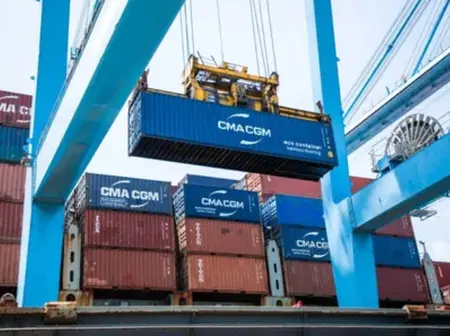
Data from the Kenya Ports Authority (KPA) shows that Mombasa and Lamu ports handled 1.97 million twenty-foot equivalent units (TEUs) between January and October 2026, up from 1.76 million during a similar period.
The increase represents a rise of approximately 210,000 container units, reflecting growing cargo activity at the country's main maritime gateways.
Total cargo throughput also increased by 7.5 per cent to 40.08 million metric tonnes, highlighting continued demand for port services from importers, exporters and regional traders who depend on Kenya's transport network.
The latest figures build on a period of sustained growth at the Port of Mombasa. In 2023, the facility handled 1.62 million TEUs, representing an 11.9 per cent increase from the previous year.
Container traffic surpassed two million TEUs in 2024, reaching 2,004,683, while cargo throughput stood at 40.99 million metric tonnes.
The upward trend continued in 2025, when Mombasa handled 2.11 million TEUs, a 5.5 per cent increase, alongside a record cargo throughput of 45.45 million tonnes.
KPA attributed the latest growth to investments in port infrastructure, acquisition of modern equipment, improved efficiency and digital systems designed to speed up cargo handling and strengthen service delivery.
The port also recorded a major operational achievement in September 2026 when workers discharged 863 containers from a vessel in a single shift at Berth 22. The performance surpassed the previous record, demonstrating improvements in cargo-handling capacity.
Beyond the increase in cargo volumes, Kenya has secured a continental maritime leadership position, with Mombasa set to host the headquarters of the Association of African Maritime Administrations (AAMA).
The decision was made in Kampala and is expected to strengthen Kenya's role in coordinating maritime priorities across the continent and engaging international institutions, including the International Maritime Organisation and the African Union.
The headquarters decision and renewed chairmanship are expected to place Kenya at the centre of discussions on African maritime cooperation, even as the country's ports continue handling growing volumes of cargo serving domestic and regional markets.
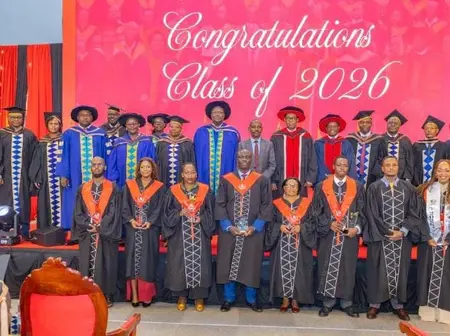
The Kenya Revenue Authority (KRA) has reiterated its commitment to streamlining tax administration in the country through modernisation and enhanced capacity building for tax administrators.In a speech read during the 23rd Kenya School of Revenue Administration (KeSRA) graduation ceremony in Nairobi, KRA Board Chairman Ndiritu Muriithi noted that the foundation of strong institutions entrusted with public responsibilities is built deliberately through clear purpose, effective governance, capable people and sound systems.
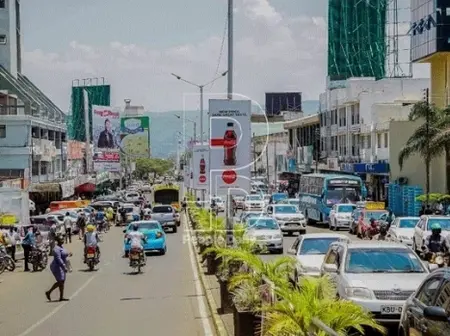
Kisumu City has emerged as an interesting example of how proper urban planning, strict enforcement and organised transport systems can help restore order in a busy city centre, raising questions about why Nairobi continues to struggle with hawkers and matatu congestion.
The lakeside city adopted a series of measures aimed at addressing the challenges of uncontrolled street trading and public service vehicles operating in unauthorised locations.
One of the major interventions came in March 2021 when Kisumu County introduced new regulations targeting matatus and buses operating within the Central Business District.
The directive, issued by then Acting City Manager Abala Wanga, required public service vehicles to stop picking up and dropping passengers at several locations within the city centre.
The affected areas included Kisumu Boys Roundabout, Aga Khan, Dal International, Kamas, Kisumu Girls and Yellow Line, among other locations.
Matatu operators were instructed to follow designated routes and use approved entry points when accessing the main bus park.
Authorities warned that vehicles violating the new regulations risked being impounded.
The county introduced additional traffic arrangements in May 2022, directing matatus and buses to use the Uhuru Business Park Complex along Nyerere Road.
Kisumu also focused on reorganising street trading by providing alternative business locations for hawkers.
Facilities such as Kibuye Market and Uhuru Business Park were among the designated spaces intended to accommodate traders and reduce congestion along busy streets.
However, the relocation exercise was not without challenges. Some traders expressed concerns about losing customers, the cost of operating from designated markets and the need for proper consultation before being moved.
Meanwhile, Nairobi continues to face persistent congestion in its CBD, where hawkers, matatus, pedestrians and private motorists compete for limited space.
Several attempts to reorganise trading activities and public transport operations in the capital have faced resistance from affected groups.
Kisumu's experience highlights the importance of combining enforcement with proper planning, accessible markets and organised transport facilities.
As Kenya's major cities continue expanding, Nairobi could draw important lessons from the lakeside city's approach.
The bigger question remains whether Nairobi County can implement sustainable reforms that restore order without undermining the livelihoods of thousands of traders and transport operators.
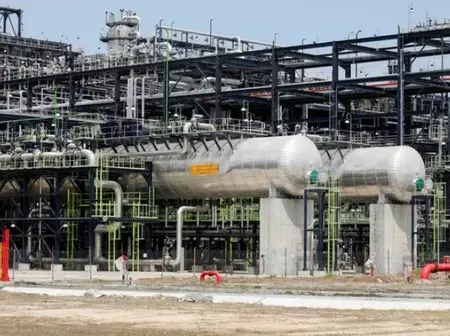
Kenya’s decision to establish a major oil refinery in Lamu presents South Sudan with an opportunity that its leaders cannot afford to overlook. For a country whose economy depends heavily on petroleum exports, this development could provide an alternative export route, strengthen regional cooperation and create employment opportunities for future generations.
On September 30, President William Ruto and Nigerian billionaire Aliko Dangote officially launched construction of the Dangote East Africa Petroleum Refinery in Lamu county. The facility is expected to process about 700,000 barrels of crude oil daily, positioning Kenya as a major petroleum-processing hub in Africa.
However, an important question arises: Where will such enormous quantities of crude oil come from?
Although Kenya possesses oil deposits in Turkana, its domestic production remains underdeveloped. A refinery of this magnitude will require substantial and reliable crude oil supplies from regional and international producers. South Sudan should therefore position itself as a strategic supplier.
According to South Sudan’s Ministry of Petroleum, the country currently produces about 175,000 barrels daily, with plans to increase production to at least 200,000 barrels by 2027. Before its civil war, production reached about 350,000 to 400,000 barrels daily, demonstrating the country’s historical petroleum potential.
South Sudan’s current production represents about 25 per cent of Lamu refinery’s planned daily processing capacity. Although not all this oil would necessarily be available for Kenya, the figures demonstrate the potential significance of a future supply partnership.
Presently, South Sudan exports its crude oil through pipelines crossing neighbouring Sudan to Port Sudan on the Red Sea. Unfortunately, the ongoing conflict in Sudan has repeatedly exposed this arrangement to insecurity, infrastructure damage and interruptions.
Whenever oil exports are disrupted, South Sudan experiences severe economic consequences, including declining government revenue, currency instability and difficulties financing essential public services.
This dependence on a single export corridor is economically dangerous.
I believe President Salva Kiir’s administration should initiate negotiations with Kenya to explore a long-term petroleum supply agreement and alternative transportation infrastructure through the Lamu Port-South Sudan-Ethiopia Transport Corridor.
Such cooperation would not necessarily mean abandoning existing arrangements with Sudan. Instead, it would diversify South Sudan’s export options, reduce economic vulnerability and strengthen regional energy security.
Kenya would benefit from additional crude oil supplies, while South Sudan could gain access to alternative markets and potentially more reliable export infrastructure.
However, the benefits should extend beyond petroleum revenues.
The Kenyan government projects that the refinery and associated industries could generate up to 60,000 direct and indirect employment opportunities. Through bilateral cooperation and existing East African Community frameworks, both governments should explore opportunities for qualified South Sudanese professionals, engineers, technicians and young graduates to participate in employment and industrial training.
Regional integration should not remain confined to diplomatic speeches. It must translate into meaningful opportunities for ordinary East Africans.
Nevertheless, constructing a pipeline would require substantial investment, environmental assessments, security guarantees and commercially viable agreements. Both governments must also protect affected communities and ensure transparent management of petroleum revenues.
As a fourth-year South Sudanese student pursuing mass media and communication at Mount Kenya University, I believe young East Africans deserve a region where neighbouring countries transform shared resources into collective prosperity.
South Sudan possesses valuable petroleum resources, while Kenya is investing in industrial infrastructure capable of supporting regional economic transformation.
Our leaders should recognise this opportunity and begin serious discussions before regional supply arrangements are finalised.
The future of East Africa should not be defined by borders separating our resources, but by partnerships transforming those resources into prosperity for our people.
Fourth-year Bachelor of Mass Media and Communication student at Mount Kenya University
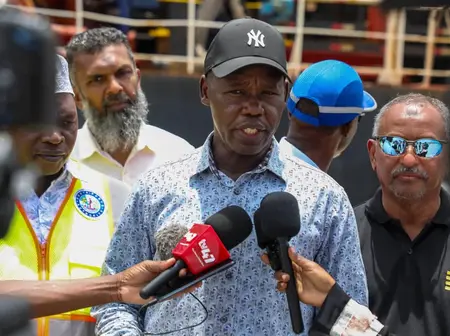
Listen to articleKenya Ports Authority (KPA) chief executive William Ruto said the ports handled 37.29 million metric tonnes during the corresponding period last year, with container traffic rising from 1.76 million TEUs to 1.97 million TEUs, representing a 12 per cent increase.Cargo throughput at the Ports of Mombasa and Lamu increased by 7.5 per cent to 40.08 million metric tonnes between January and October 2026, as container traffic at the two facilities continued to rise.
Kenya is stepping up efforts to attract Turkish investment and technology, with its embassy in Ankara engaging business leaders, industrial players and healthcare providers in a push to deepen economic ties.
A series of engagements by Kenya Ambassador to Türkiye Anthony Muchiri points to an expanding economic diplomacy agenda targeting agriculture, construction, irrigation, healthcare and technology.
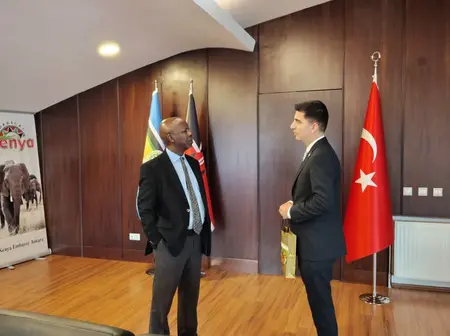
In the latest engagement on November 19, Amb Muchiri met Kerem Ilengir, founder and chairman of Ilengir Group of Companies, and head of the World Turkish Business Council, Qatar, to explore investment opportunities in Kenya.
The embassy said the two “explored high-potential investment opportunities in Kenya and exchanged insights on future strategic partnerships”.
While the mission did not give more details, the dispatch signals Nairobi's interest in attracting Turkish capital through business networks that extend beyond Türkiye into the Gulf.
The meeting followed a series of engagements in October, including discussions with the DEİK Kenya-Türkiye Business Council.
The meeting brought together Turkish business interests to explore ways of increasing trade between the two states.
“Amb Muchiri and Abdullah Yeşil, chair of the DEİK Kenya-Türkiye Business Council, co-chaired a strategic meeting focused on boosting trade volumes between Kenya and Türkiye.
“DEİK (Foreign Economic Relations Board of Türkiye), one of Türkiye’s largest and most inclusive business platforms, brings together premier industries, chambers of commerce and international businesses,” the embassy said.
The meeting covered key sectors, among them agriculture and irrigation, as well as construction, sectors central to Kenya's ambitions to expand food production, improve infrastructure and attract private investment.
Kenya's outreach has also extended beyond Ankara to regional commercial centres. On October 12, Muchiri met the Aegean Region Chamber of Commerce in İzmir, where discussions focused on expanding bilateral trade and strengthening commercial relations.
The embassy said the two sides held an "insightful discussion on enhancing economic cooperation, boosting bilateral trade and deepening commercial ties between our nations".
The focus on Turkish industrial expertise was also evident during Muchiri's visit to Turka, a vehicle inspection company that demonstrated its technology-driven inspection systems.
According to the embassy, the company uses "AI-driven imaging, robotic under-carriage scanners and automated laser testing" to eliminate human bias from vehicle inspections.
The demonstration could be relevant to Kenya's efforts to modernise vehicle inspection, improve road safety and reduce opportunities for human interference in regulatory processes.
Healthcare is another emerging area of engagement. Muchiri also met representatives of Ankara Güven Hospital to discuss possible collaboration with Kenya's Social Health Authority, although the embassy did not disclose the specific areas of cooperation.
Muchiri and an embassy delegation also visited and engaged the Konya Chamber of Commerce to explore commercial and economic cooperation between Kenya and the central Turkish region.
Chamber president Selçuk Öztürk said the visit provided an opportunity to assess "the possibilities for commercial and economic cooperation between Konya and Kenya.
They also exchange views on strengthening relations between the business communities of the two countries.
The expanding engagements come as Kenya seeks to diversify its sources of investment, technology and industrial partnerships, amid intensifying competition among global and emerging economic powers for access to African markets.
Türkiye has increasingly positioned itself as an important economic and diplomatic partner for African countries, pursuing opportunities in infrastructure, manufacturing, agriculture, healthcare and trade.
Stronger trade relations could provide Kenya more access to Turkish industrial expertise, investment capital and business networks, while creating additional markets for Kenyan products.
The strategy also offers Nairobi another avenue for diversifying its international economic partnerships rather than relying heavily on traditional Western partners and established Asian investors.
M-Pesa Till numbers have become an important payment option for businesses across Kenya, allowing customers to pay for goods and services without using cash. However, business owners also need to remain alert to fraudsters who exploit transaction reversal requests to trick merchants into refunding money they never received.
Through a business model known as rental arbitrage, entrepreneurs can lease residential units, furnish them and offer them to travellers and other guests at daily or weekly rates.
The model is attracting attention in Nairobi, where areas such as Kilimani, Westlands and Kileleshwa attract business travellers, tourists, diaspora visitors and people seeking temporary accommodation.
Rental arbitrage involves signing a long-term rental agreement with a property owner, furnishing the apartment to meet hospitality standards and listing it on platforms such as Airbnb and Booking.com.
The entrepreneur collects payments from guests while continuing to pay the agreed monthly rent to the landlord. The difference between the accommodation revenue and operating expenses determines whether the business makes a profit.
However, unlike ordinary property management, rental arbitrage requires the operator to commit substantial money before receiving the first booking.
An entrepreneur must therefore consider rent, deposits, furniture, utilities, cleaning, maintenance, platform charges, licensing and periods when the apartment may remain unoccupied.
Getting permission from the landlord
One of the most important steps is securing the landlord's written permission to operate short-term accommodation from the apartment.
A conventional residential tenancy agreement does not automatically give a tenant the right to list the property on Airbnb.
Prospective operators should negotiate an agreement that expressly allows short-stay bookings and subletting. They should also establish whether the building management or residents' association permits temporary guests.
This is particularly important in apartment complexes where management rules may restrict commercial accommodation, visitor access or frequent changes of occupants.
A business can lose money quickly if an operator furnishes an apartment only to discover that the landlord or building management does not allow Airbnb operations.
Real estate entrepreneur Alice Nyambura, quoted in the original report, advised prospective operators to understand the financial requirements before searching for an apartment.
She emphasised that rental arbitrage can become an expensive mistake when entrepreneurs commit to leases without establishing whether the expected bookings can cover their expenses.
Licences and regulatory requirements
Operating a short-stay accommodation business also requires attention to Kenya's tourism and county regulations.
The Tourism Regulatory Authority regulates accommodation establishments, including serviced apartments. The Tourism Regulatory Authority Regulations published in 2025 provide an additional regulatory framework for tourism enterprises.
Entrepreneurs should establish the appropriate licence category, registration requirements and inspection standards for their proposed accommodation business before accepting guests.
The Tourism Fund also collects a 2% tourism levy from regulated tourism activities. Operators should establish their obligations and the applicable reporting and payment requirements.
In Nairobi, businesses must also check the relevant Nairobi City County business permit requirements.
These costs should be included in the startup budget rather than treated as expenses to consider after the apartment begins receiving bookings.
How much money is needed to start?
The initial investment can be substantial, even though the entrepreneur does not purchase the property.
According to the estimates in the original report, setting up a one-bedroom apartment in areas such as Kilimani or Westlands could require approximately KSh800,000 for a basic arrangement and more than KSh1.5 million for a mid-range setup.
The money covers the rental deposit, furnishing, household equipment, bedding, kitchen supplies, photography, licensing and working capital.
An operator may also need to purchase a television, refrigerator, microwave, cooking equipment, curtains, quality mattresses and other items required to make the apartment comfortable for guests.
Keeping money aside for operating expenses is equally important.
The original report recommends maintaining at least three months of operating expenses in reserve. This can help the business survive during periods of low demand, delayed bookings or unexpected maintenance costs.
How much can an Airbnb apartment make in Nairobi?
The profitability of rental arbitrage depends on the nightly rate, occupancy, location and expenses.
The figures cited in the report put Nairobi's average short-stay occupancy at approximately 26%, with Westlands recording about 32%. The reported average daily rate in Westlands was approximately KSh7,100.
These figures illustrate why entrepreneurs should avoid assuming that an apartment will attract bookings every night.
For example, consider a one-bedroom apartment charging KSh8,000 per night.
If guests occupy the apartment for 15 nights in a month, equivalent to 50% occupancy, the business would generate KSh120,000 in gross monthly revenue.
The report estimates that operating expenses could reach approximately KSh92,000, leaving an estimated KSh28,000 before any additional costs not included in the projection.
This is an illustrative calculation rather than guaranteed income. If bookings fall below 15 nights, the operator could make considerably less or incur a loss.
The business must still meet its rental obligations even when there are no guests.
This makes cash-flow management one of the biggest challenges facing rental arbitrage operators.
Which Nairobi areas should entrepreneurs consider?
Location can significantly influence the performance of an Airbnb apartment.
Kilimani, Westlands and Kileleshwa are among the areas prospective operators can investigate because they attract different categories of short-stay customers.
However, choosing a popular neighbourhood is not enough to guarantee profitability.
Entrepreneurs should compare existing listings, nightly prices, guest reviews, apartment facilities and booking availability before signing a lease.
They should also consider proximity to shopping centres, restaurants, hospitals, business districts and transport connections.
A relatively expensive apartment in a popular neighbourhood may perform poorly if its nightly rate cannot comfortably cover rent and other expenses.
Why beginners should consider co-hosting first
For entrepreneurs who cannot raise the KSh800,000 or more required for rental arbitrage, co-hosting offers another way to enter the short-stay accommodation industry.
Under this arrangement, an operator manages an existing property on behalf of its owner and earns an agreed management fee or percentage of booking revenue.
The original report estimates that co-hosting fees can range between 15% and 25% of revenue, depending on the agreement and services provided.
The operator may handle guest communication, reservations, check-ins, cleaning arrangements and general property management without taking responsibility for the full monthly rent.
Although the income potential may be lower than rental arbitrage, the arrangement reduces the amount of capital required to enter the market.
It also allows beginners to gain experience in hospitality operations, customer service, pricing and property management before committing to a long-term lease.
What entrepreneurs should consider before investing
Nyambura advised prospective operators to begin with financial calculations rather than rushing to secure apartments.
Entrepreneurs should establish the expected monthly rent, realistic occupancy, average nightly charges and all recurring expenses.
They should also secure written permission, confirm building regulations, understand licensing obligations and maintain sufficient working capital.
The central lesson is that an Airbnb business is not simply about renting an apartment and posting attractive photographs online.
For beginners, starting with an existing property through co-hosting could provide a less expensive opportunity to understand the market before investing heavily in rental arbitrage.
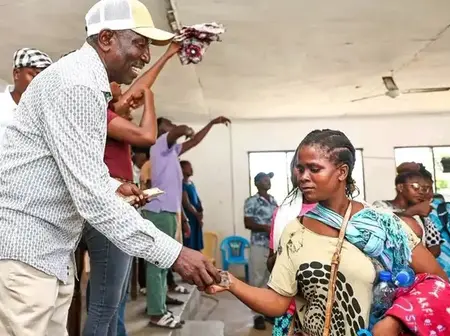
Athman announced the financial support on Saturday, November 21, explaining that the money was intended to provide beneficiaries with some capital to improve their livelihoods and become more financially independent.
Under the initiative, each beneficiary received KSh5,000, meaning the support reached more than 250 people in the community.
The MCA acknowledged that the amount might appear modest but expressed confidence that it could make a difference for individuals seeking to establish small businesses or increase their existing business capital.
He explained that the initiative was guided by his belief that people living with disabilities deserve equal opportunities and should be actively included in community development programmes.
"Mtaji huu wa KSh5,000 kwa kila mmoja niliowapa, naamini kwamba utawasaidia angalau kuendeleza na kuanzisha zile biashara zao ndogo ndogo," Athman said.
The legislator further maintained that people with disabilities should not be left out of leadership and development discussions, insisting that their views and concerns deserve equal consideration.
He said his approach to leadership involved listening to their challenges, defending their interests and ensuring they had opportunities to improve their lives.
"Katika uongozi wangu, naamini kwamba kila kiumbe kilichopo hapa duniani kina haki sawa. Hilo ndilo naloamini hata kwa ndugu zetu wenye ulemavu hapa Kilifi—kwamba wanafaa kusikilizwa ajenda zao na kuwa katika meza ya mipangilio sawa na binadamu wengine wale," he stated.
Athman added that the financial assistance was intended to support beneficiaries with different business needs, whether they wanted to establish new ventures or inject additional capital into businesses they were already operating.
He expressed hope that the money would help recipients strengthen their sources of income and improve their ability to provide for their families.
"Mapema leo, tumewawezesha zaidi ya watu 250 wenye ulemavu wa kutoweza kuongea na kusikia, ambapo kila mmoja amepokea Shilingi 5,000 kuanzisha biashara ndogo au kuongeza mtaji katika biashara yake iliyopo," he said.
The MCA also pledged to continue engaging with people living with disabilities, saying their needs should remain a priority throughout his leadership rather than receiving attention only during election campaigns.
His initiative has drawn attention to the importance of including people with disabilities in economic empowerment programmes and ensuring they have opportunities to participate in local development.
Kenya is seeking to turn growing competition between the US and China for critical minerals into an economic opportunity, opening its strategic deposits to investors from both powers.
In a communication by Minerals CS Hassan Joho on Thursday, Kenya granted the award of Mrima Hills in Kwale county to an American-led consortium, Frontier Minerals, while Chinese companies Fangda Special Steel Technology and Sinohydro Corporation jointly won tenders for chromite deposits in Samburu and copper in Tharaka Nithi.
While insisting the country's resources must support domestic industrialisation, Joho said the government remains steadfast in ensuring that mineral wealth is developed sustainably, transparently and equitably.
But the award of three mineral development tenders offers a glimpse into President William Ruto's attempts to balance the interests of the two global powers without committing Kenya to either side in their intensifying competition for control of critical mineral supply chains.
The American-led consortium Frontier Minerals is expected to develop the highly coveted Mrima Hill niobium and rare earth deposits, while Chinese companies Fangda Special Steel Technology and Sinohydro Corporation will explore chromite deposits in Samburu and copper in Tharaka Nithi.
The announcement places American and Chinese investors at the centre of Kenya's emerging critical minerals industry, at a time when Washington is seeking to reduce its dependence on China for minerals used in defence, electronics, aerospace and clean energy technologies.
It also reflects Nairobi's preference for maintaining economic partnerships with competing global powers rather than allowing geopolitical rivalry to dictate its investment choices.
President William Ruto has previously ruled out choosing between Washington and Beijing, saying Kenya would pursue multiple partnerships based on its national interests.
"There are opportunities for everybody," he told Reuters in June, arguing that African countries should pursue partnerships that deliver investment, industrial development and shared economic returns.
Joho has similarly defended Kenya's independence in selecting investors.
"I don't think it is in the place of anybody to tell us how and who to work with. Our decisions are purely informed by the interests of this country," he told Reuters in October.
The Mrima Hill project is significant to Washington because of its rare earth elements and niobium deposits, which are considered important to advanced manufacturing and strategic industries.
The American consortium comprises Frontier Minerals LLC, Bunker Hill Mining Corp, ReElement Technologies and American Resources Corporation.
Its selection comes amid US efforts to establish alternative sources of critical minerals and reduce China's dominance of processing and refining, particularly for rare earth elements.
Washington has already expressed interest in supporting Kenya to establish domestic mineral processing capacity.
In September, US Assistant Secretary of State for African Affairs Frank Garcia said they were ready to work with Kenya as it becomes a regional leader in the space.
"We are ready to help you build a mining sector that is transparent and attracts legitimate businesses, respects communities and helps secure global supply chains," Garcia said.
On the other hand, the two projects secured by Fangda and Sinohydro provide an opportunity to deepen China’s participation in Kenya’s mining sector, building on China's established position in mineral processing, industrial technology and infrastructure development.
The awards also follow Kenya's efforts to attract Chinese investment, with Joho pitching the country's deposits of coltan, copper, lithium, niobium and rare earth elements to investors at the China Mining Conference in September.
Johho’s statement also confirmed Nairobi is seeking to ensure investment in the sector translates into domestic processing, technology transfer, employment and government revenues, rather than another cycle of extracting raw materials for overseas industries.
President William Ruto made that ambition clear during the G7 summit in June, saying: "We have agreed that the minerals will be processed in Kenya."
He further warned against relationships built around exporting unprocessed resources. "These natural resources can no longer be exported and processed elsewhere. They have to be processed in-country and in-continent. We have to create value out of them."
Joho's latest statement reiterates the government's insistence on in-country mineral processing, local employment and environmental protection.
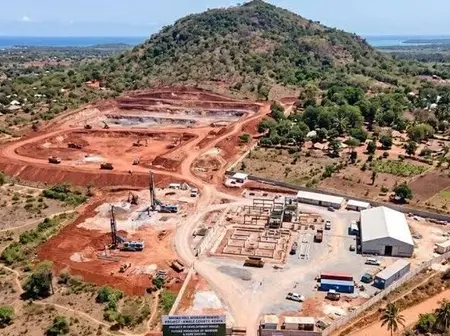
At Mrima Hill, the proposed mining activities have raised concerns over land rights, livelihoods and the protection of culturally significant sites, including the sacred Kaya forest.
Two rival bidders have also indicated plans to challenge the Mrima Hill award over alleged procurement irregularities, claims disputed by the government and the successful consortium.
The Lali Hills manganese project in Tana River and Kiritiri coltan project in Embu failed to attract responsive qualifying bids and will be addressed separately, Joho said.