Category: Economy&Finance

  • Mombasa Port Hits New Milestone as Kenya Secures Major African Maritime Leadership Role

    Mombasa Port Hits New Milestone as Kenya Secures Major African Maritime Leadership Role

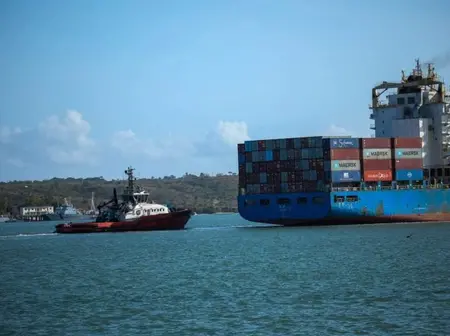
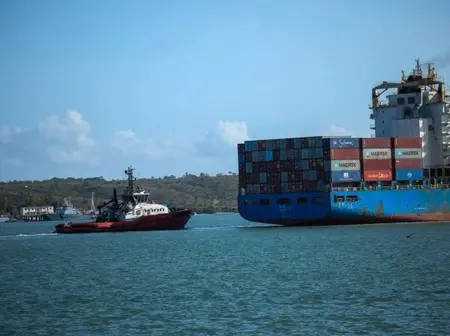
    The latest figures released by the Kenya Ports Authority (KPA) show that container traffic at the ports of Mombasa and Lamu increased by 12 per cent between January and October 2026.

    During the 10-month period, the two ports handled 1.97 million twenty-foot equivalent units (TEUs), up from 1.76 million recorded during a similar period previously.

    Total cargo handled also improved by 7.5 per cent to reach 40.08 million metric tonnes, reflecting increased activity involving importers, exporters and regional businesses.

    The performance builds on a period of sustained expansion at the Port of Mombasa. In 2023, the facility processed 1.62 million TEUs before surpassing the two-million mark in 2024, when it handled 2,004,683 containers.

    Traffic increased further in 2025, reaching 2.11 million TEUs, while total cargo throughput climbed to a record 45.45 million tonnes.

    KPA has linked the improvements to investments in port infrastructure, modern handling equipment, digital systems and measures designed to speed up cargo clearance.

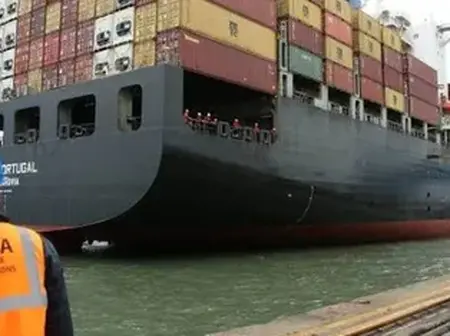
    In September 2026, port employees demonstrated the facility's growing operational capacity by unloading 863 containers from a single vessel during one shift at Berth 22, setting a new performance record.

    Meanwhile, Kenya has secured another significant achievement in the maritime sector after Mombasa was selected to host the continental headquarters of the Association of African Maritime Administrations (AAMA).

    The decision was reached in Kampala and is expected to increase Kenya's influence in shaping maritime policies across Africa and strengthening the continent's representation at the International Maritime Organisation and African Union.

    Kenya also retained the chairmanship of the 35-member organisation for another two years, with Kenya Maritime Authority Director General CPA Omae Nyarandi continuing in the position.

    The developments place Mombasa at the centre of both growing regional trade and continental maritime leadership.

    https://www.kenyans.co.ke/news/129584-mombasa-port-records-12-growth-kenya-lands-major-maritime-deal
  • Ruto’s Govt Announces Date To Complete Multi-million Modern Market In Homa Bay, Details

    Ruto’s Govt Announces Date To Complete Multi-million Modern Market In Homa Bay, Details

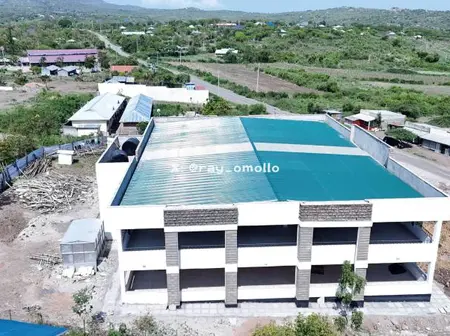
    Interior Principal Secretary Raymond Omollo announced on Sunday, November 22, that construction of the two-storey facility in Kasgunga Ward had been completed, with landscaping works remaining before its official commissioning.

    The modern market is designed to accommodate 204 traders in a sheltered environment, offering protection from harsh weather while providing improved facilities for businesses.

    One of its key features is a cold storage unit intended to help fish traders preserve their products for longer and minimise losses caused by spoilage. The facility is also expected to support economic activities linked to Lake Victoria and the wider Blue Economy.

    According to Omollo, the market includes an ICT hub, food court and social hall to support business development and provide space for community activities.

    Additional facilities include a dedicated room for breastfeeding mothers, a children's play area, modern sanitation facilities and a reliable water supply.

    The government says the amenities are intended to make the market accessible and comfortable for different groups of traders and customers.

    Once opened, the facility is expected to strengthen commercial activities in the area by providing traders with better infrastructure and an organised business environment.

    Another Modern Market Nears Completion

    Meanwhile, construction of the Othaya Modern Market in Nyeri County has reached the final stages, with structural works completed and finishing activities underway.

    The three-storey project, launched by President William Ruto in April 2025, is expected to serve approximately 1,000 traders when completed.

    Its planned facilities include dedicated sections for fresh produce, meat and vegetables, alongside cold rooms, storage areas, shops and a food court.

    The market will also have an ICT hub, SACCO office, kitchen, meeting rooms, prayer rooms and a children's play area.

    The two projects form part of government efforts to upgrade trading infrastructure and provide better working spaces for small-scale businesses.

    https://nairobileo.co.ke/news/article/31622/govt-announces-completion-of-luanda-esp-market-in-homa-bay

  • Busted Promises or Real Change? What Kisumu Traders Are Watching Ahead of the 2027 Polls

    Busted Promises or Real Change? What Kisumu Traders Are Watching Ahead of the 2027 Polls

    Senator Ojienda seeks Kisumu traders’ support ahead of 2027 governor race

    Highlighted on Sunday, November 22, 2026, following his engagement with traders and market leaders on Saturday, November 21, the outreach centers on practical economic concerns affecting small and medium-sized enterprises across the lakeside county.

    During his engagements, Ojienda focused on addressing persistent operational hurdles facing local traders, pledging stronger security around trading hubs and markets alongside revenue reforms aimed at boosting accountability and service delivery.

    For small-scale merchants whose incomes depend heavily on daily foot traffic and uninterrupted trading hours, security lapses and unpredictable local levies remain top-of-mind grievances that can quickly erode thin margins.

    Ojienda is positioning himself to succeed outgoing Governor Prof. Anyang’ Nyong’o in a contest expected to draw spirited competition from multiple contenders across Kisumu County.

    Recent opinion polling—including a Mwelekeo Insights survey released in early November 2026—has pointed to a tightly contested early field featuring figures such as Mathew Owili, Jackton Buyu, Ken Obura, and Ojienda within a narrow margin, underscoring why early coalition-building and grassroots trust matter so much before party nominations arrive.

    For Kisumu’s business owners and market leaders, however, speeches and consultative meetings represent only the opening stage of county politics.

    Turning trader support into durable momentum ahead of August 2027 will depend on whether candidates offer concrete plans for market infrastructure, fair revenue administration, and safer trading environments.

    What are your thoughts about this article? Share your reactions in the comment section and don't forget to share and follow for more updates.

    https://peopledaily.digital/inside-politics/senator-ojienda-seeks-kisumu-traders-support-ahead-of-2027-governor-race

  • Ruto’s Debt Management: Fiscal Discipline or Burdening Kenyans?

    Ruto’s Debt Management: Fiscal Discipline or Burdening Kenyans?

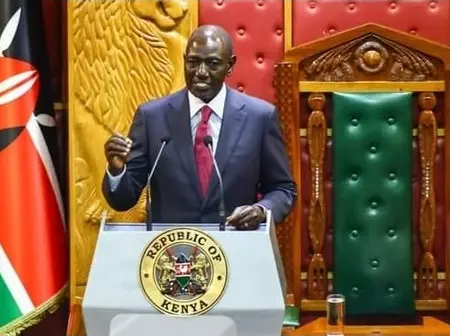
    President William Ruto’s management of Kenya’s public debt remains a mixed record, characterised by ambitious fiscal reforms, growing revenue collection efforts and persistent concerns about the country’s debt sustainability. While his administration has demonstrated commitment to addressing the debt burden, the results have yet to provide sufficient relief to ordinary Kenyans.

    Kenya’s public debt has continued to consume a significant portion of government revenue, leaving limited resources for essential services such as healthcare, education, infrastructure and social protection. The government has prioritised debt repayment, introduced tax measures and pursued international financing arrangements to ease pressure on the national budget. However, increased taxation has placed a heavy burden on households and businesses already struggling with the high cost of living.

    Ruto’s administration deserves recognition for pursuing fiscal consolidation and attempting to reduce reliance on expensive domestic borrowing. Efforts to improve revenue collection, manage expenditure and restructure certain debt obligations demonstrate awareness of the risks associated with excessive borrowing. Nevertheless, borrowing alone cannot solve Kenya’s economic challenges without corresponding improvements in productivity, accountability and prudent public spending.

    A major concern remains the efficiency with which borrowed money is utilised. Kenyans expect public debt to finance productive investments that generate employment, stimulate economic growth and expand the country’s revenue base. Persistent corruption, wastage, stalled projects and questionable expenditure undermine these objectives and weaken public confidence in government debt management.

    Ultimately, effective debt management should not be measured merely by the government's ability to repay creditors, but by whether borrowing improves citizens’ livelihoods. President Ruto must strengthen transparency, eliminate unnecessary expenditure, prioritise productive projects and ensure that public resources deliver measurable results.

    Kenya needs a sustainable debt strategy that balances repayment obligations with economic development and social welfare. Without these reforms, debt management risks becoming an exercise in collecting more taxes to service past borrowing, rather than building a prosperous future.

    Source: https://www.facebook.com/share/1EQTngSRkf/

  • Anthropic, AI, Billions and Investments: How A 2021 Startup Became Worth More Than Kenya’s Budget For 50 Years

    Anthropic, AI, Billions and Investments: How A 2021 Startup Became Worth More Than Kenya’s Budget For 50 Years

    thumbnail

    We cannot keep building companies where only the owner at the top gets richAnthropic went public on Thursday on NASDAQ in the largest IPO in history.The company behind Claude, the AI chatbot, sold 980 million shares at $83 a share, raising $81.3 billion — beating SpaceX’s record $75 billion IPO earlier this year.

  • Secret Impact on Interest Rates and Fees Exposed? Read What a KCB–Equity Merger Could Mean for You

    Secret Impact on Interest Rates and Fees Exposed? Read What a KCB–Equity Merger Could Mean for You

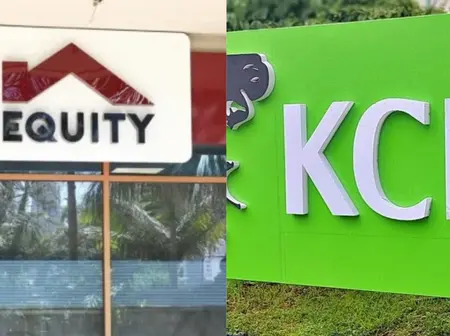
    KCB-Equity merger: What could happen to your bank account, loan and savings?

    Importantly, neither lender has announced a formal merger agreement, meaning the idea remains a policy and market discussion rather than an active transaction, and customers have no reason to rush to close accounts or alter banking arrangements.

    If the two institutions—holding combined assets of roughly KSh 4.55 trillion as of September 2026 and serving tens of millions of customers across the region—were ever to combine, existing customer funds and contractual agreements would remain legally protected under Central Bank of Kenya supervision.

    Savings balances and standing orders would eventually migrate onto a unified core banking platform, potentially requiring updated account numbers or banking apps after a multi-year transition period, while customers could gain access to a wider combined footprint of branches, ATMs, and agency outlets.

    For borrowers, existing loan agreements, repayment schedules, and fixed terms would remain binding, though a merged bank with deeper capital reserves could expand capacity for larger business, mortgage, and infrastructure credit.

    However, consumer advocates and analysts warn of a major trade-off: combining Kenya’s two largest competing lenders could reduce competitive pressure on loan interest rates, transaction fees, and deposit returns.

    Any real merger would first require board approval, shareholder backing, and strict clearance from the Central Bank of Kenya and competition regulators.

    What are your thoughts about this article? Share your reactions in the comment section and don't forget to share and follow for more updates.

    https://peopledaily.digital/business/kcb-equity-merger-what-could-happen-to-your-bank-account-loan-and-savings

  • KSh 473.4 Billion in Total Trade: The Untold Story Behind Kenya’s Expanding Monthly Trade Imbalance

    KSh 473.4 Billion in Total Trade: The Untold Story Behind Kenya’s Expanding Monthly Trade Imbalance

    Kenya spent Ksh344B on imports in one month, but exported just Ksh129B – KNBS

    Highlighted on Sunday, November 22, 2026, the figures underscore a widening monthly merchandise trade deficit of KSh 215.0 billion as import expenditure expanded far faster than outbound shipments.

    Compared with August 2026, total merchandise trade rose from KSh 402.8 billion to KSh 473.4 billion.

    Over that period, import expenditure climbed sharply by KSh 59.4 billion—from KSh 284.8 billion in August to KSh 344.2 billion in September—while export earnings posted a more modest increase from KSh 118.0 billion to KSh 129.2 billion.

    KNBS data further identified China, India, and the United States as Kenya’s leading sources of imports during the month under review.

    The widening gap reflects a familiar structural challenge in Kenya’s external accounts, where demand for imported fuel, machinery, industrial inputs, and manufactured goods routinely outstrips foreign exchange generated by agricultural commodities and regional re-exports.

    While stronger export receipts—including improved vegetable export earnings despite lower shipment volumes—helped cushion the balance, economists note that sustained import growth places ongoing pressure on the current account and foreign currency demand.

    Bridging the divide will require accelerating domestic manufacturing, value addition, and agro-processing to capture higher returns abroad.

    What are your thoughts about this article? Share your reactions in the comment section and don't forget to share and follow for more updates.

    https://peopledaily.digital/business/kenya-spent-ksh344b-on-imports-in-one-month-but-exported-just-ksh129b-knbs

  • From 251 to 246 Points: The Untold Story Behind Kenya’s Stock Market Cooling Off in September

    From 251 to 246 Points: The Untold Story Behind Kenya’s Stock Market Cooling Off in September

    KNBS: Ksh96B wiped off Kenya’s stock market, what happened to investors’ money?

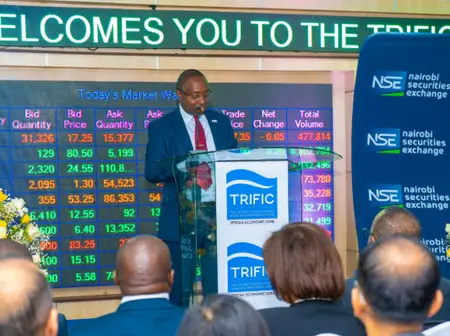
    Highlighted on Sunday, November 22, 2026, the figures show total Nairobi Securities Exchange (NSE) market value easing from KSh 4.218 trillion in August to KSh 4.122 trillion in September, alongside a dip in the Nairobi All Share Index from 251 to 246 points and a slight decline in the NSE 20 Share Index from 4,326 to 4,317 points.

    Despite alarming headlines about billions being "wiped out," market analysts emphasize that the drop does not mean KSh 96 billion in cash disappeared from company accounts or exited the economy.

    Market capitalisation simply multiplies each listed company’s total shares by its prevailing market price. When share prices adjust downward—driven in September by profit-taking following an extended 2026 rally and foreign investor selling—the quoted paper value of investors’ holdings falls accordingly.

    Shareholders only lock in an actual cash loss if they sell their shares below the price they originally paid; those who hold through the dip retain the same number of shares and remain eligible for dividends.

    Crucially, KNBS data shows trading activity stayed resilient even as valuations cooled. While share volume dipped from 767 million to 640 million, equity turnover rose from KSh 27.7 billion to KSh 28.9 billion and total transactions climbed from 291,006 to 347,203.

    Moreover, NSE market capitalisation remained 48 per cent higher than September 2025’s KSh 2.784 trillion, underscoring a healthy consolidation rather than a structural collapse.

    What are your thoughts about this article? Share your reactions in the comment section and don't forget to share and follow for more updates.

    https://peopledaily.digital/business/knbs-ksh96b-wiped-off-kenyas-stock-market-what-happened-to-investors-money

  • Willis Otieno Questions Nairobi County’s KSh1.5 Billion Borrowing Amid Unremitted Pension Deductions

    Willis Otieno Questions Nairobi County’s KSh1.5 Billion Borrowing Amid Unremitted Pension Deductions

    Lawyer Willis Otieno has raised serious questions about Nairobi County's financial management after questioning how the devolved government could receive its equitable share from the National Treasury on schedule, borrow KSh1.5 billion to facilitate salary payments, yet fail to remit employees' pension contributions and SACCO deductions.

    Otieno's concerns have placed City Hall's financial planning and accountability under renewed scrutiny, with questions emerging over how public resources are being allocated and whether county authorities are observing basic financial obligations.

    The apparent contradiction between accessing national government allocations and resorting to substantial borrowing has triggered debate over the county's expenditure priorities.

    Of particular concern is the handling of employees' statutory and personal deductions. Pension contributions and SACCO payments are funds already withheld from workers' salaries and are expected to reach their respective institutions.

    Their delayed remittance raises concerns about employees' financial security, retirement benefits and obligations to their savings organisations.

    Otieno has consequently called for the Controller of Budget to investigate the circumstances surrounding the KSh1.5 billion borrowing, establish how the funds received from the National Treasury were utilised and determine who authorised the expenditure.

    The investigation, he maintains, should provide Nairobi residents and affected employees with a transparent account of the county's financial dealings.

    Meanwhile, Nairobi County workers have raised additional concerns over their welfare, with some complaining that they have gone for two weeks without access to functioning medical insurance. The development has intensified questions about the impact of administrative and financial challenges on essential employee benefits.

    Some members of the public have also demanded tougher action against corruption, including calls for the most severe criminal penalties.

    The unfolding concerns have placed City Hall's financial accountability under the spotlight, with growing demands for transparency, proper utilisation of public funds and protection of workers' entitlements.

  • Fuel, Food, and Foreign Debt: Why Kenya’s Trade Deficit Just Blew Past Expectations

    Fuel, Food, and Foreign Debt: Why Kenya’s Trade Deficit Just Blew Past Expectations

    Kenya spent Ksh344B on imports in one month, but exported just Ksh129B – KNBS

    The resulting Ksh215 billion monthly trade deficit underscores the country's heavy reliance on external supply chains for essential commodities, industrial raw materials, and machinery, outpacing foreign exchange earnings derived from local production.

    According to the KNBS Leading Economic Indicators report, the primary drivers of the elevated import bill included refined petroleum products, heavy industrial machinery, electronics, and agricultural inputs such as chemical fertilizers and wheat.

    In contrast, domestic export performance remained anchored by traditional agricultural products—primarily tea, horticulture, coffee, and titanium ores—which continue to face price volatility in international markets.

    While foreign sales of agricultural produce showed modest volume increases, low value-addition and limited manufacturing export capacity prevented total revenue from keeping pace with expanding import expenditures.

    Economic analysts and trade policy experts warn that a widening monthly trade gap places continuous pressure on Kenya's foreign exchange reserves and the valuation of the Kenya Shilling.

    To narrow the chronic trade deficit, financial advisers and industry groups are urging the national government to accelerate local industrialization programs, enhance agricultural processing to capture higher global value, and expand clean energy infrastructure to reduce foreign fuel reliance.

    Without structural reforms aimed at substituting key imports with domestic capacity, Kenya risks remaining vulnerable to global price shocks and sustained currency depreciation.

    What are your thoughts about this article? Share your reactions in the comment section and don't forget to share and follow for more updates./

    https://peopledaily.digital/business/kenya-spent-ksh344b-on-imports-in-one-month-but-exported-just-ksh129b-knbs