Category: Economy&Finance

  • Thika Road Motorists Face Possible Monthly Toll Charges Under Proposed Ksh100 Billion Project

    Thika Road Motorists Face Possible Monthly Toll Charges Under Proposed Ksh100 Billion Project

    The planned arrangement would require motorists to pay for using the upgraded highway, with the money collected helping a private investor recover the cost of financing the project.

    According to the National Treasury's 2027 Budget Policy Statement, the Nairobi-Thika-Juja-Kenol-Sagana-Marua highway project is estimated to cost Ksh100 billion and is awaiting government approval.

    The proposal is expected to operate under a Public-Private Partnership (PPP) arrangement, allowing a private investor to finance the construction and recover the investment through toll collections.

    The Treasury has outlined a 30-year concession period, with financial close targeted for the 2028/29 financial year.

    For thousands of motorists travelling daily between Nairobi, Ruiru, Juja and Thika, the proposed system could introduce a new expense into their monthly budgets.

    Those making return journeys every working day would be required to pay depending on the rates eventually approved and the toll collection system adopted.

    Public transport operators and businesses relying on commercial vehicles could also feel the impact if the charges are extended to their categories of vehicles.

    Monthly Payments Yet to Be Revealed

    Despite the Ksh100 billion project estimate, the government has not announced how much individual motorists will be required to pay.

    The final charges will depend on the toll rates, vehicle categories and collection points established under the agreement with the private investor.

    Consequently, commuters cannot yet establish how much they would spend daily or monthly when using the highway.

    The project is also yet to receive final approval, meaning the proposed tolling arrangements remain subject to further government decisions.

    The 2028/29 financial close target should also not be interpreted as a confirmed date for the introduction of toll collection.

    If approved, the project would introduce a user-pay system on one of the country's busiest transport corridors, potentially changing the cost of daily travel for motorists connecting Nairobi and the Mount Kenya region.

    https://peopledaily.digital/news/thika-road-tolls-how-much-could-daily-commuters-spend-in-a-month
  • 68 Million Accounts Combined? See How a Banking Merger Could Impact Interest Rates

    68 Million Accounts Combined? See How a Banking Merger Could Impact Interest Rates

    KCB-Equity merger: What could happen to your bank account, loan and savings?

    The idea, revived in political and economic circles following strong Q3 2026 financial performances from both lenders, envisions creating a continental banking colossus boasting a combined balance sheet of Ksh4.55 trillion and over 68 million customer accounts across East and Central Africa.

    However, financial experts and consumer rights analysts caution that while the idea remains a political proposal rather than a formal corporate agreement, understanding its implications is critical for ordinary account holders.

    For daily account holders and savers, a structural merger would present both operational conveniences and long-term pricing questions.

    Legally, existing deposits, account balances, and contract terms would remain entirely secure, as banking regulations enforced by the Central Bank of Kenya (CBK) protect customer capital during institutional restructurings.

    In the event of a merger, customers would eventually gain access to an expanded physical and digital ecosystem—combining thousands of branch locations, agent networks, and ATMs alongside integrated mobile platforms like Equity Mobile and KCB VOOMA.

    Conversely, market analysts warn that consolidating the country’s two chief competitors into a single entity could reduce retail banking competition, potentially leading to higher transaction fees, less aggressive interest rates on fixed deposit savings, and localized branch rationalizations.

    What are your thoughts about this article? Share your reactions in the comment section and don't forget to share and follow for more updates.

    https://peopledaily.digital/business/kcb-equity-merger-what-could-happen-to-your-bank-account-loan-and-savings

  • From 5-Month Rally to Sh96B Dip: What the Stock MarketMeans for Ordinary Kenyans

    From 5-Month Rally to Sh96B Dip: What the Stock MarketMeans for Ordinary Kenyans

    KNBS: Ksh96B wiped off Kenya’s stock market, what happened to investors’ money?

    The drop snapped a multi-month bull run that had previously added hundreds of billions of shillings to market capitalization.

    The headline contraction left retail and institutional investors questioning the safety of their holdings and asking a fundamental question: where did the money go?

    In financial markets, a decline in market capitalization does not mean cash was physically withdrawn or stolen from investor accounts; rather, it reflects a downward repricing of listed assets.

    Because market capitalization is calculated by multiplying a company’s total outstanding shares by its current trading price, even small sell-offs in major blue-chip counters—such as Safaricom, Equity Group, and KCB Group—lower share values across the board.

    When share prices fall due to profit-taking, shifting global interest rates, or foreign capital reallocations, the paper value of portfolios shrinks dynamically, creating a headline valuation loss without direct capital extraction.

    Market analysts point out that while equity valuations contracted, capital within the broader financial ecosystem moved into alternative assets rather than disappearing.

    High interest rates on government fixed-income paper—such as Treasury bills and infrastructure bonds—prompted both local and foreign investors to reallocate funds away from volatile equities and into guaranteed high-yielding debt instruments.

    Furthermore, despite the September pullback snapping consecutive months of gains, the NSE remains significantly higher year-to-date compared to previous cycles, indicating that the Ksh96 billion decline represents a standard market correction following extended rally periods.

    What are your thoughts about this article? Share your reactions in the comment section and don't forget to share and follow for more updates.

    https://peopledaily.digital/business/knbs-ksh96b-wiped-off-kenyas-stock-market-what-happened-to-investors-money

  • Kenya spent Ksh344B on imports in one month, but exported just Ksh129B – KNBS

    Kenya spent Ksh344B on imports in one month, but exported just Ksh129B – KNBS

    Kenya spent Ksh344B on imports in one month, but exported just Ksh129B – KNBS

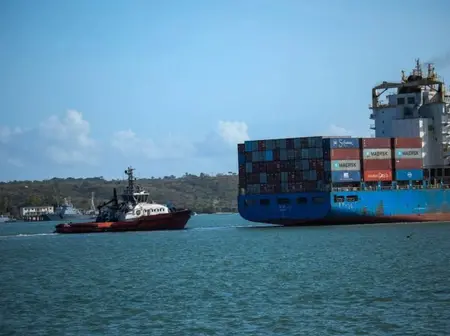
    Kenya spent a staggering Ksh344.2 billion importing goods in September 2026, yet the value of goods it exported during the same month stood at just Ksh129.2 billion.

    The difference? A Ksh214.9 billion trade deficit, a gap that raises an uncomfortable question about the country’s dependence on foreign goods: why is Kenya buying so much more from the rest of the world than it is selling?

    Fresh figures in the Kenya National Bureau of Statistics (KNBS) September 2026 Leading Economic Indicators report show that the country’s merchandise trade deficit widened sharply from Ksh166.7 billion in August to Ksh214.9 billion in September.

    In simple terms, Kenya’s import spending is growing faster than its export earnings. And the figures offer a revealing snapshot of the pressure facing local production, manufacturing and the country’s ability to earn foreign exchange.

    The KNBS report says the total value of merchandise trade increased from Ksh402.8 billion in August to Ksh473.4 billion in September.

    But the movement in imports and exports tells two different stories.

    Exports rose from Ksh118 billion to Ksh129.2 billion. That is an increase of Ksh11.2 billion. Imports, however, jumped from Ksh284.8 billion to Ksh344.2 billion, an increase of Ksh59.4 billion in just one month.

    The result was a wider trade deficit.

    The report states: “Consequently, the merchandise trade deficit widened from KSh 166.7 billion in August 2026 to Ksh214.9 billion in September 2026.”

    That is a monthly increase of Ksh48.2 billion in the deficit.

    The numbers do not mean Kenya produces nothing or that every imported product could immediately be made locally. They do, however, highlight the scale of the country’s spending on foreign goods compared with what it earns from exports.

    One country stands out in Kenya’s import figures: China.

    Kenya imported goods worth Ksh113.2 billion from China in September, making it the country’s largest source of imports. India followed with Ksh51.8 billion, while the United States accounted for Ksh21.9 billion.

    The China figure is particularly striking because imports from that country increased by 35.9 per cent from Ksh83.3 billion in August.

    This raises an important question for local businesses: what are Kenyans and Kenyan companies buying from abroad, and why are local manufacturers not supplying more of those goods?

    The KNBS report offers another clue through its breakdown of imported goods. Industrial supplies that are not food accounted for 40 per cent of total imports.

    Fuel and lubricants represented 22 per cent, while machinery and other capital equipment accounted for 13.6 per cent. Transport equipment contributed 9.8 per cent.

    These categories matter because imports are not simply consumer luxuries. Some are inputs used by factories, farms, transport companies and other businesses. Replacing them locally would require investment, reliable production capacity, competitive prices and access to technology.

    Kenya’s export performance also deserves attention.

    The United States was the leading destination for Kenyan exports in September, receiving goods worth Ksh27.9 billion. Uganda followed at Ksh13.2 billion, while Pakistan accounted for Ksh6.4 billion.

    Food and beverages made up the largest share of domestic exports, at 36 per cent. Machinery and other capital equipment accounted for 22.9 per cent, while non-food industrial supplies represented 18.2 per cent.

    The figures show that Kenya has export strengths. The challenge is whether the country can expand production, diversify what it sells and reach more markets.

    A persistent trade gap can increase the country’s need for foreign currency to pay for imports. It does not, by itself, prove that the shilling will weaken, but it underlines why export growth and competitive local industries matter.

    For households, the issue goes beyond economic statistics. Imported goods, fuel and industrial inputs are part of everyday business costs and consumer supply chains.

    The big question raised by the KNBS figures is simple: what would it take for Kenya to manufacture more of what it currently imports—and earn more from what it sells?

    Until that gap narrows, the Ksh344 billion import bill will remain a powerful measure of the country’s dependence on the global marketplace.

  • No Official Toll Tariffs Yet as Project Awaits Approval Ahead of 2028/29 Financial Close

    No Official Toll Tariffs Yet as Project Awaits Approval Ahead of 2028/29 Financial Close

    Thika Road tolls: How much could daily commuters spend in a month?

    Published in the National Treasury’s 2027 Budget Policy Statement (BPS) in November 2026, the proposal designates the extended corridor for a 30-year Public-Private Partnership (PPP) user-pay concession with the Kenya National Highways Authority (KeNHA) as contracting authority, targeting financial close in the 2028/29 financial year.

    Because the project is still listed among PPP proposals awaiting formal approvals, negotiations, and affordability and value-for-money assessments, any monthly figure for a daily commuter would be purely speculative.

    In practice, a commuter’s monthly outlay—whether driving a private car or paying matatu and bus fares—will depend on several unconfirmed variables: the final tariff schedule across private cars, public service vehicles (PSVs), buses, and heavy commercial trucks; whether charges are distance-based or flat-rate per gantry; and how frequently toll points are spaced along the route.

    For everyday travellers moving between Nairobi and high-density commuter towns such as Ruiru, Juja, and Thika—as well as longer-distance motorists heading toward Kenol, Sagana, and Marua—key policy questions remain open.

    Motorists and transport operators are watching to see whether short-distance commuters receive discounted or zoned rates, whether exemptions or preferential terms apply to categories such as public transport or emergency vehicles, what free alternative routes remain available, and what specific road upgrades the private concessionaire will deliver under a structure designed to shift commercial traffic risk away from the state.

    What are your thoughts about this article? Share your reactions in the comment section and don't forget to share and follow for more updates.https://peopledaily.digital/news/thika-road-tolls-how-much-could-daily-commuters-spend-in-a-month
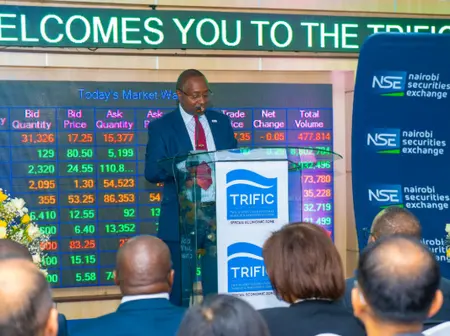
  • Secondary Bond Market Activity Surges as Investors Rebalance Portfolios Across Asset Classes

    Secondary Bond Market Activity Surges as Investors Rebalance Portfolios Across Asset Classes

    KNBS: Ksh96B wiped off Kenya’s stock market, what happened to investors’ money?

    Total market value declined by 2.28 percent from Ksh4.22 trillion in August to Ksh4.12 trillion at the end of September, snapping a five-month streak of consecutive valuation gains.

    Financial analysts note that a Ksh96 billion drop in market capitalization does not mean physical cash vanished from bank accounts or left the country.

    Instead, market capitalization is calculated by multiplying each listed company’s current share price by its total number of issued shares; when share prices dip—even on relatively small trading volumes—the collective paper valuation of those companies drops automatically.

    For long-term shareholders who held onto their shares without selling, the decline represents an unrealized (paper) loss that can recover if share prices rebound, whereas investors who sold shares during the dip locked in realized gains or losses depending on their entry price.

    Market disclosures indicate the September pullback was largely driven by profit-taking and portfolio rotation following a massive rally between April and August 2026 that had added nearly Ksh987 billion to investor wealth.

    Heavyweight counters—led by Safaricom, Absa Bank, Equity Group, and KCB Group, which together accounted for over 71 percent of monthly equity turnover—experienced mild price corrections as some institutional and foreign investors locked in profits and shifted funds toward fixed-income government securities.

    Despite the September dip, the NSE remained more than Ksh1.1 trillion higher year-to-date, underscoring the scale of earlier 2026 gains.

    What are your thoughts about this article? Share your reactions in the comment section and don't forget to share and follow for more updates.

    https://peopledaily.digital/business/knbs-ksh96b-wiped-off-kenyas-stock-market-what-happened-to-investors-money

  • Hub Offers Buyer Verification, Documentation Support, and Market Access

    Hub Offers Buyer Verification, Documentation Support, and Market Access

    Inside Kenya’s new push to get local products into UAE markets

    The trade mission—highlighted by KNCCI on Sunday, November 22, 2026—focused on strengthening export readiness, streamlining trade facilitation, and connecting Kenyan businesses with the logistics and commercial infrastructure required to compete internationally.

    According to KNCCI, the drive targets small and medium-sized enterprises (SMEs), local manufacturers, agricultural producers, and service providers looking to diversify beyond traditional export destinations.

    As part of the rollout, the chamber has urged Kenyan exporters to register with the Kenya Pavilion Dubai and utilise its liaison services—including buyer verification, documentation support, and market entry advisory—to tap into demand across the UAE and neighbouring Gulf Cooperation Council (GCC) states.

    The push builds directly on the Kenya–UAE Comprehensive Economic Partnership Agreement (CEPA), signed in January 2025 to lower tariff and non-tariff barriers, accelerate sanitary and customs clearances, and provide predictable trade rules.

    While Kenya’s exports to the UAE—anchored by meat, tea, coffee, avocados, fruits, vegetables, and cut flowers—exceeded US$600 million in 2025, bilateral trade remains heavily tilted in favour of imports from the Emirates, led by refined petroleum products.

    By pairing policy frameworks under CEPA with on-the-ground commercial platforms like the Kenya Pavilion Dubai and the UAE–Kenya Joint Business Council, policymakers and private-sector leaders aim to shift Kenya’s export mix toward higher-value, branded, and processed goods.

    With Dubai serving as a major global re-export hub, officials see stronger supply-chain coordination and quality compliance as critical to helping Kenyan enterprises secure long-term contracts in the Middle East.

    What are your thoughts about this article? Share your reactions in the comment section and don't forget to share and follow for more updates.

    https://peopledaily.digital/business/inside-kenyas-new-push-to-get-local-products-into-uae-markets

  • KNBS: Ksh96B wiped off Kenya’s stock market, what happened to investors’ money?

    KNBS: Ksh96B wiped off Kenya’s stock market, what happened to investors’ money?

    KNBS: Ksh96B wiped off Kenya’s stock market, what happened to investors’ money?

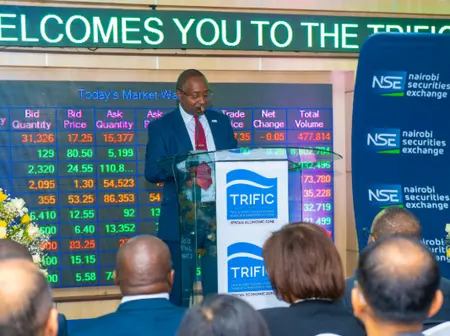
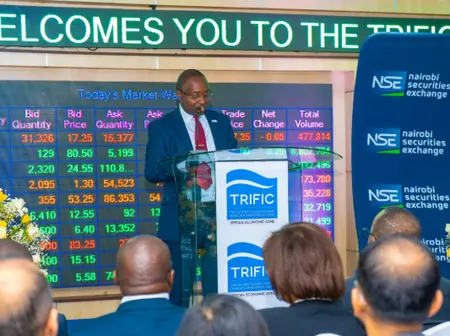
    Kenya’s stock market lost approximately Ksh96 billion in value in September 2026, reversing part of a strong rally that had pushed the Nairobi Securities Exchange (NSE) above the Ksh4 trillion mark.

    Data from the Kenya National Bureau of Statistics (KNBS) shows that market capitalisation declined from Ksh4.218 trillion in August to Ksh4.122 trillion in September, a drop of about 2.3 per cent.

    The decline raises questions about investor confidence and the value of shares held by individuals, pension funds and other institutional investors.

    However, the fall does not mean Ksh96 billion in cash was withdrawn from companies or disappeared from the economy. Market capitalisation measures the combined value of listed shares at prevailing market prices.

    The September decline followed a strong rally that had lifted the NSE’s valuation throughout much of 2026.

    KNBS figures show that market capitalisation increased from Ksh2.784 trillion in September 2025 to Ksh4.122 trillion in September 2026, representing annual growth of approximately 48 per cent.

    The Nairobi All Share Index (NASI) declined from 251 points in August to 246 points in September, while the NSE 20 Share Index eased from 4,326 to 4,317 points.

    Market reports at the time linked the correction to profit-taking after the rally and foreign investor selling. These explanations provide context but are not causes established by KNBS.

    The decline in market value can affect investors whose portfolios contain shares that lost value during the month. Investors may see the quoted value of their holdings fall even when they have not sold their shares.

    But the KNBS data also reveals an interesting contrast: the volume of shares traded fell from 767 million in August to 640 million in September, while equity turnover increased from Ksh27.7 billion to Ksh28.9 billion.

    The number of equity transactions also rose from 291,006 to 347,203. This shows that trading remained active despite the decline in market value.

    For businesses, weaker share prices can make equity fundraising less attractive because companies may have to offer more shares to raise the same amount of money. However, the September figures do not show that any listed company cancelled or delayed a fundraising plan.

    Despite the monthly decline, the NSE remained significantly more valuable than it was a year earlier. The 48 per cent annual increase in market capitalisation provides important context and shows why September should not automatically be interpreted as the beginning of a prolonged market downturn.

    Investors will be watching company earnings, dividend performance, share valuations and broader economic conditions to assess whether the correction continues.

    For ordinary Kenyans, the key lesson is that a rising stock market can increase the quoted value of investments, but those gains can also reverse. The September figures show a market that has surrendered some recent gains, but remains substantially larger than it was in September 2025.

  • Boosting Bilateral Commerce: Senior Kenyan Delegation Champions Local Goods in the UAE

    Boosting Bilateral Commerce: Senior Kenyan Delegation Champions Local Goods in the UAE

    Inside Kenya’s new push to get local products into UAE markets

    The renewed export drive forms part of Nairobi’s broader economic diplomacy strategy aimed at narrowing the bilateral trade deficit, diversifying export destinations, and connecting Kenyan farmers, processors, and manufacturers directly with international buyers.

    By strengthening institutional presence and commercial linkages in the Emirates, authorities seek to position Kenyan products competitively within one of the Middle East’s fastest-growing consumer and re-export hubs.

    At the center of the push is the operationalization of the landmark Kenya–UAE Comprehensive Economic Partnership Agreement (CEPA), signed in Abu Dhabi in January 2025 as the Emirates’ first such trade pact with a mainland African nation.

    The agreement provides a structured framework to eliminate or reduce tariffs, streamline customs clearance, address non-tariff barriers, and stimulate cross-border investment.

    Kenyan trade officials are focusing on scaling up shipments of high-demand commodities—including halal-certified meat, specialty tea and coffee, fresh avocados, mangoes, cut flowers, and value-added processed foods—which already anchor Kenya’s multi-billion-shilling export portfolio to the UAE.

    Beyond tariff concessions, trade experts emphasize that sustaining market share in the Emirates requires strict adherence to quality standards, cold-chain logistics, and regulatory certification.

    Exporters targeting the Gulf must meet rigorous food safety rules, halal accreditation requirements, and international packaging benchmarks demanded by UAE municipal authorities and retail chains.

    As government agencies work to resolve supply-chain bottlenecks and support small and medium enterprises with export readiness, stakeholders view the UAE corridor as a vital gateway for scaling Kenyan exports across the wider Middle East.

    What are your thoughts about this article? Share your reactions in the comment section and don't forget to share and follow for more updates.

    https://peopledaily.digital/business/inside-kenyas-new-push-to-get-local-products-into-uae-markets

  • Chamber Liaison Office and Business Council Guide Local Producers

    Chamber Liaison Office and Business Council Guide Local Producers

    Inside Kenya’s new push to get local products into UAE markets

    Anchored by the Kenya–UAE Comprehensive Economic Partnership Agreement (CEPA)—signed in January 2025 and advanced through parliamentary ratification—the strategy seeks to reduce tariffs, streamline customs clearances, and ease non-tariff barriers between Nairobi and Abu Dhabi.

    With the UAE already ranking among Kenya’s top export destinations and serving as a major logistics gateway into the wider Gulf Cooperation Council (GCC), officials and private-sector leaders are working to ensure local enterprises convert policy agreements into signed supply contracts.

    To bridge information and trust gaps on the ground, the Kenya National Chamber of Commerce and Industry (KNCCI) opened a Dubai liaison office in 2026, working alongside the Dubai Chamber-registered Kenyan Business Council UAE and the UAE–Kenya Joint Business Council.

    These platforms help Kenyan small and medium enterprises verify Gulf buyers, navigate documentation, and showcase products directly to regional distributors.

    Priority sectors include halal-certified meat, avocados, mangoes, cut flowers, specialty coffee, branded packaged tea, honey, leather goods, and artisanal crafts.

    Trade advisors stress, however, that preferential tariff frameworks alone do not guarantee entry. Exporters must still satisfy strict UAE municipal food-safety rules, Arabic-English labelling laws, cold-chain logistics standards, and recognised halal accreditation before shipping.

    Accessible export financing, strict compliance with Gulf quality standards, and reliable buyer verification remain essential to turning Kenya’s UAE trade push into sustained foreign exchange earnings.

    What are your thoughts about this articles? Share your reactions in the comment section and don't forget to share and follow for more updates.

    https://peopledaily.digital/business/inside-kenyas-new-push-to-get-local-products-into-uae-markets