Kenyan businesses are increasingly losing tax disputes to the Kenya Revenue Authority (KRA), with poor record-keeping, failure to substantiate tax claims and missed statutory deadlines emerging as major weaknesses in their defence against the taxman.
A study by Nairobi-based tax, legal and accounting firm Tarra Agility Africa shows that KRA won 52 percent of the 5,250 tax disputes decided between 2011 and 2026, against 36 percent for taxpayers, with the remaining 12 percent resulting in split or partial decisions.
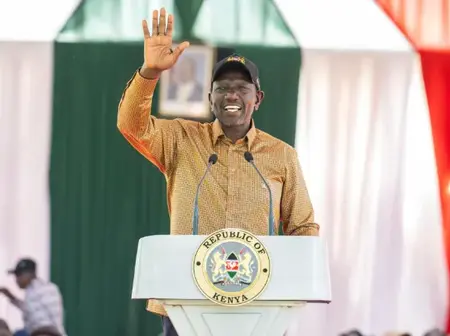
President William Ruto has described the leasing of Nzoia Sugar Company as historic, saying the private investor managing the miller has restored its profitability and transformed operations.The President said Rai Group had brought professionalism and efficiency to the company, which had virtually collapsed three years ago before the Government intervened and revived it.
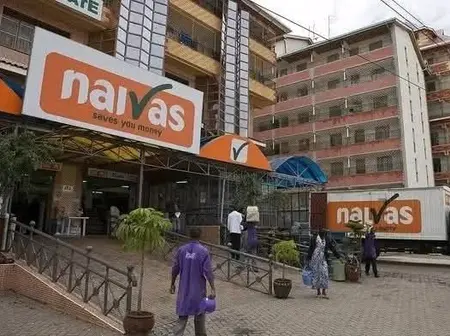
Kenyan consumers have continued to play an important role in determining the reputation and success of brands across the country, with quality, reliability, and distinction emerging as key factors in recognising outstanding products and services.
The recognition is based on consumer assessments conducted by Kantar, a leading global market research and analytics company. The research evaluates how consumers perceive different brands, taking into consideration their ability to consistently meet customer expectations, deliver quality, and maintain a strong reputation in the market
Quality remains one of the most important considerations for Kenyan consumers when choosing products and services. Customers increasingly expect brands to provide value for money, maintain high standards,s and offer products that meet their everyday needs. Companies that consistently deliver on these expectations are more likely to earn customer confidence and build lasting relationships.
Reliability is another major factor considered in the recognition. Consumers tend to favour brands they can trust to deliver consistent experiences whenever they purchase their products or use their services. Businesses that demonstrate dependability, maintain product standards, and respond effectively to customer concerns often enjoy stronger loyalty. Differentiation also plays a significant role in determining how consumers view different brands. Companies that establish unique identities, introduce innovative solutions, and differentiate themselves from competitors are better positioned to attract attention and maintain their relevance in an increasingly competitive marketplace.
The involvement of Kenyan consumers through Kantar's research provides an important perspective on brand performance. Rather than relying solely on company achievements or marketing campaigns, the assessment considers the opinions and experiences of the people who interact with these brands.
The recognition also highlights the growing importance of customer satisfaction in shaping business success. As competition increases across various sectors, companies are being encouraged to invest in innovation, improve service delivery and maintain consistent standards.
For businesses operating in Kenya, positive consumer recognition can strengthen public confidence, improve brand visibility, and create opportunities for further growth.
It also demonstrates that maintaining a strong reputation requires continuous commitment to customer needs. Brands must consistently demonstrate quality, reliability, and uniqueness to remain competitive and retain the confidence of their customers.
Ultimately, the recognition reflects the influence consumers have in shaping the country's business landscape and determining which brands stand out in the marketplace.https://citizen.digital/article/superbrands-2026-naivas-ranked-kenyas-no-1-supermarket-brand-n394146
Kenya is changing its 44-year-old pest control products law to address growing concerns over the use of agrochemicals on public health, the environment and market access for the country’s fresh produce exports.
The Pest Control Products Bill, 2025, currently before the National Assembly, seeks, among others, to establish a regulatory authority with enhanced powers to assess, register, classify, certify, ban and monitor pesticides throughout their life cycle, advise on maximum residue limits and track residues in food and the environment.
Kenya spent Ksh344.2 billion on imports in September 2026 but earned only Ksh129.2 billion from exports. This left a trade deficit of Ksh214.9 billion.
The Kenya National Bureau of Statistics says the deficit widened sharply from Ksh166.7 billion in August. That is a monthly increase of Ksh48.2 billion.
Exports rose from Ksh118 billion to Ksh129.2 billion. Imports jumped from Ksh284.8 billion to Ksh344.2 billion. In simple terms Kenya is spending faster than it is earning from abroad.
China was the largest source of imports at Ksh113.2 billion. That was a rise of 35.9 per cent from August. India followed with Ksh51.8 billion while the United States accounted for Ksh21.9 billion.
Industrial supplies made up 40 per cent of all imports. Fuel and lubricants accounted for 22 per cent. Machinery and capital equipment took 13.6 per cent while transport equipment took 9.8 per cent.
Many of these goods are inputs used by factories and farms and transport firms. Replacing them locally would need heavy investment and reliable production and competitive prices.
On exports the United States was the top buyer at Ksh27.9 billion. Uganda followed with Ksh13.2 billion and Pakistan with Ksh6.4 billion.
Food and beverages made up 36 per cent of domestic exports. Machinery and capital equipment accounted for 22.9 per cent while non-food industrial supplies made up 18.2 per cent.
A persistent trade gap raises the need for foreign currency to pay for imports. It does not on its own mean the shilling will weaken. However it shows why export growth and strong local industries matter.
For households the issue goes beyond statistics. Imported fuel and goods affect business costs and the prices Kenyans pay every day. The gap still remains very wide.
Kenya Power and Lighting Company (KPLC) has announced scheduled electricity interruptions in four counties on Monday, November 23, affecting parts of Trans Nzoia, Nyeri, Migori and Kwale counties.
The planned outages, which will last for several hours, will affect residential areas, schools, hospitals, markets and other facilities as the electricity distributor carries out maintenance and network improvement works.
In Trans Nzoia County, the interruption will affect Kapkoi, Kona Mbaya and Loreto areas from 9am to 5pm. Other affected locations include Matunda, Moisbridge, Lamaywet, Kapkoi Sisal, Bwayi Moisbridge and Moisbridge Mission Hospital headquarters, alongside neighbouring customers.
In Nyeri County, residents and businesses in Kangaita will be without electricity from 8am to 5pm. The affected locations include Eucabet Academy, Gondo, Kangaita Market, Kangaita PCEA, Kangaita Primary School, Kangaita Catholic Church, Gaaki Senior School and Mirichu Village.
Migori County will also experience an eight-hour interruption between 9am and 5pm.
The outage will affect the whole of Migori Town, Isebania Town, Mabera Centre, Nyakore, Nyakoge Centre, Namba, Nyachabo, Motemorabu, Kugusingisi, Karamu, Nyamome, Kababu, Nyabisawa, Nyanko, Mukuro, Masara, Mikei, Radienya, Kabobo, Kakula, Chungni, Osingo and Oruba, among other neighbouring areas.
In Kwale County, the scheduled interruption will affect parts of Matuga from 9am to 5pm. The affected locations include Kombani Stage, Kigongoni, Chigato, Matuga Mabatani, Matuga Makondeni, Matuga Tsunguni, Voroni, Bethany, Jirani, Matuga Girls, Matuga GTI, KALRO Matuga, Boa Primary School and Bridge School.
According to the utility company, routine power interruptions are necessary to facilitate maintenance and upgrades of power lines, connect new customers and replace electricity lines affected by road construction works, among other activities.
Affected customers are advised to take note of the planned interruptions and make appropriate arrangements.
Cash pile in the money markets has helped drive interest rates on short-dated Treasury bills below nine percent even as fears of a return to higher domestic yields linger from rebounding inflation.
The return on the 364-day Treasury bill fell below nine percent last week, for the first time in 19 weeks since Mid-July as investors continue to register heavy appetite for the discount securities.
Murkomen made the remark in a social media post shared on Facebook. He said Kenya would surpass Singapore, a country often used as an example of rapid economic growth and transformation.
The comment highlights the ambitions expressed by Kenyan leaders when discussing the country’s future. Singapore has developed into a global centre for trade, finance, technology and transport. Its progress is often linked to long-term planning, strong public institutions, investment in education and infrastructure, and policies that support business.
Kenya also has important strengths, including its position as a regional transport and financial hub, a large services sector, a growing technology industry and a young population. These areas offer opportunities for economic expansion if supported by effective policies and sustained investment.
However, surpassing Singapore would be a major undertaking. The two countries differ in population, economic structure, income levels and development history. Singapore’s income per person is far higher, while Kenya continues to face challenges such as unemployment, the cost of living, public debt and gaps in infrastructure and public services.
Murkomen’s statement does not explain the measures or timeframe through which Kenya would achieve the goal. Turning the ambition into reality would require steady economic growth, accountable leadership, improved education and skills, reliable infrastructure and an environment that attracts investment.
The remark is likely to draw attention to the debate about Kenya’s development priorities and whether government plans can deliver visible improvements in people’s lives.
For many Kenyans, the key test will be whether economic progress leads to more jobs, better services and higher living standards, rather than remaining a promise made by political leaders.
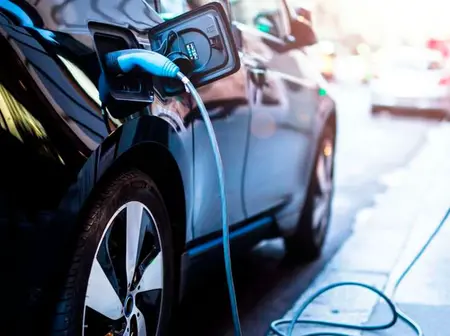
Under Kenya’s 2023 EV guidelines, charging stations should be placed every 25 km on both sides of highways, fast chargers for long-range and heavy-duty vehicles every 100 km.
Vodacom’s Ksh68.1 billion borrowing from its parent company, Vodafone Group Plc, to acquire an additional stake in Safaricom has raised questions about how the ownership change could influence investment, mobile money services and the cost of telecommunications in Kenya.
The financing arrangement helped Vodacom acquire Vodafone’s remaining indirect 5 per cent interest in Safaricom, taking its effective ownership from 35 per cent to approximately 39.94 per cent before the separate government transaction lifted its total stake to about 54.94 per cent.
While the acquisition gives the South African telecommunications group control of Kenya’s largest mobile operator, its growing debt exposure introduces a financial consideration that could influence future investment decisions.
For millions of Safaricom customers, the important question is whether the new ownership structure will translate into better network coverage, improved M-Pesa services or pressure to increase revenue from existing users.
There is, however, no announced customer tariff increase directly linked to the acquisition.
Vodacom’s November 2026 interim results show that its net debt increased by R78.8 billion to R135.6 billion in the six months to September 30, largely because of the Safaricom transaction.
Its net finance charges also increased by 64.5 per cent to R5.4 billion, reflecting higher borrowing costs.
The acquisition was financed through a combination of debt and preference share funding, including the Ksh68.1 billion bridging facility initially provided by Vodafone Investments Luxembourg S.à r.l.
Vodacom subsequently refinanced the bridging loan through preference share funding guaranteed by the parent group.
The financial exposure matters because borrowing costs compete with other demands on corporate cash flows, including network investment, technology upgrades and expansion into financial services.
However, higher debt does not automatically mean Safaricom will increase mobile money transaction charges or airtime prices. Such decisions depend on operating costs, competition, regulatory requirements and commercial strategy.
The ownership shift has particular significance for M-Pesa, which has grown beyond money transfers into payments, merchant services, credit and other financial products.
As part of the Safaricom acquisition, M-Pesa Africa Limited, previously a joint venture between Vodacom and Safaricom, became a subsidiary of Vodacom.
This gives the group greater control over its African financial technology strategy and creates opportunities to integrate products, technology and customer services across its markets.
Vodacom has described the combination as a major opportunity for its financial services business.
“The combination of Vodacom and Safaricom creates one of the continent’s largest fintech platforms,” the company said in its November investor communications.
For Kenyan customers, the potential benefits include broader digital financial services, improved payment infrastructure and expanded access to financial products.
However, greater corporate control also raises questions about data governance, product pricing and competition, particularly as M-Pesa expands into more financial services.
Safaricom has not announced that the ownership change will automatically alter existing M-Pesa tariffs or customer terms.
The bigger test for customers will be whether Vodacom’s increased ownership translates into additional investment in Safaricom’s network and digital infrastructure.
Safaricom operates in a competitive telecommunications market where customers increasingly expect reliable internet connectivity, affordable data bundles and uninterrupted mobile money services.
Vodacom’s acquisition could strengthen the group’s ability to coordinate technology investment and expand financial services across African markets.
However, the company must balance those ambitions against the cost of financing the acquisition and servicing its broader debt obligations.
The transaction also faces legal uncertainty. The High Court nullified the government’s sale of a 15 per cent stake to Vodacom on September 15, 2026. The Court of Appeal subsequently ordered the existing position regarding the shares and purchase consideration to be maintained pending determination of the appeal.
Vodacom has said it remains confident about the transaction. Chief executive Shameel Joosub told investors that even if the government acquisition were unsuccessful, the company would retain its separate 40 per cent effective interest obtained through Vodafone.
The appeal therefore remains important to Safaricom’s long-term ownership and corporate governance.
For customers, the immediate priority is not who owns the largest shareholding but whether the new structure delivers affordable services, stronger network investment and better digital financial products.
Until Vodacom demonstrates those benefits through its investment and operating decisions, the Ksh68.1 billion acquisition remains primarily a corporate ownership development rather than evidence of improved services or lower costs for Kenyan consumers.