Category: Economy&Finance

  • “KRA Isifukuze Wakimbiaji” Farouk Kibet Raises Concern Over Taxation

    “KRA Isifukuze Wakimbiaji” Farouk Kibet Raises Concern Over Taxation

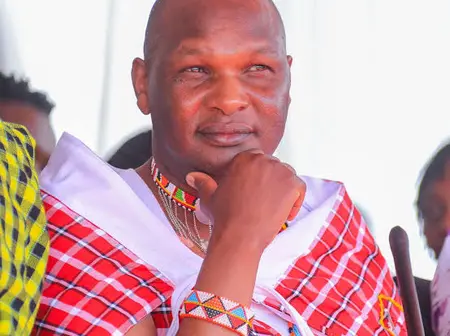
    Farouk Kibet has questioned why Kenyan athletes should be taxed after earning millions through international competitions.

    President William Ruto's aide Farouk Kibet raised the issue while discussing the financial struggles faced by Kenyan athletes, arguing that the government should reconsider how it treats their prize money. His remarks have drawn attention to the ongoing debate over taxation of sportsmen and women who earn rewards while representing Kenya abroad.

    In remarks captured in a video circulating on social media, Kibet questioned the Kenya Revenue Authority's interest in taxing athletes after they had worked hard to win competitions.

    "KRA isifukuze wakimbiaji. Mtu amekimbia, amepata Ksh5 million; you want to tax them," he said, expressing frustration over the taxation of athletes' earnings.

    His comments come at a time when Kenyan athletes continue to bring international recognition to the country through major road races, championships and other sporting competitions. However, concerns have frequently been raised over the financial challenges facing some athletes despite their achievements on the international stage.

    Kibet has previously spoken about the need to support athletes and improve sporting facilities, arguing that talented runners should receive better opportunities to develop their careers and secure their financial future.

    The discussion over athletes' taxation has also attracted attention following major international victories that have earned Kenyan runners millions of shillings in prize money and bonuses.

    In April, marathoner Sabastian Sawe made headlines after his historic London Marathon victory, with discussions emerging over the taxes applicable to his prize money and other rewards. The issue prompted debate among politicians and members of the public over whether athletes should receive special tax treatment for their achievements.

    Kenya's tax system generally requires individuals to pay taxes on taxable income, although provisions relating to foreign income and taxes paid abroad may affect the final amount payable. The taxation of athletes' earnings can therefore depend on the nature of the income and the applicable tax rules.

    Kibet's remarks are likely to reignite conversations about whether Kenya should introduce special incentives or tax relief for athletes who bring international recognition and economic benefits to the country.

    While taxation remains an important source of government revenue, some Kenyans have argued that athletes deserve additional consideration because of the sacrifices involved in competing at the highest level.

    The Kenya Revenue Authority has not been quoted responding directly to Kibet's remarks in the supplied video.

    Should Kenyan athletes receive special tax exemptions on their international prize money, or should they pay taxes like other income earners?
  • From fuel import controversy to family battles: The storm surrounding Daniel Kiptoo

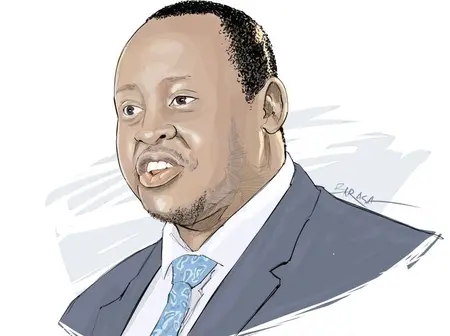
    From fuel import controversy to family battles: The storm surrounding Daniel Kiptoo

    daniel kiptoo

    Daniel Kiptoo Bargoria had everything planned to a tee until April this year, when he was forced to resign as director-general of the Energy and Petroleum Regulatory Authority (Epra) following his arrest over alleged manipulation of fuel stock data and irregular procurement of an emergency fuel cargo.

    What began as a rainy day for the former energy regulator chief has since turned into a storm, sweeping pg3 away his position and placing his career and business interests under intense scrutiny.

  • Private firms pocket Sh38bn from road upgrade projects

    Private firms pocket Sh38bn from road upgrade projects

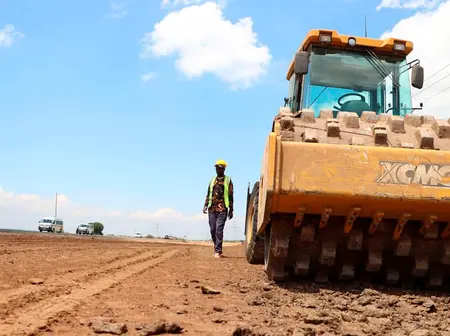
    Private firms have pocketed Sh38.18 billion or Sh8.15 billion more than what it cost to deliver 12 roads under the Roads Annuity project, highlighting the attractiveness of these projects to investors.

    Treasury disclosures show that Sh23 billion went to the investors behind the Lot 33 Annuity project in Kajiado County, Sh9.03 billion to those who delivered the Lot 15 roads and a further Sh6.15 billion to investors behind the Lot 18 project.

  • Ndii Explains Why Bomas Costs More Than GTC Tower as Questions Over KSh45.1 Billion Emerge

    Ndii Explains Why Bomas Costs More Than GTC Tower as Questions Over KSh45.1 Billion Emerge

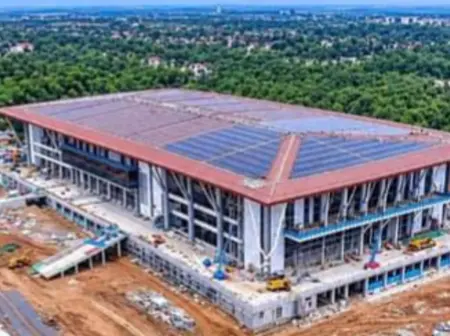
    The development in Nairobi has attracted attention following remarks by presidential economic adviser David Ndii, who defended its reported KSh45.1 billion cost against comparisons with the Global Trade Centre (GTC) Tower.

    On Tuesday, November 17, Ndii challenged critics who had questioned why the Bomas project was more expensive than the GTC Tower.

    He argued that the two developments could not be compared fairly without considering their sizes, noting that Bomas covers approximately 324,000 square metres, compared to 147,000 square metres for the entire GTC complex.

    According to Ndii, the Bomas development is more than five times the size of the GTC Tower.

    However, questions about the project's expenditure have persisted, particularly following changes to its initial budget.

    In August 2023, the Cabinet approved an estimated cost of KSh31.7 billion. The latest reported figure of KSh45.1 billion represents an increase of KSh13.4 billion, or approximately 42.3 per cent.

    The National Treasury's 2025/2026 Annual Public Debt Management Report placed the overall cost at approximately KSh42 billion, with the first phase estimated at KSh31.5 billion.

    The report indicated that the project would be implemented through a public-private partnership arrangement. Private investors would finance the hospitality and commercial facilities, while the government would fund the main convention centre.

    The Auditor-General also raised concerns about how the construction contract was awarded.

    In a report covering the Ministry of Defence for the year ending June 30, 2025, the audit office established that direct procurement approval was granted on February 17, 2025, yet the procurement process had already started on February 13 and 14.

    The Auditor-General said this was contrary to Section 69(2) of the Public Procurement and Asset Disposal Act, 2015.

    The report further pointed out differences between the payment terms in the construction contract and the financing arrangement approved by Treasury.

    The contract provided for nine instalments within 24 months, while Treasury had approved a deferred payment period of 10 years. The discrepancy could expose the government to additional charges if payments are delayed.

    The Senate has also demanded documents relating to the project, including construction contracts, procurement records, invoices, payment details and approved designs.

    Tourism Cabinet Secretary Rebecca Miano told senators in September 2026 that her ministry owned the project and oversaw its funding, while the Ministry of Defence held the main construction and procurement documents.

    Construction delays have added to the concerns. The complex was reportedly 38 per cent complete as of June 2026, despite an earlier completion target within the 2025/2026 financial year.

    The deadline was later pushed to December 31, 2026.

    The project also received KSh1.5 billion against a KSh4.6 billion grant target in the 2025/2026 financial year, leaving a shortfall of KSh3.1 billion.

    Bomas is expected to accommodate approximately 11,000 people and host major international conferences and business events.

    However, the government still faces questions over the final expenditure, implementation of the project and whether the investment will generate sufficient economic benefits to justify the money spent.

    https://www.facebook.com/100063646850476/posts/1758887052909506/?app=fbl

  • Civil servant’s pension scheme declares 17.99pc annual interest

    Civil servant’s pension scheme declares 17.99pc annual interest

    The civil servant’s pension scheme, the Public Service Superannuation Fund (PSSF) has lifted its annual interest payout on members’ retirement savings for the financial year ended June 2026 to 17.99 percent on portfolio diversification.

    The declaration is an improvement from the return of 17.68 percent paid out previously, marking resilience for the scheme amid softening domestic interest rates on traditional asset classes like Treasury bills and bonds.

  • Civil servants’ pension scheme declares 17.99pc annual interest

    Civil servants’ pension scheme declares 17.99pc annual interest

    The civil servant’s pension scheme, the Public Service Superannuation Fund (PSSF) has lifted its annual interest payout on members’ retirement savings for the financial year ended June 2026 to 17.99 percent on portfolio diversification.

    The declaration is an improvement from the return of 17.68 percent paid out previously, marking resilience for the scheme amid softening domestic interest rates on traditional asset classes like Treasury bills and bonds.

  • Equity-KCB Merger Could Change Kenya’s Banking Industry as Concerns Over Customer Costs Emerge

    Equity-KCB Merger Could Change Kenya’s Banking Industry as Concerns Over Customer Costs Emerge

    The idea was put forward by Kiharu MP Ndindi Nyoro on Thursday, November 19, 2026, as he discussed the financial performance of listed banks and the need for Kenyan lenders to strengthen their presence across Africa.

    Nyoro suggested that the two institutions could combine to form a single banking group known as Equity KCB Group, arguing that such a move would give them greater financial strength and an opportunity to compete with major international lenders.

    "Merging the two to create Equity KCB Group should not be far-fetched. It remains a viable idea," he said.

    The proposed combination would bring together two of the country's biggest financial institutions, whose assets total approximately Ksh4.55 trillion.

    Equity Group had assets worth Ksh2.15 trillion, while KCB Group's asset base stood at Ksh2.4 trillion.

    Their financial results also show strong earnings. Equity reported Ksh71.5 billion in profit after tax for the nine months ending September 2026, against KCB's Ksh58.6 billion during the same period.

    However, the possibility of having the two banks under one roof raises questions about what the arrangement would mean for millions of customers who rely on them for loans, savings and other financial services.

    Currently, Equity and KCB compete for customers in personal banking, business loans, mortgages and digital financial services. A merger would reduce the number of major competitors in these areas, potentially affecting how the banks set lending rates and transaction charges.

    While the combined institution could save money by bringing together its branches, technology systems and administrative operations, there is no guarantee that customers would enjoy cheaper services.

    Regulatory approval would also be necessary before such a transaction could proceed. The Competition Authority of Kenya would examine its effect on market competition and public interest, while the Central Bank of Kenya would assess its implications for the banking sector.

    The Capital Markets Authority could also have a role because both institutions are listed companies.

    Questions surrounding ownership and management would need to be addressed. Equity has reported higher profits, but KCB controls a larger asset base. Their shareholders would therefore need a valuation to determine their respective stakes in any combined institution.

    The future of employees would also be uncertain, particularly in departments where the two banks have similar operations. Consolidating branches and management structures could lead to staff restructuring.

    Nyoro believes the merger could give the lenders more resources to pursue expansion opportunities in West and Southern Africa.

    He pointed out that operations outside Kenya contributed 42 per cent of Equity's profits and 33.4 per cent of KCB's earnings.

    However, he warned that Kenya's public debt remained a major risk to the banking sector, noting that a government default could undermine the benefits of the proposed expansion.

    Despite the discussion, neither Equity nor KCB had announced a formal merger agreement by November 21, 2026. The proposal has not yet reached the stage of disclosed transaction terms, shareholder arrangements or an implementation timetable.

    Whether Kenya needs one larger banking institution or continued competition between the two lenders remains a major question surrounding Nyoro's proposal.

    https://www.facebook.com/100063646850476/posts/1758884759576402/?app=fbl

  • Top banks seek 12-months pause to new CBK capital rules

    Top banks seek 12-months pause to new CBK capital rules

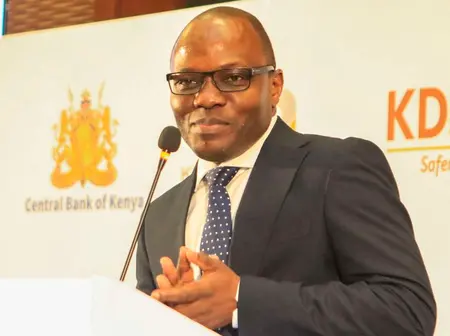
    Top banks want the Central Bank of Kenya (CBK) to suspend the implementation of new capital rules for lenders deemed to be systemically important, for at least a year, fearing disruptions to lending going into the 2027 election cycle.

    The chief executives of large banks met last week and proposed the one-year pause to the application of the new rules, arguing the move would help mitigate the economic slowdown associated with general election cycles.

  • Lamu Land Row: Private Investor’s 750-Acre Title Deed Sparks Outrage Over Ancestral Land Claims

    Lamu Land Row: Private Investor’s 750-Acre Title Deed Sparks Outrage Over Ancestral Land Claims

    A storm of uncertainty has descended on residents of Lamu following the emergence of a title deed held by a private investor claiming ownership of 750 acres of land that locals consider their ancestral property. The development has sparked anxiety, anger and renewed questions about land ownership, historical injustices and the protection of community rights along Kenya’s coastal region.

    For generations, communities in Lamu have occupied and depended on ancestral land for settlement, farming, fishing-related activities and other traditional livelihoods. The sudden appearance of a private ownership claim over such an expansive parcel has therefore raised fears that residents could eventually face displacement from land they have called home for decades.

    At the centre of the controversy is the question of how the investor acquired the title deed and whether the historical occupation and interests of the local community were adequately considered during the land registration process. For residents, the matter goes beyond paperwork. It touches on identity, heritage, belonging and the right to maintain a connection with land inherited from previous generations.

    The dispute also brings back painful memories of longstanding land ownership controversies at the Coast, where communities have repeatedly raised concerns over alleged irregular allocations and historical injustices. Many residents fear that formal documentation could be used to override customary land rights, leaving indigenous communities vulnerable.

    However, the existence of a title deed alone should not end the debate. The circumstances surrounding its issuance, the history of the property and the legitimacy of competing claims deserve thorough scrutiny by the relevant authorities.

    The National Land Commission and other government agencies have an important responsibility to establish the facts and ensure that justice is not sacrificed in the pursuit of private interests.

    Ultimately, the Lamu controversy is a test of Kenya's commitment to protecting community land rights and addressing historical land grievances. Development and investment are important, but they should never come at the expense of legitimate ancestral claims. Residents deserve transparency, fairness and answers before any action threatens their livelihoods and heritage.

    Source: https://www.facebook.com/share/1FZtA5hegQ/

  • KPLC Announces Monday Power Outages in Four Counties, Lists All Affected Areas

    KPLC Announces Monday Power Outages in Four Counties, Lists All Affected Areas

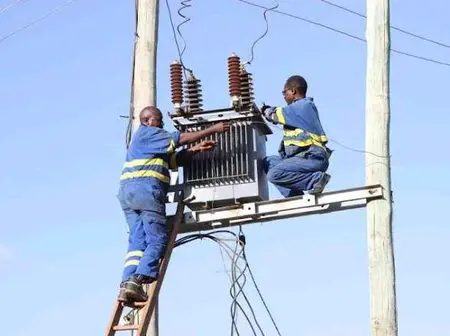
    Kenya Power and Lighting Company (KPLC) has announced scheduled electricity interruptions set to affect several parts of the country on Monday, November 23, 2026.

    In a notice released on Sunday, November 22, the power distributor listed areas in Migori, Trans Nzoia, Nyeri and Kwale counties that will experience temporary blackouts lasting up to nine hours.

    The company explained that the interruptions would allow engineers to undertake routine maintenance, improve the reliability of the electricity network and connect new customers.

    KPLC also cited the replacement of power lines affected by ongoing road construction as part of the scheduled works.

    In Migori County, the outage will run from 9am to 5pm, affecting Migori Town, Isibania Town, Mabera Centre, Nyakore, Nyakoge Centre, Namba, Moi Nyabohanse School and Market, Nyachabo, Motemorabu, Kugusingisi, Karamu, Nyamome, Kababu, Nyabisawa, Nyanko, Mukuro, Masara, Mikei, Radienya, Kabobo, Kakula, Chungni, Osingo and Oruba.

    In Trans Nzoia, electricity supply will be interrupted between 9am and 5pm in Matunda, Kona, Mbay, Loreto, Moisbridge, Lamaywet, Kapkoi Sisal and Bwayi Moisbridge. Moisbridge Mission Hospital Headquarters will also be affected.

    Residents of Kangaita in Nyeri County will experience a longer interruption running from 8am to 5pm. Affected locations include Eucabet Academy, Gondo, Kangaita Market, Kangaita PCEA, Kangaita Primary, Kangaita Catholic, Gaaki Senior School and Mirichu Village.

    Meanwhile, in Kwale County, the maintenance exercise will affect parts of Matuga from 9am to 5pm.

    Affected locations include Kombani Stage, Kigongoni, Chigato, Matuga Mabatani, Matuga Makondeni, Matuga Tsunguni, Voroni, Bethany, Jirani, Matuga Girls, Matuga GTI and KALRO Matuga.

    Boa Primary School, Bridge School and Water Boreholes D and 4/7 will also experience interruptions.

    KPLC has urged residents and business owners in the affected areas to make necessary preparations before the scheduled maintenance begins.

    https://www.facebook.com/100067867727102/posts/1527785339493709/?app=fbl