The United Kingdom has reopened applications for its Seasonal Worker visa, giving foreign nationals, including Kenyans, a chance to work on British farms for up to six months in the 2026 and 2027 seasons.
The programme targets labour shortages during peak harvest periods and the Christmas poultry season. It offers 41,000 slots in horticulture, covering soft fruits such as strawberries, orchard crops, mushrooms, cut flowers and tree nurseries, along with 1,900 poultry positions.
Workers will earn the UK agricultural minimum wage of £12.71 an hour (about KSh 2,270) for those aged 21 and above, against Kenya's general minimum wage of roughly KSh 15,200 a month. Farm-provided accommodation is usually deducted at about £77 (KSh 13,800) a week.
Getting there is costly. Applicants must pay a £340 visa fee (about KSh 61,200), show at least £1,270 (about KSh 227,700) in savings held for 28 consecutive days unless their sponsor covers maintenance, and buy their own airfare.
Workers are tied to the employer named in their certificate of sponsorship, cannot access public funds and may not bring family members.
The Kenyan government has been promoting the route through the Mkulima Majuu programme. The State Department for Diaspora Affairs has partnered with HOPS Labour Solutions and the Youth Enterprise Development Fund to recruit from agricultural colleges and polytechnics, including Bukura Agricultural College and Sigalagala National Polytechnic.
Labour rights researchers have warned that the single-employer structure creates a power imbalance, and a 2026 academic study linked it to a higher risk of exploitation. Advocacy groups add that recruitment debts raise the risk of modern slavery.
Kenya’s matatu industry is gradually embracing electric mobility, with 102 battery-powered buses deployed to serve public transport operators in a shift that could transform commuting while reducing pollution.
The expansion, highlighted by the Chinese Embassy in Kenya, demonstrates how Chinese technology and local vehicle assembly are contributing to the country’s transition towards cleaner public transport.
In a statement on Monday, November 23, 2026, the embassy highlighted the environmental and commuter benefits of the buses, noting that most had been assembled locally using kits sourced from China.
“By deploying 102 e-buses to serve public transport operators – most assembled locally from Chinese kits – a Kenyan company is carrying out a green transport shift that cuts emissions and noise and gives commuters a smooth, safe ride,” the embassy stated.
The deployment is being driven by BasiGo, a Kenyan electric mobility company that has partnered with local vehicle assemblers to introduce battery-powered buses into the public transport market.
Through its partnership with Kenya Vehicle Manufacturers, BasiGo assembles electric buses locally using imported components, with its assembly operations based in Thika, Kiambu County.
The arrangement allows Kenya to benefit from Chinese electric vehicle technology while developing domestic vehicle assembly capacity.
It also creates opportunities for local employment, technical skills development and the growth of the automotive industry.
BasiGo Managing Director Moses Nderitu told Xinhua that approximately 70 to 80 per cent of the buses were assembled locally using Completely Knocked Down (CKD) kits.
The company selected Chinese manufacturers because of their ability to supply and customise vehicles for the Kenyan market.
For matatu operators, electric buses offer an alternative to conventional diesel-powered vehicles, which expose businesses to fluctuating fuel prices and regular maintenance expenses.
Beyond the economic benefits, the transition is expected to improve the daily commuting experience.
Electric buses operate without engine noise or tailpipe emissions, offering passengers quieter journeys while reducing pollution along busy urban routes.
Johnson Kamau Wanja, a driver who operated diesel buses for 17 years before switching to electric vehicles, told Xinhua that the experience was significantly different.
“It is so much more comfortable driving an electric bus compared to a diesel one,” Wanja said.
The buses can cover approximately 190 to 230 kilometres during a typical working day before returning to charging depots, with a full charge taking about two hours.
Despite the progress, the transition faces challenges, particularly the high initial purchase cost of electric buses and the need for reliable charging infrastructure.
The vehicles require significant upfront investment, making financing arrangements important for operators seeking to replace conventional fleets.
Expanding charging stations, ensuring access to spare parts and training specialised technicians will also determine how quickly electric buses can become widespread.
Kenya’s renewable energy capacity, particularly geothermal, wind and solar power, provides an opportunity to support electric mobility while reducing dependence on fossil fuels.
The deployment of 102 buses therefore represents more than the introduction of new vehicles onto Kenyan roads. It demonstrates how Chinese technology, local assembly and private investment are creating an alternative for the country’s matatu industry.
The bigger test will be whether the model can expand beyond the initial fleet and become affordable and accessible to more public transport operators and commuters.
The report prepared by the Office of the Prime Cabinet Secretary Musalia Mudavadi details infrastructure, housing, healthcare, agriculture, education and industrial projects in Kakamega, Bungoma, Busia and Vihiga.
However, Trans Nzoia, despite being mentioned among the five counties covered by the regional development programme, has no corresponding flagship project in the document's detailed breakdown.
The omission has raised questions about the county's place in the government's development priorities, particularly amid the increasingly strained relationship between President Ruto and Trans Nzoia Governor George Natembeya.
It also draws attention to Ruto's repeated pledge to ensure equitable development across the country under his "Usawa ni Sawa" slogan.
During his State of the Nation Address on November 18, the President said fairness did not mean every region had to receive identical projects, but that every Kenyan deserved equal consideration, opportunities and a fair chance to progress.
He argued that his administration was working to address longstanding infrastructure inequalities, including communities that have waited for decades for tarmacked roads.
Ruto's remarks have become a reference point for assessing the projects outlined during his Western Kenya tour, where several counties were presented with extensive development plans.
In Kakamega, the government listed roads, affordable housing, irrigation, water projects, electricity connectivity, healthcare facilities and industrial infrastructure.
Among the projects is the 43-kilometre Kakamega-Navakholo-Musikoma Road, estimated to cost Sh2.84 billion, alongside the 36-kilometre Turbo-Shikhendu Road, valued at Sh3.67 billion.
Other investments include the Sh14 billion affordable housing programme, the Sh270 million Malaha Modern Market, the Sinoko irrigation project covering approximately 1,000 acres and the Sinoko County Aggregation and Industrial Park.
The irrigation scheme is reported to be 80 per cent complete and is expected to benefit about 2,000 farmers.
Kakamega is also listed for rural electricity connectivity worth Sh2.6 billion, targeting approximately 34,000 households, as well as hospital, stadium, water and airstrip developments.
In Bungoma, the report highlights the 41.1-kilometre Musikoma-Buyofu-Mungatsi-Myanga-Mateka Road, valued at approximately Sh1.96 billion and reported to be 75 per cent complete.
The 40.5-kilometre Bukembe-Nzoia Market-Mutomolo Road is also ongoing, alongside the Kimilili-Bokoli-Sikata road project and other connectivity works.
Other planned investments include the Kanduyi affordable housing project targeting 373 units, the Sang'alo County Aggregation and Industrial Park, a proposed Level Six hospital and the rehabilitation of Namuninge Dam at an estimated Sh289 million.
Busia's project list includes roads, affordable housing, markets, a dam and university student accommodation.
The Sh860 million Nangina-Sio Port-Okados-Mundere Road and the Sh545 million Matayos-Namwitsula Bridge-Nasewa-CAIP-Shibale road are among the infrastructure projects identified.
The county is also implementing housing projects in Nasewa and Funyula, targeting 2,000 and 955 units respectively.
In Vihiga, the government has listed road upgrades, housing, modern markets, stadium development, healthcare improvements and education infrastructure.
The county's projects include a 340-bed hostel at Sabatia Technical and Vocational College and a Kenya School of Government campus estimated at Sh1.2 billion.
Despite the extensive project lists in the four counties, Trans Nzoia has no specific flagship investment outlined in the report.
The omission is particularly notable because the county is mentioned in the regional overview but does not appear with a comparable project breakdown.
The document does not explain whether Trans Nzoia's projects were excluded from the report, whether the omission was administrative or whether the county's development priorities were addressed through other programmes.
The President's itinerary for November 21 also listed engagements in Bungoma, Kakamega and Vihiga without identifying any activity in Trans Nzoia.
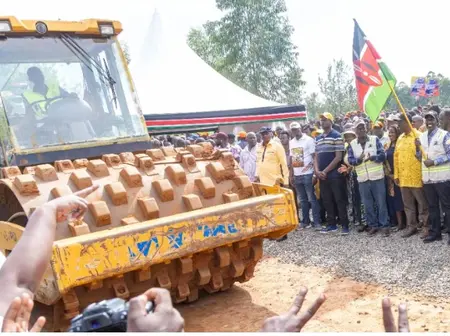
In Bungoma, Ruto was scheduled to launch roads, issue title deeds for Chebyuk Phase Three at Kipsigon, flag off electricity connectivity and lay the foundation stone for Sirisia ESP Market.
His Kakamega engagements included the Matungu KMTC hostels and the Matungu-River Sio Road, while in Vihiga he was scheduled to inspect the Kenya School of Government campus, launch hostel construction at Mbale KMTC and commission Vihiga Teaching and Referral Hospital.
The absence of Trans Nzoia from the programme has further fuelled questions about whether the county will feature in the remaining engagements of the Western Kenya tour.
The issue is unfolding amid political tensions between Ruto and Natembeya, whose disagreements over development projects, county resources and devolution have intensified in recent months.
One of the disputes involved Kitale Modern Market, which Natembeya said was a county government project funded through county resources and World Bank support at a reported cost of more than Sh874 million.
The governor accused the President of taking credit for and launching a project that had not been financed by the national government.
The disagreement contributed to political tension in Kitale, with a planned tour by Natembeya attracting heightened security deployments.
Ruto, meanwhile, accused Natembeya and his Tawe Movement of mismanaging the county and obstructing development projects.
Following the confrontation, local administration officials in Trans Nzoia reportedly directed administrators to withhold official courtesies from the governor over allegations of disrespect towards the presidency.
Although the political differences provide context to the county's apparent omission, the report does not establish that Trans Nzoia was deliberately excluded because of the disagreement between the two leaders.
Mudavadi has defended the government's development record in Western Kenya, saying the administration had committed to constructing 1,000 kilometres of new tarmac roads in the region following discussions ahead of the 2022 elections.
He said progress was being made, with some roads completed and others ongoing.
The Prime Cabinet Secretary also urged Western Kenya residents to support Ruto's bid for a second term, arguing that continued leadership would allow the administration to consolidate its development gains.
However, the absence of an identifiable flagship project for Trans Nzoia in the regional report has left questions about how the county fits into the government's investment priorities.
The report is not a complete record of all national government spending in Trans Nzoia and does not prove that the county has received no development funding.
Instead, it presents a selection of projects across the region, making the missing county profile a notable gap in the document.
For a President who has repeatedly framed equitable development as a national obligation, the county's absence from the published flagship project list presents an unanswered question: will Trans Nzoia receive a prominent place in the government's next round of regional engagements?
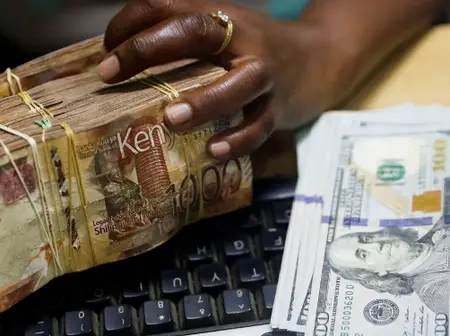
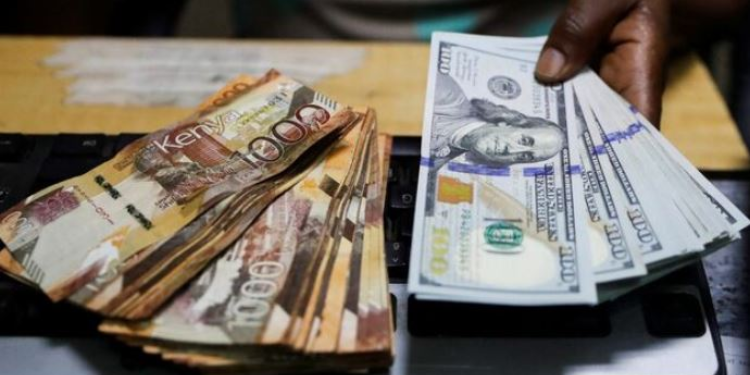
The Kenyan shilling is once again facing pressure against the United States dollar, with the local currency edging closer to the psychological KSh 130 mark. The latest developments have raised fresh questions about the country's economic stability and the ability of the local currency to maintain its value against major international currencies.
The development is particularly important because the US dollar plays a major role in Kenya's international trade. Businesses rely on the dollar to pay for imported products, fuel, machinery, medicines and other essential commodities.
Foreign Exchange Reserves Record a Decline
Another development attracting attention is the decline in Kenya's foreign exchange reserves.
The country's reserves dropped by USD 656 million in the week ending November 19, reducing import cover from 5.9 months to 5.6 months.
The reserves stood at approximately USD 13.949 billion during the reporting period.
Although the country still maintains reserves above the statutory minimum requirement of four months of import cover, the reduction deserves attention.
Foreign exchange reserves are important because they help a country meet international payment obligations, manage external financial pressures and maintain confidence in its economy.
Shilling Performs Better Against the Pound and Euro
Interestingly, the Kenyan shilling did not weaken against every major international currency.
During the same two-week period, it strengthened against the British pound and the euro.
The pound declined from KSh 174.82 to KSh 171.12, while the euro dropped from KSh 145.73 to KSh 142.66.
This means Kenyans buying certain goods and services priced in these currencies could experience some relief.
However, individuals receiving income from Britain and European countries may receive fewer Kenyan shillings when converting their foreign earnings.
What Could Happen Next?
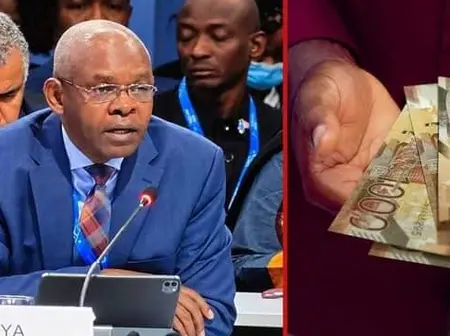
Economist Daniel Kathali reportedly warned that disruptions in the Middle East could create additional pressure on the Kenyan shilling.
For ordinary Kenyans, currency movements are not simply financial statistics. They can influence the cost of living, business operations, fuel prices and household spending.
The biggest question is whether the shilling will stabilise below KSh 130 or continue losing ground against the dollar.
Ultimately, Kenyans will be watching the government's economic decisions and the Central Bank's management of foreign exchange stability.
What is your assessment of the Kenyan shilling's performance, and what should the government do to strengthen it? Share your views in the comments.
A Kenyan man identified as Harmazon has stirred emotions online after returning home from four years of work in Qatar to find that the house built with the money he sent back fell far short of what he had expected.
Harmazon shared a short video of the homecoming on TikTok, taking viewers on a tour of the property's exterior.
Over the video, he placed a Swahili caption saying the house was built for him while he was in Qatar for four years. A broken heart emoji sits beside the words, and it conveys the gap between what he had hoped to find and what he actually came back to.
The clip has struck a chord with thousands of viewers, many of whom say the story is a familiar one. Countless Kenyan families send relatives abroad for years of hard work, then entrust loved ones back home with their earnings, trusting that something solid is taking shape in their absence. The reality does not always match the dream.
In the video, Harmazon also responds directly to a commenter who doubted him, and the mood of the post stays quiet and reflective throughout.
His disappointment has turned a private moment into a wider conversation about the sacrifices of migrant workers and the trust placed in those who manage money on their behalf.
CBK data shows that the dollar traded at KSh 129.99 on November 19, 2026, compared with KSh 129.91 on November 6, representing a slight weakening of the local currency over the two weeks.
However, the shilling performed better against other major currencies, with the British pound and euro losing value against it during the same period.
The pound declined from KSh 174.82 to KSh 171.12, while the euro dropped from KSh 145.73 to KSh 142.66. The shilling also strengthened against the Japanese yen, with 100 yen falling from KSh 81.98 to KSh 81.62.
The movements mean that while the dollar is becoming slightly more expensive, some other foreign currencies are costing fewer shillings to exchange.
Kenya's foreign exchange reserves stood at USD 13.949 billion as of November 19, equivalent to 5.6 months of import cover. This was a decline from 5.9 months recorded previously, following a USD 656 million drop in reserves during the week.
Although the reserves remain above the CBK's statutory minimum of four months of import cover, the decline could attract attention as the country manages its foreign currency needs, including payments for fuel, imports and external obligations.
Economist Daniel Kathali warned that disruptions linked to conflicts in the Middle East could add pressure to Kenya's foreign exchange position.
He pointed to the region's importance as a source of remittances from Kenyans working abroad and as a market for Kenyan tea and other exports. Disruptions could affect foreign currency inflows, while rising energy import costs may increase demand for dollars.
For businesses importing goods or paying suppliers in dollars, the shilling's movement toward KSh 130 could translate into slightly higher costs if the trend continues. Importers dealing with dollar-denominated invoices may need to account for exchange-rate changes when pricing products and planning payments.
Kenyans receiving money from the United States may see marginally different conversion amounts, although the movement between November 6 and November 19 was relatively small.
Meanwhile, exporters and people receiving income in pounds or euros may receive fewer shillings when converting their earnings, given the shilling's appreciation against those currencies.
The shilling's latest movements therefore present a mixed picture, with the dollar edging higher, the pound and euro declining, and Kenya's foreign exchange reserves experiencing a notable weekly drop.
The Central Bank of Kenya (CBK) has released new foreign exchange rates showing the Kenyan shilling trading at KSh129.98 against the US dollar, slightly below the KSh130 mark it recently reached.In its daily exchange rates published on Monday, November 23, 2026, the regulator listed the dollar at KSh129.98, two cents below the KSh130 mark.
The demand totalled approximately KSh77.28 million, including penalties and interest, covering Pay As You Earn, Withholding Income Tax, and Withholding VAT. The taxpayer decided to challenge it.
The taxpayer challenged the calculations, arguing that some payroll differences involved casual workers and interns below the tax threshold. It said those workers should not have attracted PAYE.
It also disputed PAYE on alleged gratuity that had not been paid. It said you cannot tax gratuity that was never paid to staff.
On withholding taxes, it argued that KRA had incorrectly treated various expenses, including bursaries, bank charges, office expenses and community projects, as taxable transactions. It said those were not taxable supplies.
It said bursaries were support to needy students, not payments for services. It said bank charges were bank fees, not income to a supplier.
It said office expenses and community projects were genuine expenses, not withholding tax transactions. It said KRA had got the law wrong.
Why did KRA object? KRA maintained that the taxpayer had failed to provide sufficient supporting documents to validate its objection. It said the objection was not backed by evidence.
It also raised a crucial issue: the taxpayer had acknowledged owing KSh6,005,866 in withholding income tax and withholding VAT but had neither paid the amount nor arranged to pay it. That became the turning point.
KRA said the taxpayer cannot admit it owes KSh6 million and then refuse to pay it, while asking the Tribunal to hear a KSh77 million appeal. It said the law does not allow that.
What did the Tribunal decide? The Tribunal examined Section 52(2) of the Tax Procedures Act. That provision is the key to this whole case.
The provision requires a taxpayer appealing an assessment to pay the undisputed tax or enter into an arrangement with the Commissioner to pay it when lodging the appeal. It is a mandatory requirement, not an option.
The Tribunal examined the taxpayer's own objection letter and found that it had acknowledged the KSh6,005,866 liability. The admission was in black and white, written by the taxpayer itself.
However, there was no evidence that the amount had been paid or that a payment arrangement had been made. There was no receipt, no payment plan, no letter from KRA approving instalments.
Consequently, the Tribunal found that the statutory requirement had not been satisfied and that it lacked jurisdiction to hear the appeal. Without jurisdiction, it could not proceed at all.
The appeal was struck out, with each party bearing its own costs. The taxpayer lost its chance to argue the KSh77 million case.
Importantly, the Tribunal did not determine whether KRA had correctly calculated the KSh77.28 million assessment. The PAYE and withholding tax arguments were never decided on their merits.
That is the painful part. The taxpayer may have had strong arguments on PAYE, casual workers, interns, gratuity, bursaries, and bank charges. But the Tribunal never heard them.
The Tribunal never decided whether KRA was right or wrong on the KSh77 million. It only decided that the taxpayer had not complied with Section 52(2). Procedure killed the case before merits could be considered.
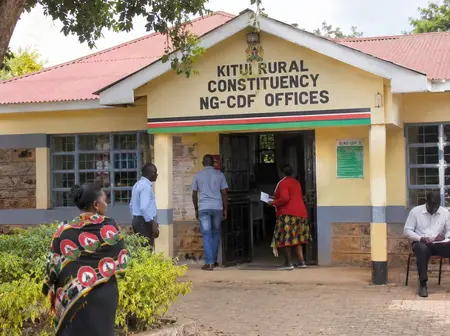
The case is Kitui Rural Constituency NGCDF v Commissioner of Domestic Taxes, Tax Appeal E094 of 2026. It is now a warning to all taxpayers in Kenya.
Courtroom Lesson 1: Address undisputed tax first. A taxpayer challenging only part of an assessment must comply with the statutory payment or payment-arrangement requirement.
If you accept that KSh6 million is payable, pay it or get a written arrangement before you appeal. Do not file an appeal and ignore the undisputed part.
Courtroom Lesson 2: Keep supporting documents. Payroll records, invoices, bank statements, payment vouchers and reconciliations are essential when disputing tax assessments.
KRA will ask for proof. If you claim casual workers were below threshold, show payroll. If you claim gratuity was not paid, show payment records.
If you claim bursaries were not taxable, show bursary letters and payments. If you claim bank charges were not withholding tax, show bank statements. Documents win tax cases.
Courtroom Lesson 3: Procedure matters. Even a potentially strong tax objection may never be heard if mandatory appeal requirements are ignored.
Many taxpayers focus on merits and forget procedure. They argue KRA is wrong, but they forget to pay undisputed tax, file on time, or attach documents.
In this case, procedure mattered more than merits. The taxpayer lost KSh77 million in arguments because of KSh6 million in admitted tax.
Experts say taxpayers should always split the assessment into two parts: disputed and undisputed. Pay or arrange the undisputed part, then fight the disputed part.
They say get the arrangement in writing from the Commissioner. Do not rely on verbal promises or emails that are not approved.
They say keep a copy of the payment receipt or arrangement letter and attach it to the appeal. That is your proof of compliance with Section 52(2).
They say do not admit liability in your objection letter unless you are ready to pay it. An admission in writing can be used against you, as it was in this case.
For NGCDFs, schools, churches, NGOs, and businesses, this case is a wake-up call. Tax compliance is not just about paying tax, it is about following appeal procedure.
If your organisation receives a KSh20 million tax assessment but accepts that KSh5 million is genuinely payable, would you pay or arrange to pay the undisputed amount before challenging the remaining KSh15 million? That is the question every taxpayer must answer.
The answer from this case is clear. Pay or arrange first, then appeal. If you do not, your appeal may be struck out, and you may lose the chance to argue the rest.
Would you pay the undisputed KSh5 million first? Or would you risk losing the whole KSh20 million appeal like Kitui Rural NGCDF?
The payments cover three road packages in Kajiado, Central, Eastern and Western Kenya, with private developers financing construction before recovering their money through long-term government instalments.
The largest share went to Lot 33 in Kajiado, where INTEX RAF Limited received Sh23 billion for a 95-kilometre network covering Ngong–Kiserian–Isinya and Kajiado–Imaroro roads.
Mota-Engil Africa received Sh9.03 billion for Lot 15, covering 44.7 kilometres across Nyeri, Kirinyaga, Murang’a, Embu, Tharaka Nithi and Laikipia counties. The company also received Sh6.15 billion for Lot 18, connecting Kakamega, Vihiga, Bungoma and Busia.
The 12 roads were constructed at a combined baseline cost of Sh30 billion and opened to motorists in 2020. Under the annuity arrangement, government payments cover construction expenses, financing costs, maintenance and the agreed returns to investors.
The programme allows private firms to build roads without requiring the government to pay the full construction cost upfront. Instead, the state repays the developers through scheduled payments over a 10-year period, using resources including the Road Maintenance Levy Fund and exchequer allocations.
Kenya is increasingly turning to toll-based road financing as pressure on public finances grows. Under this model, motorists pay directly to use the infrastructure, allowing private investors to recover their costs through toll collections.
The Nairobi Expressway, which cost Sh87.9 billion, is one example. The 27.1-kilometre highway connecting Mlolongo to Westlands through JKIA has been operational since 2022, with motorists paying between Sh170 and Sh500 depending on their vehicles and the distance travelled.
The shift towards private financing is helping Kenya undertake major road projects despite limited public funds, but the repayment arrangements also create long-term financial obligations, while toll-based projects place the cost directly on motorists using the roads.
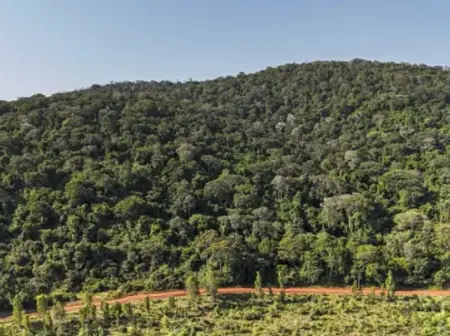
Kenya’s decision to award the Ksh8 trillion Mrima Hill mineral project in Kwale County to an American consortium could transform the country’s mining industry, attracting foreign investment, creating jobs and opening new export markets.
The deposits contain niobium and rare earth elements used in manufacturing electric vehicles, wind turbines, electronics, aerospace equipment and defence technologies.
The government estimates the mineral deposits could be worth between Ksh5.4 trillion and Ksh8.18 trillion, although this represents their estimated underground value rather than guaranteed government revenue.
On November 19, 2026, Mining Cabinet Secretary Hassan Joho announced Frontier Minerals Consortium as the successful bidder.
The consortium comprises four American companies: Frontier Minerals LLC, Bunker Hill Mining Corp, ReElement Technologies and American Resources Corporation.
The government had shortlisted seven bidders in July before two Chinese companies withdrew. Five contenders subsequently submitted proposals by October 21.
The selection comes as Washington seeks alternative sources of critical minerals to reduce its dependence on China, which dominates important segments of the global rare earth processing industry.
However, the award is not a mining licence. The consortium must complete consultations and obtain the necessary approvals before commercial extraction can begin.
The project presents an opportunity to increase mining’s contribution to an economy largely driven by agriculture, manufacturing and services.
Commercial extraction could generate government revenue through mineral royalties, corporate taxes and licence fees.
The deposits are estimated to contain more than 105 million tonnes of mineral resources, including niobium and rare earth elements.
However, actual returns will depend on recoverable quantities, extraction costs, international prices and revenue-sharing agreements.
The project could create employment in mining, engineering, construction, transportation and mineral processing.
Local businesses could benefit from supplying equipment, accommodation, food and transport.
For Kwale residents, the investment presents opportunities to participate in a new economic sector. The government will need to secure commitments on local employment, technical training and procurement to ensure communities benefit from the investment.
A major opportunity lies in establishing processing and refining facilities locally instead of exporting raw materials.
Rare earth elements are essential in manufacturing permanent magnets used in electric vehicles, wind turbines and electronic equipment, while niobium is used in specialised steel alloys and aerospace applications.
Frontier Minerals’ proposal includes developing processing and refining capacity in Kenya.
If implemented, this could allow the country to export higher-value mineral products, attract manufacturing industries and facilitate technology transfer.
Commercial production could introduce new export commodities, providing Kenya with additional sources of foreign currency.
Growing demand for critical minerals, driven by electric vehicle manufacturing, renewable energy and advanced electronics, could create international markets for Kenyan mineral products.
The resulting export earnings could support the country’s balance of payments, although returns will depend on production volumes and global prices.
The selection places Kenya within an increasingly competitive global market for strategic minerals.
Washington has been seeking alternative sources of rare earth elements to reduce dependence on Chinese supply chains.
For Kenya, competition between international investors could create opportunities to negotiate better financing, technology transfer and access to international markets.
On the same day the American consortium was selected for Mrima Hill, Chinese-linked investors were awarded separate chromite and copper projects in Samburu and Tharaka Nithi counties, demonstrating Kenya’s continued engagement with competing economic partners.
The latest award follows years of uncertainty surrounding the deposits.
In 2008, Cortec Mining Kenya obtained a prospecting licence and subsequently secured a special mining licence. However, the government revoked the licence in 2013 following disputes over statutory approvals.
The company challenged the decision through international arbitration, seeking compensation. Kenya subsequently prevailed, with the tribunal finding that the necessary environmental approvals had not been obtained.
The government later pursued a competitive tender to identify a new investor.
Mrima Hill presents significant environmental and cultural challenges.
The area contains a sacred forest associated with the Digo community and forms part of the wider Kaya heritage of the Mijikenda people. The Mrima Hill Sacred Grove was designated a national monument in 1992.
Residents have raised concerns about possible displacement, loss of agricultural land and destruction of ancestral heritage.
The government must ensure proper community consultations, compensation arrangements and environmental assessments before mining proceeds.
The Ksh8 trillion project offers Kenya an opportunity to diversify its economy, attract investment, increase exports and establish a domestic critical minerals processing industry.
Its success will ultimately depend on the government revenue generated, jobs created, industries established locally and benefits delivered to surrounding communities, rather than the estimated value of minerals underground.