Artificial intelligence (AI) is opening new opportunities for people to earn money, start businesses and compete in markets that previously required substantial capital, specialised teams or expensive equipment.
For Kenya’s young people, freelancers and small business owners, the technology could offer a practical route to earning an income if they learn how to use it to solve problems and meet customers’ needs.
Kiharu Member of Parliament Ndindi Nyoro recently highlighted the wealth employees could potentially build through ownership in successful technology companies, using American AI firm Anthropic as an example.
In a post shared on his X account on Friday, November 20, 2026, Nyoro urged Kenyan businesses to give employees opportunities to own shares in the companies they help grow.
“This model of giving opportunities for staff to own stocks in the company they work for is a model that must be cultivated in Kenya,” he said.
While employee share ownership offers one route to wealth, AI presents another opportunity for Kenyans who may not have the money to invest in large companies.
Traditionally, launching a business could require hiring designers, marketers, researchers or administrative assistants. AI tools can now help entrepreneurs perform some of these tasks at a lower cost.
A young person can use AI-assisted tools to develop marketing materials, design basic graphics, draft business proposals or manage social media accounts for small businesses.
Freelancers can also use these tools to improve productivity and compete for work from clients beyond Kenya. However, success still depends on professional skills, accuracy, creativity and the ability to attract paying customers.
AI can also help existing businesses identify customer needs, organise records, develop product descriptions and improve communication.
For example, a small retailer could use digital tools to track sales, while a tour operator could create marketing content targeting international visitors.
The opportunity lies not simply in using AI, but in identifying a problem and offering a service people are willing to pay for.
Kenyans must also recognise that AI does not guarantee wealth. Competition, unreliable information, scams and changing demand can undermine businesses built around the technology.
Nyoro’s remarks offer a broader lesson: people should seek opportunities to participate in the value technology creates, whether through entrepreneurship, employment or responsible investment.
“The world is a global interconnected economy, and anyone can participate in investing anywhere in the world,” he said.
For Kenya, expanding digital skills and affordable internet access could help more people participate in the AI economy. The real opportunity is to turn the technology from something people merely consume into a tool for earning, innovation and sustainable wealth creation.
Kenyans who assume that failing to file tax returns will go unnoticed may need to rethink their approach as the Kenya Revenue Authority (KRA) strengthens its systems for identifying taxpayers with outstanding filing obligations.
The authority’s efforts to improve taxpayer records raise a broader question about tax compliance in Kenya: how effective can enforcement become when revenue officials have more accurate information about registered taxpayers and their filing history?
The African Tax Administration Forum (ATAF) recently highlighted progress made by KRA following a partnership with the Finnish Tax Administration (VERO), including the establishment of a permanent unit to maintain taxpayer records and stronger follow-up on non-filers and nil-filers.
“The Kenya Revenue Authority (KRA) has established a permanent Register Maintenance Unit, made progress in cleaning up taxpayer records and strengthened its follow-up of non-filers and nil-filers,” ATAF said in a statement shared on X on Saturday, November 21, 2026.
Maintaining reliable records is central to effective tax administration. When taxpayer information is outdated or incomplete, identifying filing gaps and determining who requires follow-up can become more difficult.
A permanent Register Maintenance Unit could help KRA keep its records updated and improve its ability to identify taxpayers whose returns remain outstanding.
However, failing to file does not automatically mean that someone is deliberately evading tax. A taxpayer may have changed employment, become inactive or misunderstood their filing obligations. Clear communication and accessible support should therefore accompany enforcement.
Non-filers are taxpayers who fail to submit returns required of them, while nil-filers submit returns declaring no income or tax payable for a particular period.
The distinction matters because a nil return is not necessarily evidence of wrongdoing. Equally, declaring zero income should reflect a taxpayer’s actual circumstances and must not be used to conceal taxable earnings.
Kenyans should confirm their individual filing obligations rather than assume that having no current employment automatically removes the requirement to file.
KRA has also announced that the deadline for individual income tax returns will move from June 30 to April 30, beginning in 2027. This means returns for the 2026 income year will be due by April 30, 2027.
The change makes early preparation important, particularly for taxpayers who need to gather employment records, income statements or other supporting documents.
Ultimately, better taxpayer records should improve compliance while helping distinguish genuine non-compliance from confusion or administrative errors. For taxpayers, the safest approach is to understand their obligations, keep accurate records and address outstanding returns before deadlines pass.
According to Omollo, investing in the town's trading infrastructure is important for promoting interconnected development and improving opportunities for businesses operating across these regions.
The modern market is expected to accommodate more than 1,000 traders through 720 modern stalls and 20 retail shops. It will also feature spacious trading areas, cold rooms, secure storage facilities and improved sanitation services.
Other planned facilities include a childcare centre, an ICT hub, a first aid room and meeting spaces. These amenities are expected to provide traders with a more organised and supportive business environment, replacing the makeshift structures that have traditionally served as trading spaces.
Beyond improving the market's physical infrastructure, the project is already generating employment opportunities during its construction phase. Local artisans, suppliers, transporters and other workers are benefiting from activities associated with the development.
Once operational, the facility is expected to create additional opportunities for traders and other businesses that depend on agricultural commerce and retail activities.
The State Department for Internal Security and National Administration is providing supervisory and oversight coordination to support accountability, effective implementation and timely project delivery.
The project's success will ultimately be measured by the opportunities it creates for ordinary Kenyans. What are your views on the ongoing construction of the Nanyuki Modern Market and its potential benefits to local traders? Share your remarks and opinions in the comment section below.
Kenyan Prince has opened up about his journey from living on the streets to building wealth through forex trading.Speaking in an interview with School of Hard Knocks, shared on Instagram on Saturday, November 21, 2026, the trader recalled that the period came after high school.
ProgressConstruction of the Othaya Modern Market in Nyeri County has entered its final stage, with the three-storey facility reaching structural completion.Construction of the Othaya Modern Market in Nyeri County has entered its final stage, with the three-storey facility reaching structural completion as finishing works continue ahead of its anticipated opening.
There is an old African saying, “food that is in the mouth is not yet in the belly.” And this past week, a sobering new report on Kenyan agriculture appeared to validate it.The evaluation report released by Farm to Market Alliance (FtMA) found that women smallholder farmers in Kenya earned more per hectare than men.
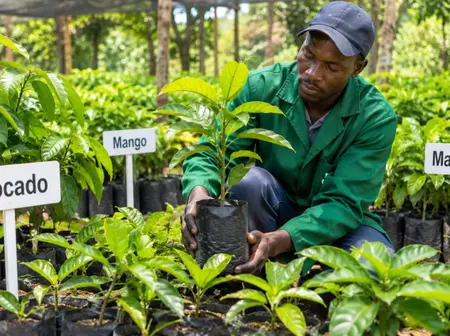
The government plans to distribute 6.16 million assorted fruit tree seedlings to farmers over the medium term as part of efforts to promote high-value crops, boost agricultural productivity and increase rural incomes.
The initiative, outlined in the 2027 Budget Policy Statement (BPS), targets the distribution of different varieties of seedlings, including macadamia, avocado, cashew nut, coconut, mango, citrus, tea and coffee.
The plan also includes date palms intended for farmers in Arid and Semi-Arid Lands (ASALs), where the government seeks to promote crops suited to the prevailing climatic conditions.
According to the Treasury document, the distribution is part of broader agricultural interventions aimed at accelerating the shift towards higher-value crops and strengthening Kenya’s agricultural value chains.
The government says the interventions are expected to improve farm incomes, lower food costs for households and position agriculture as a major driver of exports, employment and industrialisation.
The seedling distribution forms part of the government’s medium-term agricultural priorities for the 2027/28 financial year and beyond.
Other planned interventions include sustaining the fertiliser subsidy programme, under which 1.9 million metric tonnes of subsidised fertiliser will target 3.1 million farmers.
The government also plans to provide 120 million kilogrammes of maize seed under the Seed Subsidy Programme while strengthening farmer registration through the Kenya Integrated Agriculture Management Information System (KIAMIS).
The Treasury says it will also expand processing and cold-chain capacity for avocado, macadamia and mango to improve value addition and market access.
The measures are intended to help farmers move beyond the production of raw agricultural commodities by strengthening processing, branding and access to both local and international markets.
The fruit tree seedling programme is among several measures outlined in the BPS to strengthen agricultural production and diversify sources of income for rural households.
The government also plans to expand agricultural insurance for strategic crops, including maize, potato, wheat and green grams, as well as livestock.
It further intends to scale up the warehouse receipt system to reduce post-harvest losses and allow farmers to use stored produce as collateral when seeking financing.
In the livestock subsector, the government targets the production of three million straws of bull semen and 165,000 straws of goat semen, alongside vaccination of 23 million cattle against Foot and Mouth Disease and 52.5 million sheep and goats against Peste des Petits Ruminants.
The BPS does not specify how the 6.16 million seedlings will be distributed among counties, the number of farmers expected to benefit, the implementation schedule or the budget set aside for the programme.
A proposal to combine Equity Group Holdings and KCB Group into one financial institution could reshape Kenya’s banking industry, creating a lender with approximately Ksh4.55 trillion in assets and greater capacity to compete for business across Africa.
However, turning the proposal into reality would require the two banking groups to overcome a series of financial, regulatory and corporate governance challenges that go beyond combining their balance sheets.
The idea was floated by Kiharu MP Ndindi Nyoro on November 19, 2026, who argued that bringing the two lenders together would give them greater financial muscle to pursue acquisitions in West and Southern Africa and compete with some of the continent’s biggest banks.
“Merging the two to create Equity KCB Group should not be far-fetched. It remains a viable idea,” Nyoro said on Thursday, November 19, 2026.
Equity reported assets of approximately Ksh2.15 trillion as of September 2026, while KCB had about Ksh2.4 trillion. Their combined nine-month profits after tax stood at Ksh130.1 billion.
Despite the financial appeal, neither institution has announced a formal merger agreement, leaving several questions about how such a transaction would be structured and implemented.
Here are five major hurdles that could stand in the way of the proposed banking consolidation.
One of the biggest questions surrounding the proposed merger would be the ownership structure of the new institution.
Equity and KCB are independently listed banking groups with different shareholders, boards and corporate governance structures.
Combining the two would require negotiations over how the ownership of the proposed Equity-KCB Group would be distributed among existing shareholders.
Although KCB has a larger asset base, Equity recorded higher profits for the nine months to September 2026. Equity posted Ksh71.5 billion in profit after tax against KCB’s Ksh58.6 billion.
This creates a valuation question: Should ownership be determined by the size of each bank’s assets, profitability, market capitalisation or a combination of financial indicators?
The two institutions would need independent valuations to establish an acceptable exchange ratio for their respective shareholders.
The negotiations could become complicated if investors in either institution believe the proposed arrangement undervalues their investment.
The proposed combination would also face scrutiny from financial and competition regulators before it could be implemented.
The Competition Authority of Kenya (CAK) would have to examine the potential effect of the transaction on competition in the banking industry.
Under the Competition Act, businesses involved in qualifying merger transactions are required to notify the authority and obtain the necessary approval.
The authority considers factors including market concentration, consumer interests, employment and the ability of smaller businesses to compete.
A combined Equity-KCB would command a substantial position in Kenya’s banking industry, potentially changing the competitive environment for other lenders.
Regulators would need to examine whether the proposed institution could use its increased market power to influence lending rates, deposit returns and transaction charges.
The Central Bank of Kenya would also have a critical supervisory role in assessing the prudential and financial stability implications of the proposed consolidation.
The question would be whether Kenya can create a stronger institution capable of financing large projects without weakening competition and consumer protection.
Leadership and corporate governance could become another complicated issue.
Equity Group is led by Managing Director and Chief Executive Officer James Mwangi, while KCB Group is headed by Paul Russo.
Both executives lead established banking institutions with different corporate cultures, management structures and expansion strategies.
A merger would require the two boards to agree on the leadership structure of the proposed institution, including the chief executive, board composition and responsibilities of senior management.
Would the new bank retain the existing leadership teams, appoint a new chief executive or create a management structure that accommodates executives from both institutions?
The question goes beyond individual appointments. The merged institution would need a governance framework that ensures effective oversight of its operations across multiple African markets.
Without an agreed leadership structure, negotiations could face disagreements over decision-making authority, strategic priorities and the future direction of the institution.
Bringing together two major banking groups would require extensive operational integration.
Equity and KCB have invested heavily in digital banking platforms, mobile applications, agency networks, payment systems and physical branches.
Combining these operations would involve migrating customer information, integrating banking technology and establishing systems that can support millions of customers without disrupting services.
The institutions would also have to determine how to handle overlapping branches, administrative departments and support functions.
For instance, where both banks operate branches in the same commercial centres, the new institution could face decisions on whether to retain both locations or consolidate operations.
Such decisions could have implications for employees, particularly in departments where the two institutions have similar management and operational functions.
A merger could create opportunities to reduce duplicated costs, but it could also trigger restructuring, job losses and changes in how customers access banking services.
The transition would have to be carefully managed to avoid service interruptions and loss of customer confidence.
Nyoro’s proposal is largely anchored on the ambition of creating a Kenyan banking institution capable of competing with Africa’s largest financial groups.
The two banks already have operations beyond Kenya, with subsidiaries and investments across several African markets.
Combining their resources could strengthen their ability to pursue acquisitions, finance larger transactions and compete for corporate clients across the continent.
However, expanding into new markets would expose the institution to different regulatory environments, currency fluctuations, political risks and economic conditions.
There would also be the question of how much attention and capital the merged bank would allocate to international expansion compared with domestic lending.
Kenya remains a major market for both institutions, serving individuals, small businesses, corporates and government-related entities.
The new institution would therefore need to balance its continental ambitions with the responsibility of maintaining competitive banking services at home.
A larger balance sheet would not automatically translate into cheaper loans, better deposit rates or improved services for customers.
The proposed Equity-KCB merger remains an idea advanced by Ndindi Nyoro rather than a formal transaction announced by the two banking groups.
For it to progress, both institutions would need to consider the proposal, undertake financial and legal assessments, negotiate an acceptable transaction structure and seek the necessary regulatory and shareholder approvals.
The discussions would also need to address how the combined institution would protect customers, employees and investors during the transition.
Ultimately, the biggest challenge may not be creating a bank with Ksh4.55 trillion in assets, but establishing an ownership, leadership and operating structure acceptable to both institutions while ensuring that customers and Kenya’s wider financial sector benefit from the consolidation.
The government has outlined 13 requirements that mining companies must satisfy before securing rights to develop the mineral deposits at Mrima Hill in Kwale County, where a US-led consortium headed by Frontier Minerals has been selected as the successful bidder.
The requirements, published by the Ministry of Mining, Blue Economy and Maritime Affairs in the Kenya Gazette on March 27, 2026, cover financial capacity, local mineral processing, environmental protection, community engagement and the experience of prospective investors.
The government says companies seeking the mineral rights must demonstrate “vast experience in exploration and mining for speciality minerals such as niobium and rare earths in global jurisdictions.”
Investors are also required to provide “verifiable financial resources to undertake detailed exploration and mine development” alongside a skilled technical team and experienced management with a record of successfully executing similar projects.
In mineral processing, the Ministry requires bidders to demonstrate the “ability to design and commission start to end on-site processing and beneficiation plant” and the ability to process minerals locally while contributing to global supply chains.
The requirement is particularly significant for Mrima Hill, which contains niobium and rare earth elements used in various industrial and technological applications.
The government has also placed emphasis on environmental protection, requiring investors to demonstrate commitment to sustainability, including “the adoption and use of green and renewable energy”.
Under the environmental responsibility requirement, companies must commit to implementing “measurable interventions to minimise environmental impact, such as land rehabilitation and water management.”
Community engagement is another key consideration, with the Ministry requiring investors to work closely with local communities to ensure social and economic benefits are shared.
The Gazette states that companies must demonstrate a commitment to “working closely with local communities to ensure social and economic benefits are shared.”
Investors must also demonstrate experience executing similar projects in fragile ecosystems while maintaining robust corporate governance structures and expertise in both underground and surface rock engineering.
Another requirement concerns Kenya’s participation in strategic mineral investments.
The Ministry requires bidders to have a “clear understanding of Kenya laws on free carry interest, FCI and State involvement on strategic minerals.”
The provision relates to the government’s interest in its participation in strategic mineral projects and the applicable legal framework.
The government has further encouraged membership in regional or global organisations promoting equitable and responsible mining.
The requirements come as the government seeks to commercialise Mrima Hill’s deposits through an international competitive tender.
According to the Gazette, the project covers approximately 31.9 square kilometres in Kwale County, with the mineral deposits including niobium and rare earth elements.
The Ministry also reveals that a geological mapping exercise conducted in 2022 confirmed the presence of five elements at the site: niobium, yttrium, thorium, strontium and lanthanum.
The government says it has not prepared an economic viability report for the prospect.
Frontier Minerals Consortium, which includes Bunker Hill Silver Corp., ReElement Technologies Corporation and American Resources Corporation, was subsequently announced as the successful bidder in November 2026.
However, the selection does not automatically grant the consortium a prospecting or mining licence. The licensing process and applicable legal requirements must still be fulfilled before exploration and eventual mining can proceed.
Residents of Turkana are beginning to benefit from the commencement of crude oil drilling in the South Lokichar Basin, with local drivers set to receive priority in employment opportunities linked to the transportation of the commodity.
OML Africa Logistics, the company contracted to transport crude oil from Lokichar to Mombasa, has announced plans to prioritise residents in the recruitment of drivers and logistics officers.
The company says it will also train local drivers in fuel truck handling and transportation operations to equip them with the necessary skills and ensure compliance with safety standards.
OML Africa Logistics Director James Mbote said the company had committed to giving local drivers the first opportunity to secure jobs before considering applicants from other regions.
In remarks made during an interview on Surtuday, November 21, 2026, he said the company would also facilitate training for residents who lacked the necessary experience to operate oil tankers.
“Nafasi za kazi za kwanza zitapatiwa madereva kutoka Turkana. Pia tumewahakikishia kwamba wataweza kuelimishwa ambapo kuna mbinu nyingi za kuendesha matrela ya mafuta,” he said.
He added that the company would take selected drivers through training to ensure they could operate the trucks safely.
OML Africa Logistics plans to contract approximately 600 trucks to facilitate the transportation of crude oil from Turkana to Mombasa.
The initial consignments will be transported by road for export before the country transitions to alternative transportation methods, including rail and pipeline infrastructure.
The company has held consultative meetings with residents and local transport stakeholders to discuss employment opportunities and the participation of Turkana businesses in the emerging oil transportation sector.
Turkana Drivers Association Chairperson Ronald Maxwell said discussions with the logistics company had started, with local drivers and transport operators seeking mutually beneficial arrangements.
Maxwell said the association was engaging the company on issues surrounding truck hire charges, driver payments and opportunities for local transport businesses.
He said the discussions were aimed at ensuring drivers received fair compensation while local businesses also benefited from the transportation contracts.
“Walikuwa najua nalipa pesa mingi gari. Na kama hao wenyewe wale wanatafuta kazi kwa galfu na magari wamearimu bei ya magari, hiyo ni shauri yao. Bora driver alipwe pesa zake, ya kulile kidogo,” Maxwell said.
He added that the discussions had started laying the groundwork for cooperation between the logistics company, drivers and local transport operators.
“Tumeanza kuhakikishiana yale ambayo tutatenda kuendelea mbele ili kuwe na manufaa kwa kila mtu, madereva na pia sisi kama wafanyibiashara,” he said.
The development comes as crude oil drilling in the South Lokichar Basin gets underway, with Gulf Energy targeting the start of commercial crude oil production in December 2026.
The company targets an initial production of 20,000 barrels per day during the first phase, with output expected to peak at 120,000 barrels daily after 2032.
The planned transportation arrangements are expected to create opportunities for drivers, logistics officers and transport businesses as Kenya prepares to move crude oil from the oil fields to the port of Mombasa.