Category: Economy&Finance

  • Equity Bank announces service disruption on November 22 as all banking services go offline

    Equity Bank announces service disruption on November 22 as all banking services go offline

    Equity Bank announces service disruption on November 22 as all banking services go offline

    Equity Bank Kenya has announced a one-hour interruption of its banking services on Sunday, November 22, 2026, to facilitate planned system maintenance, urging customers to prepare for the temporary downtime.

    In a notice to members on Saturday, November 21, 2026, the lender said all its services would be unavailable between 4:00 a.m. and 5:00 a.m., potentially affecting customers seeking to access banking services during the early morning hours.

    “Due to planned system maintenance, all our services will temporarily be unavailable on Sunday morning, 22 November 2026, 4:00 AM to 5:00 AM,” Equity Bank stated.

    The bank did not provide further details on the specific systems undergoing maintenance or indicate whether the exercise could extend beyond the scheduled one-hour window.

    It also apologised to customers who may be inconvenienced by the temporary interruption.

    “We regret any inconvenience caused,” the lender said.

    Customers with time-sensitive transactions may therefore consider completing them before the scheduled maintenance period or waiting until services become available again after 5:00 a.m.

    Separately, Equity Bank used the notice to remind customers about its official telephone number and warn against fraudsters impersonating bank representatives.

    The lender emphasised that customers should only recognise calls originating from its designated telephone number, 0763 000 000.

    “Please remember, Equity calls you from only ONE number 0763 000 000,” the bank stated.

    Equity Bank also warned customers against sharing confidential banking information over telephone calls or SMS messages, highlighting PINs, passwords, one-time passwords (OTPs), bank details and card information.

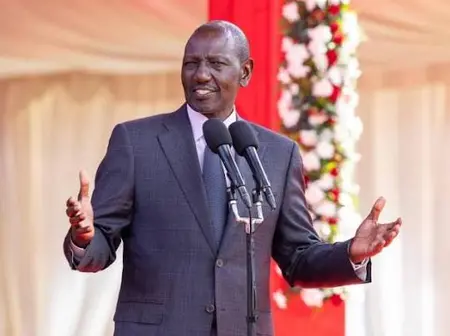
    Equity Group Managing Director and CEO Dr James Mwangi speaking during the release of the bank's 2026 third-quarter (Q3) financial results.

    “Equity will never ask for your bank details, PIN, Password, OTP or Card information on phone or SMS,” the notice read.

    The warning is particularly relevant to customers who may receive unsolicited calls or text messages from individuals claiming to represent the bank.

    Customers should avoid disclosing their banking credentials, even when a caller claims to be helping them resolve an account problem or verify a transaction.

    The bank’s reminder reinforces the importance of verifying suspicious communications and protecting sensitive financial information when using digital banking services.

    Equity Bank customers are advised to take note of the November 22 maintenance schedule and remain alert to potential impersonation attempts.

    The temporary service interruption is scheduled to last one hour, from 4:00 a.m. to 5:00 a.m.

  • Foreign Workers in Malta Protest 2027 Budget Measures Over Rising Living Costs

    Foreign Workers in Malta Protest 2027 Budget Measures Over Rising Living Costs

    The demonstrations, organised under the Green Ribbon Project, brought together migrant workers and supporters from different communities to demand the withdrawal of measures targeting third-country nationals (TCNs).

    On Friday, November 20, about 75 protesters formed a human chain towards Castille in Valletta, calling on Prime Minister Robert Abela and Finance Minister Clyde Caruana to reconsider the proposed changes.

    The campaigners argued that foreign workers contribute significantly to Malta's economy but are being subjected to additional financial burdens that could undermine their livelihoods.

    Under the 2027 budget proposals, non-EU workers without long-term residency will lose eligibility for free public transport and childcare.

    The government also plans to increase work permit application fees from €600 to €800, introduce an annual €400 infrastructure contribution and impose additional transport-related charges.

    Protest organisers said the measures would place more pressure on workers already struggling with rent, food and other daily expenses.

    They also argued that foreign workers should enjoy fair access to essential public services regardless of their nationality or residency status.

    The demonstrations were part of a week-long campaign that included calls to boycott public transport and certain shops, alongside a stay-at-home protest.

    However, Finance Minister Clyde Caruana has defended the proposals, saying they are intended to address population growth and encourage employers to reduce dependence on foreign labour.

    The campaigners are now calling for meaningful consultations before the measures take effect in January 2027.

    Source

  • Ruto Announces Sh10 Billion NYOTA Grants for 200,000 More Youth

    Ruto Announces Sh10 Billion NYOTA Grants for 200,000 More Youth

    President William Ruto has announced plans to expand the government's NYOTA business support programme, with another 200,000 young Kenyans expected to receive Sh50,000 each to establish or grow businesses.

    The proposed second intake will require Sh10 billion in grants and is expected to benefit young people who missed out during the initial distribution.

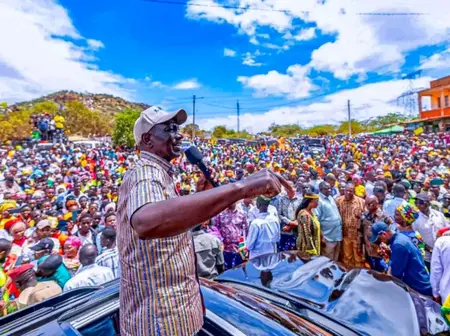
    Ruto made the announcement on Saturday, November 21, while addressing residents in Busia County during his ongoing development tour of Western Kenya.

    He said the government had received applications from many young people who were yet to benefit from the initiative and was preparing another round of financial support.

    “Tulipanga mambo ya NYOTA na tukapatia vijana 130,000 kila mmoja shilingi elfu hamsini. Kuna vijana wengi hawakupata hiyo pesa na sasa tunapanga awamu ya pili, vijana 200,000 tutawapatia kila mmoja wao pia shilingi elfu hamsini ili waende waanzishe biashara na wajiendeleze,” Ruto said.

    The President's announcement means the programme could reach an additional 200,000 beneficiaries, each receiving the same Sh50,000 support offered during the first phase.

    The NYOTA Project, whose full name is National Youth Opportunities Towards Advancement, is a five-year government initiative supported by the World Bank. It seeks to address youth unemployment through business financing, skills development, workplace experience and savings.

    Its business support component targets vulnerable young people across all 47 counties, providing start-up capital alongside training and mentorship to help them establish sustainable enterprises.

    The first phase attracted approximately two million applications, demonstrating the high demand for financial support and business opportunities among young Kenyans.

    During the initial rollout, successful beneficiaries received Sh50,000 in two instalments of Sh25,000. They were also offered training and mentorship covering business planning, financial management, record keeping and access to markets.

    Beyond business grants, NYOTA has other interventions designed to improve young people's employability. These include workplace experience opportunities and recognition of prior learning to help participants gain practical skills.

    Ruto said the expanded financial support was intended to help more young people become economically independent by starting businesses rather than depending entirely on formal employment.

    However, the President did not provide specific application dates or details of the selection process for the proposed second intake in his announcement. Young people awaiting an opportunity under the programme will therefore have to wait for further official communication on how the additional beneficiaries will be selected.

    Source

  • The Kenya Airways Flight Attendant Praised After Returning Passenger’s KSh1.2 Million

    The Kenya Airways Flight Attendant Praised After Returning Passenger’s KSh1.2 Million

    A Kenya Airways flight attendant has earned praise for her honesty and professionalism after helping a passenger recover US$9,600 (approximately KSh1.2 million), a passport and other important travel documents accidentally left behind on an aircraft.

    The incident involved Caroline Limo, who discovered the valuables while conducting routine post-flight security checks aboard Kenya Airways flight KQ762.

    According to reports, the incident happened on November 17, 2026, after the aircraft arrived at O.R. Tambo International Airport in Johannesburg, South Africa. After all passengers had disembarked, Limo began inspecting the cabin and noticed a small pouch abandoned on seat 3F in the Business Class section.

    Curious to establish its owner, she checked the contents and discovered a passport, personal belongings and a significant amount of cash. She immediately contacted a fellow senior cabin crew member, and together they verified the contents before counting the money. They established that the pouch contained US$9,600.

    Rather than keeping the money or leaving the bag unattended, Limo promptly handed everything to Kenya Airways' ground and security teams. At the time, the passenger had already proceeded to the Immigration section and was reportedly unaware that the valuable items were missing.

    The airline's ground and security personnel quickly coordinated efforts to trace the traveller and successfully returned the pouch with all its contents intact. Speaking about the incident, Limo explained that she immediately imagined the distress someone would experience after losing their passport and such a substantial amount of money while travelling.

    She also credited her colleagues and the ground team for working together to ensure the successful recovery. Limo, who considers honesty part of her professional responsibility, said returning passengers' belongings was simply the right thing to do.

    Her actions have highlighted the importance of integrity, responsibility and compassion in customer service, earning her admiration for choosing honesty when handling another person's valuable possessions.

    Click the link below to read more:

    https://www.kenyans.co.ke/news/129546-kenya-airways-flight-attendant-returns-passengers-ksh12-million-left-plane

  • Kenya Lands Sh2 Trillion Dangote Refinery as Ethiopia Secures Multiple Mega Projects

    Kenya Lands Sh2 Trillion Dangote Refinery as Ethiopia Secures Multiple Mega Projects

    Nigerian billionaire Aliko Dangote is expanding his business empire across East Africa through massive investments in oil refining, fertiliser production, cement manufacturing and energy infrastructure, with Ethiopia emerging as a major beneficiary of his investment ambitions.

    A comparison of projects announced across the region shows that although Kenya has secured Dangote's biggest single investment, Ethiopia has attracted a wider range of industrial projects.

    Kenya's biggest project is the proposed Dangote East African Petroleum Refinery in Mokowe, Lamu County, valued at approximately KSh2 trillion.

    The project was officially launched on September 30, 2026, during a ceremony attended by President William Ruto, Dangote, Ethiopian Prime Minister Abiy Ahmed and Ugandan President Yoweri Museveni.

    The refinery is expected to process up to 700,000 barrels of crude oil daily.

    It will also feature petroleum storage facilities, petrochemical industries and a proposed 1,000-megawatt power plant.

    Dangote has pledged to complete the project within 40 months, with the investment expected to generate thousands of employment opportunities.

    However, Ethiopia has attracted several major investments from the Nigerian businessman.

    One of the biggest is the $2.5 billion (approximately KSh325 billion) Gode urea fertiliser complex in the Somali region.

    The facility is expected to produce three million tonnes of fertiliser annually, reducing Ethiopia's dependence on imported agricultural inputs.

    Dangote Group owns 60 per cent of the project, while Ethiopian Investment Holdings controls the remaining 40 per cent.

    Ethiopia has also attracted a $380 million investment to expand the Mugher cement plant, increasing its annual production capacity to approximately five million tonnes.

    Another major undertaking is a petroleum pipeline connecting Ethiopia to Djibouti, designed to improve fuel transportation and reduce logistical costs.

    Meanwhile, Dangote already operates a cement manufacturing facility in Tanzania with an annual capacity of three million tonnes.

    He has also held discussions with the Tanzanian government over additional investments in electricity generation, ports and transport infrastructure.

    Uganda is another potential destination for his investments, with discussions covering fertiliser production, energy, petroleum and mining.

    The growing competition for Dangote's investments highlights how East African governments are positioning themselves to attract major industrial capital.

    While Kenya is banking on its Lamu refinery to become a regional energy hub, Ethiopia is building a broader industrial portfolio spanning agriculture, cement manufacturing and petroleum infrastructure.

    Sources;

    https://peopledaily.digital/business/list-of-dangote-mega-infrastructure-projects-in-east-africa-ethiopia-gets-more-investments-than-kenya?fbclid=IwY2xjawVuqnBleHRuA2FlbQIxMQBwZG9mBXNydGMGYXBwX2lkDDM1MDY4NTUzMTcyOAABH1GNKlaf2OLzM0qgC2xE-0Lw7FdF24VzJyRGGBipJHIVPjm2LTngVjslU_hv_aem_BrNILQOBvBcwBHWEIkjmvw

  • Ruto Announces Second NYOTA Intake, 200,000 Youths to Receive Sh50,000 Each

    Ruto Announces Second NYOTA Intake, 200,000 Youths to Receive Sh50,000 Each

    Under the initiative, each successful beneficiary will receive Sh50,000 to help them start a new business or expand an existing enterprise.

    The announcement provides another opportunity for young Kenyans interested in entrepreneurship but facing challenges accessing capital to establish their businesses.

    The NYOTA Project is a government initiative designed to improve economic opportunities for young people through business support, skills development and employment interventions.

    Through the second intake, the government intends to extend financial assistance to more young entrepreneurs, enabling them to invest in different income-generating activities.

    The Sh50,000 support is expected to help beneficiaries purchase business equipment, acquire stock, rent business premises or meet other startup expenses, depending on their business needs.

    The additional 200,000 beneficiaries will expand the programme's reach, particularly among young people looking for ways to become financially independent through entrepreneurship.

    Ruto's announcement comes amid continued concerns over unemployment and the difficulties many young people encounter when trying to secure startup capital.

    For many aspiring entrepreneurs, accessing initial funding remains one of the biggest obstacles to turning business ideas into sustainable ventures.

    However, interested applicants will need to follow the official government application procedures and meet the programme's eligibility requirements.

    Details concerning application dates, registration procedures and the selection of beneficiaries will be important as preparations for the second intake progress.

    The latest announcement is expected to generate interest among young Kenyans hoping to benefit from the government's business support initiative.

  • Kenyan Coffee Farmer Reveals How One Grower Earned Ksh14 Million in a Single Season

    Kenyan Coffee Farmer Reveals How One Grower Earned Ksh14 Million in a Single Season

    Macharia explained that the top earner was not an official or leader within the local coffee society. Instead, the grower was simply a regular cooperative member who focused on proper farm management and high yields.

    According to Macharia, the successful farmer manages around 5,000 coffee trees on his farm. Through good agricultural practices and consistent care, those trees generated enough quality produce to bring in the Ksh14 million payout.

    His remarks were first recorded on November 20, 2026, and quickly gained attention among Kenyan farmers online. Many young Kenyans have often viewed coffee farming as slow and unprofitable due to past payment delays and low cherry prices.

    However, Macharia noted that disciplined farming and strong cooperative support can turn coffee into a highly rewarding business. Industry players at the Cooperative Bank forum also encouraged farmers to adopt better crop husbandry and financial planning to boost their seasonal returns.

    Across coffee-growing counties such as Nyeri, Murang'a, Kirinyaga, and Kiambu, growers have been pushing for better farm inputs and direct market access. Stories of high payouts like this have renewed interest among smallholder farmers looking to expand their orchards.

    While managing 5,000 trees requires heavy capital, labour, and strict disease control, the potential returns show what modern coffee farming can achieve in Kenya. Do you think coffee farming can become the top wealth creator for Kenyan youth if cooperative payments improve?

  • Ndindi Explains How Employees Of A Global AI Firm Could Become Millionaires After Record Stock Debut

    Ndindi Explains How Employees Of A Global AI Firm Could Become Millionaires After Record Stock Debut

    Kiharu MP Ndindi Nyoro has explained how employees of the American artificial intelligence company Anthropic could become millionaires through employee share ownership. He pointed to the firm's record-breaking stock market debut.

    Anthropic is the developer of Claude and made its Nasdaq debut on Thursday November 19 in a record-breaking initial public offering. The company briefly reached a fully diluted valuation of about Ksh258 trillion before its shares settled lower.

    Nyoro said the listing raised the value of shares held by founders and early investors and employees. He argued that Kenyan businesses should adopt a similar model.

    In a post on X on Friday November 20 he said giving staff the chance to own stock in the company they work for is a model that must be cultivated in Kenya.

    He also cited Equity Group. He argued that employee and founder ownership can align personal financial interests with business performance.

    Nyoro cited estimates that hundreds of employees could hold shares worth more than Ksh12.9 billion each. Thousands more could hold stakes worth millions of dollars. He also highlighted investor Jaan Tallinn who reportedly invested about Ksh7.7 billion early on. His stake is now estimated at about Ksh2.3 trillion.

    These figures are estimates and not confirmed personal fortunes. Reuters reported that outside estimates of employee wealth vary and that it could not verify individual holdings. Share value also does not mean employees have received that amount in cash.

    Nyoro cautioned that technology valuations often reflect expectations of future growth and not current profits. Investors who buy at high prices risk losses if the company fails to meet expectations.

    He said the world is a global interconnected economy and anyone can invest anywhere. His remarks raise a question for Kenyan firms. Could wider employee ownership let workers share in corporate growth instead of relying on salaries alone?

    https://x.com/PeopleDailyKe/status/2124177409322766573?a=p-72ZdZVnylu0oTUR_o&s=19

  • Kenyan Prince Loses Over Ksh 3 Million During Live TikTok Trading Session

    Kenyan Prince Loses Over Ksh 3 Million During Live TikTok Trading Session

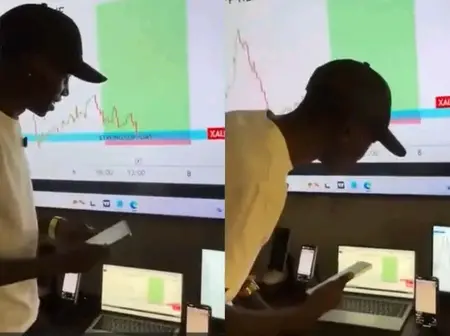
    Kenyan forex trader Raymond Omosa, popularly known as Kenya Prince, has left social media users stunned after reportedly losing more than Ksh3 million during a live trading session while demonstrating trading strategies to his followers.

    What was supposed to be an educational session quickly turned into a painful experience after the trader's anticipated market move failed to deliver the expected results.

    In the circulating video, Kenya Prince appeared excited as he announced that he was entering a buy position.

    He repeatedly encouraged his followers to join the trade, asking whether they were also participating.

    "It's a buy! It's a buy! Oh my God! Are you in?" he exclaimed, seemingly confident about the direction of the market.

    As the trade approached its closing time, his excitement intensified. He could be heard counting down the remaining seconds while urging viewers to follow the action.

    "We have one minute. It is in 15, 12, 8, 9. No time, guys! We are going crazy!" he told his audience.

    However, the trading session reportedly ended in a devastating loss exceeding Ksh3 million, turning what had begun as an exciting demonstration into an embarrassing moment for the popular trader.

    The incident has once again highlighted the unpredictable nature of forex trading, where even experienced traders can suffer significant financial losses within minutes.

    It also serves as a reminder that forex trading is not a guaranteed way of making money. Traders can lose substantial amounts, particularly when dealing with leverage, volatile markets and poorly managed risks.

    For thousands of followers who witnessed the incident, the experience offered an unexpected lesson: success in forex trading is never guaranteed, and the risks can be just as enormous as the potential profits.

  • Global Oil Prices Fall Ahead of the December EPRA Monthly Fuel Price Review in Kenya

    Global Oil Prices Fall Ahead of the December EPRA Monthly Fuel Price Review in Kenya

    The energy sector regulator, the Energy and Petroleum Regulatory Authority (EPRA), is scheduled to announce new pump prices in mid-December. Industry observers note that lower international crude prices usually reduce the landed cost of fuel delivered at the Port of Mombasa.

    However, the report explained that the final effect on local retail prices will depend on the average cost of refined petroleum products recorded during EPRA's official pricing window. Fluctuations in the Kenyan shilling against the US dollar also play a major role in determining what motorists pay at the pump.

    Motorists, matatu operators, and business owners across the country are closely watching the global market trends. Lower fuel costs would bring much-needed relief to households struggling with high transport and food expenses ahead of the festive season.

    Manufacturers and farmers also rely heavily on diesel to run machinery and transport goods to markets across different counties. A drop in pump prices would lower production costs and help stabilise the prices of basic household commodities.

    The government and energy officials have maintained that monthly fuel reviews strictly follow international market fundamentals and landing costs. Kenyans will have to wait until December 14 to see whether the global oil drop translates into cheaper petrol, diesel, and kerosene.

    With global oil prices easing ahead of the festive season, do you expect EPRA to lower pump prices next month?