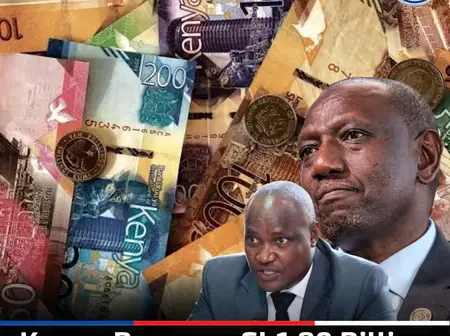
The government contracted seven new external loans worth Sh233.37 billion over a four month period, translating to an average daily borrowing rate of Sh1.89 billion, according to a National Treasury report tabled in the Senate.The statutory disclosure, submitted by National Treasury Cabinet Secretary John Mbadi under Section 31(3) of the Public Finance Management Act, details foreign credit facilities signed between May 1 and August 31, 2026.
Category: Economy&Finance
-
KRA Establishes New Unit to Track Kenyans Who Fail to File Tax Returns
The authority has established a permanent Register Maintenance Unit tasked with keeping taxpayer records accurate and updated, as the government agency seeks to strengthen tax compliance across the country.
The development was highlighted by the African Tax Administration Forum (ATAF) on Saturday, November 21, following the conclusion of a partnership between KRA and the Finnish Tax Administration (VERO).
According to ATAF, the collaboration helped KRA improve its taxpayer database, identify gaps in existing records and strengthen mechanisms for following up with individuals who have outstanding filing obligations.
The authority is also stepping up monitoring of two categories of taxpayers: non-filers and nil-filers.
Non-filers are individuals required to submit tax returns but fail to do so, while nil-filers submit returns indicating that they had no taxable income or tax payable during the relevant period.
The new unit is expected to make it easier for KRA to maintain reliable taxpayer information and identify individuals who may not be meeting their statutory obligations.
The partnership also involved knowledge-sharing activities with the Rwanda Revenue Authority, giving Kenyan tax officials an opportunity to learn from Rwanda's tax administration practices.
ATAF's Head of Project Management Office, Sameera Khan, said the organisation supported the programme through technical guidance, peer learning and coordination.
Meanwhile, the latest developments come as KRA prepares to introduce a new deadline for individual income tax returns.
In an announcement issued on November 10, the authority revealed that the filing deadline would move from June 30 to April 30, beginning in 2027.
Consequently, Kenyans submitting their 2026 individual income tax returns will have until April 30, 2027, to complete the exercise.
The changes mean taxpayers will have to prepare their financial records earlier as KRA strengthens its monitoring systems and compliance enforcement.
https://peopledaily.digital/business/how-kra-plans-to-track-inactive-taxpayers-and-kenyans-who-fail-to-file-returns
-
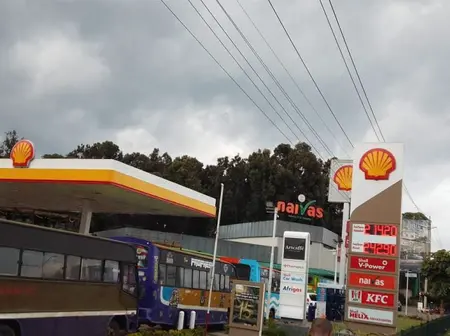
Why are Kenyan fuel prices still high despite a relatively stable shilling?
Kenyan motorists are continuing to pay more than Ksh220 per litre for petrol and diesel despite relative stability in the exchange rate, as rising international petroleum import costs and domestic pricing expenses keep pump prices elevated.
The Kenyan shilling exchanged at Ksh129.99 against the US dollar on November 19, 2026, compared with Ksh129.96 a week earlier, according to the Central Bank of Kenya (CBK).
However, the stable exchange rate has not translated into cheaper fuel, with the cost of importing refined petroleum products increasing significantly in October.
In its November 14 review, the Energy and Petroleum Regulatory Authority (EPRA) retained Nairobi’s maximum retail prices at Ksh226.96 per litre for Super Petrol, Ksh227.76 for diesel and Ksh219.87 for kerosene for the period between November 15 and December 14, 2026.
The decision came after the government deployed Ksh4.6 billion from the Petroleum Development Levy Fund to cushion consumers against rising international petroleum costs.
One of the main reasons Kenyan motorists have not benefited from exchange-rate stability is the increase in the cost of imported refined petroleum products.
According to EPRA, the average landed cost of imported Super Petrol increased by 6.11 per cent, from USD977.55 per cubic metre in September to USD1,037.30 in October 2026.
Diesel recorded a larger increase of 6.73 per cent, rising from USD1,065.38 to USD1,137.09 per cubic metre over the same period.
The landed cost of kerosene also increased by 0.71 per cent, from USD1,098.31 to USD1,106.11 per cubic metre.
These increases meant that importers faced higher costs when bringing petroleum products into Kenya, even without significant exchange-rate movements.
In its November 14 announcement, EPRA explained that the government intervention was necessary to prevent the increased import costs from being passed on to consumers.
“The Government has applied Ksh4.6 Billion from the Petroleum Development Levy Fund to stabilize the computed petroleum pump prices for the November–December 2026 cycle,” the regulator stated.
Without the intervention, Super Petrol would have increased by Ksh8.58 per litre, diesel by Ksh10.54 and kerosene by Ksh1.16.
The intervention therefore prevented another increase in fuel prices rather than delivering an actual reduction at the pump.
Kenya’s reliance on imported petroleum products exposes domestic fuel prices to movements in international markets and the exchange rate.
Since petroleum imports are priced in US dollars, a weakening shilling increases the amount of local currency required to purchase the same quantity of fuel.
Conversely, a stable exchange rate limits additional currency-related import costs but does not necessarily reduce the underlying price of petroleum products.
The latest CBK figures show that the shilling exchanged at Ksh129.99 per dollar on November 19, compared with Ksh129.96 on November 12.
The central bank described the currency as stable against major international and regional currencies during the week ending November 19.
“The Kenya Shilling remained stable against major international and regional currencies during the week ending November 19, 2026,” CBK reported.
However, the exchange-rate comparison covers only one week. It does not establish that the shilling has strengthened significantly over the longer period or reversed the effects of earlier currency movements.
For fuel importers, the distinction is important because stability protects against additional exchange-rate pressure but does not cancel increases in the dollar price of imported petroleum products.
Beyond international import costs and exchange-rate movements, other expenses contribute to the amount motorists pay at filling stations.
EPRA’s petroleum pricing formula incorporates the landed cost of imported products alongside jetty handling, primary storage, transportation, secondary storage, inventory financing, wholesale margins and applicable taxes.
The retail price calculation also includes transportation from secondary storage depots to filling stations, as well as retail operating and investment margins.
This means that a reduction in international petroleum prices does not automatically translate into an equivalent reduction in local pump prices.
The November prices published by EPRA include Value Added Tax at 8%, in line with government policy.
The different components also help explain why fuel prices can remain elevated even when the shilling is relatively stable.
The Ksh4.6 billion intervention through the Petroleum Development Levy Fund has become an important part of the latest fuel pricing decision.
Rather than allowing higher import costs to push pump prices upwards, the government used the fund to absorb the calculated increases for the November–December pricing cycle.
EPRA indicated that the intervention prevented increases of Ksh8.58 per litre for Super Petrol, Ksh10.54 for diesel and Ksh1.16 for kerosene.
While the intervention protected motorists from another price increase, it also highlights the pressure that international petroleum costs are placing on the domestic market.
The sustainability of such interventions remains an important question, particularly if import costs continue rising and the government has to deploy additional resources to stabilise prices.
For consumers, unchanged pump prices do not necessarily mean that the underlying cost of importing fuel has fallen. In this case, the government used public resources to prevent higher costs from being transferred to motorists.
The outlook for the next EPRA pricing cycle will depend on whether the cost of imported refined petroleum products moderates during the regulator’s pricing period.
CBK reported that Murban crude oil prices declined to USD89.61 per barrel on November 19, from USD90.07 on November 12, representing a weekly reduction of approximately 0.51%.
The central bank attributed the moderation to rising global oil supply outweighing geopolitical tensions.
However, crude oil prices are not the same as the cost of refined petrol and diesel imported into Kenya. Changes in crude prices do not automatically translate into equivalent changes in refined petroleum prices.
EPRA’s formula considers the weighted average cost of qualifying imported petroleum cargoes discharged at the Port of Mombasa between the 10th day of the previous month and the 9th day of the pricing month.
Consequently, the latest crude oil decline alone is insufficient to establish whether petrol and diesel prices will fall in the next review.
For Kenyan motorists, a sustained reduction in refined petroleum import costs, supported by a stable exchange rate, would provide stronger grounds for expecting relief at filling stations.
Until then, the stability of the shilling offers protection against one source of import-cost pressure, but it does not guarantee cheaper fuel.
-
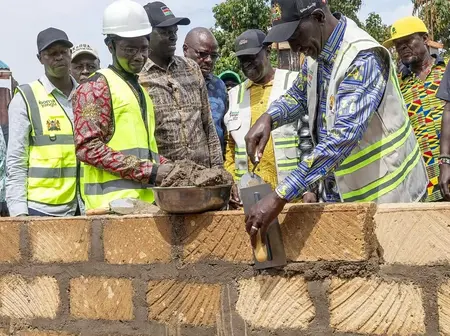
Mama Mboga Set for Major Relief as Mudavadi Unveils Ksh127 Million Sirisia Market
(Photo courtesy)
Prime Cabinet Secretary Musalia Mudavadi has announced plans for a Ksh127 million modern market in Sirisia, Bungoma County, as the government steps up efforts to improve trading facilities and support small businesses.
In a statement shared on his official X account, Mudavadi said the project would provide a better working environment for Mama Mboga and other small-scale traders.
Mudavadi made the announcement during President William Ruto's development engagements in Sirisia, where they laid the foundation stone for the construction of the modern market.
The market will have 200 modern stalls designed to provide traders with an organised, dignified and conducive environment to conduct their businesses.
Apart from the market, the leaders also launched the Musikoma-Buyufu-Mungatsi Road, which is expected to improve transportation and make it easier for residents to access markets and essential services.
Mudavadi noted that modern markets and improved roads were important in growing local economies, supporting small businesses and connecting communities to more opportunities.
He further revealed that the two projects were part of a wider national development programme covering road construction, electricity connectivity, modern markets, the expansion of the Standard Gauge Railway and improved border infrastructure.
Addressing residents, the Prime Cabinet Secretary stressed the importance of continuity, partnership and accountability in implementing development projects.
He said the national conversation should focus on ideas, measurable results and commitments that bring meaningful improvements to people's lives.
"The goal is clear: stronger local economies, more opportunities for our people and equitable development that reaches every corner of Kenya," Mudavadi stated.
https://x.com/MusaliaMudavadi/status/2124126496537133069?a=g1SlCSKVvbxbrggFdPg&s=19
-
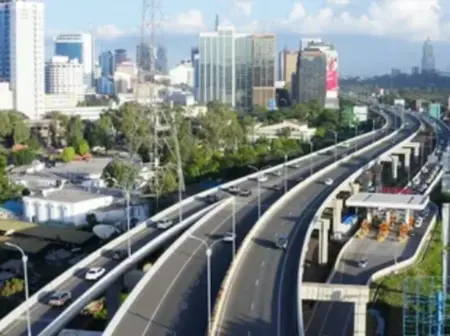
Fresh Details Emerge on Why Nairobi Expressway Recorded Ksh5.1 Billion Loss
Presidential Council of Economic Advisors Chairperson David Ndii has explained why the Nairobi Expressway continues to record significant financial losses despite generating billions of shillings from motorists using the road.
In a statement on Saturday, November 21, 2026, Ndii attributed the reported losses to the expensive financing arrangements involved in developing major infrastructure projects.
His remarks followed the release of financial figures showing that Moja Expressway Company recorded a net loss of Ksh5.1 billion for the year ending December 2025, despite collecting Ksh9.63 billion in revenue.
According to the National Treasury's Fifth Annual Report on the State of Public-Private Partnerships (PPPs), the company incurred direct costs amounting to Ksh14.73 billion during the reporting period.
The figures sparked debate among Kenyans, with questions emerging over how a 27-kilometre road could accumulate such substantial expenses within a single financial year.
NTV journalist Eric Latiff was among those who questioned the expenditure, wondering how routine activities such as cleaning the highway, maintaining street lighting and operating toll stations could account for such high costs.
Responding to the concerns, Ndii explained that infrastructure developments are usually financed through a combination of borrowed funds and money contributed by investors.
He noted that loans are generally cheaper than equity financing, with borrowing costs ranging between 5 and 10 per cent annually, compared to investor capital, which can cost between 15 and 20 per cent.
Ndii further explained that infrastructure projects commonly operate under a financing structure where 30 per cent comes from equity while 70 per cent is raised through debt.
According to him, the greater the proportion of affordable borrowing a project can secure, the lower its overall cost of capital.
He also pointed out that major infrastructure investments do not necessarily generate immediate returns for investors.
Instead, revenue collected during the initial 10 to 15 years is often directed towards servicing construction loans and meeting other financial obligations before shareholders begin receiving meaningful returns.
Ndii argued that such projects require long-term investors, including pension funds, because they can wait for extended periods before recovering their investments.
He described patient equity financing as important in infrastructure development, noting that investors in such projects may need to wait 15 years or longer to realise returns.
The Nairobi Expressway stretches approximately 27 kilometres, connecting Mlolongo to James Gichuru Road in Nairobi.
The road was developed through a 30-year Public-Private Partnership (PPP) arrangement between the Kenya National Highways Authority (KeNHA) and Moja Expressway Company Limited.
It officially began operations in 2022, allowing motorists to pay toll charges based on their respective entry and exit points.
Under the agreement, Moja Expressway operates the facility during the concession period, after which ownership is expected to revert to the Kenyan government.
Ndii's explanation has brought fresh attention to the financial arrangements behind the project, particularly how borrowing costs and long-term investment commitments affect the profitability of major infrastructure developments.
https://www.facebook.com/share/1K6Cufzz9p/
-
Bad News to Kenyans Who Fail to File Tax Returns as KRA Introduces New Measures
The initiative follows the establishment of a permanent Register Maintenance Unit tasked with keeping taxpayer information accurate, updated and properly maintained.
The development was announced following the conclusion of a partnership between KRA and the Finnish Tax Administration (VERO), which ended on Friday, November 20, 2026, in Nairobi.
The African Tax Administration Forum (ATAF), in an update shared on Saturday, November 21, highlighted several improvements achieved through the partnership, particularly in updating taxpayer records and strengthening the authority's ability to follow up on individuals who fail to file returns.
According to ATAF, KRA has made progress in cleaning up its taxpayer database while improving its systems for identifying non-filers and nil-filers.
Non-filers are individuals registered with KRA who fail to submit returns despite having a filing obligation. Nil-filers, on the other hand, submit returns indicating that they had no income or tax payable during the relevant financial period.
The new unit is expected to ensure taxpayer records remain properly managed, making it easier for the authority to identify missing returns and contact individuals whose tax obligations remain outstanding.
The improvements were achieved through cooperation with Finland's tax administration, which provided technical assistance and opportunities for knowledge exchange.
The programme was designed to strengthen KRA's administrative systems by exposing Kenyan tax officials to practices used by other countries in managing taxpayer information and enforcing compliance.
ATAF Head of Project Management Office Sameera Khan highlighted the organisation's contribution through technical guidance, coordination of knowledge-sharing activities and strategic oversight of the programme.
The initiative also involved lessons from the Rwanda Revenue Authority (RRA), with ATAF facilitating a benchmarking visit to help Kenyan officials understand how another African country manages tax administration.
The exchange provided an opportunity for KRA to explore approaches that could improve taxpayer registration, record management and compliance monitoring.
The latest developments come as KRA prepares to introduce changes to the annual individual income tax return filing calendar.
On November 10, 2026, the authority announced that the deadline for submitting individual income tax returns would shift from June 30 to April 30, beginning in 2027.
Consequently, Kenyans submitting their returns for the 2026 tax year will be required to complete the process by April 30, 2027.
The adjustment means taxpayers will have a shorter period to organise their financial documents and submit the required information.
With KRA strengthening its taxpayer database and follow-up mechanisms, individuals are being encouraged to establish their filing obligations, update their details where necessary and submit outstanding returns within the stipulated timelines.
https://www.facebook.com/share/1E62whqkLu/
-
Equity-KCB merger: The Ksh4.55T banking proposal raising questions over competition and customer costs
Kenya could get a banking giant with assets of approximately Ksh4.55 trillion if a merger proposal involving Equity Group Holdings and KCB Group becomes reality.
However, the idea raises questions about competition, customer costs and whether combining two profitable lenders is necessarily in the country’s economic interest.
The proposal was floated by Kiharu MP Ndindi Nyoro on November 19, 2026, as he assessed the performance of Kenya’s listed banking institutions and called for greater regional expansion.
“Merging the two to create Equity KCB Group should not be far-fetched. It remains a viable idea,” Nyoro said.
His proposal comes as both institutions report substantial earnings. Equity recorded Ksh71.5 billion in profit after tax for the nine months to September 2026, compared with KCB’s Ksh58.6 billion.
Their combined assets stood at approximately Ksh4.55 trillion, comprising Ksh2.15 trillion for Equity and Ksh2.4 trillion for KCB.
These figures suggest considerable financial strength. But they also raise a fundamental question: would Kenya benefit more from one powerful banking institution or two independent lenders competing for customers?
A combined Equity-KCB would have greater capacity to finance infrastructure, businesses and large corporate projects. Integrating digital platforms, branches and agency networks could also reduce duplicated operating costs.
However, those efficiencies would not automatically translate into cheaper loans or lower transaction fees.
Equity and KCB currently compete across retail banking, corporate lending, mortgages, payments and digital financial services. Combining their operations could reduce the alternatives available to borrowers and savers.
For customers, the concern is whether a larger institution would have less incentive to compete aggressively on lending rates, deposit returns and service charges.
The question is particularly important for small businesses, which depend on affordable credit to finance operations and expansion.
A merger could strengthen lending capacity, but without effective competition, there is no guarantee that customers would benefit from the institution’s increased financial muscle.
The proposed transaction would face scrutiny from Kenya’s competition and banking regulators.
The Competition Authority of Kenya (CAK) assesses mergers based on their effects on competition and public interest. Its assessment considers issues including market concentration, employment and the ability of small businesses to compete.
The Central Bank of Kenya would also exercise its sector-specific supervisory responsibilities, while the Capital Markets Authority could have a role because both institutions are publicly listed.
Kenya’s merger framework requires relevant regulatory authorisations before qualifying transactions can be implemented.
The question would therefore extend beyond whether the combined bank could compete internationally. Regulators would also have to examine whether its domestic market power could disadvantage consumers.
A merger would introduce difficult questions over ownership and corporate control.
Equity reported higher nine-month profits, while KCB had the larger asset base. Determining how much of the combined institution each bank’s shareholders would own would require detailed valuations rather than a simple comparison of earnings.
Leadership could become another sensitive issue, given Equity’s James Mwangi and KCB’s Paul Russo head the respective institutions.
Employees could also face restructuring as overlapping departments, management functions and branches are consolidated. Any resulting job losses or reduced access to physical banking services could undermine the public benefits of the transaction.
Nyoro argues that combining the lenders would strengthen their ability to pursue acquisitions in West and Southern Africa.
“Going forward, the financial giants must spread to West and Southern Africa and hunt for more money to bring back home,” he said.
He cited the contribution of international subsidiaries to the banks’ earnings, with 42 per cent of Equity’s profits and 33.4 per cent of KCB’s profits coming from operations outside Kenya, according to figures in his assessment.
However, international expansion brings currency, political and regulatory risks. A larger institution would also remain exposed to Kenya’s public debt, which Nyoro identified as a major threat to the banking sector.
“The only risk lies in how the country manages the public debt. A default would erode all the advantages,” he warned.
Neither Equity nor KCB has announced a formal merger agreement. There are no disclosed transaction terms, ownership arrangements or implementation timelines.
Any deal would require board and shareholder decisions, regulatory approval and potentially costly integration of technology, subsidiaries and operations.
The central dilemma is whether Kenya should prioritise creating a continental banking champion or preserving competition between two established lenders.
Ultimately, the success of such a merger should not be measured by the size of its balance sheet alone, but by whether it delivers better banking services, affordable credit and sustainable economic benefits for Kenyans.
-
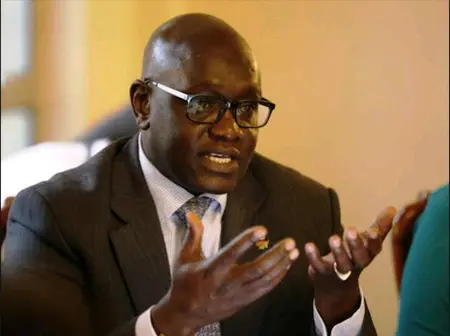
“Why Not Just Name It Turkana Oil?” Ekuru Aukot Questions the Government’s Oil-Naming Exercise
Ekuru Aukot has ignited a fresh debate over the politics surrounding Kenya’s emerging oil industry, questioning the rationale behind the proposed naming exercise and insisting that the country’s petroleum should simply be identified as Turkana Oil to recognise its geographical source.
Aukot’s position comes as the government advances plans to officially name Kenya’s crude oil ahead of the anticipated commencement of commercial production.
Reports indicate that four names have been shortlisted, including Great Rift Light, Great Rift Intermediate, Great Rift Blend and Great Rift Sweet, with the Ministry of Energy and Petroleum reportedly reviewing the proposals before submitting its recommendation to President William Ruto.
The outspoken political commentator appears to be challenging the branding approach, arguing that naming the resource Turkana Oil would straightforwardly acknowledge where the petroleum originates.
His remarks inject a politically charged dimension into the process, raising questions about geographical recognition, resource identity and the symbolism surrounding Kenya’s oil wealth.
The naming exercise has reportedly progressed beyond the public submission phase, with the ministry reviewing the shortlisted proposals as the country prepares for the anticipated unveiling of its oil trading name on December 1, 2026.
The planned milestone is expected to coincide with the commencement of the country’s first commercial oil production, marking a significant moment in Kenya’s petroleum journey.
Aukot’s intervention could further fuel discussions about the politics of natural resources, particularly the importance of recognising communities and regions associated with the country’s emerging oil industry.
As Kenya prepares to enter the commercial petroleum market, the debate over what the crude oil should be called is increasingly becoming a question of identity, recognition and political symbolism rather than merely a branding exercise.
-
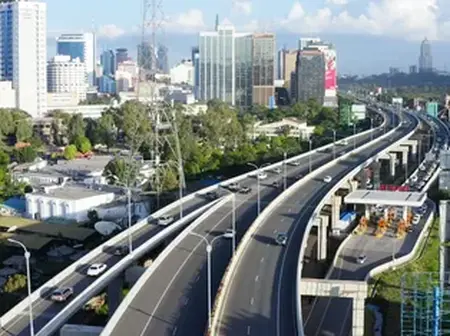
David Ndii Explains Why Nairobi Expressway Operator Reported Ksh5.1 Billion Loss
(Photo courtesy)
President William Ruto's Chief Economic Advisor David Ndii has explained why Moja Expressway Company, the operator of the Nairobi Expressway, reported a net loss of Ksh5.1 billion despite collecting Ksh9.63 billion in toll fees.
According to the National Treasury's Fifth Annual Report on the State of Public-Private Partnerships (PPPs), the company recorded a net loss of Ksh5.1 billion for the year ended December 2025.
The report shows that Moja Expressway generated Ksh9.63 billion in revenue but incurred Ksh14.73 billion in direct costs, raising questions about the high expenditure involved in running the 27-kilometre road.
The figures attracted public attention, with NTV journalist Eric Latiff questioning how activities such as sweeping the road, keeping streetlights on and operating toll booths could account for such a huge amount.
However, in a statement issued on Saturday, November 21, Ndii said the loss was largely linked to the high cost of financing infrastructure projects rather than ordinary operating expenses.
He explained that major infrastructure projects are usually financed through a combination of debt and equity, with a typical structure of 30 per cent equity and 70 per cent debt.
According to Ndii, borrowing is relatively cheaper, with interest rates ranging between 5 and 10 per cent, while equity investors expect annual returns of between 15 and 20 per cent.
He explained that using more debt helps reduce the overall cost of financing such projects.
Ndii further noted that infrastructure investors do not receive their returns immediately because most of the revenue generated during the first 10 to 15 years goes towards repaying construction loans.
He said such projects require patient equity capital, including investments from pension funds, because investors may have to wait 15 years or more before receiving significant returns.
The Nairobi Expressway was developed under a 30-year Public-Private Partnership agreement between the Kenya National Highways Authority (KeNHA) and Moja Expressway Company Limited.
The 27-kilometre road began operations in 2022, allowing motorists to pay toll fees depending on their entry and exit points.
Under the agreement, the expressway will eventually be transferred to the Kenyan government after the 30-year concession period expires.
https://www.kenyans.co.ke/news/129573-ndii-explains-why-nairobi-expressway-lost-ksh51-billion
-
Ruto Unveils KSh3.1 Billion Road Project in Mt. Elgon as He Announces Fresh Power Connection Plan
(Photo courtesy)
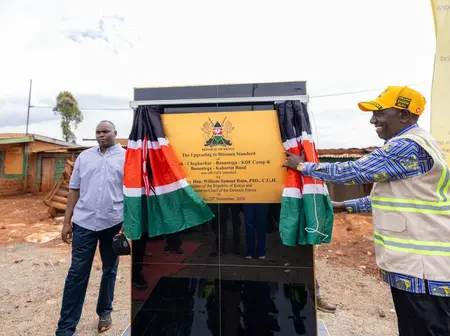
President William Ruto has launched the tarmacking of roads worth KSh3.1 billion in Mt. Elgon Constituency, Bungoma County, in a move aimed at improving transport and boosting economic activities in the region.
In a statement shared on his official X account, Ruto said he launched the tarmacking of the Masaek-Chepkurkur-Banantega-KDF Camp road and the Banantega-Kaboriot road.
The launch took place at Kipsigon Trading Centre, where the President also flagged off a last-mile electricity connectivity project targeting households and businesses in the constituency.
Ruto said the electricity project was part of the government's efforts to expand access to power and support economic activities at the household and business levels.
He further revealed that the government had allocated KSh1.8 billion in the current financial year to connect 25,000 households to electricity across Bungoma County.
According to the President, the projects are part of his administration's commitment to promoting equitable development by improving road infrastructure and expanding electricity access to more communities.
https://x.com/WilliamsRuto/status/2124085241056760071?s=19