Category: Economy&Finance

  • Stivo Changes Mum’s House Plan After Criticism, Reveals New Building Method Set to Finish in 10 Days

    Stivo Changes Mum’s House Plan After Criticism, Reveals New Building Method Set to Finish in 10 Days

    The musician recently visited Floor Decor Kenya Ltd, a precast concrete manufacturing company, where he explored an alternative construction method after his earlier building project attracted mixed reactions online.

    His initial construction footage sparked debate, with some social media users questioning the design and suggesting that the house looked like a mud structure. Radio host Alex Mwakideu was among those who publicly raised concerns about the project.

    Rather than abandon his plans, Stivo appears to have reconsidered the design and explored a different building system that could give his mother a more durable home.

    Stivo explores precast concrete construction

    In a TikTok video shared on November 20, 2026, Stivo was seen touring the premises of Floor Decor Kenya Ltd, where stacks of precast concrete panels, building materials and machinery were visible.

    During the visit, company CEO Amos Kibaru explained how the firm manufactures house components in a factory before transporting them to the construction site for assembly.

    The method involves producing building sections in advance, including wall panels with provisions for doors and windows, reducing the amount of work that has to be done on-site.

    Kibaru explained that the components are transported by lorry and assembled at the designated location, potentially allowing a house to be completed much faster than through conventional construction.

    He also highlighted the reduced labour requirements and the ability to plan costs more predictably compared with traditional brick-and-mortar construction.

    CEO explains how the house could be completed in 10 days

    The biggest revelation from Stivo's visit was the estimated construction timeline, with Kibaru telling the musician that the process could take approximately 10 days from production to completion, depending on the project.

    The company CEO explained that precast construction eliminates some of the lengthy stages associated with conventional building, where workers have to mix materials, lay bricks and wait for different sections of the structure to progress.

    Stivo appeared impressed by the explanation as he toured the facility and interacted with the company's management.

    The musician also addressed his supporters, saying he had listened to their concerns. He used the phrase "Nimewaskia wadau," meaning "I have heard you, people," suggesting that the criticism had influenced his decision to reconsider the building plan.

    He further revealed that the house design had been prepared using computer software and indicated that the construction project was already in progress.

    Stivo's mother's new home expected soon

    According to the video, Stivo's mother's house was expected to be completed the following week, suggesting that the project had already advanced by the time he shared the update.

    The new construction approach is expected to give the family a more permanent structure while reducing the time spent building.

    Stivo has been working to secure a better living environment for his mother after she reportedly faced eviction near a conservancy, leaving her living in a single room in Nyanyela.

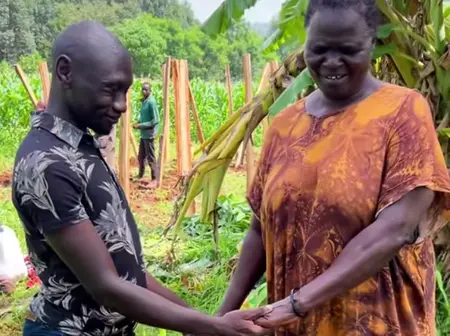
    On November 3, 2026, the musician shared footage of a rural piece of land where maize had been planted. The land was reportedly acquired with the assistance of supporters who wanted to help his mother establish a more secure home.

    A well had also been dug on the property to provide water before the house construction began.

    Despite the criticism surrounding the initial design, the musician's latest update suggests that he remains committed to giving his mother a decent home, with the revised construction method potentially bringing the project closer to completion.

    Source
  • Details Emerge as Ndindi Nyoro Reveals How AI Company Made Headlines With Ksh258 Trillion Valuation

    Details Emerge as Ndindi Nyoro Reveals How AI Company Made Headlines With Ksh258 Trillion Valuation

    The company reportedly recorded the massive fully diluted valuation before its shares settled at a lower level, highlighting the growing interest in artificial intelligence businesses among investors.

    The development comes at a time when artificial intelligence is rapidly transforming the global technology industry, with companies investing heavily in new technologies to improve efficiency and introduce innovative products.

    The Ksh258 trillion valuation has also highlighted the enormous financial opportunities associated with the AI industry. Investors are increasingly looking at technology firms developing artificial intelligence tools, hoping to benefit from the sector's expected growth.

    Fully diluted valuation refers to the estimated value of a company after accounting for all shares that could potentially exist, including shares linked to convertible securities and employee stock options.

    This means the figure does not necessarily represent the actual cash available to the company or the amount investors have paid for all its shares.

    The movement in the company's valuation also demonstrates how quickly market expectations can change depending on investor demand and share price movements.

    Nyoro's discussion brings attention to the importance of technology and innovation in shaping the future of the global economy.

    As artificial intelligence continues to attract investment, countries and businesses are increasingly considering how they can position themselves to benefit from the emerging opportunities.

    The development has further placed the spotlight on the growing financial influence of artificial intelligence companies.

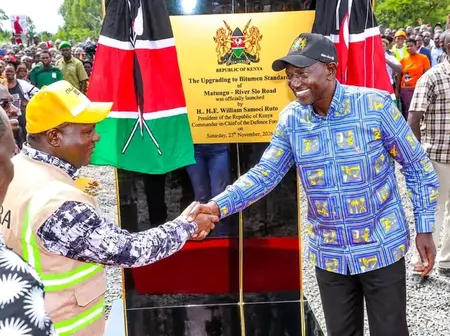
  • Kakamega, Bungoma Traders Eye Boom as Ruto Launches Matungu–Nasianda Tarmac

    Kakamega, Bungoma Traders Eye Boom as Ruto Launches Matungu–Nasianda Tarmac

    Governor Barasa attended the launch event alongside national and local leaders to witness the start of the construction works. He noted that the new tarmac road will serve as a key transport link connecting Kakamega County and neighbouring Bungoma County.

    Once completed, the road is expected to ease the movement of people and farm produce between the two counties. Better road connectivity will also reduce transport costs and open up fresh economic opportunities for traders and residents living along the route.

    In his message, the Kakamega Governor welcomed the major infrastructure investment and thanked President Ruto for his continued focus on development projects within the county. Cooperation between the national government and county leadership remains key to delivering essential services to citizens.

    Residents and business owners in Matungu Constituency and surrounding areas have warmly received the launch of the road project. For many years, poor road conditions during rainy seasons made it difficult for farmers and motorists to access major markets.

    Local leaders have also urged the contractor assigned to the project to maintain high standards and complete the tarmacking within the agreed timeline. Timely delivery will ensure communities begin enjoying the economic benefits without unnecessary delays.

    Good road networks play a major role in growing rural economies and linking local farmers to wider regional markets. Residents will now be keen to see steady progress on the ground as construction gets underway.

    How will the new Matungu to Nasianda tarmac road improve business and daily travel for residents in Kakamega and Bungoma counties?

  • Kenya Prince Loses More Than KSh3 Million During Live Forex Trading Session

    Kenya Prince Loses More Than KSh3 Million During Live Forex Trading Session

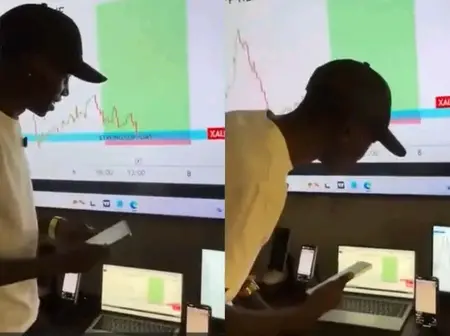
    Kenyan forex trader Raymond Omosa, popularly known as Kenya Prince, was left shocked after reportedly losing more than KSh3 million in a trading session broadcast live on TikTok, where he had been demonstrating trading techniques to his followers.

    The incident unfolded on Friday, November 20, 2026, during a livestream that attracted viewers keen to follow the trader as he placed positions in the financial markets. What began as an energetic demonstration quickly turned into a tense moment when the trade failed to go in his favour.

    Kenya Prince appeared enthusiastic at the beginning of the session, announcing that he was entering a buy position while asking his followers whether they had also taken the same trade.

    “It’s a buy! It’s a buy! Oh my God! Are you in?” he said as he encouraged viewers to follow the action and confirm their participation in the comment section.

    As the trade approached its closing time, the trader continued updating his audience on the countdown, appearing increasingly animated as he watched the market movement.

    “We have one minute. It is in 15, 12, 8, 9. No time, guys! We are going crazy!” he exclaimed during the broadcast.

    However, the mood changed dramatically when the position moved against his expectations, resulting in a reported loss exceeding KSh3 million. His reaction was captured on the livestream, with the trader appearing visibly stunned as he struggled to process the outcome.

    “Oh my God, I’ve lost it, Jesus. Oh my God. Oh my God. Oh my goodness,” he said moments after the loss.

    The incident has drawn attention to the risks associated with forex trading, particularly when market positions are taken in real time and financial exposure can be substantial. Although traders sometimes share profitable positions online, losses remain an inherent part of the market, where prices can move unpredictably and quickly.

    Kenya Prince has built a considerable social media following through forex trading content, mentorship and his public displays of an affluent lifestyle. His online presence has frequently featured luxury vehicles and other expensive purchases, attracting attention from followers interested in his financial success.

    In September 2026, he showcased a white Lamborghini Urus, reportedly purchased for KSh64.5 million in cash. He had previously spoken publicly about his ambition to acquire the luxury SUV.

    He also owns a Mercedes-Benz GLE, which he has described as an escort vehicle for his Lamborghini, further reinforcing his image as one of the country's highly visible young forex personalities.

    Beyond trading and lifestyle content, Kenya Prince has previously expressed interest in returning to school to pursue dentistry. During a January 2026 appearance on the Iko Nini Podcast, he discussed his interest in the medical profession and disclosed that he had spent approximately KSh1.2 million on improving his teeth and smile.

    The livestream loss has since placed his trading activities in the spotlight, offering viewers a glimpse of the financial risks that can accompany high-stakes forex trading, even among experienced traders who publicly teach others.

    https://www.facebook.com/100064760708552/posts/1737073395128001/?app=fbl

  • Cristiano Ronaldo Expands Business Empire With KSh3 Billion Bottled Water Factory

    Cristiano Ronaldo Expands Business Empire With KSh3 Billion Bottled Water Factory

    The project, valued at €20 million (approximately $22 million), is being developed in Gostei, a village in the municipality of Bragança, near Ronaldo's home country roots.

    The facility will source water from a local spring and package it for both domestic and international markets.

    According to reports, the project is being undertaken through Maravilha Decimal, a company jointly owned by Ronaldo and Portuguese business group Grupo Outeirinho.

    Construction is already underway, with the facility expected to be completed by the end of 2027. Commercial production is scheduled to begin in early 2028.

    Inside Ronaldo's new water factory

    The factory is designed to have separate manufacturing lines for glass and PET plastic bottles, allowing the company to serve different markets and packaging preferences.

    Once fully operational, the plant is expected to produce between 500 million and 600 million litres of bottled water annually.

    A significant portion of the production will be targeted at export markets, potentially giving the Portuguese investment an international reach.

    The development is also expected to create several dozen employment opportunities for residents of the surrounding area.

    Francisco Ferreira, an executive at Grupo Outeirinho, has highlighted the spring water's mineral composition as one of the project's major selling points.

    Ronaldo has previously ventured into bottled water

    The investment is not Ronaldo's first involvement in the bottled water industry.

    In June 2023, the football superstar launched Ursu, a premium mineral water brand bottled in Spain, during an event in Madrid.

    The launch attracted attention partly because of Ronaldo's widely publicised stance on drinking water.

    During a Euro 2020 press conference in 2021, he moved two Coca-Cola bottles away from his position before holding up a bottle of water, encouraging people to drink water instead.

    His latest investment suggests that he intends to build a stronger presence in the beverage industry through production and international distribution.

    Inside Cristiano Ronaldo's growing business empire

    At 41, Ronaldo has established several business interests alongside his successful football career.

    His CR7 brand covers clothing, underwear, fragrances and footwear, giving him a presence in the fashion and lifestyle industries.

    He also has a partnership with Portugal's Pestana Group through the Pestana CR7 hotel chain.

    The hospitality business has expanded into several international destinations, including Lisbon, Madeira, Madrid, New York and Marrakech.

    Beyond fashion and hotels, Ronaldo is a partner in Insparya, a chain of hair transplant clinics operating in the beauty and healthcare sector.

    He also holds a stake in Medialivre, a Portuguese media company whose publications include Correio da Manhã and the sports newspaper Record.

    His growing investments demonstrate how he has diversified his earnings beyond football, although the sport remains the foundation of his financial success.

    Ronaldo's football earnings and billionaire status

    Ronaldo's commercial activities have been supported by his extraordinary earnings from professional football, endorsements and sponsorship agreements.

    In June 2025, he extended his contract with Saudi Arabian club Al-Nassr, keeping him at the club until 2027.

    His earnings for 2025 were estimated at $275 million from his football salary, bonuses and commercial endorsements.

    In October 2025, the Bloomberg Billionaires Index estimated his net worth at approximately $1.4 billion, placing him among the wealthiest athletes in the world.

    His future in football remains a major talking point

    Despite his growing business interests, Ronaldo has continued to attract attention over how much longer he intends to play professional football.

    He has previously suggested that his retirement could be approaching, although he has left room for his plans to change.

    One of his biggest personal ambitions remains reaching 1,000 career goals, a milestone that could influence how he approaches the final years of his playing career.

    The planned water factory adds another major venture to a portfolio that already spans hospitality, fashion, healthcare, media and beverages.

    Source

  • Kenyan millers secure cheaper wheat imports as EAC slashes duty to 10 per cent

    Kenyan millers secure cheaper wheat imports as EAC slashes duty to 10 per cent

    thumbnail

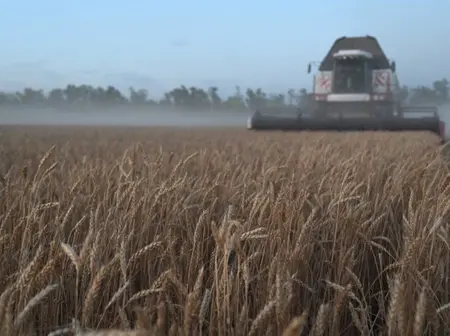
    Listen to articleThe approval was published in an EAC Gazette notice dated November 12, 2026, and will remain in force until June 30, 2027.Select Kenyan millers have secured approval to import 136,000 tonnes of wheat at a reduced 10 per cent duty, offering potential relief to flour manufacturers grappling with rising production costs.

  • Why Ndii Is Defending Ruto’s Sh45.1 Billion Bomas Project

    Why Ndii Is Defending Ruto’s Sh45.1 Billion Bomas Project

    President William Ruto's economic adviser David Ndii has defended the controversial Sh45.1 billion Bomas International Convention Centre project, but his explanation has done little to settle growing questions surrounding the massive government investment.

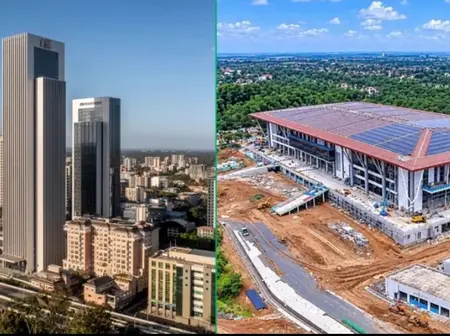
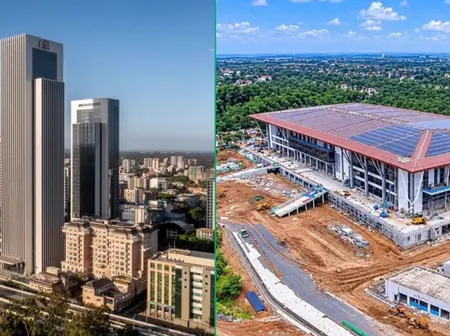
    Ndii recently responded to criticism comparing the cost of the Bomas project with that of the Global Trade Centre Tower in Nairobi.

    Critics had questioned why the government was spending approximately Sh45 billion on the Bomas development when the GTC Tower, which stands 184 metres tall, reportedly cost Sh39 billion to construct.

    However, Ndii dismissed the comparison, arguing that critics were ignoring the significant differences in the sizes of the two developments.

    According to the economist, the Bomas International Convention Centre will cover approximately 324,000 square metres, more than five times the GTC Tower's reported floor area of 60,126 square metres.

    He also pointed out that the entire GTC complex measures approximately 147,000 square metres, arguing that the Bomas project should be assessed based on its overall size and facilities rather than its headline construction cost.

    The planned Bomas development is expected to accommodate up to 11,000 delegates and feature a 5,000-seat convention hall, a 3,500-seat auditorium, a banquet ballroom, 35 meeting rooms and other facilities.

    Despite Ndii's defence, questions about the project's financial arrangements remain.

    The project's estimated cost has increased from approximately Sh31.7 billion when it was initially approved in 2023 to Sh45.1 billion, raising concerns about the reasons behind the additional expenditure.

    There have also been questions about procurement transparency and the custody of critical contractual documents.

    During a Senate appearance, Tourism Cabinet Secretary Rebecca Miano explained that although her ministry owns the project and oversees its funding, the Ministry of Defence was responsible for procurement and contracting.

    Senators have consequently demanded access to the contract, financial records, procurement documents and expenditure reports to establish how public funds are being utilised.

    Ultimately, while Ndii's explanation provides a justification based on the project's size, Kenyans are still entitled to clear answers about the rising costs, procurement decisions and accountability surrounding the multibillion-shilling development.

    Sources;

    https://peopledaily.digital/business/why-ndiis-defence-of-ksh45-1b-bomas-project-leaves-key-questions-unanswered?fbclid=IwY2xjawVui8lleHRuA2FlbQIxMQBwZG9mBXNydGMGYXBwX2lkDDM1MDY4NTUzMTcyOAABH570fE9VD6vrrU5ISSjc9ppNfbiSa6mkfrKfyU7BVwXlcNgZhyVxdmxTX282_aem_YP3DjBTa1GXK3Ee1oV4ZrA

  • A Seat for the Industry, a Turf War Among Regulators: Why Kenya’s Pesticide Bill Is Under Fire

    A Seat for the Industry, a Turf War Among Regulators: Why Kenya’s Pesticide Bill Is Under Fire

    thumbnail

    Nairobi -Civil society advocates and public health watchdogs are raising alarm over the Pest Control Products Bill (National Assembly Bill No. 48 of 2025). The Bill would overhaul Kenya’s 1982 Pest Control Products Act (Cap. 346), and critics warn it could put corporate profits ahead of food safety, smallholder farmers, and the environment.

  • Safaricom explains how Kenyans can invest in stocks with just Ksh100 through Ziidi Trader

    Safaricom explains how Kenyans can invest in stocks with just Ksh100 through Ziidi Trader

    For a long time, investing in the stock market has sounded like an opportunity reserved for wealthy individuals with thousands or millions of shillings to spare. Safaricom is now encouraging Kenyans to rethink that perception by highlighting a platform that allows them to start buying shares with as little as Ksh100.

    In a post shared on its X account on Saturday, November 21, 2026, the telecommunications company said its Ziidi Trader platform gives Kenyans another way to participate in the stock market without starting with large amounts of money.

    “With Ziidi Trader, Kenyans can invest in stocks from Ksh100, opening another way to take part in the investment market,” Safaricom stated.

    The company said beginners do not need to start big to learn how investing works, emphasising the importance of understanding risks and making informed financial decisions.

    The initiative seeks to challenge the perception that owning shares in companies listed on the Nairobi Securities Exchange (NSE) is beyond the reach of ordinary Kenyans.

    Safaricom has explained that customers can access Ziidi Trader through M-PESA on My OneApp.

    To use the service, customers open My OneApp, navigate to the Financial Services section and select Ziidi Trader.

    The platform allows users to buy and sell shares listed on the NSE, track their investment portfolios and receive eligible dividends through M-PESA.

    According to the company, customers do not need to open a separate Central Depository and Settlement Corporation (CDSC) account to trade through the platform.

    The NSE’s regular trading hours are Monday to Friday, from 9.30am to 3pm. Investors should check the platform’s current operating conditions before placing orders.

    In an earlier communication published on October 9, 2026, Safaricom challenged the belief that stock market investing was reserved for wealthy people.

    “Hiyo ni Myth. Shares ni yetu wote,” the company stated, using the Swahili phrase to emphasise that share ownership should be accessible to more Kenyans.

    The Ksh100 entry point could make it easier for beginners to explore the market and learn about listed companies without committing large sums at the outset.

    However, a low starting amount does not eliminate the risks associated with investing. Share prices can rise or fall depending on company performance, market conditions and investor demand.

    Kenyans interested in Ziidi Trader should research companies before investing, understand applicable transaction charges and consider whether share trading suits their financial goals.

    Unlike savings products with stated interest rates, shares do not guarantee returns. Investors can lose money if the value of their holdings falls, while dividends depend on a company’s decision and ability to distribute profits.

    Safaricom said financial services should provide people with more ways to plan, save and build towards their goals.

    The broader message is that investing can begin with a modest amount, but successful participation requires patience, research and an understanding of the risks involved.

  • Why Ndii’s defence of Ksh45.1B Bomas project leaves key questions unanswered

    Why Ndii’s defence of Ksh45.1B Bomas project leaves key questions unanswered

    Why Ndii’s defence of Ksh45.1B Bomas project leaves key questions unanswered

    President William Ruto’s economic adviser David Ndii has defended the cost of Kenya’s Bomas International Convention Complex, arguing that critics are making misleading comparisons with Nairobi’s Global Trade Centre (GTC) Tower.

    But while Ndii maintains that the Bomas development is significantly larger, official records reveal deeper questions surrounding its cost, procurement, financing and implementation.

    The project, whose reported overall cost has reached Ksh45.1 billion, has attracted scrutiny following an increase from the initial Cabinet-approved estimate of approximately Ksh31.7 billion in August 2023.

    In a post on X on Tuesday, November 17, 2026, Ndii challenged comparisons between the two developments, arguing that their different sizes should be considered before judging their construction costs.

    “Boss, this is called confirmation bias. You could’ve searched the sizes of each. Bomas Convention Centre is 324,000 square metres, more than 5 times the GTC Tower, and more than double the entire GTC complex (147,000 square metres),” Ndii wrote.

    President’s economic advisor David Ndii : PHOTO/@DavidNdii/X

    His argument is that comparing the reported Ksh45.1 billion Bomas cost with the approximately Ksh39 billion GTC Tower construction cost without considering their respective sizes produces a misleading conclusion.

    However, the comparison raises an important measurement question.

    Information presented to Parliament describes the Bomas development as covering approximately 323,500 square metres. This refers to the wider project area and cannot automatically be compared with the reported floor area of GTC Tower.

    A proper cost comparison would require equivalent measurements, construction specifications and a breakdown of the facilities included in each development.

    The bigger concern is the difference between the initial Ksh31.7 billion estimate and the reported Ksh45.1 billion overall project cost.

    The difference is Ksh13.4 billion, equivalent to approximately 42.3 per cent of the original estimate.

    However, the figures require careful interpretation because the project changed scope, contractor and financing arrangements.

    Bomas International Convention Complex. PHOTO/@Williamsruto

    The National Treasury’s 2025/2026 Annual Public Debt Management Report provides additional context. It describes Bomas as a public-private partnership under a plan, design, finance, construct, operate and transfer model.

    Under the proposed arrangement, private investors are expected to finance the hospitality and commercial components, while the government finances the core convention centre.

    The report puts the overall project cost at approximately Ksh42 billion, with the first phase estimated at Ksh31.5 billion.

    This creates an important distinction between the initial phase, the main construction contract and the wider development. The different published figures cannot be treated as directly interchangeable without a detailed breakdown of their respective components.

    The financial questions are compounded by findings in the Auditor-General’s report on the Ministry of Defence for the year ended June 30, 2025.

    The report established that approval for direct procurement was granted on February 17, 2025, after procurement proceedings had already commenced, with tender invitation documents and a site visit certificate dated February 13 and 14.

    The Auditor-General said this was contrary to Section 69(2) of the Public Procurement and Asset Disposal Act, 2015.

    Auditor-General Nancy Gathungu addresses the Budget and Appropriations Committee on Tuesday, May 27, 2025. PHOTO/https://www.facebook.com/share/p/15MoxVfAEm/

    The audit also identified inconsistencies between the construction contract’s repayment arrangements and Treasury’s financing approval.

    While the contract provided for nine instalments within 24 months, Treasury had approved a 10-year deferred payment arrangement.

    The Auditor-General warned that the government could incur penalties and charges if payments were delayed.

    These findings do not establish that the project was overpriced or that corruption occurred. They do, however, raise questions about procurement compliance and the government’s financial obligations.

    The project’s accountability arrangements have also attracted parliamentary scrutiny.

    Tourism Cabinet Secretary Rebecca Miano told senators in September 2026 that her ministry owns the project and oversees its funding, while the Ministry of Defence holds the principal construction and procurement documents following a delegation of responsibilities.

    The Senate during a past session. PHOTO/https://www.facebook.com/ParliamentKE

    The arrangement prompted senators to demand the construction contract, financing agreements, procurement records, invoices, payment records, feasibility studies, bills of quantities and approved designs.

    The Senate’s concern is particularly significant because the Tourism Fund is financing the development, yet the ministry responsible for the project’s ownership does not hold the principal construction contract.

    There are also concerns about whether the investment will deliver its intended economic benefits within the expected timeline.

    Business Daily reported in September 2026 that the complex was only 38 per cent complete as of June 2026, against a full completion target for the 2025/26 financial year.

    The construction deadline was subsequently scheduled for December 31, 2026.

    Funding has also emerged as a challenge. Bomas received Ksh1.5 billion against a Ksh4.6 billion grant target during the 2025/26 financial year, leaving a Ksh3.1 billion shortfall.

    Construction progress at the Bomas International Convention Complex, where final interior finishes, external works and access roads are underway ahead of the December 2026 completion deadline. Photo: @ray_omollo/X

    The delay and funding gap raise questions about whether the government can complete the project on schedule and meet its financial obligations.

    Ultimately, Bomas is intended to strengthen Nairobi’s position as a regional destination for international conferences, business tourism and major events.

    But its economic success will depend on more than its 11,000-person capacity. The government must demonstrate that projected conference demand, operating revenue and wider tourism benefits justify the investment.

    Ndii’s comparison with GTC Tower highlights the importance of considering project size when evaluating construction costs. However, it does not resolve the questions surrounding Bomas’ revised cost, procurement history, financing arrangements and implementation delays.

    For Kenyan taxpayers, the central issue remains whether the government can provide a transparent account of what the Ksh45.1 billion covers, why the project estimates changed and how the investment will generate sustainable economic returns.