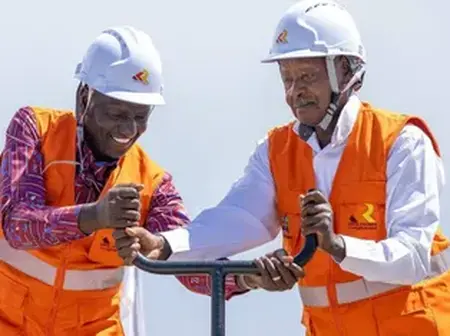
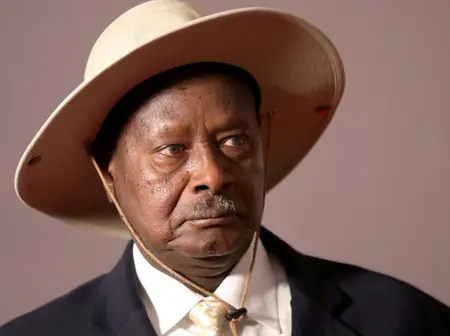
Uganda has reportedly cancelled a Ksh385 billion railway contract with a Turkish construction company. Muhoozi Kainerugaba, Uganda's Chief of Defence Forces, made the claim on Saturday, November 21, 2026.
He said the government had terminated the agreement and would look for another contractor.
"We have cancelled the SGR contract with the Turkish company Yapi Merkezi indefinitely. We shall find a more suitable and effective partner soon," Kainerugaba said.
The contract covers a 270-kilometre standard gauge railway from Malaba to Kampala. Uganda's Transport Ministry signed the deal with Yapi Merkezi in October 2024.
President Yoweri Museveni launched construction on November 21, 2024. The works were expected to take four years.
The project later stalled. Uganda struggled to secure financing, and the Transport Ministry temporarily halted work. The railway was first awarded in 2015 to China Harbour Engineering Company. That deal was cancelled after the contractor failed to secure Chinese government financial.
The claim could affect Kenya's own railway plans. Kenya is extending its SGR from Naivasha through Kisumu to Malaba.
The Malaba link would connect to Uganda's rail line. Kenya launched the Naivasha-Malaba extension in March 2026.
It is split into a 264-kilometre Naivasha-Kisumu section and a 107-kilometre Kisumu-Malaba section.
Chinese firms China Communications Construction Company and China Road and Bridge Corporation are building the Kenyan extension. Both countries had targeted January 2027 for completion.
Once finished, the network is meant to carry goods from the Port of Mombasa through Nairobi and Naivasha to Malaba and Kampala. Kenya has not yet responded to the claim. The Ugandan government has not yet confirmed the cancellation in an official statement.
In a statement shared on Saturday, November 21, Muhoozi said Uganda had terminated its agreement with Yapi Merkezi and would look for another contractor to complete the Standard Gauge Railway (SGR) project.
“We have cancelled the SGR contract with the Turkish company Yapi Merkezi indefinitely. We shall find a more suitable and effective partner soon,” he stated.
The contract, signed in October 2024, was valued at approximately Ksh385 billion. It covered the construction of a 270-kilometre electric railway linking Malaba, on the Kenyan border, to Kampala.
The project is important to Kenya because it is expected to connect Uganda to the railway network running from the Port of Mombasa through Nairobi and Naivasha to Malaba. The connection would provide another option for transporting cargo across the region.
However, the latest announcement has raised questions about the progress of the cross-border railway plan.
Kenya is already extending its SGR from Naivasha through Kisumu to Malaba. Construction of the Naivasha-Kisumu and Kisumu-Malaba sections was launched in March 2026, with the government targeting completion in January 2027.
Uganda's railway project has experienced delays linked to financing challenges and changes in contractors. Muhoozi had also announced the cancellation of Yapi Merkezi's contract in June before reversing that position in November following instructions from President Yoweri Museveni.
The latest announcement therefore comes amid an already uncertain history for the project. Uganda's Transport Ministry is yet to provide clear public confirmation of the contract's legal status following Muhoozi's latest statement.
The big question now is whether Uganda will secure another contractor quickly enough to keep the regional railway connection on schedule.
The US-led consortium selected by the Kenyan government to negotiate prospecting rights for the Mrima Hill rare earth and niobium deposits has unveiled a 36-month programme outlining what it plans to do before making a decision on developing the mineral-rich site in Kwale County.
Frontier Minerals LLC, comprising Bunker Hill Silver Corp., ReElement Technologies Corporation and American Resources Corporation, plans to undertake fresh drilling, establish the mineral deposits’ actual resource potential, conduct processing tests and complete a feasibility study.
In a November 20, 2026 announcement, Bunker Hill Silver Corp. said the programme would begin with drilling to verify historical exploration findings, with the consortium targeting an updated mineral resource estimate within the first year.
The company stated that the first phase “twins and confirms the historical PAW drill holes and is designed to deliver a current NI 43-101 mineral resource estimate within the first year.”
The proposed work will be followed by expansion drilling to establish the broader extent of the deposits.
The initial drilling programme will seek to establish whether historical findings accurately represent the quantity and grade of rare earth and niobium minerals at Mrima Hill.
The announcement cites historical estimates of 48.7 million tonnes of indicated rare earth resources grading 4.40 per cent total rare earth oxides (TREO) and 110.7 million tonnes of inferred resources grading 3.61 per cent TREO.
However, the figures are not current mineral resources. The consortium says the historical estimates must be verified before they can be relied upon.
It also disclosed that it does not yet have access to the historical drill-hole database, assay certificates, sample material or drill core supporting the estimates.
Beyond drilling, the consortium plans to investigate how the minerals can be processed locally, potentially creating additional value within Kenya’s mining industry.
Its proposed programme includes metallurgical test work, process development and a planned metallurgical testing and pilot facility in Kenya.
ReElement’s chromatography-based separation technology will also be assessed as part of a study comparing different refining technologies.
The announcement states that the programme will include “a planned metallurgical testing and pilot facility in Kenya and the refining technology trade-off study, in which ReElement’s chromatography-based separation technology will be assessed.”
The final processing technology will depend on the results of the feasibility study.
The consortium’s proposal is to produce separated rare earth and niobium products refined in Kenya for Western supply chains.
Environmental Studies and Community Engagement
The proposed programme will also include an environmental, social and health impact assessment (ESHIA), a radiological baseline study and a radiation safety management plan.
The assessments will examine the environmental and health considerations associated with developing the mineral deposits, including the presence of thorium.
Before prospecting begins, Frontier must engage host communities, landowners, county leadership and other local stakeholders and obtain the consents required under Kenya’s Mining Act.
The company acknowledges “the environmental and cultural significance of Mrima Hill to the Digo community and the people of Kwale County.”
It also plans to recruit a Kenyan-based team, including a resident resource geologist and environmental and community specialists.
The final stage will involve completing a feasibility study to establish whether the project can advance to development.
The consortium is targeting a development decision within three years after the prospecting licence is issued.
However, winning the tender does not automatically grant Frontier permission to begin prospecting or mining. It must apply for a prospecting licence through the Ministry’s Online Mining Cadastre.
The application will be reviewed by the Mineral Rights Board, after which the Cabinet Secretary may grant the licence on the board’s recommendation.
If the project records a positive feasibility study, obtains a mining licence and secures financing, Bunker Hill is positioned to be contracted to build and operate the mine and processing plant.
The proposed 36-month programme therefore marks the next phase of the Mrima Hill project, with exploration, local processing assessments and regulatory approvals preceding any possible commercial mining.
The heated moment unfolded when a reporter approached the vendor to ask for her opinion on the government’s recent move to lower the retail price of subsidised fertiliser for farmers across the country.
In August 2026, Agriculture Cabinet Secretary Mutahi Kagwe announced that the cost of a 50-kilogramme bag of subsidised fertiliser would be reduced from Ksh2,500 to Ksh2,000 starting in September 2026, alongside cheaper certified maize seeds to support agricultural production.
Rather than praising the subsidy program, the visibly frustrated trader dismissed questions about the administration’s economic policies, arguing that ordinary citizens continue to face severe financial strain in their daily lives.
Speaking passionately in Swahili during the viral clip aired by K24 TV, she stated, "Msiniulize kuhusu huyo rais wenu. Nchi inahangaika ni kama haina rais," which translates to, "Do not ask me about that president of yours. The country is struggling as though it has no president."
Her blunt remarks spread rapidly across X, Facebook, and TikTok after K24 TV published the segment, drawing thousands of reactions from Kenyans debating the disconnect between official economic figures and household realities.
Many online commenters backed the trader’s position, pointing out that reductions in farm input prices take months to trickle down into lower retail food costs at urban markets.
Small-scale traders at Marikiti and other major Nairobi markets have repeatedly raised concerns over shrinking profit margins, high transport expenses, county operating levies, and reduced customer purchasing power.
When shoppers reduce the quantities of fresh produce they buy each day, market vendors are left absorbing unsold stock and tighter cash flow despite macro-level policy adjustments.
Conversely, defenders of the government’s agricultural agenda argued that lowering fertiliser and seed costs remains a necessary foundational step to boost local harvests, reduce reliance on food imports, and stabilize market prices over time.
They maintain that strengthening domestic farming capacity is the most sustainable way to shield Kenyan households from global supply shocks and unpredictable weather patterns.
As one of Nairobi’s largest fresh produce distribution centers, Marikiti Market frequently reflects the immediate economic mood of working-class Kenyans, giving grassroots voices significant influence in national political conversations.
With economic recovery, taxation, and the cost of living dominating public discourse ahead of the 2027 General Election, unscripted reactions from everyday business owners continue to shape how citizens evaluate government performance.
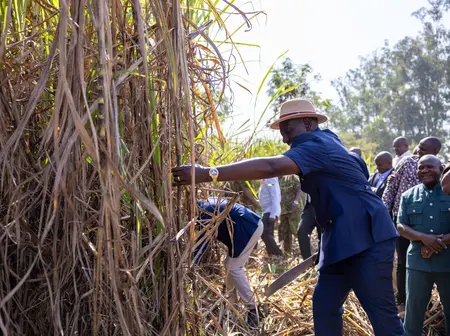
The announcement comes as the government moves to improve the earnings of sugarcane farmers following changes in the management of state-owned sugar factories.
Ruto said the government had set aside KSh1.2 billion for sugarcane farmers supplying Mumias, Nzoia, Chemelil and Muhoroni sugar factories.
The President made the announcement during his ongoing development tour of Western Kenya, where he has been addressing residents and highlighting his administration's projects in the region.
He questioned why sugarcane farmers should not enjoy bonuses similar to those received by tea and coffee growers.
According to Ruto, the planned payments are part of efforts to ensure farmers benefit from improvements in the sugar industry.
The Kenya Sugar Board is expected to oversee the distribution of the money, with individual payments determined by the amount of sugarcane delivered to the factories.
The board has reportedly completed the verification of eligible farmers using delivery records provided by the respective factories.
The President also claimed that farmers who previously waited for several months to receive payment for their sugarcane are now receiving their money more frequently.
The bonus announcement comes after the government leased five state-owned sugar factories to private investors for 20 years as part of efforts to revive the struggling sugar sector.
Apart from the sugar industry, Ruto announced several development plans during his Western Kenya tour, including road construction, electricity connections and the recruitment of additional teachers.
The announcements have placed farmers' earnings and the future of the sugar industry at the centre of discussions in the region.
For Mumias sugarcane farmers who have experienced payment challenges in previous years, attention will now turn to the promised November 23 payments.
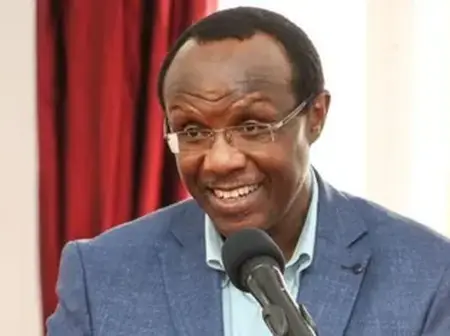
Head of the Presidential Council of Economic Advisors David Ndii has attributed the Ksh5.1 billion loss, reported by the Nairobi Expressway operator to the high cost of financing major infrastructure projects.
In a statement on Saturday, November 21, Ndii explained that revenue collected through toll charges during the early years of such projects is largely used to repay loans taken to finance construction.
His remarks followed the release of financial figures showing that Moja Expressway Company recorded a net loss of Ksh5.1 billion for the year ended December 2025, despite generating Ksh9.63 billion in revenue.
According to the National Treasury's Fifth Annual Report on the State of Public-Private Partnerships, the company incurred direct costs amounting to Ksh14.73 billion during the period.
The figures attracted public attention, with questions emerging over how operating a 27-kilometre road could result in such a high annual expenditure.
NTV journalist Eric Latiff was among those who questioned the costs, taking to his X account to ask how activities such as sweeping the road, maintaining street lighting and operating toll booths could account for the reported amount.
Responding to the concerns, Ndii said infrastructure projects are usually financed through a combination of equity and debt.
He explained that investors and project developers borrow money to fund construction, with the loans attracting interest that must be repaid over time.
As a result, a significant portion of the revenue collected during the initial years goes towards meeting financing obligations rather than being treated as profit.
The explanation suggests that the company's reported loss cannot be understood by looking at routine road maintenance expenses alone.
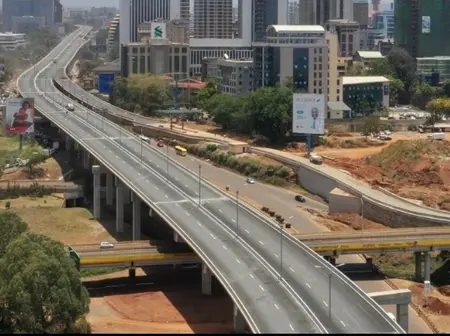
The Nairobi Expressway was developed under a public-private partnership arrangement, with the private operator responsible for financing, constructing and operating the road before recovering its investment through toll charges.
Such arrangements are designed to allow major infrastructure projects to proceed without the government meeting the full construction cost upfront.
However, the reported Ksh5.1 billion loss has renewed public interest in the financial structure of the project, and how toll revenue is distributed between operating expenses, debt repayment and other obligations.
President William Ruto’s economic adviser David Ndii has explained why the Nairobi Expressway continues to record significant financial losses despite generating billions of shillings from motorists using the elevated highway.
Ndii attributed the losses to the expensive financing structure associated with major infrastructure projects, explaining that a substantial portion of the revenue collected during the initial years is usually directed towards repaying loans used during construction.
His remarks come amid growing public debate following the release of financial figures showing that Moja Expressway Company Limited, which operates the 27-kilometre road, recorded KSh9.63 billion in revenue in 2025.
However, the company incurred direct expenditure amounting to KSh14.73 billion, resulting in a reported deficit of approximately KSh5.1 billion.
Responding to questions raised by journalist Eric Latiff and economist Jaindi Kisero, Ndii explained that infrastructure projects typically operate under a financing arrangement comprising 30 per cent equity and 70 per cent debt.
He noted that borrowing is generally cheaper than relying on investors' capital, with debt financing attracting annual costs of between five and 10 per cent, compared to 15 to 20 per cent for equity.
According to Ndii, infrastructure projects of this nature can spend their first 10 to 15 years directing the money they generate towards servicing outstanding loans.
He argued that investors should therefore be prepared to wait longer before recovering their investments and earning substantial returns.
Ndii further pointed to pension funds as an important source of patient capital because such institutions can afford to wait more than 15 years before receiving returns.
The debate has also raised questions about the expressway's dollar-denominated loans, rising expenditure and toll charges paid by Kenyan motorists.
Meanwhile, Treasury Cabinet Secretary John Mbadi has called for closer examination of the company's financial statements to establish why expenditure has increased faster than revenue.
The discussion has renewed scrutiny of Kenya's public-private partnership model as the government considers similar arrangements for other major infrastructure projects.
Kenyan banks are strengthening their influence across Africa after securing significant control of banking assets in neighbouring countries, with Rwanda and the Democratic Republic of Congo emerging as major destinations for their investments.
A new International Monetary Fund working paper has revealed that Kenyan-controlled banks account for approximately 65 per cent of Rwanda’s banking assets and 48 per cent of assets in the DRC.
They also control 29 per cent of Uganda’s banking assets.
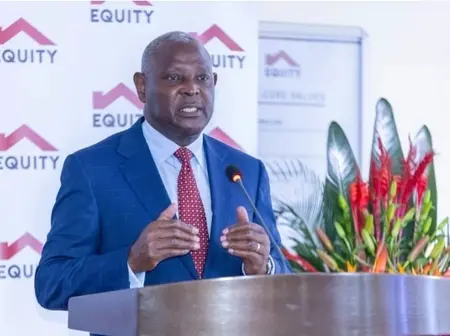
The findings highlight Kenya’s growing influence in the regional financial sector, with major lenders including Equity Group and KCB Group leading the expansion.
According to the IMF report titled Cross-Border Banking Exposures and Macroeconomic Spillover Effects: The Case of Kenya, the expansion has been driven by strategic acquisitions, investments in established financial institutions and the search for new markets beyond Kenya.
KCB strengthened its position in Rwanda in 2021 after acquiring a 62.06 per cent stake in Banque Populaire du Rwanda for approximately KSh4.8 billion.
The lender subsequently increased its ownership before merging BPR with its existing Rwandan operations in 2022.
In the DRC, Equity Group expanded through the acquisition of ProCredit Bank Congo and Banque Commerciale du Congo, which were brought together under Equity BCDC.
KCB also entered the Congolese market after completing the acquisition of an 85 per cent stake in Trust Merchant Bank in December 2022.
Data from the Central Bank of Kenya shows that Kenyan banks held approximately KSh2.147 trillion in assets across other regional markets by the end of 2024, nearly 3.7 times the amount recorded in 2018.
The DRC accounted for KSh933.4 billion, representing 43.5 per cent of those assets.
However, the rapid expansion has raised concerns about financial stability and cross-border supervision.
The IMF has highlighted elevated non-performing loan ratios at some Kenyan bank subsidiaries, warning that closer cooperation between regional regulators is necessary to manage potential financial risks.
Despite the concerns, Kenyan lenders continue to position themselves as major players in Africa's expanding financial services industry.
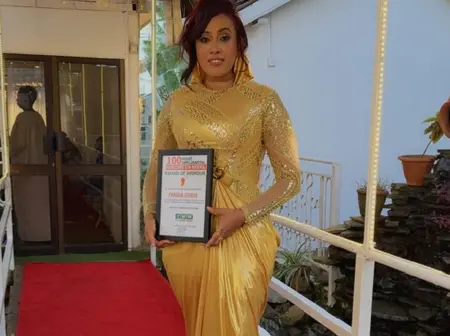
Businesswoman Farida Idris, who spent 16 years at Capital FM before founding her own strategic communications agency, has been named among Kenya’s 100 Most Influential Muslims.
Idris, the founder and lead strategist of FID & Co. Africa, was recognised during the seventh edition of the initiative held in Mombasa for her contribution to entrepreneurship, leadership, strategic communications and women’s empowerment.
She built her career in media and business development at Capital FM Kenya, where she rose to senior leadership roles overseeing commercial strategy, partnerships and experiential projects before venturing into entrepreneurship.
She now runs FID & Co. Africa, a strategic communications, public relations and experiential agency that works with brands, institutions and organisations to build visibility, partnerships and impact.
With nearly two decades of experience in media, communications and business development, Idris has also undertaken strategic partnership work across East Africa.
Beyond running her business, she has established the Suhba Series, a women’s empowerment platform launched in 2026 to foster conversations on faith, leadership, entrepreneurship, financial independence and personal growth.
The platform has held two editions, bringing together accomplished women, emerging leaders and changemakers to share experiences and build networks.
Speaking during the recognition ceremony, Idris said celebrating people while they are still making meaningful contributions to society can inspire them to continue their work.
“We are often very good at celebrating people when they are no longer here to hear the applause. Recognition should not have to wait. Sometimes, simply telling someone that their work matters is enough to inspire them to keep going,” she said.
She argued that influence should be measured by the lives one improves rather than the number of people who know their name.
“Influence is not how many people know your name. It is how many lives are better because you showed up. That is the kind of influence I aspire to,” she added.
Idris credited the Muslim media fraternity for supporting community initiatives and helping give visibility to platforms such as the Suhba Series.
She said she intends to expand both FID & Co. Africa and the Suhba Series by building more strategic partnerships and creating platforms that amplify women's voices.
“When you empower a woman, you don’t simply change her story. You change the possibilities for everyone connected to her,” she noted.
Ireland is offering financial support of up to approximately Ksh12 million to help eligible property buyers and homeowners restore vacant and derelict houses, including those located in rural communities and remote offshore islands.The initiative, known as the Vacant Property Refurbishment Grant, is part of the Irish government’s efforts to bring unused homes back into residential use and revitalise communities affected by population decline.