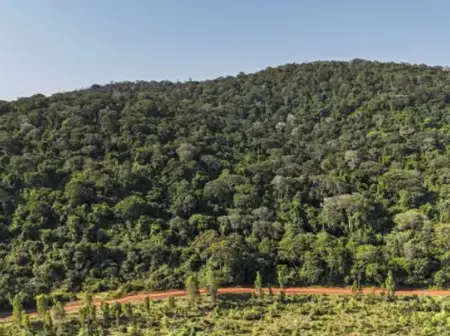
The US-led consortium selected by the Kenyan government to negotiate prospecting rights for the Mrima Hill rare earth and niobium deposits has unveiled a 36-month programme outlining what it plans to do before making a decision on developing the mineral-rich site in Kwale County.
Frontier Minerals LLC, comprising Bunker Hill Silver Corp., ReElement Technologies Corporation and American Resources Corporation, plans to undertake fresh drilling, establish the mineral deposits’ actual resource potential, conduct processing tests and complete a feasibility study.
In a November 20, 2026 announcement, Bunker Hill Silver Corp. said the programme would begin with drilling to verify historical exploration findings, with the consortium targeting an updated mineral resource estimate within the first year.
The company stated that the first phase “twins and confirms the historical PAW drill holes and is designed to deliver a current NI 43-101 mineral resource estimate within the first year.”
The proposed work will be followed by expansion drilling to establish the broader extent of the deposits.
The initial drilling programme will seek to establish whether historical findings accurately represent the quantity and grade of rare earth and niobium minerals at Mrima Hill.
The announcement cites historical estimates of 48.7 million tonnes of indicated rare earth resources grading 4.40 per cent total rare earth oxides (TREO) and 110.7 million tonnes of inferred resources grading 3.61 per cent TREO.
However, the figures are not current mineral resources. The consortium says the historical estimates must be verified before they can be relied upon.
It also disclosed that it does not yet have access to the historical drill-hole database, assay certificates, sample material or drill core supporting the estimates.
Beyond drilling, the consortium plans to investigate how the minerals can be processed locally, potentially creating additional value within Kenya’s mining industry.
Its proposed programme includes metallurgical test work, process development and a planned metallurgical testing and pilot facility in Kenya.
ReElement’s chromatography-based separation technology will also be assessed as part of a study comparing different refining technologies.
The announcement states that the programme will include “a planned metallurgical testing and pilot facility in Kenya and the refining technology trade-off study, in which ReElement’s chromatography-based separation technology will be assessed.”
The final processing technology will depend on the results of the feasibility study.
The consortium’s proposal is to produce separated rare earth and niobium products refined in Kenya for Western supply chains.
Environmental Studies and Community Engagement
The proposed programme will also include an environmental, social and health impact assessment (ESHIA), a radiological baseline study and a radiation safety management plan.
The assessments will examine the environmental and health considerations associated with developing the mineral deposits, including the presence of thorium.
Before prospecting begins, Frontier must engage host communities, landowners, county leadership and other local stakeholders and obtain the consents required under Kenya’s Mining Act.
The company acknowledges “the environmental and cultural significance of Mrima Hill to the Digo community and the people of Kwale County.”
It also plans to recruit a Kenyan-based team, including a resident resource geologist and environmental and community specialists.
The final stage will involve completing a feasibility study to establish whether the project can advance to development.
The consortium is targeting a development decision within three years after the prospecting licence is issued.
However, winning the tender does not automatically grant Frontier permission to begin prospecting or mining. It must apply for a prospecting licence through the Ministry’s Online Mining Cadastre.
The application will be reviewed by the Mineral Rights Board, after which the Cabinet Secretary may grant the licence on the board’s recommendation.
If the project records a positive feasibility study, obtains a mining licence and secures financing, Bunker Hill is positioned to be contracted to build and operate the mine and processing plant.
The proposed 36-month programme therefore marks the next phase of the Mrima Hill project, with exploration, local processing assessments and regulatory approvals preceding any possible commercial mining.
Leave a Reply