Category: Economy&Finance

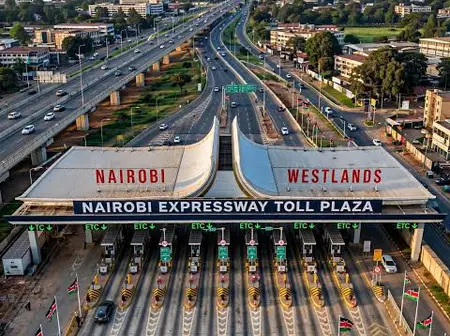
  • Ndii Reveals Why Nairobi Expressway Recorded Ksh5.1 Billion Loss Despite Collecting Ksh9.6 Billion

    Ndii Reveals Why Nairobi Expressway Recorded Ksh5.1 Billion Loss Despite Collecting Ksh9.6 Billion

    Ndii, who heads the Presidential Council of Economic Advisors, attributed the financial performance to the expensive nature of financing large infrastructure projects, arguing that revenue collected during the early years is largely committed to servicing construction loans.

    His remarks followed the release of financial figures showing that Moja Expressway Company recorded a net loss of Ksh5.1 billion for the financial year ending December 2025.

    The company generated Ksh9.63 billion in revenue but reported direct costs amounting to Ksh14.73 billion, according to the National Treasury's Fifth Annual Report on the State of Public-Private Partnerships.

    The figures triggered questions about the expenses involved in operating the 27-kilometre highway, with NTV journalist Eric Latiff questioning how routine activities such as cleaning, lighting and managing toll stations could account for such substantial costs.

    Responding to the concerns, Ndii explained that infrastructure investments are commonly financed through a combination of borrowed funds and money contributed by investors.

    He noted that debt financing generally attracts annual interest rates of between five and 10 per cent, compared to equity financing, which can cost investors between 15 and 20 per cent.

    According to Ndii, infrastructure projects typically adopt a financing structure comprising 30 per cent equity and 70 per cent debt to reduce their overall cost of capital.

    He further explained that investors may have to wait between 10 and 15 years before receiving substantial returns because much of the money generated during the initial operating period goes towards loan repayments.

    Ndii argued that such projects require long-term investors, including pension funds, which can afford to wait for extended periods before recovering their investments.

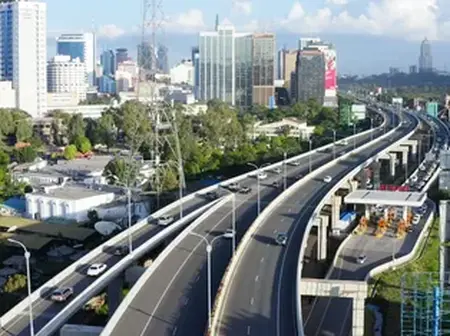
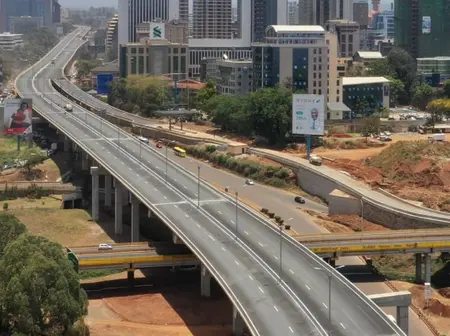
    The Nairobi Expressway was developed through a 30-year Public-Private Partnership between the Kenya National Highways Authority and Moja Expressway Company.

    The road, which connects Mlolongo to James Gichuru Road, opened to motorists in 2022. It operates under a concession arrangement that will eventually see the facility transferred to the Kenyan government when the agreement expires.

    However, Ndii's explanation focused on the financing structure of infrastructure projects rather than providing a detailed breakdown of the company's reported Ksh14.73 billion in direct costs.

    https://www.kenyans.co.ke/news/129573-ndii-explains-why-nairobi-expressway-lost-ksh51-billion

  • Babu Owino’s Major Promise to Nairobi Traders as He Eyes City Hall in 2027

    Babu Owino’s Major Promise to Nairobi Traders as He Eyes City Hall in 2027

    Embakasi East Member of Parliament Babu Owino has promised to reduce business licence fees for traders across Nairobi if elected governor in the 2027 General Election, placing the interests of small-scale business owners at the centre of his campaign.

    Owino said his proposed administration would seek to ease the financial burden facing traders by lowering the cost of obtaining business permits from the Nairobi County Government.

    The legislator's pledge is likely to attract the attention of thousands of business owners who depend on their daily earnings to support their families amid rising operational expenses.

    Nairobi hosts thousands of small and medium-sized enterprises, including shopkeepers, market vendors, street traders, restaurant operators and other entrepreneurs who rely on affordable licensing arrangements to keep their businesses running.

    According to Owino's proposal, reducing business licence charges would help create a more favourable environment for traders while encouraging entrepreneurship and economic growth in the capital.

    The MP has increasingly positioned himself as a candidate promising to transform Nairobi through improved service delivery, accountability and better management of county resources.

    His latest pledge comes as the contest to succeed Governor Johnson Sakaja gathers momentum ahead of the August 2027 General Election.

    Owino is among several politicians seeking to occupy City Hall, with his campaign focusing on issues affecting ordinary Nairobi residents and the business community.

    The Embakasi East legislator has also previously highlighted corruption, poor garbage collection, inadequate street lighting and challenges facing public healthcare as some of the problems requiring urgent attention.

    He has argued that Nairobi needs leadership capable of addressing residents' concerns while ensuring county resources are used responsibly.

    His promise to reduce business licence fees could therefore become an important campaign message, particularly among traders who have repeatedly raised concerns about the cost of operating businesses in the city.

    However, the proposed reductions would need to be translated into a clear policy and implemented through the appropriate county processes if he wins the governorship.

    As the 2027 elections approach, Nairobi traders will be watching closely to see whether the competing gubernatorial candidates can present practical solutions to the challenges affecting their businesses.

    Sources;

    https://peopledaily.digital/inside-politics/babu-owino-pledges-to-reduce-nairobi-business-licence-fees-for-all-traders-if-elected-governor

  • From Finance PS to Senior Boardroom Roles, Martin Oduor-Otieno’s Rise Through Corporate World

    From Finance PS to Senior Boardroom Roles, Martin Oduor-Otieno’s Rise Through Corporate World

    thumbnail

    Martin Oduor-Otieno is a Kenyan business advisor, executive coach and former banker with more than 25 years of experience in leadership, financial services, governance and strategy.He is the Founder of The Leadership Group Limited, a position he has held since January 2016, where he provides business advisory services in leadership and governance, strategy development and execution.

  • How KRA plans to track inactive taxpayers and Kenyans who fail to file returns

    How KRA plans to track inactive taxpayers and Kenyans who fail to file returns

    How KRA plans to track inactive taxpayers and Kenyans who fail to file returns

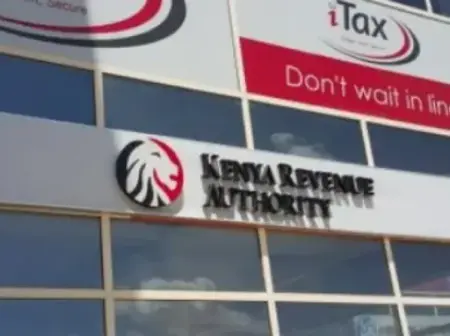
    The Kenya Revenue Authority (KRA) has stepped up efforts to identify inactive taxpayers and follow up with Kenyans who fail to file their tax returns, following the establishment of a permanent unit to maintain taxpayer records.

    The move is among the achievements of a partnership between KRA and the Finnish Tax Administration (VERO), which concluded on Friday, November 20, 2026, in Nairobi.

    In a post shared on X on Saturday, November 21, 2026, the African Tax Administration Forum (ATAF) highlighted the progress made during the collaboration, including cleaning up taxpayer records and strengthening follow-up on non-filers and nil-filers.

    “The Kenya Revenue Authority (KRA) has established a permanent Register Maintenance Unit, made progress in cleaning up taxpayer records and strengthened its follow-up of non-filers and nil-filers,” the statement said.

    The authority has also established a permanent Register Maintenance Unit to ensure taxpayer information is regularly updated and maintained.

    The establishment of the unit is expected to support efforts to improve the accuracy of taxpayer records and help the authority identify people who are not meeting their filing obligations.

    Non-filers are taxpayers who fail to submit their required tax returns, while nil-filers submit returns declaring no income or tax payable for the relevant period.

    Improved records can help KRA identify gaps in filing, follow up with taxpayers whose returns are outstanding and strengthen compliance monitoring.

    The collaboration with VERO focused on improving KRA’s administrative capacity through technical support and the exchange of knowledge with other tax authorities.

    ATAF’s Head of the Project Management Office, Sameera Khan, highlighted the organisation’s role in identifying areas requiring support, facilitating peer learning and providing strategic guidance through the project’s board.

    As part of the collaboration, ATAF facilitated peer-to-peer learning involving the Rwanda Revenue Authority (RRA), including a benchmarking visit.

    The exchange provided an opportunity for tax officials to learn from another revenue authority’s experiences and approaches to tax administration.

    ATAF also provided strategic guidance through the Project Board to support the implementation of the programme’s priorities.

    The forum congratulated KRA and VERO on the achievements recorded during the partnership, pointing to progress in taxpayer register maintenance and compliance follow-up.

    In an announcement on November 10, 2026, the authority said the deadline for filing individual income tax returns would move from June 30 to April 30, starting in 2027.

    This means Kenyans filing their 2026 individual income tax returns will be required to submit them by April 30, 2027.

    “The new deadline is 30th April,” KRA stated.

    A woman files her tax returns on the KRA website. Image used for illustration.

    The earlier deadline means taxpayers will need to organise their financial records and prepare their returns sooner to avoid missing the submission date.

    As KRA strengthens its taxpayer records and follows up on outstanding returns, individuals are encouraged to confirm their filing obligations and comply with the applicable deadlines.

  • Uganda Announces Major Change to Ksh385 Billion Railway Project Linking Kampala to Kenya

    Uganda Announces Major Change to Ksh385 Billion Railway Project Linking Kampala to Kenya

    In a statement issued on Saturday, November 21, Muhoozi claimed that the Ugandan government had terminated its agreement with Yapi Merkezi, the contractor selected to construct the Standard Gauge Railway (SGR) connecting Kampala to Malaba on the Kenyan border.

    He indicated that the government would seek a new company to undertake the project, although he did not provide details of the circumstances surrounding the reported termination.

    “We have cancelled the SGR contract with the Turkish company Yapi Merkezi indefinitely. We shall find a more suitable and effective partner soon,” Muhoozi stated.

    The agreement, valued at approximately Ksh385 billion, was signed by Uganda's Ministry of Transport in October 2024. It covered construction of a 270-kilometre railway line between Kampala and Malaba.

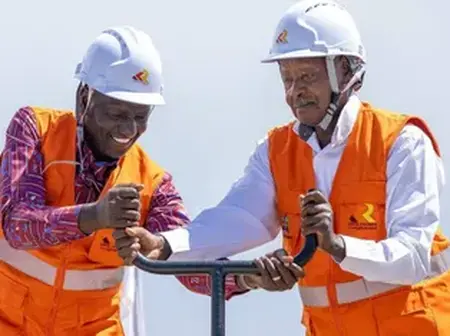
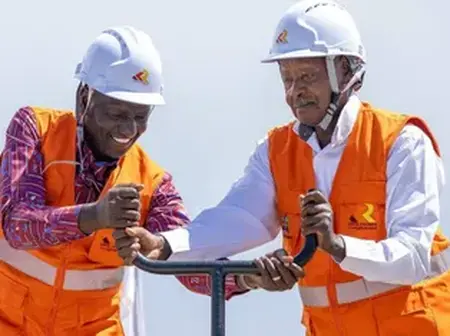
    President Yoweri Museveni officially launched the construction works on November 21, 2024, with the project initially expected to take four years.

    However, progress was disrupted by financing difficulties, forcing authorities to suspend parts of the implementation process.

    Uganda had previously awarded the railway contract to China's China Harbour Engineering Company in 2015, but that arrangement was abandoned after the firm failed to secure the required financing.

    What the development means for Kenya

    The reported cancellation could complicate plans to establish a continuous railway connection between Kenya and Uganda.

    Kenya is currently extending its SGR network from Naivasha through Kisumu to Malaba, where it is expected to connect with Uganda's railway system.

    The Kenyan extension was officially launched in March 2026 and comprises two sections: the 264-kilometre Naivasha-Kisumu line and the 107-kilometre Kisumu-Malaba stretch.

    China Communications Construction Company and China Road and Bridge Corporation are undertaking the construction works.

    Both countries had previously targeted January 2027 for completion of their respective railway extensions.

    Once operational, the regional railway network is expected to facilitate cargo transportation from the Port of Mombasa through Nairobi and Naivasha to Kisumu, Malaba and Kampala.

    However, Uganda's reported decision to terminate the Turkish firm's contract raises fresh questions about when the cross-border railway connection will become operational.

    https://www.kenyans.co.ke/news/129568-uganda-cancels-multi-billion-sgr-deal-turkish-firm-muhoozi-claims

  • Why Ndii Says Nairobi Expressway Is Losing Billions

    Why Ndii Says Nairobi Expressway Is Losing Billions

    Moja Expressway Company has reported a net loss of Ksh5.1 billion. This happened even though the firm earned Ksh9.63 billion in revenue for the year ended December 2025. The figures appear in the National Treasury's Fifth Annual Report on the State of Public-Private Partnerships.

    According to the report, the company spent Ksh14.73 billion in direct costs. That is far more than the money it collected from motorists. The numbers quickly sparked public debate.

    Many Kenyans wondered how running a newly built 27-kilometre road could cost so much in one year. NTV journalist Eric Latiff asked the question on his X account. He wanted to know how sweeping the road, keeping the lights on and running toll booths could add up to such a huge bill.

    The Head of the Presidential Council of Economic Advisors David Ndii responded on Saturday, November 21. He said the real burden comes from the cost of financing the project. Big infrastructure projects are built using a mix of debt and investor money.

    Ndii explained that loans are cheaper because they cost between 5 and 10 per cent every year. Money from investors costs far more at between 15 and 20 per cent. He said a typical project carries 30 per cent equity and 70 per cent debt. The more debt a project can handle, the lower its cost of capital becomes.

    He added that such projects usually generate cash in their first 10 to 15 years. Most of that money goes towards repaying loans before investors see any returns. This is why patient capital such as pension funds is needed. These investors can wait 15 years or more for their payout.

    The Nairobi Expressway runs for 27 kilometres under a 30-year partnership between the Kenya National Highways Authority and Moja Expressway Company Limited. It opened in 2022. Motorists pay tolls based on where they enter and exit. At the end of the concession the road will be handed over to the government.

    https://x.com/kenyans/status/2124119568704483408?a=AJXkB794-gRhtKoFxPE&s=46

  • Why Motorists Paid Billions Yet Nairobi Expressway Still Recorded Massive Losses

    Why Motorists Paid Billions Yet Nairobi Expressway Still Recorded Massive Losses

    Thousands of Nairobi motorists pay toll fees every day, yet the company running the elevated highway just posted a massive Sh5.1 billion loss.

    On Saturday, November 21, President William Ruto’s Chief Economic Advisor, David Ndii, stepped forward to explain the puzzling financial numbers. Speaking via a statement shared on his social media channels, Ndii attributed the deficit to the heavy cost of repaying construction loans during the early years of the project.

    The public uproar began earlier in the week after the National Treasury released its Fifth Annual Report on the State of Public-Private Partnerships. The official document showed that Moja Expressway Company Limited collected Sh9.63 billion in toll revenue in 2025, yet spent Sh14.73 billion.

    Many Kenyans struggled to understand how a brand-new 27-kilometre road could swallow nearly Sh15 billion in just twelve months. Dismissing the online skepticism as premature panic, Ndii replied directly to critics on X using blunt Swahili slang.

    "Hii ni kiherehere," Ndii wrote, using the local term that translates to unnecessary fuss or overexcitement. He added, "Most infrastructure projects take 5 to 10 years to break even. Investors usually recoup their money in the latter half of the concession."

    According to the economist, a huge chunk of the Sh170 to Sh500 toll fees motorists pay goes straight into servicing the loans used to build the road. He also pointed out that the Nairobi Expressway has no provision for viability gap funding, meaning the private Chinese investor bears the commercial risk alone rather than passing the bill to taxpayers.

    Treasury Cabinet Secretary John Mbadi echoed a similar defence during a Tuesday night television interview. Mbadi assured Kenyans that the operator's red ink poses zero financial risk to the national budget.

    Still, economic commentators and journalists have raised sharp questions about the transparency of the reported expenses. Veteran business journalist Jaindi Kisero and NTV host Eric Latiff publicly questioned how routine maintenance, lighting, and toll booth operations on a relatively new highway could add up to Sh14.73 billion in one year.

    Critics also note that the Treasury report lumped all expenses under "direct costs" without breaking down how much went to loan interest, currency exchange losses, or actual road maintenance. For daily commuters already stretched by high fuel prices and toll rates that jumped in early 2024, the math feels hard to swallow.

    As the government plans to build more major roads like the Rironi-Mau Summit highway using similar private-investor deals, the Nairobi Expressway has become a major test case.

    Do you believe the Nairobi Expressway is genuinely making losses, or should the government make the operator's full financial records public?

  • 5 Small Businesses Form Four Leavers Can Start in Kenya With KSh500 to KSh5,000

    5 Small Businesses Form Four Leavers Can Start in Kenya With KSh500 to KSh5,000

    For those who have limited financial resources, starting a small business can provide an opportunity to become financially independent while gaining valuable entrepreneurial experience.

    A report by K24 Digital highlights several businesses that young people can venture into with starting capital ranging between KSh500 and KSh5,000.

    One of the options is selling smokies and boiled eggs. The business is popular in many Kenyan neighbourhoods because the products are affordable and attract customers looking for quick snacks. With approximately KSh3,000 to KSh5,000, a beginner can purchase initial stock, cooking fuel, ingredients for kachumbari and basic serving materials.

    Another opportunity is fruit vending, which can be started with approximately KSh1,000 to KSh3,000. Young entrepreneurs can buy bananas, oranges, mangoes and other seasonal fruits from wholesale markets before selling them to customers in residential areas or busy streets. Proper stock management is important because fresh produce can spoil if it remains unsold.

    Young people who enjoy preparing food can also consider making and selling mandazi. With an estimated KSh1,000 to KSh2,500, they can purchase flour, cooking oil, sugar and other ingredients needed for production. The finished products can be supplied to small shops, neighbours and workers looking for affordable breakfast options.

    The second-hand clothing business, commonly known as mitumba, is another venture that requires relatively little capital. Instead of purchasing an expensive bale of clothes, beginners can select individual pieces with approximately KSh2,000 to KSh5,000. They can then sell the items through social media platforms such as WhatsApp and Facebook or directly to customers within their neighbourhoods.

    Another business idea is preparing and selling fresh juice or popcorn. Young people interested in juice preparation can purchase fruits and packaging materials, although having a blender already can significantly reduce the initial investment. Popcorn is another option, with a small amount of money going towards maize, cooking oil, salt and packaging materials.

    These ventures offer Form Four leavers an opportunity to explore entrepreneurship without necessarily waiting until they secure formal employment.

    However, starting a business requires more than purchasing stock. Young entrepreneurs need to identify suitable selling locations, understand customer preferences, maintain proper hygiene and keep track of their expenses.

    They should also avoid spending all their starting capital at once and instead reserve some money for restocking and unexpected costs.

    Ultimately, the period after completing secondary school can be used to develop practical skills, understand how businesses operate and build a source of income. Even a small venture started with limited resources can provide valuable experience and potentially grow with proper planning and commitment.

    https://x.com/K24Tv/status/2123761021622096217?s=19

  • Easy Coach Updates Fare Prices from Nairobi to Kisii, Western and Kisumu Ahead of Christmas

    Easy Coach Updates Fare Prices from Nairobi to Kisii, Western and Kisumu Ahead of Christmas

    Easy Coach has revised fares for passengers travelling from Nairobi to various destinations in Western Kenya and Nyanza ahead of the December festive season, with ticket prices reaching nearly KSh 2,000.

    According to the updated pricing, passengers travelling from Nairobi to Kisumu, Maseno and Siaya will pay KSh 1,900, while those heading to Busia will part with KSh 1,950.

    Travellers to Kakamega and Mumias will pay KSh 1,800, while tickets to Kisii and Homa Bay have been set at KSh 1,550. Those travelling to Migori and Rongo will pay KSh 1,600.

    The revised fares come as transport operators prepare for increased demand during the December holidays, when thousands of Kenyans travel to their rural homes to celebrate Christmas and New Year with family.

    Easy Coach has also launched an early booking campaign, urging customers to secure their seats in advance as buses on popular routes are likely to fill up quickly.

    The company has previously experienced high demand for destinations such as Kisumu and Busia during festive seasons, with passengers booking seats weeks ahead of their travel dates.

    The latest adjustment follows earlier fare changes in 2026, when transport operators faced pressure from rising fuel costs.

    With the festive season approaching, travellers planning to use Easy Coach have been encouraged to confirm their travel dates early and budget for the revised fares before making their journeys.

    Source: https://www.facebook.com/share/1EeNvffKCa/

  • Uganda Cancels Ksh385 Billion Railway Deal With Turkish Firm Leaving Kenya’s SGR Dream In Doubt

    Uganda Cancels Ksh385 Billion Railway Deal With Turkish Firm Leaving Kenya’s SGR Dream In Doubt

    Chief of Defence Forces Muhoozi Kainerugaba made the announcement on Saturday November 21. He said the government had ended the agreement and would look for another contractor.

    "We have cancelled the SGR contract with the Turkish company Yapi Merkezi indefinitely. We shall find a more suitable and effective partner soon," he stated.

    Uganda's Transport Ministry signed the deal with the Turkish firm in October 2024. It covered a 270-kilometre railway line from Malaba to Kampala.

    President Yoweri Museveni launched the construction on November 21 2024. The works were expected to take four years. However the project stalled after Uganda struggled to secure the money needed to build it.

    This is not the first time the railway has hit trouble. The project was first awarded to China Harbour Engineering Company in 2015. That agreement collapsed when the contractor failed to secure financing from the Chinese government.

    The decision could affect Kenya. The country is extending its own SGR line from Naivasha through Kisumu to Malaba where it is supposed to connect with Uganda's railway.

    Kenya launched the Naivasha-Malaba extension in March 2026. The project has two sections. These are a 264-kilometre Naivasha-Kisumu line and a 107-kilometre Kisumu-Malaba stretch.

    China Communications Construction Company and China Road and Bridge Corporation are carrying out the work. The railway is meant to offer a new route for goods moving from the Port of Mombasa to Kampala.

    https://x.com/kenyans/status/2124060236386619745?a=aqS-dH7DEzhFw9Di2X0&s=46