Category: Economy&Finance

  • What Must Happen Before Kenya Can Export Oil From Turkana

    What Must Happen Before Kenya Can Export Oil From Turkana

    Kenya's journey towards exporting crude oil from Turkana involves more than drilling wells. Production facilities, transportation arrangements and storage infrastructure must all be ready before the oil can reach international markets.

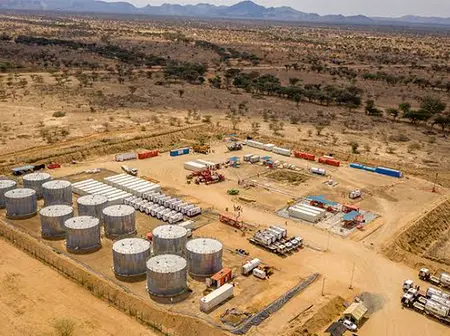
    Production drilling began at the Amosing 1 well pad in the South Lokichar Basin on November 20, 2026. The project is being developed by Gulf Energy E&P BV SEZ under the government's approved development plan.

    However, the beginning of drilling does not mean that exports can start immediately. Several stages must be completed before the first shipment leaves the country.

    The first phase of the South Lokichar oil project is designed to produce approximately 20,000 barrels of crude oil per day.

    According to the South Lokichar Field Development Plan presented to Parliament, this phase will focus on the Ngamia and Amosing fields. It includes plans for 48 production and injection wells, together with the facilities required to support oil production.

    The wider development covers six oil discoveries: Ngamia, Amosing, Twiga, Ekales, Agete and Etom.

    These discoveries will not all enter production at the same time. The project will be developed in phases, with the second phase expected to increase production capacity to approximately 50,000 barrels per day.

    The initial target therefore represents only the first stage of a larger oil development programme.

    Transporting crude oil from Turkana to the coast is one of the major requirements for starting exports.

    During the initial phase, the oil is expected to be transported by road tankers. The trucks will carry crude from the South Lokichar oil fields to the Kenya Petroleum Refineries Limited storage facilities in Changamwe, Mombasa.

    The Energy and Petroleum Regulatory Authority's 2026 statistics report outlines a transport arrangement involving approximately 600 trucks. The system is expected to support about 100 truck journeys per day, with an average round trip taking six days.

    After reaching Mombasa, the crude will be stored before being prepared for export through the Kipevu Oil Terminal 2.

    This makes reliable road transport and adequate storage capacity important parts of the export plan. Delays or disruptions along the transport route could affect the movement of crude oil from the production fields to the coast.

    The project has two important target dates that should not be confused.

    Gulf Energy is targeting December 1, 2026, for the start of first oil production. However, the first export shipment is expected to leave Kenya on March 1, 2027, according to the Kenya News Agency.

    The difference between these dates reflects the work required after production begins.

    Once crude oil is produced, it must be collected, transported to Mombasa and stored before arrangements can be completed for export. The process involves several activities, meaning that the start of production does not automatically translate into an immediate shipment.

    The March 2027 date is therefore a target that depends on the successful completion of these arrangements.

    The South Lokichar project is also expected to create opportunities for businesses and workers, particularly in Turkana County.

    According to information reported by the Kenya News Agency following a media engagement in Turkana, Gulf Energy Country Manager Frankline Juma said 400 of the 600 trucks planned for crude transportation had been reserved for transporters from local communities.

    The company also reported that 599 of the 716 jobs in the project were held by Kenyans. Of those Kenyan employees, 61 per cent were from Turkana County.

    These figures were provided by the company and reported by the Kenya News Agency. They should therefore be understood as company-reported figures rather than independently audited employment statistics.

    As the project expands, the extent to which local communities benefit will depend on the availability of jobs, business contracts and opportunities for local transport operators.

    The planned production of 20,000 barrels per day is not the project's final target.

    Under the development plan, the second phase is expected to increase production capacity to approximately 50,000 barrels per day. Reaching this level will require further drilling and additional investment in production infrastructure.

    Transport arrangements will also need to accommodate any increase in the volume of crude being produced.

    The Energy and Petroleum Regulatory Authority's report discusses the transport requirements associated with the project's development. While road tankers are planned for the initial phase, future arrangements may require additional infrastructure and regulatory approvals.

    This means that expanding production will involve more than increasing the number of operating wells. The systems used to move and handle the oil must also be able to support higher volumes.

    The beginning of production drilling is an important development for Kenya's petroleum sector, but it does not by itself guarantee the project's long-term success.

    The actual economic benefits will depend on how much oil can be produced, the costs involved and the revenue earned from selling it.

    International crude oil prices, transportation expenses and the cost of developing the oil fields will all influence the project's financial performance.

    For now, attention is on whether Gulf Energy can meet its December 2026 first-oil target and complete the preparations needed for the planned March 2027 export shipment.

    Kenya has moved closer to commercial oil production, but the next major test will be turning the drilling activity in Turkana into a reliable production and export operation.

  • Where to buy vegetables at cheaper prices in Nairobi

    Where to buy vegetables at cheaper prices in Nairobi

    thumbnail

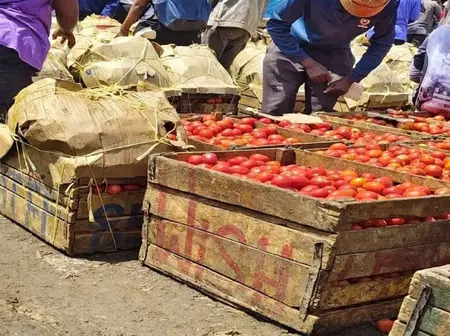
    People do this to cut costIn order to survive and cut cost by all means, Nairobi residents have found places to buy some stuff at cheaper prices.In fact some people buy some household stuff far away from thier estates so as to save on huge spending.

  • KNBS Releases New Kenya Power Data as Electricity Sales Fall and Imports Drop 18% in September

    KNBS Releases New Kenya Power Data as Electricity Sales Fall and Imports Drop 18% in September

    Data contained in the KNBS Leading Economic Indicators report shows that electricity sales by Kenya Power stood at 1,054.1 million kilowatt-hours (kWh) in September, compared to 1,061 million kWh recorded in August.

    The figures represent a 0.7 per cent reduction in electricity sales within one month, reflecting a slight change in the country's power consumption and supply figures.

    During the same period, total electricity supply declined by 2.5 per cent, falling from 1,395.8 million kWh in August to 1,361.3 million kWh in September.

    Electricity imports experienced a bigger decline, dropping by 18 per cent from 147.6 million kWh to 121.1 million kWh. The reduction came as Kenya recorded lower power purchases from Ethiopia and Uganda, two of its regional electricity suppliers.

    Imports from Ethiopia fell from 134 million kWh in August to 111.4 million kWh in September. Electricity supplies from Uganda also declined, dropping from 13.5 million kWh to 9.7 million kWh. No electricity imports from Tanzania were recorded during the month.

    Despite the reduction in imported electricity, locally generated power remained the biggest contributor to Kenya's electricity supply.

    Geothermal energy maintained its position as the country's leading source of electricity after recording a 1.5 per cent increase in generation to 575.1 million kWh in September. The output accounted for 46.4 per cent of total domestic electricity generation.

    Other sources also recorded varying performances, with wind power generation rising by 5 per cent to 224.1 million kWh. Solar electricity increased by 7.4 per cent to 42.4 million kWh, while thermal generation grew by 5.7 per cent to 92.3 million kWh.

    However, hydroelectric generation experienced a significant decline, falling by 10.4 per cent from 341.7 million kWh in August to 306.2 million kWh in September.

    The reduction in hydropower output outweighed the gains recorded in other sources, resulting in a slight decline in total domestic electricity generation. Local production fell from 1,248.2 million kWh in August to 1,240.2 million kWh in September.

    Kenya also recorded a sharp reduction in electricity exports, which dropped from 19 million kWh in August to 3.2 million kWh in September. This represented an 83.1 per cent decline within the month.

    The latest statistics highlight changes in Kenya's electricity supply, with geothermal energy continuing to play a major role while imports from neighbouring countries and hydroelectric generation recorded lower output.

    Although Kenya Power's electricity sales declined during the period, the KNBS report did not establish the reasons behind the movement. It also did not indicate whether the reduction was linked to household consumption, industrial demand, electricity prices or other economic factors.

    https://www.facebook.com/share/1EQfnyS6xL/

  • Kenya Moves Closer to First Commercial Oil Production

    Kenya Moves Closer to First Commercial Oil Production

    Kenya Moves Closer to Commercial Oil Production with First Development Well  in Turkana.

    The development marks an important step for Kenya after more than a decade of oil exploration and preparations. Oil was discovered in the Turkana region in 2012, but commercial production has faced several delays.

    Drilling operations have now started at the Amosing oil field, with the government and Gulf Energy working to prepare the fields for production. The first phase is expected to produce approximately 20,000 barrels of crude oil per day.

    The oil will initially be transported by trucks from Turkana to Mombasa, where it will be stored before being prepared for export to international markets. Plans to increase production in the coming years are also being considered as the project develops.

    The government expects the project to create employment opportunities, improve infrastructure and bring more income to the country through oil sales. Local residents are also expected to benefit from transport contracts, business opportunities and other services connected to the oil industry.

    However, questions remain about how the oil revenues will be managed and how local communities will benefit from the project. Residents have called for transparency, fair compensation and greater involvement in decisions affecting their land and resources.

    As Kenya prepares for its first commercial oil production, many citizens are watching closely, hoping the project will contribute to economic growth and improve living standards.

  • Government Moves to Address Non-Compliance in Cooperative Societies

    Government Moves to Address Non-Compliance in Cooperative Societies

    Thousands of cooperative societies in Kenya could face deregistration from January 2027 if they fail to meet the legal requirements governing their operations.

    The government has raised concerns about financial accountability after discovering that only about 4,000 of the more than 30,000 registered cooperative societies had submitted their required annual returns.

    Acting Commissioner for Cooperative Development Symon Mburia said the State Department would take action against societies that continue failing to meet their statutory obligations.

    Cooperative societies allow members to pool resources, including money, to support shared investments and economic activities. These contributions must be managed properly because members depend on their organisations to protect their financial interests.

    However, concerns have emerged over societies whose management has failed to meet the expected standards. Members of some cooperatives have reportedly experienced difficulties recovering their savings and contributions.

    The government is therefore considering stronger enforcement measures against societies that fail to comply with the law.

    Mburia made the announcement during the Fifth Annual Cabinet Secretary's Consultative Meeting with cooperative and MSME leaders in Naivasha.

    One of the main issues identified by the government is the failure by many societies to submit their annual returns.

    These documents provide information about a cooperative's financial activities and help establish whether it is meeting its reporting obligations.

    Under Section 25 of the Co-operative Societies Act, registered societies are required to maintain proper accounts, have their financial statements audited and submit annual returns together with the relevant audited documents to the Commissioner for Cooperative Development.

    The Ministry of Cooperatives and MSMEs also requires societies to submit their audited accounts and annual returns within four months after the end of their financial year.

    With only about 4,000 societies reported to have met the requirement, the government is concerned about the large number that have not fulfilled their reporting responsibilities.

    The Co-operative Societies Act provides conditions under which the Commissioner can cancel the registration of a cooperative society.

    Under Section 62, a society may face cancellation if it fails to submit returns for three consecutive years. Other grounds include having fewer than the prescribed number of members or failing to achieve its registered objectives.

    However, the government's announcement does not mean that all the nearly 30,000 societies identified in the compliance exercise have already been ordered to close. Cancellation must follow the applicable legal process.

    The law also provides an opportunity for a person affected by a cancellation order to appeal to the Cabinet Secretary within the prescribed period.

    The planned exercise is important because many people have invested their money in cooperative societies.

    Members may have accumulated savings, purchased shares or contributed towards projects managed by their organisations. They therefore have an interest in ensuring that their cooperatives maintain proper financial records and operate responsibly.

    Under Section 63 of the Co-operative Societies Act, cancellation of registration brings the society's existence as a corporate body to an end.

    Sections 64 and 65 provide for the liquidation process, including the appointment of a liquidator to handle the society's assets and affairs.

    This means that members should not automatically expect to receive their money immediately after a cooperative is deregistered. Its assets, outstanding debts and claims must first be addressed through the relevant legal procedures.

    Apart from addressing societies that have failed to meet statutory requirements, the government is also considering measures to improve the management of the cooperative sector.

    During the Naivasha meeting, Mburia announced plans to develop a Kenya Cooperative Transformation Strategy to guide the sector's future development.

    The State Department is also working on a Cooperative Management Information System that is expected to make 35 government services accessible online. These include submitting statutory documents and applying for borrowing powers.

    Additionally, societies may be encouraged to merge where appropriate to strengthen their operations and improve efficiency.

    The proposed changes are intended to improve accountability, reduce administrative challenges and make cooperative services more accessible.

    The government has indicated that enforcement action against non-compliant societies is expected to begin in January 2027.

    Cooperative officials will therefore need to pay attention to their accounting records, annual audits and submission of statutory returns.

    Members also have a role to play. Attending general meetings and reviewing financial reports can help them understand how their contributions are being managed.

    The planned exercise could bring significant changes to Kenya's cooperative sector. However, the actual impact will depend on how the government implements the legal requirements and how affected societies respond before enforcement begins.

  • 10 Kenyan Saccos Ranked for Financial Stability as Winas and Newfortis Outshine Bigger Lenders

    10 Kenyan Saccos Ranked for Financial Stability as Winas and Newfortis Outshine Bigger Lenders

    The findings are contained in the Sacco Societies Regulatory Authority (SASRA) Supervision Annual Report 2025, which assesses the financial health of deposit-taking Saccos (DT-Saccos) using key indicators, including capital adequacy, borrowing, deposits and non-performing loans.

    The report, released on October 6, 2026, highlights Winas DT-Sacco and Newfortis DT-Sacco among the institutions demonstrating strong financial performance, despite their smaller size compared to some of Kenya's biggest Saccos.

    Saccos that stood out in the financial stability assessment

    Winas DT-Sacco topped the list, recording a Core Capital to Total Deposits ratio of 84.94% and a Core Capital to Total Assets ratio of 42.22%.

    The institution also reported zero external borrowing and a non-performing loan (NPL) ratio of 1.61%, indicating a relatively low level of loans that were not being repaid as expected.

    Kenya National Police DT-Sacco, one of the country's largest institutions by assets, also recorded strong figures. It posted a Core Capital to Total Assets ratio of 35.67%, Institutional Capital to Total Assets of 30.11%, zero external borrowing and an NPL ratio of 2.33%.

    Transnation DT-Sacco ranked among the top performers, with a Core Capital to Total Assets ratio of 21.10% and non-performing loans at 2.90%.

    Hazina DT-Sacco recorded a capital ratio of 16.15% and an NPL ratio of 2.00%, while Sheria DT-Sacco reported a Core Capital to Total Assets ratio of 18.17%, zero external borrowing and non-performing loans at 2.80%.

    Newfortis DT-Sacco stood out for loan quality, recording the lowest NPL ratio among the institutions highlighted at 0.48%. Its Core Capital to Total Assets ratio was 13.48%, and it had no external borrowing.

    Imarisha DT-Sacco also featured in the rankings, posting a Core Capital to Total Assets ratio of 17.49% and non-performing loans at 1.53%. Its external borrowing remained relatively low at 2.44%.

    Kenya's largest Saccos also feature

    The report also highlighted the performance of major Saccos with large asset bases and extensive membership networks.

    Mwalimu National DT-Sacco, Kenya's largest Sacco by total assets, recorded an NPL ratio of 2.42% in 2025. Its Core Capital to Total Assets ratio stood at 13.96%, while Institutional Capital to Total Assets was 9.89%.

    Stima DT-Sacco, ranked second by total assets, reported Core Capital to Total Assets of 19.22% and Institutional Capital to Total Assets of 12.84%.

    However, its NPL ratio stood at 6.48%, higher than that of several other institutions on the list. The Sacco reported external borrowing of 1.39%.

    Unison DT-Sacco completed the list with a Core Capital to Total Assets ratio of 16.15%, zero external borrowing and an NPL ratio of 2.16%.

    What the figures mean for Sacco members

    A common feature among several of the highly ranked institutions was limited or no external borrowing, meaning they relied largely on their own capital and member deposits instead of loans from outside lenders.

    Low non-performing loan ratios can also indicate that a Sacco has been managing lending risks relatively well, with fewer borrowers falling behind on repayments.

    The report's findings show that financial strength is not necessarily determined by an institution's size. Smaller Saccos such as Winas and Newfortis recorded impressive figures on selected indicators, competing with larger institutions that have extensive membership and asset portfolios.

    However, capital ratios and loan performance alone do not guarantee that savings are risk-free, making it important to review a Sacco's overall financial position before depositing money or taking out a loan.

    Source

  • What Kenya’s investment leaders told retail investors on securing the future

    What Kenya’s investment leaders told retail investors on securing the future

    thumbnail

    Kenyan investors are being advised to stop leaning on interest-bearing products alone and to build wealth across equities, retirement plans and properly structured estates.The message ran through the 6th Abojani Economic Empowerment Conference in Nairobi on Saturday, held under the theme "Invest Intelligently".The significant event fr inverstors event attracted top leaders from banking, insurance, asset management and capital markets.

  • Smaller SACCOs Outshine Industry Giants in Kenya’s Latest Financial Rankings

    Smaller SACCOs Outshine Industry Giants in Kenya’s Latest Financial Rankings

    Size has not guaranteed financial strength in Kenya's Savings and Credit Cooperative Organisations (SACCOs) sector, following the release of a new supervision report by the Sacco Societies Regulatory Authority (SASRA).

    The report assessed deposit-taking SACCOs using five key financial stability indicators, revealing that some smaller institutions performed better than established industry giants in important areas of financial management.

    Two smaller SACCOs particularly stood out for their strong core capital positions and ability to control non-performing loans, demonstrating that financial performance is not necessarily determined by an institution's size.

    Core capital is an important measure of a SACCO's financial strength. It indicates its ability to absorb unexpected losses while maintaining operations and protecting members' interests.

    The management of bad loans is equally important because unpaid debts can affect an institution's liquidity, profitability and ability to issue loans to members.

    SACRA's assessment provides an opportunity for members to examine how their institutions are performing beyond the size of their assets and membership.

    The findings also highlight the importance of responsible lending, effective loan recovery and maintaining sufficient financial reserves.

    For larger SACCOs, the results serve as a reminder that expanding membership and increasing assets must go hand in hand with sound financial management.

    Members are also encouraged to consider financial stability indicators when deciding where to save their money or access credit facilities.

    SACCOs play a significant role in Kenya's financial sector by providing affordable credit and encouraging a culture of saving among individuals and groups.

    However, their long-term success depends on their ability to manage risks, maintain adequate capital and ensure that members' deposits are protected.

    The latest SASRA report has therefore shifted attention to a crucial question: which SACCOs are genuinely financially strong, rather than simply being the biggest?

  • Sirisia Modern Market Gets KSh127 Million Boost

    Sirisia Modern Market Gets KSh127 Million Boost

    The project is expected to transform the trading environment in Sirisia by providing modern facilities designed to support small businesses and improve the working conditions of local traders.

    According to the President, the new market will feature 200 smart stalls, providing additional trading spaces for business owners, including Mama Mboga and other small-scale traders who depend on daily sales to support their families.

    The investment is part of a wider government programme targeting the construction of 17 modern markets across Bungoma County. The initiative is aimed at strengthening small businesses while giving traders a more organised, dignified and convenient environment in which to conduct their activities.

    For many traders, particularly those operating in informal and open-air markets, access to proper trading facilities remains an important concern. Modern markets can provide a better organised business environment, potentially improving customer access, the handling of goods and the overall trading experience.

    The Sirisia project is therefore expected to become an important facility for local entrepreneurs once completed. Its 200 smart stalls will provide opportunities for more traders to operate from designated spaces rather than competing for limited trading areas.

    Small-scale traders play an important role in Kenya's economy, creating livelihoods and ensuring that essential goods reach communities. Improving the facilities available to them could help strengthen local commerce and create better opportunities for business growth.

    However, residents and traders will be keen to see the project completed and the promised facilities made accessible to the intended beneficiaries.

    What is your opinion on the KSh127 million Sirisia Modern Market project and the plan to construct 17 modern markets across Bungoma County? Share your views, remarks and comments in the comment section.

  • Lake Victoria South Water Works Steps Up Efforts to Improve Itare-Litein Water Supply

    Lake Victoria South Water Works Steps Up Efforts to Improve Itare-Litein Water Supply

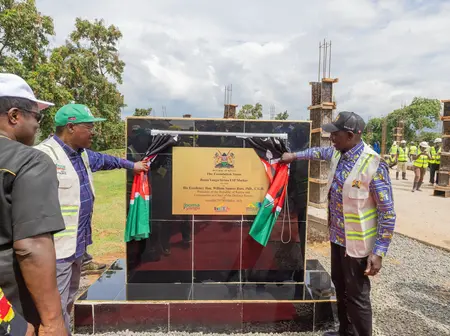
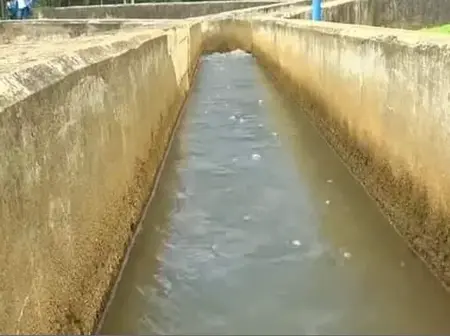
    Lake Victoria South Water Works Development Agency has officially taken over the management of the Itare-Litein Bulk Water Supply Scheme in a major development expected to improve water supply to thousands of residents in Bomet and Kericho counties.

    The takeover, which officially commenced on November 2, 2026, marks a significant step towards addressing longstanding challenges that have affected the scheme, including inadequate production, management disagreements and unreliable water distribution.

    The agency assumed responsibility for bulk water operations following consultations involving the national government, the two county governments and local water service providers. The transfer is expected to streamline operations and strengthen accountability in the management of the critical water infrastructure.

    Since assuming control, the agency has recorded a notable improvement in water production. Daily output has increased from approximately 2.7 million litres to 5.5 million litres against the scheme's installed capacity of eight million litres. The agency is targeting 7.5 million litres daily to meet the growing demand.

    The scheme serves an estimated 240,000 residents across Bureti, Konoin and Sotik constituencies, making it an important source of water for households, businesses and institutions.

    Speaking during a stakeholders' forum at the Itare Water Treatment Plant, Principal Secretary for Water and Sanitation Julius Korir called for cooperation among national and county governments to ensure sustainable operations.

    However, challenges remain, particularly non-revenue water, estimated at 56 per cent due to vandalism, illegal connections, water theft and inadequate metering. Stakeholders have proposed improved surveillance, installation of meters and rehabilitation of ageing infrastructure.

    The timely payment of bulk water bills by water service providers was also identified as essential in meeting electricity and water treatment costs.

    The takeover has renewed hope among residents who have endured years of unreliable water supply. With improved management and coordinated investment, the Itare-Litein scheme is expected to strengthen water security and support economic development across the two counties.

    Source: https://www.facebook.com/share/1CTQfezsuZ/