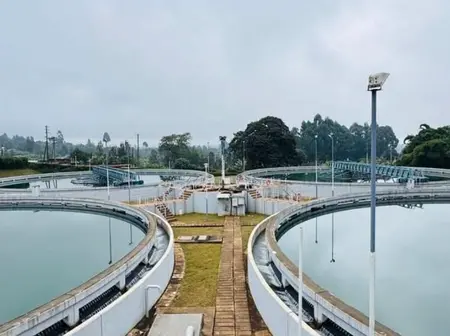
Nairobi City Water and Sewerage Company (NCWSC) is quietly rewriting its history.Once a byword for perceived tender scandals with suppliers losing trust in engaging the Company, the utility is now held up as an example of what happens when a public entity follows the Public Procurement and Asset Disposal Act, 2015 and Regulatikns to the letter.
Category: Economy&Finance
-

Development Tour and Business Support for Bahati Traders – Susan Kihika
The governor's visit comes at a time when economic empowerment and improved service delivery remain important issues for communities across Nakuru County. Small-scale traders play a significant role in supporting household incomes and sustaining economic activities at the grassroots level.
Beyond the distribution exercise, the development tour also provides an opportunity for residents to raise concerns directly with county leadership. Community engagement is important because it allows local administrators to understand challenges affecting different areas and identify priorities that require attention.
The governor specifically highlighted discussions on ongoing projects and local priorities as key components of the visit. This suggests that the tour is not limited to political engagement but also focuses on assessing development activities and understanding what residents expect from their county government.
For Bahati residents, the visit offers an opportunity to interact with the county leadership and communicate their expectations regarding development and economic empowerment. The effectiveness of such initiatives, however, will ultimately depend on how well the promised support translates into lasting improvements in people's livelihoods.
As the development tour continues, attention will remain on the projects being implemented and the benefits reaching ordinary residents.
What is your opinion on Governor Susan Kihika's development tour and the distribution of business equipment to small-scale traders in Bahati Ward? Share your remarks, views and comments in the comment section.
-

Itare-Litein Water Scheme doubles production to 5.5M litres after agency takeover
The Lake Victoria South Water Works Development Agency has more than doubled daily water production at the Itare-Litein Bulk Water Supply Scheme to 5.5 million litres after taking over operations, a move expected to improve access to clean water for about 240,000 residents in Bomet and Kericho counties.
The agency said production had previously dropped to 2.7 million litres per day, despite the facility having a designed capacity of eight million litres, leaving households, schools, institutions and businesses struggling with unreliable water supply.
Following the takeover, management has embarked on an overhaul of the system, including replacing seven pumps, repairing damaged pipes and purchasing water treatment chemicals to stabilise operations.
The interventions have enabled the facility to increase output to 5.5 million litres daily, with the agency targeting 7.5 million litres in the next phase before restoring the plant to its full design capacity.
Speaking during the announcement on November 21, 2026, the Lake Victoria South Water Works Development Agency CEO Jackline Kemunto said the changes had started producing results within less than a month of the new management taking charge.
“Some of the pipes that were damaged have been replaced. We have also replaced seven pumps, and that is why you can see this plant is now operational,” Kemunto said.
The management added that the immediate priority was to stabilise production and improve distribution security to ensure more treated water reaches consumers.
Beyond the immediate repairs, the agency is planning a comprehensive upgrade of the bulk water supply infrastructure through funding from German development financier KfW.
The planned investment is expected to address longstanding technical challenges and strengthen the system’s ability to deliver water consistently to the growing population in the region.
The takeover has raised hopes among residents of Bomet County, where water shortages have persisted for years despite repeated engagements between county leaders and national government institutions.
Bomet Senator Hillary Sigei welcomed the agency’s intervention, saying residents had endured water challenges for approximately four years and that the latest developments offered hope for a lasting solution.
The representative said the county had held several meetings with Senate committees to push for improved water supply after receiving complaints from residents.
He expressed optimism that the allocation of water meant for Bomet would translate into actual supply rather than remain a provision on paper.
“The sixth percent entitlement to the people of Bomet haitakuwa kwa karatasi ama kwa maneno, bali tutakuwa na maji nyumbani zetu. Tutakuwa na maji kwa maduka zetu, tutakuwa na maji kwa mashule zetu,” Sigei said.
The improved production is expected to ease pressure on households, businesses and learning institutions that have been affected by inconsistent supply.
The success of the intervention will, however, depend on the agency’s ability to sustain production, complete the planned infrastructure upgrades and ensure equitable distribution across the areas served by the scheme.
Rono is a digital journalist with a proven track record in newsroom leadership and content creation. Currently a Digital Writer for People Daily Digital, Emmanuel’s career is rooted in a lifelong passion for storytelling. Let's talk here: emmanuel.rono@mediamax.ke or ronoemmanuel685@gmail.com
-

Simba Corp Introduces Electric MG Cars in Kenya, Eyes Local Assembly
Simba Corporation has officially launched full electric MG vehicles in the Kenyan market, rolling out a new lineup of electric and petrol models backed by plans for local assembly and expanded charging and servicing infrastructure.Move builds on the firm’s earlier Ksh 1 billion investment in a dedicated electric vehicle (EV) assembly line at its Mombasa-based subsidiary, Associated Vehicle Assemblers (AVA).
-

From a Casual Conversation to a Thriving Seedling Enterprise in Bomet
A casual conversation about opportunities in agribusiness has blossomed into a thriving seedling enterprise for Cosmas and Pamela Langat, a couple from Kimenderit village in Bomet County who have turned a modest idea into a growing business.
The couple ventured into seedling production after discussing the potential of agriculture as a source of income. What began as a simple idea has gradually evolved into an enterprise supplying farmers with a variety of quality vegetable and fruit seedlings.
Their nursery produces seedlings for cabbage, kale, spinach, African nightshade, capsicum, tomatoes, bulb onions and other fruits and vegetables, catering to the growing demand among farmers seeking reliable planting materials.
Like many small-scale entrepreneurs, the Langats did not achieve success overnight. Their journey has been marked by trial and error, learning from mistakes, adapting to challenges and steadily improving their production techniques.
Starting small enabled them to understand the business, identify customer needs and build confidence before expanding their operations. Through persistence and teamwork, they have continued to grow their enterprise, turning their initial investment into a promising source of income.
The seedling business has also positioned the couple within the agricultural value chain, providing an essential service to farmers whose success often depends on the quality of seedlings they plant. Healthy seedlings are critical in determining crop performance, productivity and eventual returns, making nursery enterprises an important part of food production.
Their experience demonstrates that agribusiness does not necessarily require huge capital or sophisticated infrastructure to get started. With a clear vision, commitment, willingness to learn and proper management, small ventures can gradually develop into sustainable businesses.
For Cosmas and Pamela, the journey is a testament to the power of shared ideas, resilience and determination. Their story offers inspiration to aspiring entrepreneurs, particularly young people and families looking to explore agriculture, showing that a simple conversation can plant the seeds of an opportunity that grows into a rewarding livelihood.
Source: https://www.facebook.com/share/18kf2KkdBD/
-

KNBS: Kenya Power sales fall as electricity imports drop 18% in September
Kenya’s electricity sales declined marginally in September 2026, even as electricity imports from neighbouring countries recorded a sharper drop, pointing to changes in the country’s power supply mix.
Data from the Kenya National Bureau of Statistics (KNBS) shows that electricity sales by Kenya Power fell to 1,054.1 million kilowatt-hours (kWh) in September, from 1,061 million kWh in August, representing a 0.7 per cent decline.
The drop coincided with a 2.5 per cent reduction in total electricity supply, which fell from 1,395.8 million kWh to 1,361.3 million kWh during the period.
The decline in electricity sales was considerably smaller than the fall in imports, which dropped by 18 per cent to 121.1 million kWh from 147.6 million kWh in August.
The figures are contained in the KNBS Leading Economic Indicators report for September 2026, which tracks electricity generation, imports, sales and exports.
The report does not explain what caused the decline in electricity sales or overall supply.
Kenya’s electricity imports from its regional neighbours declined significantly in September, with supplies from both Ethiopia and Uganda recording reductions.
Imports from Ethiopia fell from 134 million kWh in August to 111.4 million kWh in September, while those from Uganda declined from 13.5 million kWh to 9.7 million kWh.
No electricity imports from Tanzania were recorded during the month.
The decline in imports reduced their contribution to Kenya’s total electricity supply, although domestic generation remained the main source of electricity.
Geothermal electricity generation increased despite the overall decline in local power generation, reinforcing its position as Kenya’s leading electricity source.
According to KNBS, geothermal generation rose by 1.5 per cent to 575.1 million kWh in September, accounting for 46.4 per cent of total local generation.
The report notes that “Geothermal was the leading source of electricity generation”.
Hydroelectric generation, however, declined by 10.4 per cent to 306.2 million kWh from 341.7 million kWh in August.
Wind generation increased by 5 per cent to 224.1 million kWh, while solar power generation rose by 7.4 per cent to 42.4 million kWh.
Thermal electricity generation also increased by 5.7 per cent to 92.3 million kWh.
Overall, local electricity generation declined slightly from 1,248.2 million kWh in August to 1,240.2 million kWh in September.
The figures show that increased geothermal, wind, solar and thermal generation was not enough to offset the reduction in hydroelectric output.
Kenya’s electricity exports also recorded a substantial decline, falling from 19 million kWh in August to 3.2 million kWh in September.
This represented an 83.1 per cent monthly reduction.
The decline in exports occurred alongside lower electricity imports, reflecting a significant reduction in cross-border electricity trade during the month.
The September electricity statistics reveal a marginal decline in Kenya Power sales against a backdrop of lower electricity supply and reduced regional imports.
However, the figures do not establish whether electricity demand among households, manufacturers and commercial consumers weakened.
A breakdown of electricity sales by customer category would be necessary to determine which consumers accounted for the monthly movement.
The report also does not attribute the decline to electricity prices, economic activity, weather conditions or power generation constraints.
For now, the figures provide evidence of a modest decline in electricity sales and a more pronounced reduction in electricity imports, while geothermal power continues to dominate domestic generation.
-

Babu Owino Brings Marikiti Market in Nairobi CBD to a Standstill as Huge Crowd Gathers Around Him
Videos shared on Facebook on Saturday, November 21, showed the lawmaker surrounded by a large crowd of enthusiastic residents and traders who gathered to catch a glimpse of him.
The unexpected reception highlighted Babu's growing popularity in Nairobi, where he enjoys considerable support, particularly among young people and ordinary residents.
The legislator appeared to command significant attention as traders and other members of the public gathered around him, temporarily shifting attention from their normal commercial activities.
Marikiti Market is among Nairobi's busiest trading centres, attracting traders, customers and transport operators from different parts of the capital. Any major gathering at the facility can easily attract attention and affect movement within the surrounding streets.
The latest incident has also renewed discussions about Babu's political influence as preparations for the 2027 General Election continue to gather momentum.
The Embakasi East MP has increasingly positioned himself as a major political figure in Nairobi, with his ambitions and influence attracting attention from different political camps.
His political activities have also brought him closer to other opposition figures, including Nairobi Senator Edwin Sifuna, as the Linda Mwananchi Movement continues expanding its presence across the country.
Babu has previously participated in major political mobilisations across Nairobi, including the September 13 Linda Mwananchi tour, which saw leaders visit Marikiti, Gikomba and Burma markets before proceeding to Jacaranda Grounds.
The latest Facebook footage is likely to generate further debate about his popularity and political future, particularly as the race for Nairobi's gubernatorial seat takes shape ahead of 2027.
-

Kenya Revives South Lokichar Oil Project, Targets 2027 Exports
Kenya has resumed oil drilling activities in the South Lokichar Basin, marking a significant step towards its ambition of becoming an oil-producing and exporting nation by 2027. The development is expected to revive the country's petroleum sector, attract investment and strengthen economic prospects in the oil-rich Turkana region.
The resumption of drilling follows years of delays caused by financing challenges, infrastructure limitations, regulatory hurdles and uncertainty surrounding the commercial development of the oil fields. The South Lokichar project, located in Turkana County, has long been viewed as one of Kenya's most promising petroleum ventures, with significant crude oil reserves discovered in the area.
The government is now accelerating efforts to develop the necessary infrastructure to support commercial production and transportation of crude oil. Plans include establishing pipelines, processing facilities and other logistical systems required to move oil from the fields to export markets. Authorities are targeting the first oil exports in 2027, a timeline that would represent a major milestone for Kenya's energy industry.
The project is expected to generate government revenue through royalties, taxes and other payments while creating employment opportunities for local communities. It could also stimulate investment in transport, construction, hospitality and other businesses as infrastructure development gathers momentum.
However, the project faces several challenges, including the high cost of oil development, fluctuations in global crude prices and environmental concerns. Communities in Turkana have also raised questions about land rights, compensation, employment opportunities and the equitable distribution of benefits from petroleum resources.
Kenya's renewed drilling efforts come at a time when countries across Africa are seeking to maximise the economic value of natural resources while balancing energy transition commitments and environmental sustainability.
If the 2027 export target is achieved, South Lokichar could transform Kenya's energy landscape, strengthen foreign exchange earnings and position the country as a new player in the regional oil market. The success of the project will largely depend on sustained investment, effective management and cooperation between the government, investors and local communities.
Source: https://www.facebook.com/share/18z7yjQQ3f/
-
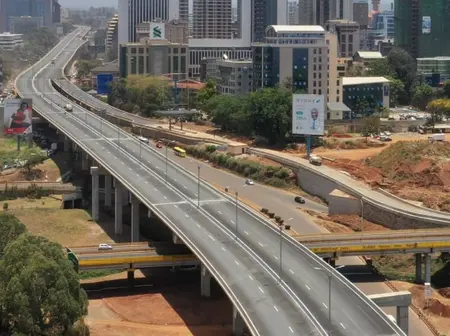
Ndii Reveals Why Nairobi Expressway Is Losing Billions Despite Ksh9.6 Billion Revenue
Ndii weighed in on the debate after economist and journalist Jaindi Kisero questioned the project’s expenditure, dollar-denominated loans and ability to turn rising revenue into profits.
Journalist Eric Latiff also raised concerns over the reported Ksh14.73 billion in direct expenditure recorded by Moja Expressway Company Limited in 2025, questioning the cost of operating and maintaining the 27-kilometre road.
Responding, Ndii said major infrastructure projects often rely heavily on borrowing, meaning much of the revenue collected during their early years goes towards servicing loans rather than generating immediate profits.
He explained that such developments commonly use a financing structure of approximately 30 per cent equity and 70 per cent debt. According to him, borrowing costs can range between five and 10 per cent annually, while equity investors may demand returns of between 15 and 20 per cent.
Ndii added that infrastructure investments typically require a long recovery period, with cash generated during the first 10 to 15 years largely directed towards debt repayment.
He argued that pension funds and other long-term investors provide suitable capital for such projects because they can wait more than 15 years to recover their investments.
The debate follows financial figures showing that Moja Expressway collected Ksh9.63 billion in revenue in 2025 but recorded direct expenditure of Ksh14.73 billion, leaving a deficit of approximately Ksh5.1 billion.
The figures were contained in the National Treasury’s annual report on public-private partnerships. The company's financial performance had also shown a deficit in the year ending June 2024, when it reported Ksh4.6 billion in revenue against Ksh5.8 billion in expenditure.
Kisero has questioned the decision to use dollar-denominated loans for a project collecting tolls in Kenya shillings, warning that exchange-rate movements could increase repayment costs.
He has also demanded explanations for the high operating expenditure, continued losses and challenges involving the Electronic Toll Collection system.
Treasury Cabinet Secretary John Mbadi has similarly called for a deeper examination of the rising costs. He noted that revenue increased from about Ksh7.1 billion in 2024 to Ksh9.6 billion in 2025, while direct expenditure rose from approximately Ksh9 billion to Ksh14.7 billion.
https://peopledaily.digital/business/david-ndii-explains-why-nairobi-expressway-makes-losses-despite-ksh9-6b-revenue
-

Meet 7 Business Leaders Benefiting From Kenya’s Booming Vehicle Sales Industry
In this storySeveral Kenyan business leaders have invested in the country’s vehicle sales industry.Their investments come as Kenya’s new vehicle market records its strongest recovery in years.According to Business Daily, dealers sold 14,070 vehicles between January and October 2026, a 27.62% increase from the corresponding period in 2025.