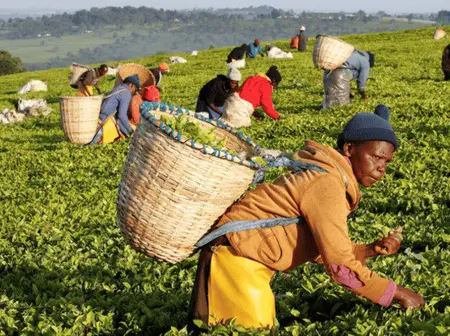
Listen to articleThe forecast comes as coffee prices are expected to remain under pressure, with Arabica prices projected to record smaller declines in 2027 and 2028 following a sharp drop this year.Tea farmers are set to benefit from improving global prices over the next two years, even as coffee growers face declining returns amid expectations of increased global production and easing supply pressures.
Category: Economy&Finance
-
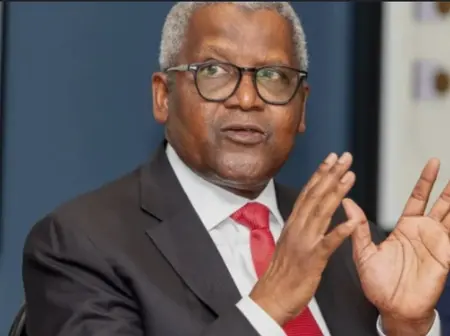
Inside Dangote’s Sh2 Trillion Kenya Refinery and East Africa Investment Push
At the centre of the ambitious regional plan is a proposed Sh2 trillion oil refinery in Lamu, which is expected to process up to 700,000 barrels of crude oil daily once completed.
President William Ruto attended the project's groundbreaking ceremony on September 30, 2026, describing the development as a major opportunity to transform Lamu's economic fortunes. He projected that the facility could generate approximately 60,000 direct and indirect employment opportunities.
Ruto also linked the refinery to the development of Lamu Port and the Lamu Port-South Sudan-Ethiopia Transport corridor, saying the investment would strengthen Kenya's position as a regional commercial centre.
Dangote's ambitions stretch beyond Kenya. In Ethiopia, his group has increased its proposed investment in a fertiliser project from $2.5 billion to more than $4 billion, equivalent to approximately Sh519 billion.
The expanded development is expected to include a fertiliser complex, a 110-kilometre natural gas pipeline, a 120-megawatt power plant and facilities for packaging and blending agricultural products.
In Tanzania, Dangote already operates a $500 million cement factory in Mtwara, with an annual production capacity of three million tonnes. Further discussions reportedly involve port development, energy generation, fertiliser manufacturing and transport infrastructure.
Uganda has also attracted the billionaire's attention. President Yoweri Museveni disclosed that he held discussions with Dangote on November 18, exploring possible investments in petroleum, mining, agriculture, energy and fertiliser production.
However, several of the proposed ventures remain at the discussion stage and are yet to move into implementation.
The investment drive could reshape industrial activity across the region by creating employment, expanding local production and reducing reliance on imported agricultural products and industrial materials.
Link;
https://eastleighvoice.co.ke/business/426387/inside-aliko-dangotes-multi-billion-dollar-east-africa-investment-push
-
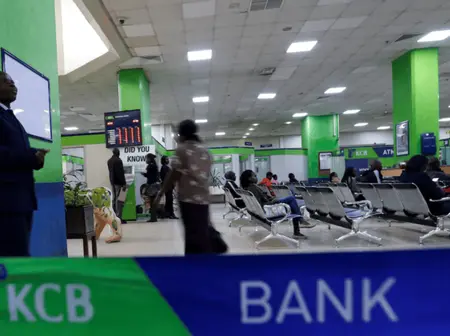
DRC emerges as biggest market for Kenyan banks as regional assets hit Sh2.1 trillion
Listen to articleThe scale of the regional push is reflected in the Sh2.147 trillion in assets Kenyan banks held across other East African Community (EAC) markets by the end of 2024, nearly 3.7 times the amount recorded in 2018.Kenyan banks have tightened their grip on East Africa's financial sector, controlling nearly two-thirds of Rwanda's banking assets, almost half of the Democratic Republic of Congo's (DRC) and close to a third of Uganda's.
-
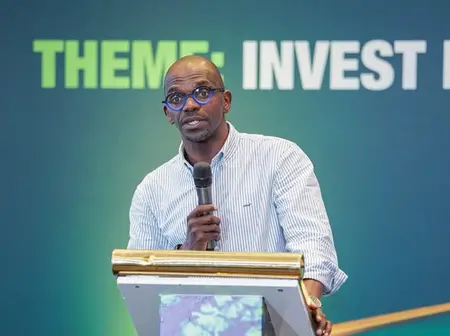
NCBA Economist Urges Investors to Look Beyond Market Trends as Global Uncertainty Rises
As global economic uncertainty continues to reshape financial markets, investors are being urged to rethink traditional investment strategies, challenge popular market assumptions and develop a deeper understanding of the forces driving economic change.Raphael O. Agung, Group Director, Global Markets and Chief Economist at NCBA Group, says successful investing is not necessarily about predicting what happens next, but understanding the economic environment, recognising emerging opportunities and preparing for different market conditions.
-
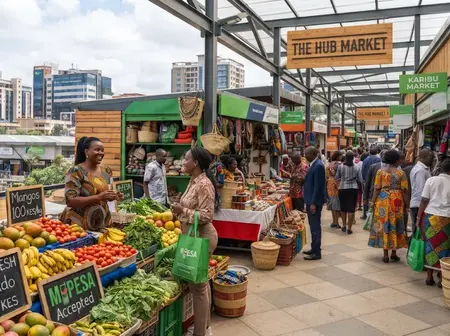
What sets modern markets apart from traditional open-air markets in Kenya
Markets connect farmers, traders and consumers across Kenya. However, facilities differ depending on how each market is planned, built and managed. Modern markets generally provide permanent, organised and better-equipped trading spaces, while some traditional open-air markets operate in temporary or less developed settings.
-
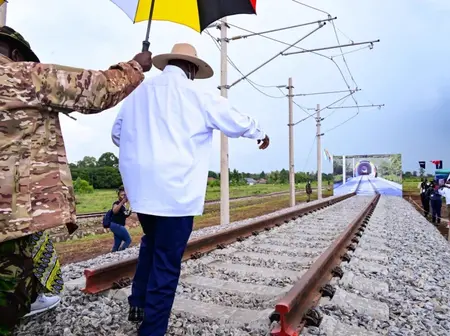
Muhoozi cancels Uganda’s Ksh386 billion SGR contract with Turkish firm
Uganda’s Chief of Defence Forces (CDF), General Muhoozi Kainerugaba, has announced the cancellation of a railway construction contract awarded to Turkish company Yapi Merkezi, barely 15 days after approving the firm to proceed with the project.
In a statement posted on X on Saturday, November 21, Muhoozi said the government had decided to terminate its engagement with the company indefinitely.
“We have cancelled the SGR contract with the Turkish company Yapi Merkezi indefinitely. We shall find a more suitable and effective partner soon,” he stated.
The announcement marks another reversal in Uganda’s plans to construct a Standard Gauge Railway (SGR) linking its capital, Kampala, to Malaba on the Kenyan border.
On November 6, Muhoozi had announced that President Yoweri Museveni instructed him to approve Yapi Merkezi to undertake the first phase of the railway project.
“Under the direction and instructions of Mzee Museveni, I approve the Turkish company Yapi Merkezi to implement the 1st Phase of the SGR. From Malaba to Kampala,” he wrote at the time.
He also directed government departments to speed up the implementation of the presidential directive.
However, his latest announcement has raised fresh questions about the future of the project and whether the government will proceed with another contractor.
Uganda signed a construction contract with Yapi Merkezi in October 2024 for the 272-kilometre railway linking Kampala to Malaba.
The project is estimated to cost €2.7 billion (approximately Ksh386 billion) and is expected to connect Uganda to Kenya’s existing railway network, providing landlocked Uganda with access to the Port of Mombasa.
Construction has yet to move into its main phase, with the government still working to secure the full financing required for the project.
On November 18, Reuters reported that Uganda was targeting January 2027 to conclude financing arrangements, with Works and Transport Minister Fred Byamukama telling lawmakers that the government was working towards financial close.
The government had already approved €650.75 million in financing from the Islamic Development Bank, while Citibank was helping mobilise additional funds.
Yapi Merkezi had also undertaken preliminary activities under a €75 million government-funded arrangement. These included railway surveys, ground investigations and the establishment of construction facilities.
During an update to Parliament on November 17, Byamukama said the preliminary works had been completed in October 2026.
However, he explained that the contractor could only begin major construction after the government secured full financing and issued a full Notice to Proceed.
The 272-kilometre railway is expected to take four years to complete once major construction begins.
It will pass through several areas, including Tororo, Iganga, Jinja, Mukono and Wakiso before reaching Kampala.
The railway is part of Uganda’s wider plan to improve trade and transport links with Kenya, South Sudan, the Democratic Republic of Congo and Rwanda.
Muhoozi has not provided further details on the proposed replacement contractor or explained the reasons behind his latest announcement.
The Ugandan government had also not publicly announced a formal termination of the construction agreement in response to his November 21 post at the time of publication.
-
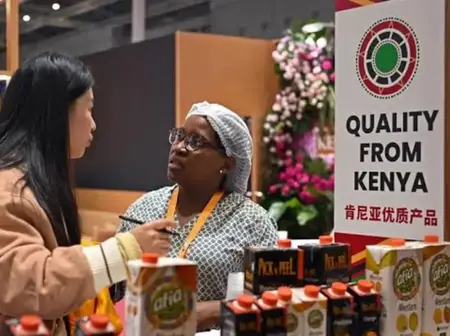
Kenyans Urged to See Kenya-China Trade as a Two-Way Traffic
Kenyans have been urged to take advantage of China’s welcome to African exports, as a new television series pushes businesses to see China as a market to sell to and not only a place to buy from.Speaking at a press briefing on the third season of A Glimpse of China in the New Era 2026, StarTimes officials said the show aims to change how Kenyans think about the relationship.
-
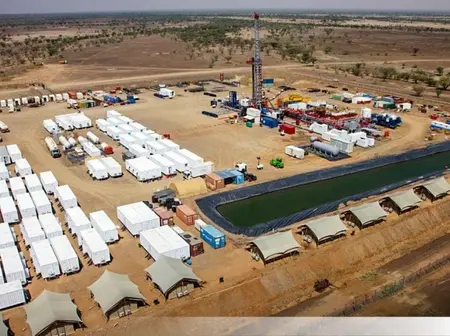
Turkana oil: Expected revenue for Kenya, production targets ahead of December launch
Kenya is preparing to join the ranks of oil-producing countries in East Africa, with commercial production from the South Lokichar Basin in Turkana County expected to begin on December 1, 2026.
The project, operated by Gulf Energy, follows more than a decade of delays since oil was discovered in the basin in 2012. Its progress marks a major step towards turning Kenya’s oil resources into commercial revenue, with the government and local communities expecting economic benefits from the development.
The South Lokichar project covers Blocks T6 and T7 and has estimated recoverable resources of about 326 million barrels. Its first phase, running from 2026 to 2032, targets production of 20,000 barrels per day from the Ngamia, Amosing, Twiga and Ekales fields, collectively known as NEAT.
Production is expected to increase to 50,000 barrels per day in a subsequent phase, while Gulf Energy has indicated plans to invest about $6 billion in capital and development.
Projections put the government’s potential share of revenue over the project’s lifetime at between $1.05 billion and $2.9 billion, equivalent to approximately Ksh136 billion to Ksh371 billion. The actual amount will depend on international oil prices, production volumes and the recovery of development costs.
Oil exports could also provide Kenya with an additional source of foreign exchange, alongside earnings from agriculture, tourism and other services.
The country currently spends significant amounts importing petroleum products, making the development of domestic crude resources an important part of its energy sector.
However, producing crude oil does not automatically mean Kenya will stop importing refined fuel. The Turkana oil will initially be transported for export, while the country continues to rely on imported petroleum products for its domestic fuel needs.
The project is also expected to create employment opportunities, particularly for residents of Turkana County.
Local workers and businesses are expected to benefit from activities linked to drilling, construction, transportation and other support services. The government has emphasised local participation, including giving priority to residents of the oil-producing region.
Infrastructure development is another area expected to benefit from the project. Roads, water facilities and other supporting services are part of the wider development activities around the oil fields.
The government is also working on revenue-sharing arrangements and community programmes intended to ensure that residents benefit from oil production.
These measures will be important in addressing local expectations, particularly after years of exploration and development delays.
Moving the oil from Turkana to the export market presents another major undertaking.
The crude, which is light and has low sulphur content, also has a high wax content. This means it requires heating to maintain its flow during transportation.
Initial production will be moved by insulated trucks to Mombasa, where the oil will be stored and handled before export. Rail transport is planned for a later phase, while a pipeline remains a longer-term option.
The Kenya Pipeline Company is expected to support storage and handling arrangements at the coast.
Kenya is also preparing a commercial name for its crude to distinguish it in the international market. Four options have been shortlisted: Great Rift Light, Great Rift Intermediate, Great Rift Blend and Great Rift Sweet.
Energy Cabinet Secretary Opiyo Wandayi has said President William Ruto will unveil the selected name during the December 1 flag-off of the first consignment.
The project’s economic returns will depend on production targets being achieved, international oil prices, reliable transportation and the terms governing revenue distribution.
-
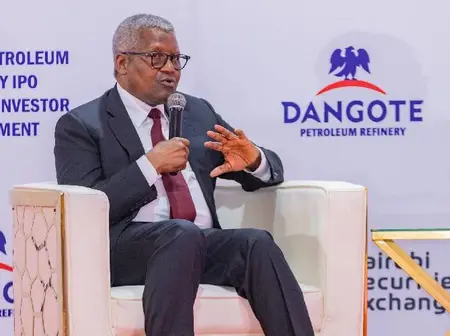
Inside Aliko Dangote’s multi-billion-dollar East Africa investment push
Listen to articleAt the centre of the regional expansion is the proposed approximately Sh2 trillion Dangote oil refinery in Lamu, Kenya, designed to process up to 700,000 barrels of crude oil per day.Nigerian industrialist Aliko Dangote is pursuing multi-billion-dollar investments across East Africa, including a major oil refinery in Lamu, Kenya, a fertiliser complex in Ethiopia, and plans to expand his industrial footprint in Tanzania, while exploring further investment opportunities in Uganda.
-
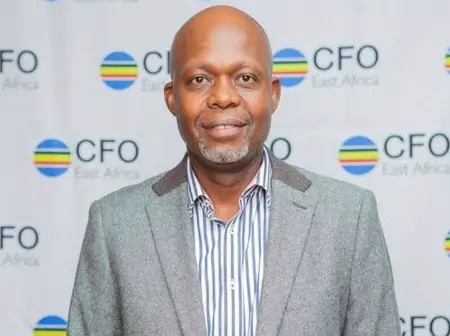
KCB Finance Director Lawrence Kimathi Wins Africa’s Top CFO Award
A Kenyan banking executive has earned continental recognition after Lawrence Kimathi, KCB Group’s Finance Director, was named Africa’s Chief Financial Officer of the Year at the 2026 All Africa Business Leaders Awards.The award was presented on November 19 during a ceremony at the Sandton Convention Centre in Johannesburg, South Africa.