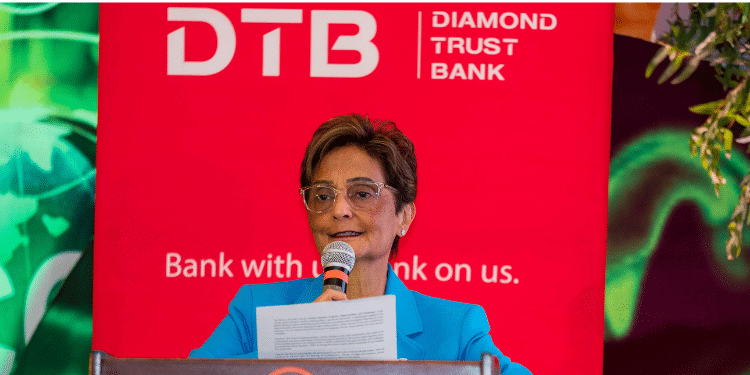
Diamond Trust Bank Kenya Limited has appointed Naomi Munyi, the Group Chief Finance Officer of ICEA LION Group, as a non-executive director.The bank announced the appointment in a public notice dated November 21, 2026.“The Board of Directors of Diamond Trust Bank Kenya Limited (the “Company”) is pleased to announce the appointment of Ms Naomi Karamuta Rukaria Munyi as a non-executive Director of the Company with effect from 20 November 2026,” part of the notice read.
Category: Economy&Finance
-

PART 3: The Generational Wealth Catastrophe: When Parents’ Sacrifices Become Their Children’s Dependency
The Great Illusion: When expensive education that fails to translate into economic success – Part 3When Parents’ Sacrifices Become Their Children’s Dependency: Perhaps the greatest tragedy of the education and career illusion is not unemployment itself.It is the destruction of family wealth that was accumulated over generations.
-

Good records can make or break your agribusiness
Supporting agribusinesses with business development services has never been this challenging. This is because small and micro businesses are not keeping good records for their enterprises.Many avoid looking at their numbers or manipulate them to fit their purposes.A policy brief published on August 11, 2026 by the International Growth Centre (IGC), titled Data without Insight: Why small businesses underinvest in record keeping-Evidence from Kenya, reports that nearly 40 per cent of SMEs record information infrequently or not at all, and less than 10 per cent of small businesses maintain detailed stock or inventory records.The study was conducted in Nairobi on general SMEs, and the issue may be worse for smallholder farmers with limited knowledge working in remote areas.A spot check done on farmers in Kisii County found out that farmers producing 20 litres of milk per day thought their cows were profitable, but this is far from the truth.
-
KRA Clarifies New Import Tax Rules for Traders
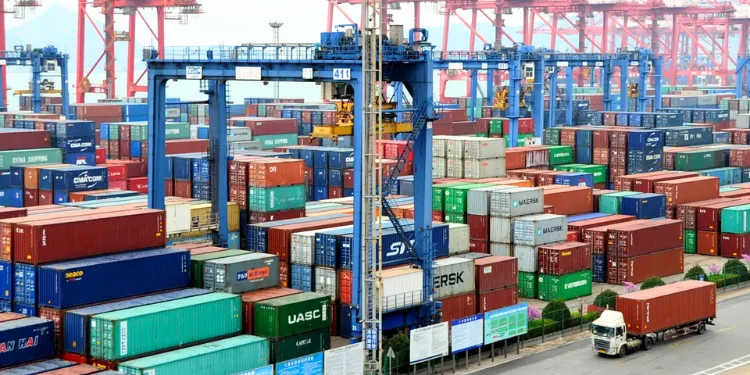
The Kenya Revenue Authority (KRA) has defended new restrictions on goods permitted in Ksh2 million consolidated containers, saying the changes are intended to curb smuggling of high-value goods and tax evasion without introducing new taxes for small traders.According to the Commissioner for Customs and Border Control, Lilian Nyawanda, on November 20, the reclassification was intended to promote fairness and simplicity rather than introduce new taxes.
-

Kenyan startup funding falls sharply as investors concentrate on fewer, larger deals
Kenya’s startup funding market is losing ground as investment concentrates in larger businesses and fewer companies secure financing. Startups raised $201 million (KSh26.1 billion) in the first nine months of 2026, down 73% from $744 million (KSh96.7 billion) in the corresponding period last year, according to Africa: The Big Deal.
The decline has left Kenya with its lowest January-to-September funding total in six years. Only 45 Kenyan startups raised at least $100,000 (KSh13 million) during the period, a 32% reduction from a year earlier, as investors became more selective about the companies receiving capital.
The contraction comes as African startup financing becomes concentrated among fewer businesses. Africa: The Big Deal recorded 311 startups raising at least $100,000 across the continent in the first nine months of 2026, down 18% from 381 in the same period last year. The number of investors participating in deals above that threshold also fell 18% to 334, from more than 408.
The funding market is favouring larger transactions. Deals worth at least $10 million accounted for 83% of African startup funding during the nine months, compared with 78% in 2025 and 69% in 2024. Spiro and Moove alone raised $595 million, representing 28% of the continent’s total funding.
For early-stage businesses, the contraction has been more pronounced. African startups raising between $100,000 and $1 million fell 22% to 171, from 220 a year earlier. The number of businesses securing investments of at least $1 million declined by 13%.
The latest figures point to a funding market where the availability of capital depends increasingly on a company’s ability to attract larger investment rounds.
Africa: The Big Deal recorded $2.16 billion in startup funding across the continent in the first nine months of 2026, excluding exits, representing a 4% decline from $2.24 billion in the corresponding period last year. Equity financing, however, increased by 23% to $1.5 billion, while debt funding fell 33% to $669 million.
Debt accounted for 31% of total funding, down from 45% in the first nine months of 2025. The reduction follows an unusually strong previous year, when major energy financing transactions contributed significantly to the continent’s fundraising total.
Nigeria was the strongest performer among Africa’s four leading startup markets, attracting $635 million, a 157% annual increase. Egypt raised $445 million, up 10%, while South Africa secured $182 million, down 58%.
Kenya’s $201 million placed it behind both Nigeria and Egypt, despite having been Africa’s leading venture capital destination in 2025.
The country’s previous performance was supported by large transactions in energy and related businesses. Kenyan startups raised $984 million in 2025, accounting for nearly a third of the $3.2 billion secured across Africa.
The latest funding figures also reflect the treatment of electric mobility company Spiro. Africa: The Big Deal excluded its more than $327 million raised during the period from Kenya’s country total after reclassifying the business as Pan-African. The company relocated its headquarters to Nairobi but operates across several African markets and has a holding company in Dubai.
The dependence on foreign venture capital has left Kenyan startups exposed to changes in international investment appetite. Kenya’s pension industry, despite holding substantial financial assets, has contributed relatively little to private equity investment.
The industry held KSh2.8 trillion in assets at the end of 2025, according to TechTrendsKE reporting published in May. Private equity accounted for just 1.07% of those assets, while more than half was invested in government securities.
Pension regulations allow allocations of up to 10% to private equity, but actual investment remains considerably lower. Local institutional investors have generally favoured assets offering more predictable returns than investments in young technology businesses.
Vivo Fashion Group co-founder Wandia Gichuru has previously raised concerns about the limited number of Kenyan venture capital firms managing locally sourced investment funds. British International Investment’s Seema Dhanani has also argued for greater participation by domestic capital providers in attracting international investment.
Push Ventures partner Benjamin Singh told Business Daily that investors are now assessing startup returns against alternatives such as US Treasury securities and Kenyan government bonds.
“A 10-year US Treasury pays about five percent, and Kenya’s own bonds pay over nine percent. Venture capital has to beat that, and it hasn’t yet shown it can,” Singh said.
The return expectations have made it harder for startups without established revenues to compete for investment.
Kenya’s dependence on large energy transactions has become more apparent following the decline in sector financing across Africa.
Energy startups raised $187 million in the first nine months of 2026, down 74% from the $721 million recorded during the same period last year. The sector’s share of total African startup funding fell to 9%, its lowest level since 2021.
Kenya had attracted 51.3% of recorded African ClimateTech funding between 2019 and 2025, according to an EcoNews analysis published in October. Nigeria accounted for 12.9%, while South Africa received 12%.
The funding was also concentrated among a relatively small group of businesses. The 20 largest ClimateTech recipients accounted for 60% of sector funding between 2016 and 2025.
Kenya’s exposure to large energy transactions is particularly relevant given the performance of companies such as M-Kopa and Sun King, which have attracted substantial financing to support asset-financing and energy businesses.
The slowdown in energy investment has coincided with difficulties at several heavily funded Kenyan ventures, including Koko Networks, which depended on carbon credit revenues to support its clean cooking business.
Koko raised more than $100 million before entering administration in February 2026 after the Kenyan government declined to issue a letter of authorisation allowing the company to sell carbon credits.
At least 13 Kenyan startups have collapsed over the past five years after collectively raising $717.5 million (KSh93 billion), according to figures cited by Business Daily.
The failures include Twiga Foods, Copia, Koko Networks and Lipa Later, which attracted funding from international investment firms before encountering financial difficulties.
Twiga Foods, which raised $185.4 million, entered administration in September 2026. Its investors included French investment firm Creadev.
Copia raised $123 million before entering administration in May 2024 after failing to secure additional financing. Its backers included Enza Capital and UK-based Lightrock.
Koko Networks attracted more than $100 million from investors including Push Ventures, Microsoft’s Climate Innovation Fund and French asset manager Mirova. Its administration process has also exposed difficulties in recovering value from its carbon credit inventory.
Lipa Later raised $16.6 million before entering administration in March 2025. The technology-enabled credit business was backed by US-based Cauris Finance and Lateral Frontiers.
Singh said the failures had damaged investor confidence, with regulatory uncertainty in Koko’s case adding to the risks associated with financing Kenyan businesses.
He also said investors were directing more money towards established startups through later-stage investment rounds rather than spreading capital across younger ventures.
The Nairobi International Financial Centre is planning a $500 million (approximately KSh65 billion) fund targeting technology companies, artificial intelligence startups and small and medium-sized businesses.
NIFC chief executive Daniel Mainda said that the proposed fund would mobilise investment from local and international capital providers.
Technology and AI businesses are expected to receive half of the targeted amount, approximately KSh32.5 billion, with the remainder allocated to companies in other sectors.
The proposal follows a decline in Kenyan startup funding during the first half of 2026. TechTrendsKE reported that businesses raised approximately KSh16 billion during the period, compared with KSh29 billion in the first half of 2025.
The proposed vehicle would provide an additional route for mobilising institutional investment into businesses that struggle to secure conventional venture capital.
Some Kenyan companies are turning to structured financing arrangements that use existing business assets and customer repayments to access capital.
SunCulture secured $10 million through a securitisation arrangement backed by customer receivables, according to EcoNews reporting published in September 2026.
The solar irrigation company supplies equipment to farmers through instalment payment arrangements. Its financing structure allows future customer repayments to support investment, releasing capital that can be used to fund additional installations.
Mirova’s Gigaton Fund provided financing for the transaction, with Kaleidofin supporting the arrangement.
The model offers another financing route for companies with established customer relationships and predictable repayment streams.
Across Africa, logistics and transport businesses have also overtaken fintech as the largest recipients of startup investment over the past seven years. The sector attracted $780 million, representing 36% of funding, compared with $760 million for fintech companies.
Spiro and Nigeria-founded mobility financing company Moove accounted for three-quarters of the logistics and transport sector’s funding.
For Kenya’s startup ecosystem, the combination of fewer participating investors, reduced early-stage financing and limited domestic institutional investment is making access to capital more difficult for companies outside the established group of funded businesses.
-

Farmers Document Indigenous Seeds to Protect Crop Diversity in East Africa
Nairobi, Kenya: Many indigenous crop varieties remain undocumented, making it difficult for farmers to identify, preserve and protect the diversity of seeds passed down through generations. Limited recognition of farmer-managed seed systems and changing seed regulations further threaten this diversity. Across Eastern Africa, farmers, researchers and policymakers are exploring ways to document local varieties, improve access to diverse seeds and strengthen community-led conservation.
-

PART 2: The Dream Job Trap: How Entitlement, Peer Pressure and Unemployment Destroy the Graduate’s Future
Dream job trap: For many young Africans, graduation is treated as the beginning of a guaranteed journey toward professional success.Years of studying, examinations, assignments and university life create the expectation that a degree will eventually lead to employment, financial independence and a comfortable lifestyle.
-
Equity Group weighs bigger dividends as its African banking business gains ground
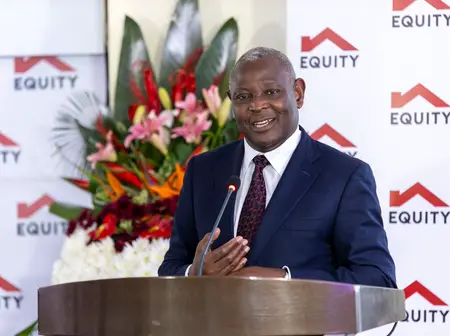
Equity Group’s regional subsidiaries now account for almost half of its profit before tax, giving the lender a growing source of earnings as it prepares to increase shareholder dividends while funding further expansion across Africa.
The group’s nine-month results to September 2026 showed a 32% increase in profit after tax to KSh68.7 billion. Non-interest income provided a major contribution to the growth, with management also pointing to stronger returns from businesses outside Kenya as evidence that its regional investment strategy is delivering results.
According to Equity Group’s third-quarter results, regional subsidiaries contributed 49.2% of group profit before tax and held 55.2% of total assets. The subsidiaries also accounted for 47% of banking revenue during the first half of the year, reflecting their growing contribution to the group’s operations.
The performance has given management room to pursue two objectives that require substantial capital: increasing returns to shareholders and expanding its presence in additional markets and business lines.
Equity’s regional operations have developed into a major contributor to group profitability, with the Democratic Republic of Congo (DRC) emerging as its strongest example of growth following an acquisition.
The group’s investment in BCDC, acquired in 2020, initially produced a return on equity of approximately 7%. James Mwangi, Equity Group’s chief executive, told the lender’s latest results briefing that the combined DRC operation now generates a return on equity of 23%.
The subsidiary also recorded KSh24.7 billion in profit after tax in FY2025, representing annual growth of 58%, according to Equity’s full-year results. Its contribution to the group’s earnings has given management additional capital to pursue opportunities in other high-growth businesses.
Mwangi said the DRC operation could generate $200 million in profit, which would provide further resources for investment. He added that Equity had managed to reproduce the returns achieved in Kenya across newer markets within a shorter period.
The regional portfolio also includes operations in Uganda, Rwanda, Tanzania and South Sudan. Equity’s FY2025 results showed that its subsidiaries outside Kenya contributed 51% of banking profit before tax, while the third-quarter results put their contribution to group profit before tax at 49.2%.
The group has established particularly strong banking positions in the DRC and Rwanda, where its reported asset market shares stood at 22.8% and 17.3%, respectively. Its presence in Uganda and Tanzania remains smaller, at 5.3% and 1.9%.
The growing contribution from regional businesses is central to Equity’s plans to increase shareholder distributions without abandoning its expansion programme.
Mwangi confirmed that dividend per share would increase in 2026, with the growth expected to track earnings per share performance at a minimum. The group has maintained a dividend payout ratio of 30%, the lower end of its stated policy range of 30% to 50%.
Equity did not declare an interim dividend despite the strong earnings growth. Management has instead prioritised retaining capital for investment in new business lines and geographical markets, with Mwangi arguing that the returns from these investments support future dividend payments.
The approach follows a substantial increase in the group’s previous annual distribution. Equity recommended a dividend of KSh5.75 per share for FY2025, up from KSh4.25 in FY2024. The FY2025 distribution amounted to approximately KSh21.7 billion.
The proposed increase for 2026 would extend that growth in shareholder payouts, although the final dividend per share will depend on full-year earnings and the group’s capital allocation decisions.
Equity’s dividend strategy also comes as the Central Bank of Kenya considers proposed capital conservation requirements that would link banks’ ability to distribute earnings to their Common Equity Tier 1 capital positions.
The proposed framework includes mandatory earnings retention for institutions whose capital ratios fall within specified thresholds. Banks with stronger capital positions would have greater flexibility over distributions.
For Equity, maintaining sufficient capital while expanding its regional operations is therefore an important part of its shareholder return strategy.
Equity’s capital allocation strategy extends beyond traditional banking, with management investing in additional financial services and healthcare operations across its markets.
In its first-half 2026 results, the group reported that subsidiaries accounted for 51% of banking deposits and 54% of banking loans. Their contribution to the balance sheet reflects the scale of the business outside Kenya, particularly in markets where Equity has established substantial banking operations.
The group has also expanded its insurance business and healthcare network, creating additional sources of income beyond lending and deposit-taking.
Equity Afia, the group’s healthcare business, operates 159 medical centres and has established a presence across all Kenyan counties. Mwangi said the network’s next expansion objective is to reach every sub-county.
The healthcare business currently concentrates on outpatient services, operating at Level 3 and 3B facilities. Management intends to expand into inpatient and tertiary care as the network develops.
Mwangi also outlined plans to reduce pharmaceutical prices by 40% in the short term, with a longer-term target of up to 80%. He said Equity could finance local pharmaceutical manufacturing to help achieve the reductions.
The pharmaceutical strategy builds on the group’s earlier move into pharmacy operations. Equity began piloting its first pharmacy in 2026, pursuing greater control over medicine procurement and distribution within its healthcare network.
Equity says it has sufficient capital to support further lending and expansion without compromising its regulatory position.
Mwangi put the group’s core capital ratio at 18%, approximately eight percentage points above the regulatory minimum, while total capital stood at 19% against a minimum requirement of 14.5%.
The lender is also raising Tier 2 capital at subsidiary level to maintain its capital buffers as it pursues additional lending and investment opportunities.
Management is monitoring net interest margin and operating efficiency as indicators of the sustainability of its earnings growth. Equity reported a net interest margin of 8.4% in the third quarter, while its cost-to-income ratio stood at approximately 47.9%.
The group expects its net interest margin to improve further by the end of the year, according to Mwangi.
Non-funded income has also become a substantial contributor to the group’s financial performance. Equity reported non-funded income of KSh84.3 billion in the nine months to September, representing annual growth of 34%. The category accounted for 43.9% of total income, compared with 40.1% in the corresponding period of 2025.
The growth follows a similar trend in the first half of 2026, when non-funded income increased 36% to KSh55.6 billion. Management has attributed the expansion to activities including trade finance, digital transactions, loan appraisal fees and insurance.
Asset quality remains an important consideration as Equity prepares to expand its loanbook.
The group’s non-performing loan ratio stood at 9.3% in the third quarter, down from 12.1% a year earlier. However, the absolute value of non-performing loans reached KSh100.2 billion, compared with KSh99.7 billion in the second quarter.
Kenya remains the main source of the group’s impaired loans, according to Mwangi. He said the other subsidiaries had maintained NPL ratios in the lower single digits, while bringing the Kenyan ratio below 10% would take the group’s overall figure below 5%.
Management is pursuing loan recoveries, monitoring overdue facilities and expanding new lending to improve the quality of the portfolio.
Equity has a KSh530 billion lending pipeline, half of which it intends to convert into loans by the end of 2026. Mwangi said the group was combining recovery efforts with negotiated settlements where necessary.
He also said corporate loans originated over the past seven years had not gone bad, with current recoveries concentrated on facilities dating back seven to ten years.
The bank’s technology investments form another part of its operating strategy. Mwangi said system availability had improved from between 68% and 72% to 100%, while the group had addressed vulnerabilities and social engineering threats affecting customers.
Equity’s digital banking operations accounted for 89.5% of transactions in its third-quarter results, while 98.3% of transactions took place outside physical branches. The group has also continued customer protection initiatives through its Hakikisha programme, which addresses fraud risks associated with digital banking.
Mwangi said cybersecurity threats could not be eliminated entirely, but the group had strengthened its defensive capabilities through its technology operations.
Equity’s expansion programme will therefore continue to draw on the earnings generated by its established markets, with the DRC providing a growing source of profits and capital for further investment. The group intends to increase dividends per share as those investments contribute to earnings growth.
-

Kenyan banks are offering sharply different returns as the competition for deposits shifts
Kenyan banks are taking different approaches to funding as interest rates decline, with some smaller lenders continuing to pay above 10% on fixed deposits while established institutions offer considerably lower returns. The gap between the highest and lowest reported Kenyan bank fixed deposit rates reached eight percentage points in September 2026, according to Central Bank of Kenya (CBK) data.
African Banking Corporation (ABC) offered the highest rate at 10.9%, followed by Development Bank of Kenya (DBK) at 10.01%. Middle Eastern Bank paid 9.22%, Kingdom Bank 9.13% and SBM Bank 8.94%, placing five smaller lenders among the institutions offering the highest returns on term deposits.
Standard Chartered Bank Kenya recorded the lowest rate among the major institutions featured in the comparison at 2.91%. Equity Bank paid 6.68%, KCB 6.37% and NCBA 5.41%, while Co-operative Bank of Kenya offered 5.79%.
The difference in pricing comes as the banking industry’s average deposit rate continues to decline. The September figures show smaller lenders maintaining higher payments to depositors while larger banks operate with comparatively cheaper term funding.
The highest fixed deposit rates are running ahead of returns available from conventional short-term investment products. Average annualised returns from money market funds (MMFs) fell to 9.3% at the end of September, while the 364-day Treasury bill yield stood at approximately 9.07%.
The MMF average had declined from 9.9% in September 2025, according to an earlier TechTrendsKE analysis of 26 funds, 20 of which recorded lower annualised returns to unit holders. The one-year Treasury bill yield had also dropped from 9.2% in December 2025 to approximately 9% in September.
ABC’s 10.9% rate therefore exceeded the average MMF return by 1.6 percentage points and the one-year Treasury bill yield by approximately 1.8 percentage points. DBK’s 10.01% rate also remained above both benchmarks.
The rates give depositors another option as returns from conventional cash-management investments decline. Fixed deposits offer an agreed interest rate over a specified period, while MMF returns fluctuate with the underlying investments and prevailing market conditions.
The pricing differences also reveal how banks are approaching customer funding. Institutions with established transaction-account businesses can mobilise current and savings deposits at lower interest costs, reducing their dependence on expensive term deposits.
TechTrendsKE’s September analysis of NCBA’s financial performance found that the lender’s net interest income increased 22% after interest expenses declined 23.3%. The bank benefited from replacing more expensive term funding with cheaper current and savings deposits.
That funding structure gives banks with substantial low-cost deposit bases an advantage when competing for lending business. Smaller lenders seeking to expand their deposit books may have to offer higher rates to attract customers willing to commit their money for longer periods.
Standard Chartered’s September fixed deposit rate of 2.91% provides a useful comparison with the pricing offered by smaller competitors. Its nine-month financial results showed customer deposits increasing 18% to KSh335.1 billion, despite its relatively low position in the fixed deposit rankings.
The bank reported a 7% increase in net profit to KSh10.5 billion for the nine months to September 2026, even as net interest income declined 18% to KSh18.2 billion. Non-interest income grew 22% to KSh12.4 billion, supported by its wealth and markets businesses.
KCB Group also demonstrated the advantages of operating with a large deposit base. Its customer deposits increased 15% to KSh1.8 trillion in the nine months to September, while net interest income rose 8.2% to KSh112.9 billion. The lender reported a 24% increase in net profit to KSh58.6 billion.
These results show how established banks can sustain deposit growth and earnings through scale, lower-cost funding and income from activities beyond traditional lending.
Smaller lenders face a different funding environment. Kingdom Bank, SBM Bank and Access Bank Kenya were among the institutions recording some of the highest overall lending rates in September, at 17.16%, 17.05% and 16.99%, respectively.
Bank of Africa recorded an average lending rate of 17.38%, the highest in the comparison. The presence of several high-paying deposit institutions among banks charging relatively expensive borrowing rates points to differences in their funding costs and lending portfolios.
The wider decline in interest rates has affected the returns available across Kenya’s financial system. The CBK’s monetary policy easing contributed to lower Treasury bill yields, commercial bank lending rates and deposit rates during the nine months to September.
The Central Bank Rate stood at 8.75% after the CBK maintained it at that level from February 2026. Previous reductions in the benchmark rate continued filtering through the banking system, with the average commercial bank lending rate falling to 14.4% in September from a peak of 17.2% in November 2025.
The average deposit rate also declined from a high of 11.5% in mid-2025 to approximately 6.9% in September, according to the supplied CBK figures. Another industry comparison in the September data placed the average deposit rate at 7.23%, down from 7.53% at the end of 2025.
The movement has reduced the returns available to savers across several conventional investment products. Money market funds have experienced lower annualised yields, while government securities have also repriced as market interest rates declined.
Banks are competing in this environment for deposits that can support their lending operations and investments. The highest fixed deposit rates represent the more expensive end of that competition, particularly for institutions seeking to attract customers away from other savings and investment products.
Family Bank’s September financial results provide an example of how lenders deploy the money they mobilise. Its interest income from government securities increased 52% to KSh8.48 billion, compared with 10.8% growth in interest income from loans, which reached KSh13.14 billion.
Customer deposits at the lender grew 24.18% to KSh182.34 billion, while its interest expenses increased by just 3.4%. Government securities accounted for 38.5% of its total interest income, up from 31.5% a year earlier.
The figures demonstrate the contribution of Treasury bills and bonds to banks’ earnings alongside traditional lending. Deposit mobilisation therefore supports several interest-earning activities, with lenders allocating funds according to their liquidity requirements and investment strategies.
The declining cost of credit has also affected the difference between what banks charge borrowers and what they pay depositors.
The average lending margin fell to 7.27% in September from 7.69% in December 2025, according to the CBK comparison. UBA Kenya Bank recorded the highest margin at 10.25%, followed by Bank of Africa at 10.05% and Access Bank Kenya at 9.65%.
HFC Bank recorded the largest contraction, with its lending margin declining by 5.39 percentage points to 6.88%. Credit Bank, DBK, Sidian Bank and Access Bank also recorded notable reductions.
The overall lending rates of all but five banks declined between December 2025 and September 2026. HFC Bank recorded the largest reduction at 4.86 percentage points, followed by Credit Bank at 4.47 percentage points and DBK at 2.69 percentage points.
Citibank N.A. Kenya recorded the lowest average lending rate at 10.36%, followed by Standard Chartered at 11.28%, Habib Bank A.G. Zurich at 12.51%, Stanbic Bank Kenya at 12.71% and HFC Bank at 13.03%.
Banks generally adjust deposit pricing to manage the difference between funding costs and lending income. As borrowing rates decline, reducing the cost of deposits becomes one way to preserve lending spreads, particularly for institutions facing pressure on interest income.
The CBK’s risk-based credit pricing framework is expected to improve transparency in how commercial banks determine loan rates. The framework incorporates a common reference rate, operating costs and the risk associated with individual borrowers.
The adoption of the Kenya Shilling Overnight Interbank Average (KSONIA) as a reference rate for variable-rate shilling loans also forms part of the changes to credit pricing.
The framework’s implementation comes as the banking industry adjusts to a lower interest-rate environment, with banks having to manage the cost of customer deposits alongside changes in lending income.
The banking sector’s financial results show that lenders are also relying on government securities and non-interest income to manage earnings as interest rates decline.
Family Bank’s growing income from Treasury securities provides one example, while Standard Chartered’s increase in wealth and markets income demonstrates how larger institutions are generating revenue beyond conventional lending.
KCB’s deposit growth and expansion in net interest income offer another illustration of how a large funding base can support earnings even as market rates fall.
For depositors, the September CBK figures place ABC and DBK at the top of the fixed deposit market, with returns exceeding those recorded by major lenders and the average yields available from money market funds and Treasury bills. The banking industry’s changing funding costs, however, continue to influence how individual institutions price customer savings and deploy the money they attract.
-

Absa takes on established investment firms with new global multi-asset fund
Absa has entered Kenya’s global investment market with a multi-asset fund targeting investors seeking exposure to international securities without having to open and manage offshore brokerage accounts.
The Absa Global Multi-Asset Special Fund, launched on November 19 through Absa Asset Management Limited (AAML), is available in Kenya shillings and US dollars. It gives the bank-backed asset manager a position in a special funds segment where investment banks and independent fund managers have built sizeable portfolios around alternative investment strategies and international markets.
The launch comes as Kenya’s collective investment schemes (CIS) market moves beyond KSh1 trillion in assets under management. Special funds account for KSh252.8 billion of that market, according to figures provided in the launch announcement. Capital Markets Authority data placed total CIS assets at KSh948.7 billion at the end of June 2026, with special funds representing 26.6 percent.
The segment had expanded from KSh203.5 billion in March to KSh252.8 billion in June, a quarterly increase of about 24 percent. The growth has attracted more fund managers seeking investors interested in strategies beyond conventional money market and fixed-income products.
The market, however, remains concentrated around a handful of established providers. Standard Investment Bank’s Kenya shilling-denominated Mansa-X fund held KSh163.8 billion in June, equivalent to 64.8 percent of special funds assets. Its dollar-denominated counterpart held another KSh20.5 billion, or 8.1 percent, while Faida Investment Bank’s Oak Multi Asset Fund had KSh19 billion, representing 7.5 percent.
Together, the two Mansa-X funds accounted for approximately 72.9 percent of the segment at the time. Absa is entering a market where established managers already command substantial investor capital, even as demand for offshore exposure creates room for additional products.
The fund’s investment approach is built around international market exposure, with global equities forming the largest allocation.
Elizabeth Irungu, Chief Executive Officer of Absa Asset Management Limited, said customers had been asking for investment opportunities beyond the Kenyan market. The fund’s allocation strategy responds to that demand by committing at least 60 percent of its portfolio to global equities and approximately 10 percent to precious metals.
Its geographical exposure covers the United States, Europe and emerging markets. Irungu said the manager did not intend to overlook emerging economies when selecting international investment opportunities.
Absa plans to access global equities through a curated selection of exchange-traded funds (ETFs), working with international partners and fund managers. The structure allows the fund to gain exposure to a wider universe of securities through investment vehicles that track selected markets, indices or asset classes.
The broader multi-asset mandate also covers bonds, cash, commodities and fixed deposits. These investments give the manager additional asset classes through which to construct the portfolio, although the precise allocation beyond the equity and precious-metals portions has not been disclosed in the available interview material.
The fund’s reported seed capital is KSh230 million. Absa Bank Kenya Chief Executive Yusuf Omari said the commitment reflected the bank’s confidence in the product and its intention to provide investment options for customers seeking long-term wealth creation.
Absa’s entry adds a bank-backed asset manager to a market that has attracted investment banks, wealth managers and other fund providers.
NCBA entered the offshore investment segment with its Global Equity and Global Fixed Income Special Funds, giving investors access to international markets through ETFs and mutual funds. Ndovu Wealth’s Kibaba Multi-Asset Special Fund also offers exposure to global equities, bonds, real estate investment trusts and commodities through shilling and dollar options.
Other providers have expanded their international investment offerings. Britam introduced its Enhanced Global Equities Special Fund and Multi Asset Special Fund in October 2026, while CIC has a Global Balanced Special Fund. Faida’s Oak Multi Asset and Standard Investment Bank’s Mansa-X products remain among the established funds in the wider special funds market.
The competing products differ in their investment mandates, asset allocations, minimum contributions and risk profiles. Some concentrate on equities or fixed income, while multi-asset funds combine several categories of investments within one portfolio.
For Absa, the opportunity lies in attracting investors who want international diversification through a locally managed product. Its use of ETFs also gives the fund a route into markets and securities that would otherwise require investors to select and manage offshore investments independently.
The presence of several providers means investors have more products to compare, but the size of the existing funds shows that new entrants must compete for capital in a segment with established managers and large asset bases.
The Absa Global Multi-Asset Special Fund has a minimum initial investment of KSh250,000 for the shilling option and US$2,500 for the dollar option. Subsequent contributions start at KSh100,000 or US$1,000, respectively.
Investments are subject to a six-month lock-in period, while Absa recommends a holding period of three to five years. Investors withdrawing before the recommended investment horizon should also account for a five percent early withdrawal penalty. The fund does not charge an entry fee.
The previously published fund fact sheet lists an average expense ratio of 3.5 percent. The absence of an entry fee therefore does not mean the investment has no ongoing costs. Investors need to consider the expense ratio alongside the early withdrawal penalty and the period for which they intend to remain invested.
The fund carries a high-risk classification, consistent with its substantial allocation to international equities and exposure to global markets. Its performance will depend on the underlying investments, market movements and the performance of the currencies and asset classes to which the portfolio is exposed.
The recommended three-to-five-year holding period gives the manager time to invest across market cycles, but it also means the product is not designed as a substitute for savings that investors may need to access at short notice.
Absa’s entry expands the range of locally managed products offering access to international investments. Its ability to attract capital will depend on how investors assess its portfolio strategy, costs, risk profile and performance against the established global and multi-asset funds already operating in Kenya.