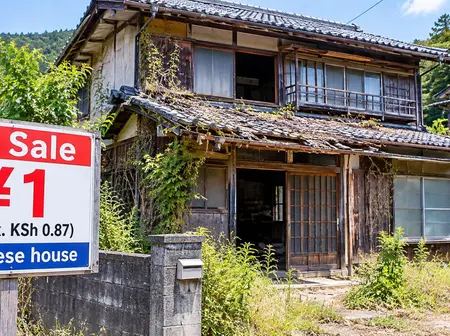
Some homes are advertised for just ¥1, worth less than Ksh1. Known as akiya, these vacant rural properties attract attention because foreigners, including Kenyans living abroad, can legally buy property in Japan. However, the advertised price is only the beginning.Where to find and choose a house
Category: Economy&Finance
-
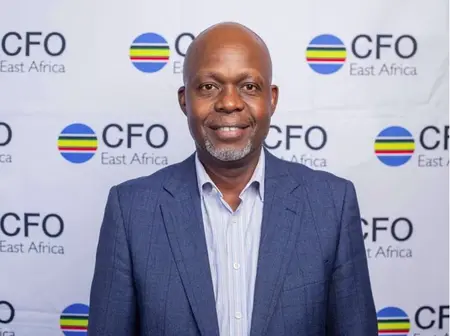
KCB finance chief Kimathi wins top Africa CFO award
KCB Group Finance director Lawrence Kimathi has been named Africa’s Chief Financial Officer of the Year at the 2026 All Africa Business Leaders Awards (AABLA).
The award recognizes his contribution to strengthening the lender’s financial performance, regional expansion and corporate governance.
Kimathi received the award at the 14th edition of the AABLA gala held at the Sandton Convention Centre in Johannesburg, South Africa, on November 19.
The awards, organised in partnership with CNBC Africa, recognise outstanding business leadership and achievements across the continent.
The recognition comes at a time when KCB Group is consolidating its position as East Africa’s largest banking group by assets, with growing regional operations, increased digital transactions and improved operating efficiency underpinning its earnings.
Kimathi joined KCB in May 2015, bringing more than two decades of experience in financial management across multinational corporations and the financial services industry.
Before his appointment, he was Group Supply Finance director at East African Breweries Limited (EABL), having previously served as CFO at AIG Kenya.
He holds an MBA from Warwick Business School in the UK, a Bachelor of Science degree in Accounting from the United States International University-Africa and is a Certified Public Accountant of Kenya.
During his tenure, Kimathi has played a central role in executing KCB's regional expansion strategy, particularly through acquisitions that have strengthened its geographical footprint and diversified earnings.
These include the acquisitions of National Bank of Kenya, Banque Populaire du Rwanda and Trust Merchant Bank in the Democratic Republic of Congo.
He also oversaw the automation of the group's finance function through investments in financial consolidation, enterprise resource planning and planning systems, improving financial reporting and management processes.
The impact of the group's growth strategy is reflected in its latest financial results.
KCB reported a 23.9 per cent increase in net profit to Sh58.6 billion for the nine months ended September 2026, compared with Sh47.3 billion in a similar period last year.
Total assets expanded 15.4 per cent to Sh2.4 trillion, supported by a 15 per cent increase in customer deposits to Sh1.8 trillion and an 11 per cent rise in gross loans to Sh1.4 trillion.
Total operating income increased 12.3 per cent to Sh167.8 billion, outpacing the 6.1 per cent growth in operating expenses.
This improved the cost-to-income ratio to 43.7 per cent from 46.2 per cent, pointing to better operational efficiency.
The group's subsidiaries outside Kenya contributed Sh19.6 billion in net profit, representing 33.4 per cent of overall earnings, underscoring the growing importance of regional diversification.
The award citation recognises more than financial stewardship.
"It highlights the strategic importance of disciplined capital allocation, operational efficiency, financial controls and regional diversification in sustaining growth in an increasingly competitive banking environment."
-
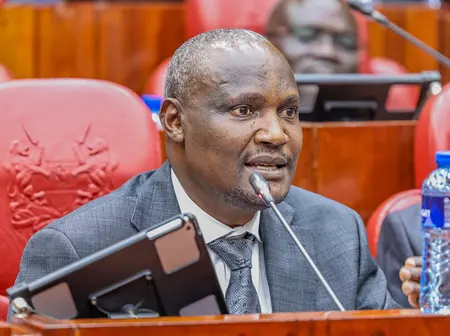
Kenya releases KSh1.67 trillion through the Exchequer as Treasury bill redemptions hit KSh66.76 billion
Kenya’s government had issued KSh1.57 trillion through the Exchequer by October 30, 2026, as domestic borrowing continued to supply a substantial share of public financing and short-term debt repayments added to the Treasury’s cash requirements. A Central Bank of Kenya (CBK) Treasury bill auction recorded KSh66.76 billion in maturing securities, the largest redemption amount in the supplied auction series for both the current financial year and calendar year.
The National Treasury’s statement of actual revenues and net Exchequer issues shows that cumulative cash issues reached KSh1.567 trillion against actual receipts of KSh1.657 trillion. The resulting Exchequer balance stood at KSh89.78 billion.
Domestic borrowing contributed KSh677.20 billion to actual receipts, while tax revenue generated KSh850.54 billion. The figures provide a picture of the resources supporting government operations during the opening months of the 2026/27 financial year, as the Treasury manages existing debt obligations, transfers to counties and expenditure across national government institutions.
The National Treasury recorded KSh1.656 trillion in cumulative receipts by October 30, comprising tax revenue, non-tax revenue, borrowing and other financing sources.
Tax collections accounted for KSh850.54 billion, while non-tax revenue contributed KSh31.68 billion. Domestic borrowing generated KSh677.20 billion, with external loans and grants providing another KSh65.79 billion. Other domestic financing contributed approximately KSh2.11 billion, while the opening balance from July 1, 2025, stood at KSh29.21 billion.
The cumulative receipts compared with total Exchequer issues of KSh1.567 trillion, leaving a reported balance of KSh89.78 billion.
The statement, issued by the National Treasury and signed by Cabinet Secretary John Mbadi on November 12, 2026, compares original budget estimates with actual receipts and cash issues across ministries, departments, agencies and county governments.
The original estimate for total receipts stood at approximately KSh5.18 trillion. Actual receipts had reached KSh1.66 trillion by the end of October.
Domestic borrowing accounted for approximately 40.9% of the Treasury’s cumulative actual receipts, making it the second-largest source of financing after tax revenue.
The original budget estimate for domestic borrowing was KSh1.568 trillion. The Treasury’s explanatory note breaks this estimate into KSh919.36 billion in net domestic borrowing and KSh648.78 billion in internal debt redemptions to be rolled over.
This distinction is important when examining the government’s financing requirements. Net borrowing represents additional financing, while the rollover component relates to replacing existing debt as it matures.
The Treasury’s actual domestic borrowing receipts stood at KSh677.20 billion by October 30.
The government’s reliance on domestic financing has implications for commercial banks and other institutional investors that hold Treasury bills and bonds. Government securities provide an investment channel for these institutions, but government financing requirements also compete with other borrowers for funds available in the domestic market.
Central Bank of Kenya Governor Kamau Thugge has previously warned that heavy government borrowing could undermine efforts to reduce commercial lending rates. The CBK has argued that lowering the government’s domestic borrowing requirement would create more room for private-sector credit.
Family Bank’s nine-month financial results provide an illustration of the role government securities play in commercial banking. The lender reported KSh8.48 billion in interest income from government securities for the period to September 2026, up 52% from KSh5.58 billion a year earlier. Government securities accounted for 38.5% of its total interest income.
The Treasury’s domestic financing position comes as the government faces substantial short-term debt maturities.
A CBK Treasury bill auction document dated November 19, 2026, records KSh66.76 billion in redemptions across the 91-day, 182-day and 364-day securities.
The 91-day bills accounted for KSh30 billion, while the 182-day securities contributed KSh8.71 billion. Another KSh28.04 billion was due from the 364-day tenor.
The redemption amount was the largest in the supplied auction series for the current financial year and calendar year. The previous comparable peaks were KSh61.29 billion on February 9, 2026, and KSh59.47 billion on June 8, 2026.
The auction attracted KSh44.09 billion in bids against KSh28 billion offered. The CBK accepted KSh43.70 billion, producing an overall performance rate of 157.48% and a bid-to-cover ratio of 1.01.
However, accepted bids were below the amount of securities falling due. The auction therefore resulted in an implied net repayment of approximately KSh23.06 billion.
The 91-day tenor attracted the strongest demand, receiving KSh22.68 billion in bids against KSh8 billion offered. The 182-day securities attracted KSh8.86 billion against KSh10 billion offered, while the 364-day bills received KSh12.55 billion against a similar KSh10 billion offer.
Accepted interest rates declined slightly across all three maturities compared with the preceding auction. The weighted average rates stood at 8.7422% for the 91-day bills, 8.8286% for the 182-day securities and 8.9943% for the 364-day tenor.
The next auction, scheduled for November 26, has KSh28 billion in Treasury bills on offer against scheduled redemptions of KSh53.41 billion. This creates another potential net repayment of approximately KSh25.41 billion based on the announced amounts.
The CBK has indicated that the actual amount realised will depend on the National Treasury’s immediate liquidity requirements.
The Treasury statement records KSh136.96 billion in actual cash releases to county governments against their combined equitable share allocation of KSh428 billion.
Nairobi City had the largest allocation at KSh22.11 billion, with KSh7.08 billion released by October 30. Nakuru had an allocation of KSh14.90 billion, followed by Turkana at KSh14.27 billion and Kakamega at KSh14.07 billion.
Other substantial allocations included Kiambu at KSh13.51 billion, Machakos at KSh10.51 billion, Meru at KSh10.90 billion and Kisii at KSh10.11 billion.
The county allocation table provides both the approved estimates and actual cash releases for each devolved administration, showing the distribution of national transfers during the financial year.
The Treasury also identifies KSh71.09 billion in additional allocations under the County Governments Additional Allocations Act, 2026. These funds are to be disbursed through the respective ministries, departments and agencies.
County financing has also featured in the government’s outstanding payment obligations. TechTrendsKE reported on November 20 that county trade payables stood at KSh172.5 billion as of June 2026, while county governments collected KSh96.1 billion in own-source revenue during FY2025/26.
The Treasury’s recurrent Exchequer table records KSh560.58 billion in actual cash issues against original estimates of approximately KSh1.72 trillion.
The Ministry of Defence recorded the largest actual recurrent releases among the listed national government departments, receiving approximately KSh76.56 billion against an original estimate of KSh233.92 billion.
The State Department for Higher Education and Research received KSh59.22 billion against KSh98.12 billion, while the State Department for Basic Education received KSh34.97 billion against an allocation of KSh116.83 billion.
The State Department for Internal Security and National Administration recorded KSh25.30 billion in actual issues against an original estimate of KSh52.88 billion.
Other departments had substantially smaller cash releases. The Office of the President received KSh1.47 billion against an allocation of KSh6.17 billion, while the Office of the Prime Cabinet Secretary received approximately KSh336.71 million against KSh1.14 billion.
The National Treasury itself recorded KSh15.69 billion in actual recurrent issues against an original estimate of KSh58.44 billion.
The figures cover recurrent Exchequer issues rather than the full expenditure of each institution. They provide a breakdown of cash released for government operations across the national administration.
Government cash requirements also extend beyond the expenditure recorded in the October Exchequer statement.
TechTrendsKE reported on November 20 that pending-bill claims had reached KSh664.8 billion, with KSh155.34 billion recommended for settlement. The report also put roads-sector claims settled through securitisation at KSh80.3 billion and cited KSh23.74 billion in claims approved by Cabinet during October.
These outstanding obligations add to the government’s financing commitments, particularly where contractors and suppliers are waiting for payments from public institutions.
The government’s medium-term budget plans also point to substantial financing requirements. TechTrendsKE’s November 4 reporting put proposed expenditure and net lending for FY2027/28 at KSh5.416 trillion against projected revenue of KSh4.004 trillion, with a projected fiscal deficit of approximately KSh1.35 trillion.
A subsequent November 20 report detailed revisions to the financing framework, reducing projected net domestic financing from KSh929.1 billion to KSh658.9 billion while increasing net foreign financing from KSh423.8 billion to KSh570 billion.
The proposed changes would lower the domestic financing requirement in the next financial year while increasing the contribution expected from external sources.
For the current financial year, the Treasury’s October statement records KSh677.20 billion in actual domestic borrowing receipts, alongside KSh850.54 billion in tax revenue and KSh65.79 billion in external loans and grants.
The November Treasury bill auction adds another measure of the government’s short-term financing activity, with KSh66.76 billion in maturities and an implied KSh23.06 billion net repayment. The next auction carries another KSh53.41 billion in scheduled redemptions as the Treasury continues managing its domestic debt obligations.
-

Global oil prices fall ahead of December EPRA fuel price review
Global oil prices have eased ahead of the Energy and Petroleum Regulatory Authority’s (EPRA) December fuel price review, raising the possibility of lower pump prices for Kenyan motorists if the decline is sustained.
Murban crude oil prices fell to approximately Ksh11,649 per barrel on November 19, 2026, from Ksh11,709 a week earlier, according to the Central Bank of Kenya’s latest weekly bulletin.
The moderation comes as households and businesses continue to contend with high fuel and transport costs. Kenya relies heavily on imported petroleum products, making local pump prices sensitive to movements in international oil prices, the exchange rate and shipping costs.
The latest decline could help ease the cost of importing fuel, although its effect on retail prices will depend on the average prices of refined petroleum products during EPRA’s pricing period.
“Murban crude oil prices moderated to USD 89.61 per barrel on November 19, from USD 90.07 per barrel on November 12, as rising oil supply outweighed geopolitical tensions.Over the same period, spot gold prices decreased to USD 3,522.31 per ounce on November 19 from USD 3,876.4 per ounce on November 12,” read the update in part.
The Kenyan shilling remained relatively stable against the US dollar, exchanging at Ksh129.99 on November 19, compared with Ksh129.96 a week earlier.
The stability reduces the risk of exchange-rate movements cancelling out any savings from lower international oil prices. Since petroleum imports are paid for in dollars, a weaker shilling would make fuel more expensive for local importers even when global prices decline.
“The Kenya Shilling remained stable against major international and regional currencies during the week ending November 19, 2026. It exchanged at KSh 129.99 per U.S. Dollar on November 19, compared to Ksh 129.96 on November 12.”
EPRA’s monthly review considers the cost of imported refined petroleum products, shipping charges, the exchange rate and other components used in calculating retail prices.
The December review will be closely watched by public transport operators, freight companies and businesses that rely on diesel to move goods and run machinery.
Diesel is widely used in transport and agriculture, meaning changes in its price can affect the cost of moving passengers and goods, as well as production expenses.
However, the extent of any reduction will depend on the movement of refined petroleum product prices and other costs captured in EPRA’s formula. A decline in crude prices does not automatically translate into an equivalent reduction in retail fuel prices.
The CBK bulletin attributed the moderation in oil prices to rising global supply, which outweighed lingering geopolitical tensions during the period under review.
The outlook remains dependent on decisions by the Organisation of the Petroleum Exporting Countries and its allies (OPEC+), demand from major consumers such as China and possible disruptions to global supply.
-
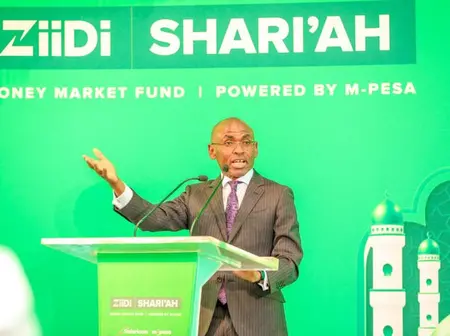
Safaricom speaks after Ziidi users report failed withdrawals and login problems
Safaricom has addressed complaints from customers experiencing difficulties accessing their Ziidi accounts, following reports of failed logins and unsuccessful attempts to withdraw money from the investment platform.
The telecommunications company on Saturday, November 21, 2026, confirmed that Ziidi services were experiencing a technical hitch, assuring affected customers that its technical team was working to restore normal operations.
The disruption has left some customers struggling to access their investment accounts, with complaints ranging from difficulties logging in to withdrawal challenges.
In one complaint shared on X, a customer, @Dreamkingjr, asked Safaricom why they were unable to log into their Ziidi account.
“I’m unable to login into my ziidi account what could be the issue,” the customer stated.
Responding to the complaint, Safaricom acknowledged the problem, stating:
“Hello, thank you for reaching out. We understand the concern you are experiencing. We are currently experiencing a technical hitch affecting the Ziidi services. Our team is actively working to resolve the issue. Kindly bear with us as we address this,” Safaricom responded.
Another customer, @ominde_victor, reported being unable to withdraw money from the platform after being prompted to opt into Ziidi again.
The customer expressed concern over the situation, explaining that they urgently needed to access their money.
“I cannot withdraw money it requires me to opt in again in Zidi and i need the money urgently kindly kindly,” the customer complained.
Safaricom issued a similar response, confirming that the withdrawal difficulties were related to the technical hitch affecting its Ziidi services.
A third customer, @Christhedonhazy, also sought an update on the situation, asking Safaricom whether there was any progress in resolving the Ziidi problem.
The company responded that it was still following up on the matter and working to have the services restored as soon as possible.
“Kindly we are still following up on the issue to have it resolved as soon as possible. We are asking for patience and sorry for the inconvenience caused,” Safaricom stated.
The complaints have drawn attention to the importance of Ziidi among M-PESA customers who use the platform to invest and access their money.
Ziidi is a money market fund launched by Safaricom after receiving approval from the Capital Markets Authority (CMA) in November 2024.
The platform was developed in partnership with licensed fund managers, including Standard Investment Bank, ALA Capital Limited and Sanlam Investments East Africa Limited.
It allows M-PESA customers to invest money directly from their mobile wallets, with a minimum investment of KSh100.
Customers can access the service through the M-PESA application or by dialling *334#, making it possible for both smartphone and feature-phone users to invest.
Money invested in the fund earns returns based on the performance of its underlying investments, which include government securities and interest-earning deposits.
The platform has attracted considerable interest since its introduction, with Ziidi reporting a net profit of Ksh784.28 million during its first 14 months of operation, ending December 2025.
The latest disruption comes amid previous complaints and questions from customers about accessing their investments.
The company clarified that customers must wait for an existing request to be completed or cancelled before initiating another one.
In a separate clarification in August 2026, Safaricom also maintained that joining Ziidi was optional and that customers could continue accessing other M-PESA services without enrolling in the investment product.
However, the latest complaints concern a different issue, with Safaricom directly acknowledging a technical hitch affecting Ziidi services.
While Safaricom has confirmed that its technical team is working to resolve the problem, it has not publicly provided a specific timeline for restoring normal Ziidi operations.
The company has also not disclosed the cause of the technical hitch or the number of customers affected.
For customers unable to withdraw urgently needed funds, the disruption has raised concerns about access to their investments.
Safaricom has apologised for the inconvenience and appealed for patience as its team works to resolve the problem.
-
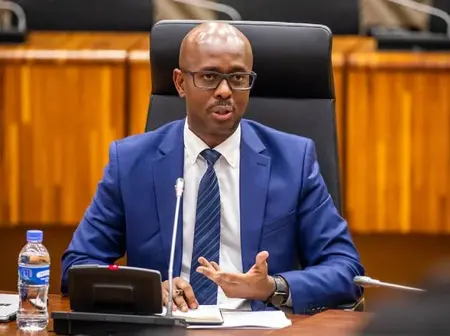
Rwanda converts World Bank loans into Japanese yen to manage debt risks
Listen to articleWhile the currency conversion addresses exposure to exchange-rate movements, the interest-rate swap protects against fluctuations in borrowing costs.The Rwandan government has converted two existing World Bank loans worth $126 million (approximately Sh16.38 billion) and €68 million (approximately Sh9.70 billion) into Japanese yen as part of efforts to reduce exposure to foreign currency fluctuations and manage the cost of servicing external debt.
-

Nairobi–Thika–Marua highway: What motorists need to know about planned toll charges
Motorists using the Nairobi–Thika–Juja–Kenol–Sagana–Marua highway could pay toll charges under a proposed Ksh100 billion public-private partnership (PPP) plan outlined in the National Treasury’s 2027 Budget Policy Statement.
The proposed arrangement would allow a private investor to finance, upgrade, operate and maintain the busy highway before recovering the investment through charges paid by motorists using the road.
The project is among the infrastructure developments being considered by the government as it seeks private financing for major road projects without relying entirely on public funds.
According to the Treasury’s proposals, the corridor would operate under a 30-year concession, with financial close targeted for the 2028/29 financial year.
This means a private company would take responsibility for raising the required capital and undertaking the agreed works before collecting toll revenue over the concession period.
Under the proposed public-private partnership, the private investor would finance the project and undertake the necessary highway upgrades before taking over its operation and maintenance.
The investment would be recovered mainly through toll charges paid by motorists rather than direct payments from the national government.
The Treasury describes the arrangement as a user-pay model, under which the private partner would take on commercial and traffic-demand risks.
The proposal states that the structure would not involve government payments or contingent liabilities to the government.
However, the same policy document provides for an estimated cumulative maximum contingent liability exposure of Ksh120 billion across the 2028/29 and 2029/30 financial years.
The figure represents a planning estimate of potential fiscal exposure arising from circumstances such as early termination of the agreement or other contractual obligations. It is not the amount motorists would pay to use the highway.
The government has not announced the proposed toll rates, the locations of collection points or the categories of vehicles that would be charged.
Details on whether public service vehicles, private motorists and commercial trucks would pay different rates have also not been provided.
If implemented, the proposal would introduce an additional cost for motorists travelling between Nairobi, Thika, Juja, Kenol, Sagana and Marua.
Private vehicle owners and transport companies would pay the charges directly, while public transport operators could factor the additional operating expenses into their fares.
Matatu fares between Nairobi’s Central Business District and Thika currently vary depending on demand and time of travel. Passengers typically pay between Ksh100 during quieter periods and Ksh150 to Ksh200 during peak hours.
However, it remains unclear whether the proposed toll charges would lead to higher passenger fares, as the government has not released the rates or the proposed collection arrangements.
The project is still at the proposal stage and requires further approvals, negotiations and assessments before implementation.
The final agreement would also need to establish the responsibilities of the private investor, the expected road improvements and the conditions governing toll collection.
The proposals also include the Nairobi Southern Bypass, estimated at Ksh12.3 billion under a 25-year concession, and the Mombasa Northern Bypass, valued at approximately Ksh30 billion under a 30-year arrangement.
Both projects are also targeting financial close in the 2028/29 financial year.
The proposed partnerships form part of the government’s wider plan to attract private capital into infrastructure development as it faces pressure to manage public borrowing and financing requirements.
Under the arrangements, investors would take responsibility for financing and maintaining the roads, with toll revenue providing a means of recovering their investments.
For motorists, the eventual impact will depend on the terms negotiated between the government and private investors, including toll rates, collection points and the categories of road users covered.
Until the agreements are finalised and the necessary approvals obtained, no toll charges have been confirmed for the Nairobi–Thika–Marua highway.
-
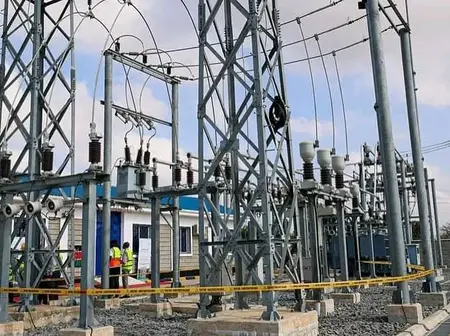
Nuclear power, High Grand Falls: List of projects set to add 5,540MW to Kenya’s electricity supply
Kenya Electricity Generating Company (KenGen) is seeking local and international investors to finance projects expected to increase its electricity generation capacity by 5,540 megawatts by 2034.
The expansion plan includes a 2,000MW nuclear power plant and the 700MW High Grand Falls hydropower project, alongside solar and smaller hydropower developments as the company works to meet rising electricity demand.
KenGen Managing Director and Chief Executive Officer Peter Njenga said the target was part of the company’s broader strategy to support Kenya’s ambition of increasing its installed electricity generation capacity to 10 gigawatts.
The company, which currently accounts for approximately 60 per cent of electricity generated in Kenya, has expanded its development pipeline beyond the earlier 1,500MW target under its G2G 2034 strategy.
Other projects in the pipeline include a 42.5MW solar plant, an 8.6MW hydropower development in Migori County and improvements to existing generation stations.
KenGen has outlined several projects expected to support its planned 5,540MW expansion by 2034.
They include:
The projects form part of KenGen’s long-term expansion pipeline, with delivery dependent on investment, financing and the necessary development approvals.
The 700MW hydropower plant is planned along the Tana River within the Seven Forks cascade. Once developed, it is expected to provide additional electricity while supporting flood control downstream.
Kenya is also preparing to venture into nuclear electricity generation through a proposed 2,000MW plant. KenGen has been designated as the owner and operator of the country’s first nuclear power station.
The initial development phases are targeted for the Lake Victoria region, with commercial operations projected around the mid-2030s.
In the shorter term, the company expects to add approximately 250MW to the national grid by 2027. The programme will include a 100MW battery energy storage system to support electricity supply.
The investment drive comes ahead of the third Sustainable Energy Conference scheduled for November 24 to 27 at the Geothermal Spa in Olkaria, Naivasha.
KenGen has secured 13 corporate partnerships for the event, which is expected to attract approximately 1,500 delegates from more than 80 countries. The participants will include about 200 investors and 40 financiers.
The partners include KCB Group, Stanbic Bank, Equity Bank Kenya, NCBA Group, Co-operative Bank of Kenya, the Energy and Petroleum Regulatory Authority, Geothermal Development Company, Kaishan Group and Sun King.
Speaking during the partnership signing in Nairobi, Njenga said the energy sector was at a critical stage as the country worked to expand cleaner electricity generation while responding to growing demand.
“We are at a very crucial juncture in the energy sector where we are expanding to cleaner energy against growing demand. These partnerships bring together complementary expertise, capital and technology that are essential to accelerating geothermal development and strengthening Africa’s energy future,” Njenga said.
The conference will be held under the theme “Powering Africa’s Green Industrial Revolution” and will bring together industry players to discuss investment opportunities, project financing and renewable energy development.
One of the developments linked to KenGen’s investment programme is a proposed US$800 million green fertiliser plant by Kaishan Group at the Olkaria Green Energy Park.
The facility is expected to use 165MW of geothermal electricity and create more than 2,000 jobs once operational.
The park has attracted five investors in fertiliser, steel and fish-feed manufacturing, with KenGen seeking to use geothermal resources to support industrial activities beyond electricity generation.
The conference programme will begin with a community clean-up on November 24, followed by the official opening on November 25. Cabinet Secretary for National Treasury and Economic Planning John Mbadi is expected to attend as the chief guest.
Discussions will cover investment mobilisation, financing of energy projects and opportunities across the renewable energy value chain. Delegates will also participate in power plant tours before the conference concludes on November 27.
KenGen’s expansion plans come as Kenya seeks additional investment to meet increasing household, commercial and industrial electricity demand while strengthening its position as a regional power supplier.
-
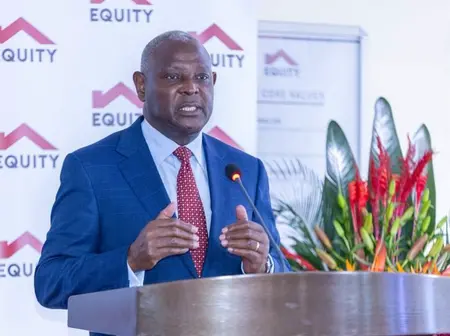
How Kenyan banks secured 65% of Rwanda’s banking assets and 48% in DRC
Kenyan banks have quietly built one of Africa’s most influential regional banking networks, extending their reach beyond Nairobi to become major players in the financial systems of neighbouring countries.
A new International Monetary Fund (IMF) working paper has revealed the extent of that influence, showing that Kenyan-controlled lenders account for approximately 65 per cent of Rwanda’s banking assets and 48 per cent of assets in the Democratic Republic of Congo (DRC).
The banks also control 29 per cent of Uganda’s banking assets, highlighting Kenya’s growing influence over financial services in East and Central Africa.
The findings are contained in a paper titled Cross-Border Banking Exposures and Macroeconomic Spillover Effects: The Case of Kenya, authored by IMF researchers Zhongxia Zhang and Francine Nyankiye.
But the dominance did not happen overnight. It is the result of years of strategic acquisitions, investments in established local lenders, expansion of branch networks and a search for new markets beyond Kenya’s increasingly competitive banking sector.
Two institutions, Equity Group and KCB Group, have been particularly instrumental in this expansion.
One of the biggest moves was made by KCB Group, which used acquisitions to establish a much stronger position in Rwanda.
In 2021, KCB acquired a 62.06 per cent stake in Banque Populaire du Rwanda (BPR) from London-listed financial services company Atlas Mara.
The transaction cost approximately Ksh4.8 billion. KCB subsequently increased its shareholding to 76.67 per cent by purchasing additional shares from minority shareholders.
The bank then merged BPR with its existing KCB Bank Rwanda operations in 2022, creating BPR Bank Rwanda Plc.
The consolidation increased KCB’s ownership to approximately 87 per cent and gave it access to an established customer base, existing branches and a recognised banking brand.
Rather than building a banking business from scratch, KCB acquired an institution that already had roots in the Rwandan economy.
The strategy also allowed it to expand its retail, corporate and small-business banking operations.
Equity Group has also established a presence in Rwanda, where it operates Equity Bank Rwanda.
Together with other Kenyan-linked financial institutions, these investments help explain the IMF’s finding that Kenyan banks account for nearly two-thirds of Rwanda’s banking assets.
The Democratic Republic of Congo has become an even bigger strategic prize for Kenyan lenders.
With a population exceeding 100 million people, substantial mineral resources and significant demand for financial services, the country offers opportunities that are difficult to find in smaller banking markets.
Equity Group was among the first Kenyan institutions to make a major move into the market.
Its expansion happened in two major stages:
The merger brought together an existing customer base, infrastructure and banking expertise, positioning Equity BCDC among the largest financial institutions in the DRC.
KCB Group subsequently entered the market through another major acquisition.
In December 2022, KCB completed the acquisition of an 85 per cent stake in Trust Merchant Bank (TMB), one of the DRC’s established financial institutions.
TMB already had an extensive network, including more than 100 branches, agency banking outlets and services targeting individuals, businesses and large corporations.
The acquisition allowed KCB to enter the Congolese market with an established operation instead of spending years developing one from the ground up.
These two investments have been central to the growth of Kenyan banking assets in the DRC.
The scale of the expansion is particularly evident in the amount of assets Kenyan banking groups have accumulated outside the country.
According to the IMF research, Kenyan banks held approximately Ksh2.147 trillion in assets across other East African Community markets by the end of 2024.
This was nearly 3.7 times the amount recorded in 2018.
The DRC accounted for approximately 43.5 per cent of those assets, up from around 10 per cent in 2018.
Rwanda, Tanzania and Uganda each accounted for approximately 15 per cent.
The Central Bank of Kenya’s 2024 Bank Supervision Annual Report provides further insight into the figures.
The figures demonstrate how the DRC has overtaken other regional markets as the largest destination for Kenyan banking investments.
More recent figures published in September 2026, based on the CBK’s 2025 supervision report, showed that Kenyan banks’ assets in the DRC had crossed the Ksh1 trillion mark.
They stood at approximately Ksh1 trillion, compared with Ksh933.4 billion in 2024.
This represents a substantial concentration of Kenyan banking investments in the Congolese economy.
The acquisitions are not simply about geographical expansion. They reflect a deliberate search for growth opportunities.
Kenya has one of the region’s most developed banking industries, with established institutions competing for customers, deposits, businesses and lending opportunities.
For major lenders, expanding into neighbouring economies provides access to new customers and revenue streams.
The DRC is particularly attractive because of its large population, mining industry, cross-border trade and demand for financial services.
Rwanda, on the other hand, offers a relatively organised financial environment and opportunities in retail banking, corporate finance and small-business lending.
There is also a regional integration dimension.
The East African Community has promoted the movement of capital, services and investment across member states, creating opportunities for financial institutions to establish operations beyond their home markets.
The DRC’s admission into the EAC in 2022 further strengthened the strategic importance of the market.
Kenyan banks have also benefited from existing commercial relationships, regional trade and familiarity with neighbouring economies.
Importantly, the expansion has not been driven exclusively by Equity and KCB.
Other Kenyan-linked banking institutions operating across regional markets include Co-operative Bank, NCBA, I&M Bank, Diamond Trust Bank and Guaranty Trust Bank.
Their presence has helped establish Kenya as an important source of banking capital and expertise across the region.
One of the more interesting findings in the IMF paper concerns how Kenyan banks finance their operations outside Kenya.
A large proportion of the subsidiaries’ activities is funded through deposits collected from customers in the host countries rather than relying primarily on money transferred from their parent institutions in Nairobi.
This means that when customers in Rwanda or the DRC deposit money with a Kenyan-owned bank, those funds can help finance lending and other banking activities within the local economy.
The arrangement is significant because it reduces dependence on cross-border funding and limits the extent to which financial difficulties at a parent institution automatically translate into immediate funding problems for its subsidiaries.
The IMF considers the locally funded structure an important factor when assessing financial stability.
However, it does not eliminate the risks associated with foreign ownership.
Decisions on capital allocation, risk appetite, corporate strategy and group liquidity can still be influenced by parent institutions in Kenya.
The growing influence of Kenyan banks has also created a new regulatory challenge.
The IMF warns that the expansion has made Kenyan banking groups increasingly important to the financial stability of countries where they operate.
One concern involves non-performing loans (NPLs).
The working paper identifies instances where Equity and KCB subsidiaries have recorded non-performing loan ratios above the averages in some of their host markets.
In Uganda, for example, Equity’s reported NPL ratio stood at 14.5 per cent against a banking-sector average of 3.98 per cent.
This is particularly important because a bank with a substantial market share and deteriorating loan quality can pose risks beyond its own balance sheet.
The IMF also identifies gaps in cooperation between financial regulators.
The Central Bank of Kenya has signed memoranda of understanding with 13 central banks, largely in countries where Kenyan banks operate.
However, the researchers found that most bank-country pairs had not conducted joint inspections during the preceding decade.
Only one joint inspection was scheduled for KCB’s Rwandan subsidiary in 2026, according to the paper.
Differences in accounting standards, capital requirements and deposit insurance arrangements also complicate the management of cross-border banking risks.
The challenge is therefore ensuring that regulators in Nairobi, Kigali and Kinshasa can coordinate effectively when a financial institution experiences difficulties.
-
List of Dangote mega-infrastructure projects in East Africa: Ethiopia gets more investments than Kenya
Nigerian billionaire Aliko Dangote is building an expanding industrial footprint across East Africa, with investments spanning oil refining, fertiliser production, cement manufacturing and cross-border energy infrastructure.
A comparison of the projects announced across the region reveals an interesting pattern: Ethiopia has attracted a wider range of Dangote’s industrial investments than Kenya, even as Kenya hosts the proposed flagship oil refinery in Lamu.
The distinction is important. Kenya’s refinery is an enormous single investment, but Ethiopia’s portfolio combines fertiliser production, cement expansion, new manufacturing facilities and fuel transportation infrastructure.
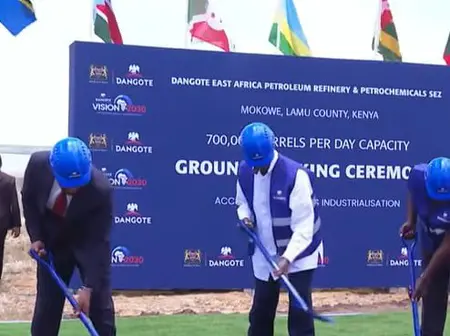
Kenya is hosting what could become the largest single investment in Dangote’s East African portfolio: the proposed Lamu oil refinery valued at approximately Ksh2 trillion.
The project was officially launched at Mokowe, Lamu County, on September 30, 2026, in a ceremony attended by President William Ruto, Dangote and other African leaders.
The refinery is designed to process up to 700,000 barrels of crude oil per day, making it one of the largest proposed facilities of its kind globally.
The wider industrial complex is expected to include:
The Kenyan government says the investment could create up to 60,000 direct and indirect jobs. Dangote also pledged to commission the refinery within 40 months.
Kenya’s project is therefore not simply a refinery. It is intended to become an industrial and energy hub serving neighbouring countries.
Ethiopia has attracted a broader collection of Dangote projects, particularly in fertiliser manufacturing and cement production.
Dangote Group partnered with Ethiopian Investment Holdings to develop a major urea fertiliser complex in Gode, in Ethiopia’s Somali region.
The project is valued at approximately US$2.5 billion, equivalent to roughly Ksh325 billion at an illustrative exchange rate of Ksh130 per dollar.
It is designed to produce up to three million tonnes of urea annually.
Dangote Group holds a 60 per cent stake, while Ethiopian Investment Holdings owns the remaining 40 per cent.
Construction began in October 2025. The project is expected to reduce Ethiopia’s dependence on imported fertiliser and potentially supply neighbouring countries, including Kenya and Somalia.
Dangote Cement has announced a US$380 million investment in expanding its existing Mugher cement plant.
The expansion involves a second production line and a new cement grinding unit.
According to the company’s September 2026 capital markets presentation, the expansion and associated grinding capacity are expected to add approximately 2.5 million tonnes annually, taking the facility’s production capacity to five million tonnes.
The investment builds on Dangote’s existing cement operations in Ethiopia, which began in 2015.
Another major project involves a petroleum products pipeline connecting Damerjog in Djibouti to Dewele in Ethiopia.
The announcement was made by Ethiopian Prime Minister Abiy Ahmed in September 2026 following discussions involving Dangote Group and Ethiopian Investment Holdings.
The project is intended to reduce transportation costs and delays along the Ethiopia-Djibouti corridor.
Storage terminals are planned at both ends of the pipeline.
Ethiopia’s wider investment discussions also include NPK fertiliser manufacturing, additional cement capacity and possible acquisitions.
However, the specific proposed NPK facility with a two-million-tonne annual capacity, as well as the reported new cement plant and acquisition, could not be independently confirmed from the latest company disclosures reviewed.
They should not yet be presented as completed investments or projects with confirmed construction schedules.
Dangote’s most established industrial investment in Tanzania is the cement plant in Mtwara.
The facility was commissioned in December 2015 and has an annual production capacity of approximately three million tonnes.
It is an existing operation, rather than a newly announced project.
However, Dangote has held discussions with the Tanzanian government on additional investments, including port development, a special trade zone, transport infrastructure, fertiliser manufacturing and a proposed 2,000MW power plant.
The discussions also include a proposed 40-kilometre concrete road to support port operations and a transport link between Mtwara and Mbamba Bay.
These proposals could significantly expand the group’s presence in Tanzania, although they remain at different stages of discussion and development.
Uganda is another country Dangote has identified for possible investments, although the discussions are not yet equivalent to the confirmed projects in Kenya and Ethiopia.
The areas of interest reportedly include:
Uganda’s oil discoveries and planned petroleum infrastructure make it a potentially important market for industrial investment.
The country’s crude oil could also become an important source of feedstock for the proposed Lamu refinery, depending on regional supply arrangements and commercial agreements.
For now, these should be understood as potential investment areas rather than confirmed construction projects.
The contrast is particularly interesting because Kenya has secured the most expensive single project in the announced portfolio.
Ethiopia, however, is attracting investments across several different industries.
There are three major reasons this distinction matters.
The Gode fertiliser complex is designed to serve Ethiopia’s agricultural sector, which has substantial fertiliser requirements. Its location near natural gas resources also provides an important industrial advantage because natural gas is a key feedstock in urea production.
The Mugher expansion and fertiliser investments point towards a strategy of producing industrial and agricultural inputs locally rather than relying heavily on imports.
The partnership between Dangote Group and Ethiopian Investment Holdings gives the investor a local institutional partner, while government commitments to purchase fertiliser are intended to provide confidence in the market.
Kenya, meanwhile, is positioning Lamu as a regional petroleum and petrochemical centre, using its port infrastructure and access to regional markets to attract large-scale investment.