Category: Economy&Finance

  • Ndindi Nyoro explains how AI company employees could become millionaires

    Ndindi Nyoro explains how AI company employees could become millionaires

    Ndindi Nyoro explains how AI company employees could become millionaires

    Kiharu Member of Parliament (MP) Ndindi Nyoro has explained how employees of American artificial intelligence (AI) company Anthropic could become millionaires through employee share ownership following the firm’s record-breaking stock market debut.

    Nyoro highlighted how the company’s listing on Nasdaq had increased the value of shares held by its founders, early investors and employees, arguing that Kenyan businesses should adopt a similar model.

    Anthropic, the developer of Claude, an AI assistant similar to ChatGPT, made its Nasdaq debut on Thursday, November 19, 2026, in a record-breaking initial public offering (IPO).

    The company briefly reached a fully diluted valuation of about Ksh258 trillion before its shares settled lower, highlighting investors’ appetite for AI businesses despite questions about profitability.

    In a post shared on his X account on Friday, November 20, 2026 , Nyoro argued that employee share ownership could help workers build wealth while giving them a greater stake in the success of their employers.

    “This model of giving opportunities for staff to own stocks in the company they work for is a model that must be cultivated in Kenya,” he said.

    Anthropic was founded in 2021 by former OpenAI employees, including siblings Dario Amodei and Daniela Amodei. Its public listing has drawn attention to how shares and stock-based compensation can reward founders, early investors and employees as a company grows.

    Nyoro also cited Equity Group, arguing that employee and founder ownership can align personal financial interests with business performance.

    Nyoro cited estimates suggesting that hundreds of Anthropic employees could hold shares worth more than Ksh12.9 billion each, while thousands could have holdings valued in millions of dollars.

    However, these figures should be treated as estimates rather than confirmed personal fortunes. Reuters reported that outside estimates of employee wealth vary and could not independently verify individual holdings. The value of shares also does not necessarily mean employees have received that amount in cash.

    Nyoro also highlighted investor Jaan Tallinn, who reportedly invested about Ksh7.7 billion in Anthropic in its early stages, with his stake later estimated at approximately Ksh2.3 trillion.

    Nyoro cautioned that technology company valuations often reflect expectations of future growth rather than current profits.

    Anthropic’s enormous valuation comes amid questions about the costs of developing and operating advanced AI systems. Investors buying shares at high prices risk losses if a company fails to meet expectations.

    A software developer works at a technology hub

    “The world is a global interconnected economy, and anyone can participate in investing anywhere in the world,” Nyoro said.

    Anthropic is an American artificial intelligence (AI) company that develops Claude, an AI assistant similar to ChatGPT.

    His remarks raise a question for Kenyan businesses: could wider employee ownership help workers share in corporate growth rather than relying on salaries alone?
  • Kenya Prince Left in Disbelief After Losing KSh3 Million During Live TikTok Forex Trading Session

    Kenya Prince Left in Disbelief After Losing KSh3 Million During Live TikTok Forex Trading Session

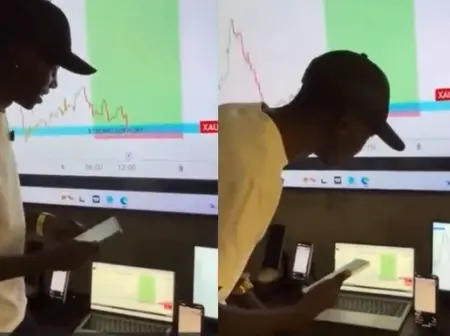
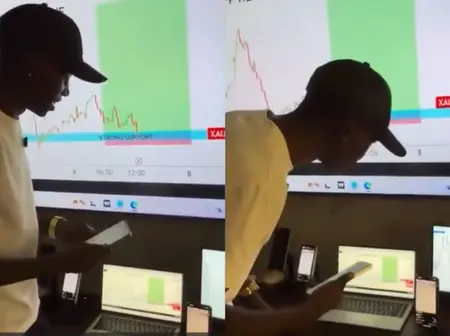
    Kenyan forex trader and online personality Kenya Prince has reportedly suffered a major financial setback after losing KSh3 million while conducting a live trading session on TikTok.

    The incident has attracted attention among social media users, particularly those who follow online forex trading and financial content. Kenya Prince was reportedly demonstrating his trading activities to viewers when the unexpected loss occurred, leaving him shocked by the outcome.

    The reported incident has sparked fresh conversations about the risks associated with forex trading, especially among young people who have developed an interest in making money through online financial markets.

    Forex trading involves buying and selling currencies to benefit from changes in exchange rates. Although traders can make profits, the market is highly unpredictable, and losses can occur within a short period. The amount lost by Kenya Prince, if confirmed, highlights how quickly trading positions can move against an investor.

    His experience has also raised questions about the growing trend of influencers conducting live trading sessions to showcase their skills and encourage followers to explore the forex market.

    For many aspiring traders, watching experienced individuals trade online can create the impression that making money through forex is straightforward. However, successful trading requires proper knowledge, discipline, risk management and an understanding of market movements.

    The incident has therefore served as a talking point among Kenyans, with social media users reacting to the reported loss and discussing the dangers of risking large amounts of money in the market.

    Kenya Prince's reported KSh3 million loss is a reminder that forex trading carries substantial financial risks, regardless of a trader's experience or online following.

  • What CS Davis Chirchir Said in Turkana as Kenya Starts Commercial Oil Production

    What CS Davis Chirchir Said in Turkana as Kenya Starts Commercial Oil Production

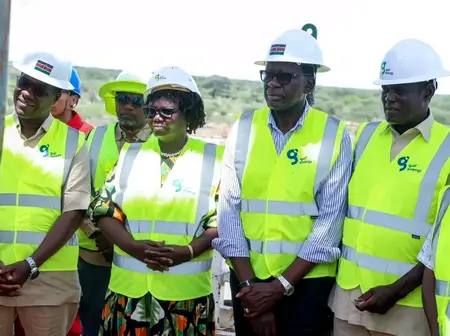
    Speaking on Friday, November 20, 2026, during the landmark well-spudding ceremony at the Amosing 1 and 2 oil fields in the South Lokichar sub-basin, Chirchir emphasized that upgraded transport corridors are vital to unlocking the region's economic potential.

    He noted that committing more than Ksh24 billion to quality infrastructure around the oil-producing blocks will not only support seamless petroleum logistics but also transform the socio-economic standing of local Turkana communities.

    Chirchir, who previously served as Energy Cabinet Secretary before moving to the Transport docket, joined Energy and Petroleum CS Opiyo Wandayi and East African Community CS Beatrice Askul to witness the activation of the GW70 onshore drilling rig.

    The Transport CS has consistently maintained that Kenya’s evacuation infrastructure is ready to move crude oil from Lokichar to the coast without operational bottlenecks.

    Under the approved Field Development Plan (FDP), initial crude output from Blocks T6 and T7 will be transported by road using heavy trucks from Turkana to Mombasa for storage at the Kenya Petroleum Refineries Limited (KPRL) tank farms.

    Chirchir previously explained to Parliament that Lokichar is already linked to the national trunk road network, which is undergoing continuous strengthening along the corridor to the Coast.

    Looking ahead to the second development phase when daily output is projected to scale up, the Ministry of Roads and Transport plans to transition crude evacuation from highways to a rehabilitated Meter Gauge Railway (MGR) line via Eldoret.

    That multimodal rail shift is designed to lower transport costs, reduce highway congestion, and enhance environmental safety once production hits peak volumes.

    Meanwhile, Friday’s spudding exercise—operated by Kenyan firm Gulf Energy E&P BV SEZ under a Ksh774 billion ($6 billion) development program—marks the final countdown to December 1, 2026, when Kenya expects to record its first commercial oil output.

    Gulf Energy Managing Director Paul Limoh confirmed that Phase One will target over 20,000 barrels per day from the Ngamia, Amosing, Twiga, and Ekales (NEAT) fields before expanding to 50,000 barrels daily in Phase Two.

    Across the 25-year contract period, the six South Lokichar discoveries hold an estimated 326 million recoverable barrels, with the government projecting lifetime earnings exceeding Ksh371 billion.

    SOURCE

  • Ruto Lists Multi-billion Projects Set To Transform Western Kenya Completely, Details

    Ruto Lists Multi-billion Projects Set To Transform Western Kenya Completely, Details

    A report compiled by the Office of the Prime Cabinet Secretary details investments in Kakamega, Bungoma, Busia, Vihiga and Trans Nzoia, covering road construction, affordable housing, healthcare, water supply, agriculture and industrial development.

    The projects are being implemented under the administration’s Bottom-Up Economic Transformation Agenda (BETA), with roads accounting for a significant share of the investments.

    In Kakamega, work is ongoing on the 43-kilometre Kakamega-Navakholo-Musikoma Road, valued at KSh2.84 billion, and the 36-kilometre Turbo-Shikhendu Road, whose cost stands at KSh3.67 billion.

    Other projects include the KSh1.63 billion Malava-Samitsi-Navakholo Road and improvements along the Kakamega Airstrip-Chepsonoi-Shinyalu route.

    Bungoma is also benefiting from the 41.1-kilometre Musikoma-Buyofu-Mungatsi-Myanga-Mateka road, which was reported to be 75 per cent complete at a cost of KSh1.96 billion.

    In Busia, the government listed the Nangina-Sio Port-Okados-Mundere Road and the Matayos-Namwitsula Bridge-Nasewa-CAIP-Shibale road among ongoing infrastructure projects.

    Prime Cabinet Secretary Musalia Mudavadi said the administration had committed to delivering 1,000 kilometres of tarmac roads across Western Kenya, following negotiations with Ruto before the 2022 General Election.

    Beyond transport infrastructure, the report indicates that 440 affordable housing units have been completed and commissioned, while more than 10,000 others are either under construction or at the procurement stage.

    The Nasewa housing project in Busia is targeting 2,000 units at an estimated cost of KSh5.5 billion. Kakamega also has a wider housing programme valued at KSh14 billion.

    In healthcare, the Kakamega County Teaching and Referral Hospital's upgrade to Level Six status is 85 per cent complete, while funding has been approved for a proposed Level Six facility in Bungoma.

    Water investments include the Alupe Dam in Busia, rehabilitation of Namuninge Dam in Bungoma and the Shitoli Water Project in Ikolomani.

    Industrial and agricultural initiatives include aggregation parks in Nasewa, Sang'alo and Sinoko, alongside efforts to revive Mumias and Nzoia sugar factories.

    Mudavadi urged Western Kenya residents to support Ruto's re-election bid in 2027, arguing that another term would allow the administration to complete ongoing development programmes.

    https://www.tuko.co.ke/politics/647419-ruto-outlines-roads-housing-health-projects-worth-ksh-40b-western-kenya/

  • KRA explains why every Kenyan should ask for valid eTIMS receipt

    KRA explains why every Kenyan should ask for valid eTIMS receipt

    KRA explains why every Kenyan should ask for valid eTIMS receipt

    The Kenya Revenue Authority (KRA) has urged Kenyans to always ask for valid electronic Tax Invoice Management System (eTIMS) receipts when making purchases, saying the documents help maintain proper records and support accurate tax reporting.

    In a post shared on its X account on Friday, November 20, 2026, the authority reminded consumers that eTIMS receipts serve as proof of transactions and help buyers keep clear records whenever they need to verify a purchase.

    “Always ask for a valid eTIMS receipt showing the supplier PIN, QR code and total amount,” KRA said.

    The reminder comes as the authority intensifies the use of electronic invoices to verify income and expenses declared by taxpayers.

    KRA requires businesses to issue electronic tax invoices in line with applicable tax regulations. Valid invoices help document transactions and support the reporting of business income and expenses.

    A well-designed login UI of KRA's e-tims portal showing login forms. PHOTO/https://etims.kra.go.ke/basic/login/indexLogin

    The authority announced that, from January 1, 2026, it would validate income and expenses declared in tax returns against TIMS/eTIMS records, withholding income tax information and customs import records, subject to applicable legal provisions and exemptions.

    The system is intended to improve tax compliance by ensuring declared transactions are supported by appropriate documentation.

    The authority has also introduced measures to help small-scale farmers and suppliers who may struggle to issue electronic invoices themselves.

    During a taxpayer town hall meeting at Murang’a University on Tuesday, November 17, Commissioner for Micro and Small Taxpayers George Obell explained how reverse invoicing allows approved buyers to generate eTIMS invoices on behalf of farmers supplying agricultural produce.

    “Under the arrangement, a factory or other business purchasing agricultural produce can generate an invoice on behalf of the farmer, thereby documenting the transaction in eTIMS,” Obell said.

    He added that the arrangement enables purchasing businesses to support their expense claims with the required documentation.

    Under the reverse invoicing arrangement, buyers must obtain KRA approval, secure the farmer’s informed consent and capture details including the farmer’s PIN, quantity supplied and agreed price.

    Farmers must also receive notifications when invoices are generated on their behalf and can monitor the records through their eTIMS dashboards.

    KRA has previously said reverse invoicing helps bring small suppliers into electronic tax documentation while enabling businesses to account for legitimate purchases.

    For consumers, the authority’s latest reminder is straightforward: checking that a receipt contains the supplier’s PIN, QR code and total amount can help ensure the transaction is properly documented.

  • Kenya Prince’s KSh3 Million Forex Disaster: Trader Breaks Down After Live Trade Goes Wrong

    Kenya Prince’s KSh3 Million Forex Disaster: Trader Breaks Down After Live Trade Goes Wrong

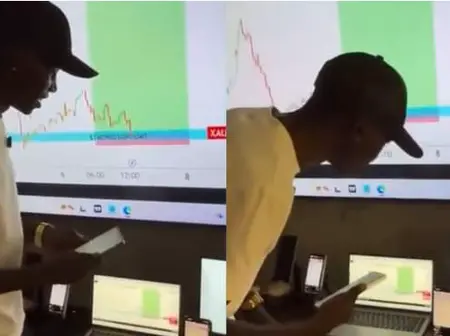
    Kenyan forex trader Raymond Omosa, popularly known as Kenya Prince, experienced a costly setback after losing more than KSh 3 million during a live trading session on TikTok.

    The incident happened on Friday, November 20, 2026, while he was livestreaming a forex lesson for his followers. Thousands of viewers were watching as he demonstrated how to execute trades and encouraged them to follow his moves.

    In the footage, the trader appeared enthusiastic as he announced that he was entering a buy position, repeatedly asking his audience whether they had joined the trade.

    “It’s a buy! It’s a buy! Oh my God! Are you in?” he asked, urging viewers to confirm their participation in the comment section.

    As the trade approached its closing time, Kenya Prince counted down while updating his audience on the remaining time.

    “We have one minute. It is in 15, 12, 8, 9. No time, guys! We are going crazy!” he exclaimed.

    However, the mood changed when the trade moved against him, resulting in a loss of more than KSh 3 million.

    “Oh my God, I’ve lost it, Jesus. Oh my God. Oh my God. Oh my goodness,” he said, appearing shocked by the outcome.

    Kenya Prince's luxury lifestyle

    Kenya Prince has built a public profile through forex trading, online mentorship and social media displays of wealth.

    In September 2026, he unveiled a white Lamborghini Urus, claiming he had purchased the luxury vehicle for KSh 64.5 million in cash. He had previously spoken about his ambition to own the high-end car.

    The following month, he described himself as the definition of young, rich and famous in Kenya and across East and Central Africa. He also identified his Mercedes-Benz GLE as an escort vehicle.

    Beyond trading and his luxury lifestyle, the forex trader has expressed interest in pursuing a career in dentistry.

    During an interview on the Iko Nini Podcast in January 2026, he spoke about his plans to return to school and venture into the medical field. He also disclosed that he had spent KSh 1.2 million improving his teeth and smile.

    https://www.facebook.com/100064760708552/posts/1735978821904125/?app=fbl

  • Major Blow To Ruto As Kenyan Shilling Weakens Against US Dollar After State Of Nation Address

    Major Blow To Ruto As Kenyan Shilling Weakens Against US Dollar After State Of Nation Address

    Days after President William Ruto praised his administration for stabilising the Kenyan shilling, the local currency has weakened against the US dollar, crossing the Ksh130 mark amid growing economic pressure.

    Data released by the Central Bank of Kenya (CBK) on Friday, November 20, showed the dollar exchanging at Ksh130.00, while Bloomberg quoted the exchange rate at Ksh130.07.

    The latest depreciation comes amid increased demand for dollars by businesses seeking to import goods, putting pressure on the foreign exchange market.

    The shilling has also faced pressure from declining foreign currency inflows, with diaspora remittances dropping by 1.9 per cent to Ksh55.9 billion in October 2026, down from Ksh438.8 million recorded in October 2025.

    CBK data further showed that Kenya's foreign exchange reserves declined by $135 million, from $14.74 billion on October 29 to $14.605 billion on November 12.

    The currency had remained relatively stable for more than two years, supported by diaspora remittances, agricultural exports, foreign investments and development partner loans.

    In July 2026, CBK Governor Kamau Thugge attributed the stability to strong dollar inflows and adequate foreign exchange reserves.

    The shilling also briefly crossed Ksh130 in April 2026 before strengthening to Ksh129.50.

    Thugge has maintained that the central bank would intervene when necessary to prevent further depreciation.

    Link

    https://www.kenyans.co.ke/news/129539-kenyan-shilling-crosses-ksh130-against-us-dollar-amid-growing-pressure?fbclid=IwY2xjawVtYQdleHRuA2FlbQIxMQBwZG9mAXNydGMGYXBwX2lkDDM1MDY4NTUzMTcyOAABH4-JJrgAuZz8ZGvjXp0xof3VVZ3EPS8sJn3G9O9VjVF49VD9mfYalIm9Fyjx_aem_BPGTYKOR5UiOvJ87FPnJ4w

  • Ndindi Nyoro Breaks Down How AI Investments Are Creating a New Generation of Billionaires

    Ndindi Nyoro Breaks Down How AI Investments Are Creating a New Generation of Billionaires

    Kiharu Member of Parliament Ndindi Nyoro has highlighted the enormous wealth creation opportunities presented by artificial intelligence investments, using American technology company Anthropic to demonstrate how businesses can transform the financial fortunes of their founders, investors and employees.

    In a statement discussing Anthropic's reported valuation and investment journey, Nyoro challenged Kenyan companies to embrace employee stock ownership programmes, arguing that workers should have an opportunity to benefit directly from the growth of the organisations they help build.

    Anthropic was founded in 2021 by former OpenAI employees, including siblings Dario Amodei and Daniela Amodei.

    The company focuses on developing artificial intelligence technology, particularly AI systems designed with safety considerations.

    According to figures shared by Nyoro, Anthropic's reported valuation had surpassed $1.7 trillion (approximately KSh221 trillion), making it an extraordinary example of wealth creation within the technology industry.

    The legislator claimed that the company's seven founders had become billionaires, with their individual fortunes averaging more than $23 billion.

    He further highlighted the reported financial benefits enjoyed by employees through company share ownership, claiming that hundreds had accumulated fortunes exceeding $100 million, while thousands had become dollar millionaires.

    Nyoro argued that Kenyan businesses should consider adopting a similar model to allow employees to own a portion of the companies they work for.

    He cited Equity Bank founder and Managing Director Dr James Mwangi, noting that ownership in the institution gives him a direct interest in its performance and growth.

    The Kiharu MP also highlighted the investment journey of Jaan Tallinn, who reportedly invested $60 million in Anthropic during its initial funding rounds in 2021.

    According to Nyoro, the investment had grown to approximately $18 billion, representing an extraordinary increase in value.

    On global investment trends, Nyoro observed that American technology companies are frequently valued based on expectations of future growth rather than their current financial performance.

    He cited SpaceX's reported valuation and high price-to-earnings ratio to demonstrate how investors sometimes commit enormous resources based on anticipated future returns.

    Nyoro maintained that Kenya should not remain outside the global investment revolution, arguing that technological advancements have created opportunities for people to participate in businesses beyond their national borders.

    He urged Kenyans to explore international investment opportunities while encouraging local companies to introduce employee ownership programmes that could help workers accumulate long-term wealth.

    His remarks have reignited discussions about employee benefits, investment culture and how Kenyan businesses can create opportunities for workers to share in corporate success.

    Sources;

    https://www.facebook.com/share/p/19YaqzJpuL/

  • Kenya Railways Sets 2027 Target for Major Nairobi Railway City Funding Deal

    Kenya Railways Sets 2027 Target for Major Nairobi Railway City Funding Deal

    The corporation is targeting early 2027 to achieve financial close for the redevelopment of Nairobi Central Railway Station and its surrounding public spaces.

    The timeline emerged following high-level discussions between Kenyan officials and a visiting United Kingdom delegation led by Kirsty McNeill, the UK Minister of State for International Development and Africa.

    McNeill visited Kenya Railways on Thursday, November 19, accompanied by British High Commissioner to Kenya Matt Baugh. The meeting focused on the progress of Nairobi Railway City and Britain's contribution to the project's preparation.

    Kenya Railways Board Chairman Abdi Bare Duale said the programme had reached a critical stage, with upcoming financing decisions expected to determine how quickly construction can begin.

    He acknowledged Britain's support in providing technical assistance during the planning and preparation phases, adding that the coming months would be crucial in moving the project towards implementation.

    Kenya Railways Managing Director Philip Mainga disclosed that the procurement process for the Engineering, Procurement and Construction contractor and the Supervising Engineer for Nairobi Central Station had been completed.

    He said the corporation was now working with the National Treasury and other government agencies to finalise the remaining financing arrangements.

    Beyond the railway station redevelopment, Kenya Railways is preparing to commence another major component known as the Meetings, Incentives, Conferences and Exhibitions (MICE) Core in the coming weeks.

    The development will feature a multipurpose arena and commercial facilities designed to accommodate international conferences, exhibitions, sporting competitions and entertainment events.

    Nairobi Railway City is envisioned as a modern urban development on underutilised railway land in the capital's central business district.

    The master plan incorporates improved transport infrastructure, commercial buildings, residential facilities and public spaces.

    Once completed, the programme is expected to expand Nairobi's CBD, improve movement within the city, create employment opportunities and attract private investment.

    https://peopledaily.digital/news/kenya-railways-reveals-when-nairobi-railway-city-funding-deal-could-be-sealed

  • Kenya Prince left in disbelief after losing Ksh3M while teaching forex trading live on TikTok

    Kenya Prince left in disbelief after losing Ksh3M while teaching forex trading live on TikTok

    thumbnail

    Kenyan forex trader Raymond Omosa, popularly known as Kenya Prince, was left stunned after losing more than Ksh3 million during a live trading session as he taught his followers how to trade.The incident unfolded during a TikTok livestream on Friday, November 20, 2026, where thousands of viewers were watching as the trader demonstrated how to place trades and encouraged his audience to participate.