Category: Economy&Finance

  • Safaricom Reveals How Much Customers Pay Per Minute for Day and Night Calls

    Safaricom Reveals How Much Customers Pay Per Minute for Day and Night Calls

    In a response shared on X, the telecommunications company clarified that its voice charges depend on the time of the call and whether a customer is calling another Safaricom subscriber or a different local network.

    According to Safaricom, calls made between 8:00 am and 10:00 pm cost KSh4.87 per minute across all local networks.

    However, customers making calls between 10:00 pm and 8:00 am enjoy a reduced rate of KSh2.50 per minute when calling other Safaricom numbers.

    Those calling Airtel, Telkom and other local networks during the night continue to pay KSh4.87 per minute.

    The clarification followed a complaint by an X user, Koki Wabule, who questioned why a call lasting one minute and 58 seconds had cost her KSh9.51.

    She shared an Okoa Chap Chap notification showing the amount charged and sought an explanation from Safaricom.

    The company apologised and explained that the call had been made at around 5:30 pm, placing it within the daytime charging period.

    At the rate of KSh4.87 per minute, a call lasting almost two minutes would cost approximately KSh9.57, which is close to the amount reflected in her notification.

    The latest clarification is important for millions of Kenyans who depend on mobile calls for business, family communication and daily activities.

    Customers should also note that Safaricom offers voice bundles through its *544# menu, allowing subscribers to purchase minutes for calls across local networks.

    The bundles can be paid for using airtime or M-Pesa, and customers can also purchase them for other Safaricom numbers.

    With mobile communication remaining part of everyday life, understanding the applicable charges can help customers manage their airtime spending and avoid unexpected deductions.

    Safaricom subscribers can check available voice offers by dialling *544#.

  • Kenya Begins Turkana Oil Drilling as Government Projects Ksh371 Billion Revenue

    Kenya Begins Turkana Oil Drilling as Government Projects Ksh371 Billion Revenue

    The exercise began on Friday, November 20, at the Amosing 1 well pad in the South Lokichar Basin, where Gulf Energy E&P BV SEZ is undertaking the operations using specialised drilling equipment leased from China's Great Wall Drilling Company.

    Energy Cabinet Secretary Opiyo Wandayi presided over the ceremony marking the commencement of drilling, also known as spudding.

    During the event, Wandayi announced that the government was targeting December 1, 2026, for the commencement of initial crude oil production.

    The first phase is expected to deliver approximately 20,000 barrels daily from four oil fields identified as Ngamia, Amosing, Twiga and Ekales, collectively referred to as NEAT.

    The government estimates that the project could generate more than USD2.9 billion, equivalent to approximately Ksh371 billion, during its 25-year contractual period. However, actual earnings will depend on international crude oil prices and production levels.

    Gulf Energy Managing Director Paul Limoh said the company was working within its implementation schedule to ensure production begins on the targeted date.

    He revealed that the initial crude oil output would be transported from Turkana to Mombasa using trucks before being stored at the Kenya Petroleum Refineries Limited (KPRL) facilities.

    The company is targeting a significant increase in production during the second phase, with daily output expected to reach 50,000 barrels.

    According to the government's development plan, the six oil discoveries identified in the South Lokichar Basin contain an estimated 326 million barrels of recoverable crude oil.

    Meanwhile, Transport Cabinet Secretary Davis Chirchir disclosed that the government was investing more than Ksh24 billion in roads and supporting infrastructure within the oil-producing region.

    The investment is expected to facilitate oil transportation while improving connectivity and supporting economic activities in Turkana.

    The commencement of drilling marks an important milestone in Kenya's long-running efforts to develop its oil resources and establish a commercial petroleum industry.

    https://www.kenyans.co.ke/news/129554-kenya-eyes-ksh-371b-turkana-drilling-begins-production-targets-20000-barrels-daily

  • Kibera Set for Major Housing Expansion as Government Plans 15,000 New Homes

    Kibera Set for Major Housing Expansion as Government Plans 15,000 New Homes

    The new development will form part of the ongoing redevelopment of Soweto East, which the government says is being implemented in phases to improve housing conditions and provide residents with access to essential social amenities.

    In a statement released on Friday, November 20, Interior Principal Secretary Raymond Omollo said the transformation of Kibera had made considerable progress over the past four years under President William Ruto's Bottom-Up Economic Transformation Agenda (BETA).

    The first phase, known as Zone A, delivered 822 apartments distributed across 21 blocks. This was followed by Zone B, which provided 4,054 social housing units in 18 high-rise buildings.

    The second development also incorporated facilities intended to serve residents, including a primary school, health centre and commercial spaces.

    With Zone B approaching completion, the government is preparing to move into the next phase, covering Zones C and D.

    According to Omollo, preparations are underway on an 8.1-hectare piece of land where the additional 15,000 housing units will be developed.

    Beyond residential buildings, the planned project will feature shopping facilities, Early Childhood Development (ECD) centres, health clinics and improved sewer infrastructure.

    Omollo said the initiative was not only intended to increase the availability of affordable homes but also improve security and the general living environment within informal settlements.

    He argued that better housing conditions would give families more secure surroundings while reducing some of the challenges associated with overcrowding.

    The Kibera project forms part of the government's wider affordable housing programme, which seeks to expand access to decent accommodation in urban areas.

    The latest announcement signals another major phase in the government's efforts to transform one of Nairobi's most densely populated settlements.

    https://nairobileo.co.ke/news/article/31590/kibera-to-get-15000-more-affordable-housing-units-as-govt-begins-new-phase

  • KEPROBA Appoints Austin Macheso to Lead Agency as Acting CEO

    KEPROBA Appoints Austin Macheso to Lead Agency as Acting CEO

    The agency announced on Friday, November 20, that Macheso assumed the position of Acting Chief Executive Officer on November 16.

    His appointment follows years of service within KEPROBA, where he previously worked as Director of Products, Export Market Development and Promotion. In that role, he contributed to initiatives aimed at expanding opportunities for Kenyan products in foreign markets.

    Macheso has a Master’s degree in International Business Management and a Bachelor of Arts degree covering Economics, Sociology and History.

    KEPROBA said his background in export development, strategic planning and engagement with international markets would help advance its mandate of improving Kenya's competitiveness in global trade.

    The agency is also expected to benefit from his experience working with stakeholders involved in promoting locally manufactured goods and strengthening the country's international brand.

    Established in August 2019, KEPROBA emerged from the merger of the former Export Promotion Council and Brand Kenya Board.

    Its responsibilities include helping Kenyan businesses identify overseas markets, promoting the Made in Kenya brand, organising participation in international trade exhibitions and improving the packaging and branding of locally produced goods.

    Macheso takes over the acting leadership as the agency continues efforts to position Kenyan products and services more competitively in international markets.

    In a separate corporate appointment announced on November 19, Jubilee Group Kenya confirmed Cliff Bakashaba as the substantive Chief Executive Officer and Principal Officer of Jubilee Asset Management Limited.

    Bakashaba had previously held the position in an acting capacity. The firm manages approximately USD 2 billion in assets through institutional mandates and retail collective investment schemes.

    https://nairobileo.co.ke/business/article/31600/kenya-export-agency-names-austin-macheso-new-acting-ceo

  • Whooping Amount Flight Attendant Found on Business Class Seat After Passengers Disembarked

    Whooping Amount Flight Attendant Found on Business Class Seat After Passengers Disembarked

    A Kenya Airways flight attendant has been praised for returning lost property worth US$9,600 to a passenger.

    The handbag went missing on flight KQ762 from Nairobi to Johannesburg. The passenger had gone through Immigration in OR Tambo airport but had not noticed that he had left his bag behind.

    Limo alerted another purser. Together, they counted the money in the bag and confirmed that there was a total of US$9,600 (about KSh 1.2 million).

    As losing such an amount of money, as well as passport documents, in a foreign country would be very stressful for the passenger, Limo immediately turned the bag over to the ground and security team within Kenya Airways. As the passenger had left the plane, this action was very quick.

    The ground staff were able to locate the person and return the items to them. The money and documents were undamaged.

    While Limo was not present during the handover, she was happy that the staff were able to act quickly, and reduce any stress felt by the passenger.

    “I thank the cabin crew and ground staff so much. It was definitely a great group effort.”

    “It was an easy decision to make. It is our job as cabin crew to look out for passengers, and to get their personal items back to them safely.”

    This incident shows how important honesty can be when people are far away from home. If someone loses their passport, and potentially thousands of dollars, it could cause a lot of problems.

    https://www.facebook.com/share/19qaEsMLvt/

  • 332 Plot Owners Risk Losing Land as Developer Issues 20-Day Ultimatum

    332 Plot Owners Risk Losing Land as Developer Issues 20-Day Ultimatum

    thumbnail

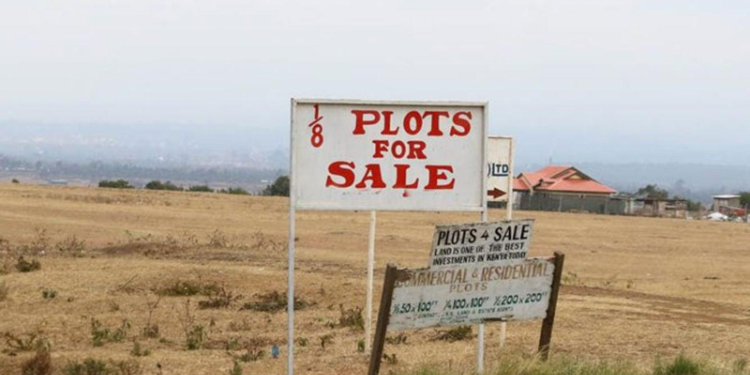
    Owners of 332 plots face the risk of losing their properties after a land development company issued a 20-day ultimatum requiring them to clear outstanding payments or face repossession and auction.In a notice published on Friday, November 20, 2026, Mavoko Land Development Co. Ltd directed owners of the listed plots in Mlolongo Ngwata Phase III to complete their payments by December 10, 2026.

  • KCB M-PESA Announces One-Hour Service Disruption as Safaricom Schedules System Maintenance

    KCB M-PESA Announces One-Hour Service Disruption as Safaricom Schedules System Maintenance

    In a message sent to customers on Friday, November 20, the service provider announced that the maintenance would take place on November 21, between 3:00 am and 4:00 am.

    During the one-hour window, customers will be unable to access KCB M-PESA services as technicians carry out the planned system work.

    The company apologised for the inconvenience and urged customers to take note of the timing to avoid disruptions to transactions that may require the platform.

    "Dear Customer, to enable scheduled system maintenance, KCB MPESA services will be unavailable tomorrow 21st Nov 2026 from 3:00 AM to 4:00 AM," the notification stated.

    The announcement comes amid other service-related updates involving Safaricom's mobile financial platforms.

    In October, Safaricom acknowledged a technical problem affecting M-Shwari, its mobile savings and credit service. The company informed customers that the platform was experiencing degraded performance and asked them to remain patient as its technical team worked to restore normal operations.

    Safaricom also apologised to users affected by the disruption.

    Separately, the telecommunications company recently conducted an electronic waste collection campaign, encouraging customers to surrender old phones, chargers, earphones and other unused accessories at its retail outlets across the country.

    The initiative aimed to promote responsible disposal of electronic waste, recover reusable materials and reduce environmental pollution.

    KCB M-PESA customers who may need to make urgent transactions have been advised to plan around the announced maintenance period, as access is expected to resume after 4:00 am.

    https://nairobileo.co.ke/business/article/31601/safaricoms-kcb-m-pesa-announces-scheduled-service-downtime

  • Judiciary recruits 1,280 staff, including 153 judges and magistrates, but still operates below capacity- Koome

    Judiciary recruits 1,280 staff, including 153 judges and magistrates, but still operates below capacity- Koome

    thumbnail

    Listen to articleThe staffing shortage comes despite improvements in case resolution, with courts handling 576,702 cases against 561,580 filed during the year, translating to a case clearance rate of 103 per cent.The Judiciary appointed 53 judges and 100 magistrates in the 2025/2026 financial year as part of efforts to address staff shortages and speed up the resolution of cases in courts across the country.

  • Donald Kipkorir Explains How Kenya Can Achieve Industrialisation by Emulating Thailand and Vietnam

    Donald Kipkorir Explains How Kenya Can Achieve Industrialisation by Emulating Thailand and Vietnam

    Senior Lawyer Donald Kipkorir has outlined an ambitious development blueprint that Kenya could adopt to achieve industrialisation within one generation, drawing inspiration from the remarkable economic transformations witnessed in Thailand and Vietnam.

    Kipkorir argues that the two Asian countries offer valuable lessons for Kenya because they were predominantly agricultural economies before embarking on carefully structured development programmes that transformed their economic fortunes.

    According to the lawyer, their success was not achieved through randomly distributed development projects but through a systematic four-phase strategy, with each stage taking approximately five to ten years.

    The first phase involved transforming agriculture through massive investment in research, modern farming techniques, high-yield crops and improved livestock production. Agricultural value addition and the export of finished products subsequently became critical drivers of economic growth.

    The second phase concentrated on cottage industries, including textiles, footwear, carpentry and other small-scale manufacturing enterprises. This required empowering the private sector while expanding essential infrastructure such as roads, railways and water supply networks.

    The third phase involved establishing heavy industries capable of producing electronics, vehicles and machinery. Governments played a significant role through investments in technical education, research and development, electricity generation and industrial infrastructure.

    The final phase focused on advanced technology and digital transformation, ensuring widespread connectivity, digital literacy and preparedness for an artificial intelligence-driven economy.

    Kipkorir warns that Kenya risks missing the industrialisation opportunity because its development priorities remain poorly coordinated, with different economic transformation stages being pursued simultaneously without a clearly defined sequence.

    He maintains that Kenya should study Thailand and Vietnam rather than Singapore, arguing that their agricultural backgrounds make them more relevant development models.

    He also identifies Rwanda and Eritrea as potentially more suitable examples for countries seeking to replicate Singapore's development approach.

    His argument places renewed emphasis on strategic planning, economic discipline and a properly sequenced industrialisation agenda as Kenya seeks to transform its economy.

  • Milk Prices Rise in Meru as 500ml Packet Hits Sh78

    Milk Prices Rise in Meru as 500ml Packet Hits Sh78

    Residents of Meru town are facing increased spending on household essentials following a rise in the retail price of milk, with a 500ml packet now selling at between KSh70 and KSh78 in some supermarkets.

    The latest prices vary depending on the supermarket and its location, with some retailers charging as much as KSh78 for the half-litre packet.

    The increase marks a noticeable change from the previous retail price of KSh65, which was common not long ago. The latest adjustment means consumers are paying between KSh5 and KSh13 more for the same quantity of milk.

    The rising cost is likely to put additional pressure on household budgets, particularly for families that rely on milk as part of their daily meals.

    Milk is among the commonly purchased food products in many Kenyan households, where it is consumed during breakfast and used in preparing various meals and beverages.

    For families that purchase milk regularly, even a small increase in the price can translate into higher monthly expenditure.

    The difference in prices across supermarkets also means shoppers may have to compare retail outlets before making purchases to find more affordable options.

    The development comes at a time when consumers continue to monitor the cost of basic commodities amid concerns over the rising cost of living.

    Although the reported prices are specific to some supermarkets in Meru town, the increase highlights the financial pressure that changes in everyday food prices can place on consumers.

    Residents will now have to adjust their household spending to accommodate the higher cost, especially those who purchase milk daily.

    It remains unclear whether the latest price adjustment will be temporary or whether consumers should expect further changes in the coming weeks.