Glovo has opened two new facilities in Nairobi as part of its Ksh10 billion investment commitment in Kenya, with the expansion expected to create additional jobs and income-generating opportunities for young people.
The facilities, including a Real Time Operations (RTO) office and the company’s first Glovo Centre in Kenya, are focused on advancing the platform’s operational capacity, supporting rider development and strengthening its presence in the local digital economy.
The launch took place during a visit to Kenya by Glovo Co-founder Sacha Michaud, following the company’s announcement in May 2026 that it would invest an additional Ksh10 billion in the country by 2030.
Glovo’s Nairobi-based RTO department, which initially supported six markets, now provides round-the-clock operational services across 21 markets. Its workforce capacity has also increased from 100 to 220 workstations, with further expansion planned as the business scales.
The growth is expected to create employment opportunities for Kenyans seeking careers in technology-enabled operations, customer support and related fields.
Additionally, Glovo plans to onboard an additional 1,000 riders by the end of 2026, building on the 2,765 riders registered during the first ten months of the year. According to Glovo, this represents its highest annual rider onboarding figure since entering the Kenyan market in 2019.
Speaking during the launch, Michaud said, “When we announced our investment commitment earlier this year, our ambition was not simply to grow Glovo’s presence in Kenya, but to create more opportunities for people to earn, learn and build their futures. These new facilities are part of making that commitment a reality. We want young Kenyans working within our operations to have opportunities to develop their skills and grow their careers, while ensuring riders have access to the training and financial knowledge that can help them make the most of their earnings and pursue their own ambitions.”
The second facility, the Glovo Centre, will bring rider registration, onboarding, training and support services under one roof. It is also expected to provide riders with practical skills to support their financial management and future entrepreneurial activities.
As part of the initiative, Glovo partnered with Centonomy to conduct a financial literacy training session for 50 riders, focusing on money management, savings and financial planning.
The launch also coincided with the establishment of a rider-led Savings and Credit Cooperative Society (SACCO), which is intended to improve access to credit and encourage collective saving among delivery riders.
Furthermore, Glovo has expanded its platform to connect more than 6,000 businesses with customers, while over 12,400 riders have earned income through its delivery service since its establishment in Kenya.
The Kenyan shilling has weakened past Ksh130 against the US dollar, raising questions about whether the local currency is losing the stability it maintained for more than two years.
However, the latest movement may not signal an impending currency crisis, with Central Bank of Kenya (CBK) data showing that the country still has substantial foreign exchange reserves to cushion its economy against external shocks.
In July 2026, CBK Governor Kamau Thugge explained the factors behind the shilling’s prolonged stability, saying, “Indeed, it has been steady since early 2024. It has fluctuated between 120 and 129.”
On Friday, November 20, 2026, CBK’s exchange-rate data placed the US dollar at Ksh130.00, while Bloomberg quoted it at Ksh130.0700. The development marks another breach of the threshold after the shilling briefly weakened beyond it in April before recovering.
One of the strongest indicators of Kenya’s ability to withstand currency pressure is its foreign exchange reserve position.
CBK reported that reserves stood at $13.949 billion (approximately Ksh1.813 trillion) as of November 19, equivalent to 5.6 months of import cover. This remains above the statutory minimum requirement of four months.
However, reserves declined from $14.605 billion (approximately Ksh1.899 trillion) on November 12, representing a reduction of $656 million (approximately Ksh85.3 billion) in one week.
The decline raises questions about Kenya’s foreign currency outflows, including external debt payments, government transactions and possible central bank operations. However, the published figures do not establish that CBK sold dollars to defend the shilling.
Diaspora remittances have also weakened slightly, declining by 1.9 per cent to $430.5 million (approximately Ksh55.9 billion) in October 2026, compared with $438.8 million (approximately Ksh57 billion) in October 2025.
Despite the reduction, Kenya continues to receive billions of dollars annually from citizens working abroad, providing an important source of foreign exchange.
The shilling’s movement is also taking place against changing conditions in international currency markets.
CBK’s November 20 bulletin indicated that the US Dollar Index strengthened by 0.70 per cent during the week ending November 19, potentially adding pressure on emerging-market currencies.
CBK has previously explained that the exchange rate is determined by market forces rather than fixed by the central bank.
“The Central Bank does not set the exchange rate; it is market determined based on supply and demand of foreign exchange,” the institution states on its website.
This means crossing Ksh130 does not automatically indicate that the central bank has lost control of the currency market.
A weaker shilling also has different implications for various sectors. Importers purchasing petroleum, medicines, machinery and industrial raw materials in dollars may face higher costs, while exporters earning foreign currency could receive more shillings when converting their earnings.
The government could also require more local currency to service external debt denominated in dollars.
The debate over the shilling’s stability is not entirely new. In October 2025, IMF officials reportedly questioned whether the currency’s unusually narrow trading range reflected underlying market conditions.
“The IMF were in town two weeks ago, and one of the things they told us is that the exchange rate is too stable,” Ndiritu Muriithi, Kenya Revenue Authority chairman, said.
“I found it strange myself that the IMF would say the exchange rate is too stable.”
Thugge previously attributed the shilling’s stability to foreign currency inflows from diaspora remittances, agricultural exports, foreign investments and development partners.
However, maintaining exchange-rate stability over the long term requires sustained foreign currency earnings to meet Kenya’s import requirements and external financial obligations.
The latest reserve figures suggest that Kenya still has a substantial buffer, although the decline in reserves and remittance inflows warrants attention.
For now, crossing Ksh130 should not automatically be interpreted as a return to the currency instability experienced in earlier years.
The more important indicators will be whether reserves continue declining, whether import cover approaches the statutory minimum and whether demand for dollars persistently exceeds available supply.
Until those indicators show sustained deterioration, the Ksh130 threshold alone may say more about market psychology than the actual health of Kenya’s foreign exchange position.
The company explained that the interruption would facilitate critical maintenance on the Mumias-Rangala 132kV transmission line, which serves several areas in the two counties.
According to Kenya Power, the exercise is intended to address network requirements, protect essential infrastructure and prevent possible equipment failures that could affect the reliability and stability of electricity supply.
The planned interruption will affect customers in Busia Town, Malaba Town, Mundika, Matayos, Alungoli, Korinda, Sio Port, Bumala, Sega, Jera, Ukwala, Ambira, Ugunja, Rangala, Simenya, Mutumbu, Nyamnina, Dudi, Wagai, Aluor, Kodiaga and Yala.
Other affected locations include Sawagongo, Panyako, Gombe, Kambare, Kobare, Ndere, Segere, Tingwangi, Murmalanga, Anduro, Siaya Prisons, Port Victoria, Mabinzu, Ruambwa, Bumbe Polytechnic, Little Gem Resort, Madeya and Dominion Farms.
The notice also listed Kipenzi Sugar, Machakuzi, Angurai, Nambale, Buyofu and Busia Prisons, alongside neighbouring customers, among those expected to experience the interruption.
Kenya Power said the maintenance would be conducted within the scheduled window to allow for timely restoration of electricity and improve the resilience of the power network.
The company apologised for the inconvenience and appealed to affected customers to exercise patience and understanding as technicians carry out the work.
Customers in the listed areas have been advised to make necessary preparations ahead of interruption.
Millions of Kenya Power customers could eventually feel the effects of Kenya’s changing electricity market, but not necessarily through an immediate reduction or increase in their monthly bills.
The bigger question is whether allowing large consumers to buy electricity directly from private generators will reduce power costs without shifting the expense of maintaining the national grid to households and smaller businesses.
The National Assembly Committee on Delegated Legislation, chaired by Ainabkoi MP Samuel Chepkonga, conditionally endorsed the Energy (Electricity Market, Bulk Supply and Open Access) Regulations, 2026, following discussions with Energy and Petroleum Regulatory Authority (EPRA) Director-General Edward Kinyua on Thursday, November 19, 2026.
Gazetted in May as Legal Notice No. 79 of 2026, the regulations establish a framework for electricity market participants, bulk power supply and third-party access to transmission and distribution networks. They provide for direct electricity supply arrangements between licensed market participants and eligible consumers, with electricity transported through existing infrastructure.
The regulations also provide for wheeling or use-of-system charges, energy accounting, supply agreements and performance security. Their purpose is to make it possible for eligible buyers to negotiate electricity purchases outside traditional supply arrangements while paying for the use of the national grid.
The reforms primarily target large electricity consumers, including manufacturers, that could negotiate supply contracts directly with independent power producers (IPPs).
Instead of relying entirely on Kenya Power’s conventional supply arrangements, eligible buyers could compare offers from generators and negotiate prices and contractual terms. The electricity would still travel through the national transmission and distribution networks, meaning access to the grid would not be free.
“For a very long time, our market has been monopolised. The reforms will create competition, drive operational efficiency, and lower power tariffs to make Kenya a competitive manufacturing hub,” Kinyua told MPs.
However, ordinary households should not expect to start choosing electricity suppliers immediately. Eligibility requirements, licensing, technical arrangements and network access conditions determine who can participate.
The biggest unanswered question is how much eligible buyers will pay to transport electricity through the national grid.
That issue is particularly important because EPRA was still examining different approaches to setting wheeling tariffs during a technical workshop held on November 16 and 17 in Machakos, according to RES4Africa. The discussions considered whether charges should be based on electricity capacity or actual energy consumed, as well as differences arising from voltage levels, time and geographical location.
These decisions will influence whether direct purchases genuinely become cheaper and how fairly network costs are shared.
Kenya Power reported revenue of Ksh238.24 billion and electricity purchase costs of Ksh152.65 billion in the financial year ended June 2026. The company also recorded a Ksh24.99 billion profit after tax.
Chief Executive Joseph Siror said: “Going forward, the Company will focus on translating its improved financial position into better service delivery and sustained shareholder value.”
The utility must still maintain its infrastructure even if some large customers purchase electricity elsewhere. If it loses significant sales revenue while retaining network responsibilities, regulators will need to ensure that wheeling charges adequately recover legitimate costs without unfairly burdening customers who cannot switch.
That is a risk requiring scrutiny, not proof that household electricity bills will rise.
Cheaper electricity for factories does not automatically mean cheaper electricity for households or lower prices for manufactured goods.
The final cost of power also depends on network charges, transmission losses, balancing services, backup supply and contractual obligations. The savings manufacturers achieve could improve their competitiveness, but whether consumers benefit through lower product prices will depend on business decisions and market competition.
Electricity Sector Association of Kenya Chief Executive George Aluru said: “The sector needs more investments in generation and transmission and we as the private sector are ready to commit the necessary resources.”
He added: “We have seen policy changes that are calling for us to reimagine the sector. The sector needs are clear- from generation to transmission lines- and we as the private sector are ready to partner to move the electricity market to what these regulations envision.”
Kenya’s Transmission Master Plan requires approximately 9,600 kilometres of additional transmission lines over 20 years, at an estimated US$5.2 billion. At the Central Bank of Kenya’s November 19 rate of Ksh129.99 per US dollar, that is approximately Ksh675.95 billion.
During the November 19 scrutiny, MPs questioned Regulation 11, which deals with performance security. Kathiani MP Robert Mbui sought clarity on how the requirement would apply to suppliers and consumers. Kinyua explained that the provision was intended to protect buyers when suppliers fail to deliver contracted electricity.
Members also sought clearer definitions of technical terms, including open access and ancillary services, as well as evidence that public participation requirements had been met. EPRA was asked to incorporate the committee’s recommendations.
Chepkonga had previously defended Parliament’s supervisory role during debate on the regulations.
“Parliament cannot abdicate its supervisory and oversight role.”
Ultimately, the success of the reforms will depend on more than the number of private electricity suppliers entering the market.
The test will be whether manufacturers obtain competitively priced electricity, network operators recover legitimate infrastructure costs, and households are protected from unfair cost transfers.
Until the wheeling tariff framework and implementation safeguards are clear, the effect on ordinary Kenya Power bills remains uncertain.
The Kenya Revenue Authority has urged Kenyans to make it a habit to request valid electronic Tax Invoice Management System receipts whenever they purchase goods or services, warning that the documents play an important role in ensuring accurate tax records and accountability.
In a public awareness message shared on Friday, November 20, 2026, the tax authority reminded consumers that obtaining an eTIMS receipt is not just a responsibility for businesses but also an important step for customers seeking to maintain proper transaction records.
KRA advised Kenyans to ensure every valid eTIMS receipt contains three essential details: the supplier's Personal Identification Number (PIN), a QR code and the total amount paid.
The authority explained that these details help customers verify their transactions and establish whether the purchases have been properly documented in the tax system.
The reminder comes as KRA continues strengthening its electronic tax administration systems, particularly in verifying income and expenses declared by taxpayers.
Effective January 1, 2026, the authority began validating income and expenses declared in tax returns against information obtained from TIMS/eTIMS invoices, withholding income tax records and customs import data.
This means taxpayers claiming business expenses must have appropriate supporting documentation, subject to applicable legal provisions and exemptions.
Meanwhile, KRA has introduced additional support for small-scale farmers and suppliers who may struggle to generate electronic invoices.
Through a system known as reverse invoicing, approved buyers can generate eTIMS invoices on behalf of farmers supplying agricultural produce.
However, buyers must obtain KRA approval, secure the farmer's consent and record important transaction details, including the farmer's PIN, quantity supplied and agreed price.
Farmers must also receive notifications whenever invoices are generated on their behalf and can monitor the transactions through their eTIMS dashboards.
KRA's latest reminder is therefore an important message to consumers and business owners across the country.
By consistently requesting valid electronic receipts and checking their details, Kenyans can help strengthen financial accountability, improve record keeping and support the country's tax compliance efforts.
Kiharu Member of Parliament Ndindi Nyoro has explained how employees working for American artificial intelligence company Anthropic could become millionaires following the firm's remarkable stock market debut.
Nyoro says the company's employee share ownership model offers important lessons for Kenyan businesses, particularly on how workers can build long-term wealth by owning a stake in the organisations they help grow.
Anthropic, the developer of the popular Claude artificial intelligence assistant, made its Nasdaq debut on Thursday, November 19, 2026, in what has been described as a record-breaking initial public offering.
The company's market valuation briefly reached approximately KSh258 trillion, attracting significant attention from investors across the world.
In a statement shared on his X account on Friday, November 20, Nyoro argued that Kenyan companies should embrace employee share ownership schemes to give workers an opportunity to benefit financially from their employers' growth.
“This model of giving opportunities for staff to own stocks in the company they work for is a model that must be cultivated in Kenya,” Nyoro stated.
According to the legislator, Anthropic's stock market performance demonstrates how employees who receive company shares can accumulate substantial wealth as their employers expand and become more valuable.
Reports cited in the discussion suggest that hundreds of Anthropic employees could hold share portfolios worth billions of shillings, although individual valuations have not been independently confirmed.
Nyoro also referenced Equity Group as an example of how ownership and participation in a company's growth can create opportunities for wealth accumulation.
The MP further highlighted the investment journey of Jaan Tallinn, an early Anthropic investor who reportedly invested approximately KSh7.7 billion, with his stake subsequently estimated to be worth about KSh2.3 trillion.
He maintained that Kenyans should recognise opportunities in the increasingly interconnected global economy, including investing in businesses beyond their borders.
“The world is a global interconnected economy, and anyone can participate in investing anywhere in the world,” he said.
Nyoro's remarks come amid growing interest in artificial intelligence investments and employee participation in corporate ownership.
However, he noted that high company valuations also come with risks, particularly when expectations of future growth exceed actual business performance.
The Ministry of Mining named the consortium as the preferred bidder for the Mrima Hill project on Thursday, November 19, 2026. In a statement released through EIN Presswire, Managing Member Brad Barnett said the firm recognises the heavy responsibility of developing a resource of national and global importance.
Barnett confirmed that the group's blueprint prioritises domestic value addition rather than shipping unprocessed raw ore out of the country. By building local refining facilities, the consortium aims to establish a complete mine-to-material supply chain that keeps greater economic returns within Kenya.
Geologists estimate that the Mrima Hill deposits in Kwale County hold more than 105 million tonnes of valuable mineral resources. Their combined potential market value sits between Sh5.4 trillion and Sh8.18 trillion, although that valuation reflects gross resource worth rather than direct government revenue.
Frontier Minerals Consortium brings together four specialised entities: Frontier Minerals LLC, Bunker Hill Mining Corporation, American Resources Corporation, and ReElement Technologies Corporation. Each partner contributes distinct capabilities spanning resource extraction, industrial processing, and advanced rare earth purification.
Beyond setting up factories, Barnett stated that the consortium will invest in technical training to create long-term opportunities for Kenyan workers and local enterprises. He added that teams will collaborate with state agencies and host communities to adopt environmentally responsible extraction and refining practices.
However, securing preferred bidder status does not allow the American-led group to begin commercial digging immediately. Frontier Minerals must first obtain a prospecting licence from the Ministry of Mining and secure formal consents from local Kwale communities.
The consortium must also complete an Environmental and Social Impact Assessment and obtain clearance from the National Environment Management Authority. Before applying for a full mining licence, the firm will conduct extensive drilling, metallurgical testing, pilot processing, and a comprehensive feasibility study.
Global demand for rare earth elements has surged as manufacturers race to secure materials for electric vehicles, renewable energy infrastructure, electronics, and defence systems. For Kenya, successfully operationalising Mrima Hill could transform the coastal region into a major industrial hub while expanding non-traditional export earnings.
With regulatory approvals, environmental safeguards, and community negotiations still ahead, close public scrutiny will follow every step of the project. Will the multi-trillion-shilling Mrima Hill deal genuinely uplift ordinary Kwale residents and create lasting jobs for Kenyans, or will local communities be sidelined as extraction begins?
Ugandan President Yoweri Museveni has witnessed the signing of a crude oil marketing agreement between the government and global energy trader Vitol, in a move aimed at cutting out unnecessary middlemen and securing better returns from Uganda’s petroleum resources..
In a post shared on his X account on Friday, November 20, 2026, Museveni said the agreement would allow Uganda to market its Pearl Sweet crude oil internationally while strengthening the Uganda National Oil Company’s (UNOC) capacity to participate in the global oil business.
The agreement was signed at State House Entebbe between the Ugandan government, represented by UNOC and the Ministry of Energy and Mineral Development, and Vitol.
Museveni said the partnership with Vitol began with the supply of petroleum products, helping Uganda eliminate unnecessary middlemen and negotiate better prices.
“Our partnership with Vitol began with the supply of petroleum products, helping us eliminate unnecessary middlemen and secure better prices,” he said.
“Under this new agreement, Vitol will help market our Pearl Sweet crude oil globally while building UNOC’s capacity to participate in the international oil business,” he added.
Pearl Sweet is Uganda’s crude oil brand, named ahead of the country’s planned entry into commercial oil production. The government hopes to turn its petroleum reserves into a source of revenue through international sales and the development of supporting infrastructure.
In September, the president revealed that a Kenyan senator had alerted him to Uganda’s use of middlemen in fuel procurement, prompting his government to review the arrangement.
Museveni said diesel premiums fell from about Ksh15,340 to Ksh10,790 per metric tonne, while petrol premiums declined from Ksh12,675 to Ksh7,995. Aviation fuel premiums also dropped from approximately Ksh14,853 to Ksh10,303 per metric tonne, according to figures he cited.
The figures refer to import premiums, not pump prices paid by motorists.
The crude marketing agreement comes as Uganda advances plans to begin exporting its oil. UNOC previously announced that Vitol would market the government’s and company’s share of Pearl Sweet, with exports expected from early 2027.
Museveni said the partnership was an important step towards ensuring Uganda receives the best value from its petroleum resources.
“I welcome Vitol and wish them good luck,” he said.
The deal places greater emphasis on Uganda’s ability to market its own crude internationally while building local expertise in oil trading and commercial operations.
Women farmers in Kenya are generating higher revenue per hectare than their male counterparts despite cultivating smaller pieces of land and facing significant challenges in accessing agricultural financing, machinery and reliable markets.
A nine-year evaluation by the Farm to Market Alliance, released in Nairobi on Thursday, November 19, 2026, has revealed that women smallholder farmers earn an average of KSh82,494 per hectare in main-season revenue, compared to KSh69,833 recorded by men.
The findings indicate that women generate approximately 18 per cent more revenue per hectare despite cultivating an average of 1.9 acres, compared to 2.8 acres among male farmers.
However, the report highlights a significant gap when it comes to expanding agricultural businesses and generating annual profits.
Women-led Farmer Service Centres record average annual profits of KSh143,989, significantly lower than the KSh515,253 earned by male-led centres.
The disparity has been attributed to limited access to agricultural equipment, affordable loans and established markets.
According to the evaluation, women-led centres own an average of two pieces of agricultural equipment, compared to 3.2 among male-led businesses.
Financing also remains a major obstacle, with approximately 70 per cent of Farmer Service Centres lacking formal institutional credit despite 97 per cent having bank accounts.
The report further indicates that only 3.8 per cent of farmers have formal contracts with produce buyers, while just 18.5 per cent receive payments promptly.
Despite these challenges, some women are transforming their agricultural activities through value addition.
Esther Luvai, a farmer in Migori County, explained how processing groundnuts into peanut butter had improved her business and strengthened her financial independence.
The Farm to Market Alliance programme, implemented by the Cereal Growers Association since 2017, operates 2,126 Farmer Service Centres across 13 counties, reaching approximately 401,955 farmers.
The evaluation calls for increased investment in agricultural equipment, affordable financing, processing facilities and reliable markets to help women-led agribusinesses expand and maximise their potential.
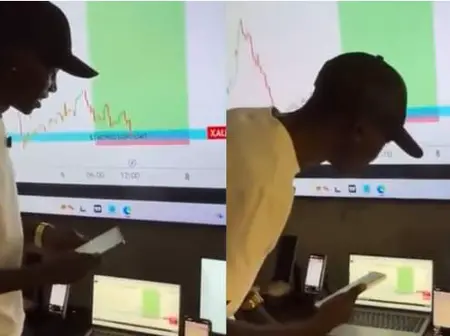
Kenyan forex trader and online personality Kenya Prince has reportedly suffered a major financial setback after losing KSh3 million while conducting a live forex trading session on TikTok.
The incident has attracted attention on social media, with many Kenyans reacting to the reported loss and questioning the risks associated with live forex trading.
Kenya Prince, who has built an online following through forex trading content and educational sessions, was reportedly demonstrating his trading activities when things took an unexpected turn. What was meant to be a live demonstration ended in a costly loss, leaving him visibly shocked.
The reported KSh3 million loss has sparked fresh conversations about the unpredictable nature of the foreign exchange market. Although forex trading offers opportunities to make profits, it also exposes traders to significant financial risks, particularly when dealing with large amounts of money.
The incident has also attracted discussions about the pressure experienced by traders who conduct live sessions in front of thousands of viewers. Unlike ordinary trading activities, live demonstrations expose every decision to public scrutiny, making unexpected losses even more difficult to handle.
Some social media users have expressed sympathy for Kenya Prince, while others have used the incident to remind aspiring traders against investing money they cannot afford to lose.
Forex trading has continued to attract young Kenyans seeking alternative sources of income. However, financial experts have repeatedly warned that the market requires proper knowledge, discipline and effective risk management.
The incident involving Kenya Prince serves as another reminder that even experienced traders can suffer substantial losses.
The video has continued to generate reactions online as Kenyans discuss the reported incident.