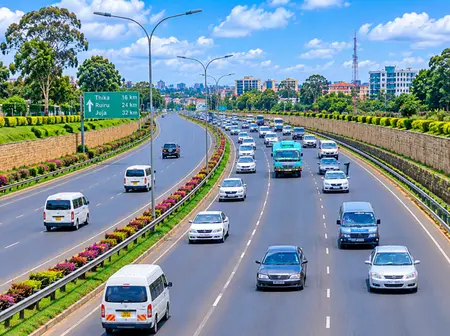
Motorists using the Nairobi–Thika–Juja–Kenol–Sagana–Marua highway could pay toll charges under a proposed Ksh100 billion public-private partnership (PPP) plan outlined in the National Treasury’s 2027 Budget Policy Statement.
The proposed arrangement would allow a private investor to finance, upgrade, operate and maintain the busy highway before recovering the investment through charges paid by motorists using the road.
The project is among the infrastructure developments being considered by the government as it seeks private financing for major road projects without relying entirely on public funds.
According to the Treasury’s proposals, the corridor would operate under a 30-year concession, with financial close targeted for the 2028/29 financial year.
This means a private company would take responsibility for raising the required capital and undertaking the agreed works before collecting toll revenue over the concession period.
Under the proposed public-private partnership, the private investor would finance the project and undertake the necessary highway upgrades before taking over its operation and maintenance.
The investment would be recovered mainly through toll charges paid by motorists rather than direct payments from the national government.
The Treasury describes the arrangement as a user-pay model, under which the private partner would take on commercial and traffic-demand risks.
The proposal states that the structure would not involve government payments or contingent liabilities to the government.
However, the same policy document provides for an estimated cumulative maximum contingent liability exposure of Ksh120 billion across the 2028/29 and 2029/30 financial years.
The figure represents a planning estimate of potential fiscal exposure arising from circumstances such as early termination of the agreement or other contractual obligations. It is not the amount motorists would pay to use the highway.
The government has not announced the proposed toll rates, the locations of collection points or the categories of vehicles that would be charged.
Details on whether public service vehicles, private motorists and commercial trucks would pay different rates have also not been provided.
If implemented, the proposal would introduce an additional cost for motorists travelling between Nairobi, Thika, Juja, Kenol, Sagana and Marua.
Private vehicle owners and transport companies would pay the charges directly, while public transport operators could factor the additional operating expenses into their fares.
Matatu fares between Nairobi’s Central Business District and Thika currently vary depending on demand and time of travel. Passengers typically pay between Ksh100 during quieter periods and Ksh150 to Ksh200 during peak hours.
However, it remains unclear whether the proposed toll charges would lead to higher passenger fares, as the government has not released the rates or the proposed collection arrangements.
The project is still at the proposal stage and requires further approvals, negotiations and assessments before implementation.
The final agreement would also need to establish the responsibilities of the private investor, the expected road improvements and the conditions governing toll collection.
The proposals also include the Nairobi Southern Bypass, estimated at Ksh12.3 billion under a 25-year concession, and the Mombasa Northern Bypass, valued at approximately Ksh30 billion under a 30-year arrangement.
Both projects are also targeting financial close in the 2028/29 financial year.
The proposed partnerships form part of the government’s wider plan to attract private capital into infrastructure development as it faces pressure to manage public borrowing and financing requirements.
Under the arrangements, investors would take responsibility for financing and maintaining the roads, with toll revenue providing a means of recovering their investments.
For motorists, the eventual impact will depend on the terms negotiated between the government and private investors, including toll rates, collection points and the categories of road users covered.
Until the agreements are finalised and the necessary approvals obtained, no toll charges have been confirmed for the Nairobi–Thika–Marua highway.
Leave a Reply