Category: Economy&Finance

  • Ruto backs Ndii’s argument on housing workers and milk shortage

    Ruto backs Ndii’s argument on housing workers and milk shortage

    Ruto backs Ndii’s argument on housing workers and milk shortage

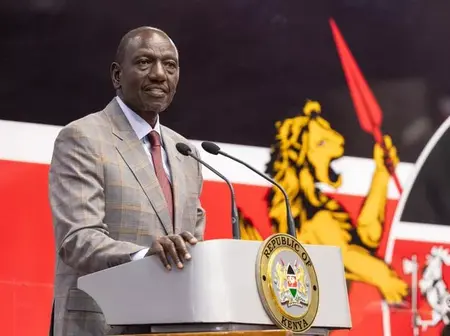
    President William Ruto has backed his economic adviser David Ndii’s explanation that increased milk consumption by newly employed workers, including those on affordable housing projects, is contributing to shortages in supermarkets.

    Ruto said Kenya’s milk production had increased significantly, but the growing number of people earning an income had also raised demand for the commodity.

    Speaking on Wednesday, November 4, 2026, the president cited an increase in annual milk production from about 4.6 billion litres to approximately 5.5 billion litres in the previous year.

    He also pointed to Kenya National Bureau of Statistics figures showing a 36 per cent increase in milk processing capacity.

    Addressing concerns over why consumers were experiencing milk shortages despite higher production, Ruto referred to an explanation made by Ndii a day earlier.

    “There are too many people now who can afford some tea and some milk because we have close to another two million people who are not working. Now they are working. 1.1 million of them are in the affordable housing space,” Ruto said.

    He added that changing employment levels were also influencing consumption patterns in other sectors, including coffee and tea.

    The president’s remarks came amid growing public debate over milk availability, with consumers questioning why supermarkets were experiencing stock-outs despite increased national production.

    Ruto said the additional workers entering employment had increased the number of people able to afford basic household commodities.

    He argued that the growth in employment, particularly through affordable housing construction, had changed consumption patterns.

    The president said the same trend could be witnessed in other sectors as more Kenyans gained purchasing power.

    President’s economic advisor David Ndii .PHOTO/@DavidNdii/X

    Ndii had raised the issue on Tuesday during the 2026 NCBA Economic Forum in Nairobi, where he questioned claims that declining production was responsible for milk shortages.

    Citing Kenya National Bureau of Statistics data, he pointed to an increase in milk production to approximately 5.6 billion litres and a 34 per cent rise in milk intake by processors.

    “If there is no reduction in supply, and there is actually a very sharp increase in both production and the intake by processors, what can explain the stock-outs on the shelves?” Ndii posed.

    He linked the increased demand to affordable housing construction sites, where contractors provide milk to workers as part of their daily provisions.

    On Wednesday, Ndii shared a post on social media quoting a statement about how new ideas are eventually accepted after initially facing opposition.

    “All truth passes through three stages. First, it is ridiculed. Second, it is violently opposed. Third, it is accepted as being self-evident,” he wrote.

    However, the increase in annual production has coincided with a decline in formal milk deliveries to processors in recent months.

    Data shows deliveries fell from 88.89 million litres in May to 75 million litres in August 2026, representing a decline of about 16 per cent.

    The Kenya Dairy Board has attributed the drop mainly to drought conditions and pressure on animal feed, while other concerns have emerged over milk collection, processing and distribution.

    Consumers have also faced higher prices, with fresh packaged milk recording a six per cent increase and ultra-high-temperature milk rising by eight per cent in September.

    The developments have renewed debate over the factors affecting milk availability, including production levels, changing consumption patterns and the challenges facing the dairy supply chain.


  • Ugandan innovator’s homemade plane crashes during test flight

    Ugandan innovator’s homemade plane crashes during test flight

    Ugandan innovator’s homemade plane crashes during test flight

    A Ugandan innovator has suffered a setback after an aircraft he reportedly built locally crashed during a test flight in Kasambira, raising questions about the challenges facing homegrown aviation inventions.

    The aircraft, reportedly built by an innovator identified as Matege, is said to have crashed while undergoing a test flight.

    The incident has attracted attention, with the crash highlighting the risks involved in experimenting with homemade aircraft and the difficulties innovators face in turning their ideas into working machines.

    However, details surrounding the incident remain unclear, including the exact cause of the crash, whether Matege sustained injuries and the extent of damage to the aircraft.

    The crash comes amid a history of Ugandan inventors attempting to develop locally assembled aircraft. In 2018, Joseph Nkaheza, another Ugandan innovator, made headlines after his homemade helicopter crashed during a test flight in Mbarara, leaving him with head injuries.

    Uganda has an Aircraft Accident and Incident Investigation Unit mandated to investigate aviation accidents and identify safety failures to prevent similar incidents.

    Authorities have not been independently confirmed as having issued a statement on the Kasambira incident.

  • From start-up to IPO: Four crucial lessons from Quickmart and Anthropic

    From start-up to IPO: Four crucial lessons from Quickmart and Anthropic

    “Nowadays people know the price of everything and the value of nothing.” –Oscar Wilde

    What can a profitable Kenyan supermarket chain and loss making artificial intelligence [AI] company valued at $2 trillion teach us about business? Do two companies, worlds apart – one with a closed initial public offering [IPO] and the other about to launch – reveal a fundamental truth about how companies create, capture and sustain value. How did a start-up with seven founders, most in their late 30s, and oldest being 43, become so respected?

  • Bamburi Cement Pushes Low-Carbon Cement as Kenya Shifts to Green Construction

    Bamburi Cement Pushes Low-Carbon Cement as Kenya Shifts to Green Construction

    thumbnail

    Bamburi Cement Plc has stepped up efforts to promote low-carbon cement in Kenya, calling for changes in public procurement policies and financing guidelines to encourage the use of environmentally friendly construction materials.The manufacturer wants government agencies and private developers to give preference to cement products with lower carbon emissions when awarding construction contracts, a move it says could create new opportunities for local manufacturers investing in cleaner production technologies.

  • The Matatu Conductor Has Competition—and It Isn’t Another Conductor

    The Matatu Conductor Has Competition—and It Isn’t Another Conductor

    thumbnail

    The Kenyan matatu industry has perfected many things: creative route names, loud music, astonishing levels of improvisation and the ability to find one more passenger when everyone else believes the vehicle is full. What it has not always perfected is the humble business of recording every transaction and understanding where the money went.

  • Production of certified seeds in Kenya increases to 80 million kilos

    Production of certified seeds in Kenya increases to 80 million kilos

    Kenya's certified seed production has increased to 80 million kilogrammes from 65 million kilogrammes in 2025, as the government steps up efforts to improve farmers' access to quality planting materials and strengthen food security.

    The increase comes amid renewed concerns over counterfeit seeds, regulatory challenges and the need to ensure that farmers across the country can access affordable and suitable varieties.

    Speaking during the 15th Seed Traders Association of Kenya (STAK) Congress and Expo, Agriculture Cabinet Secretary Mutahi Kagwe said the country had made progress in expanding seed production and developing varieties suited to different agro-ecological zones.

    In his speech, read by Agriculture Secretary James Wanjohi, Kagwe noted that 1,297 crop varieties had been released for use across the country's agro-ecological zones, averaging about 40 new varieties annually. Half of these are climate-smart varieties.

    The congress was held under the theme, "Securing Kenya's Seed Future Through Innovation, Farmer Protection and Food Security".

    Wanjohi said quality seed was the foundation of agricultural production, playing a critical role in improving productivity, strengthening resilience to climate change and supporting farmers to move from subsistence farming to commercially viable agriculture.

    He, however, acknowledged that access, affordability, quality assurance and last-mile distribution remained major challenges, particularly for farmers in underserved areas.

    "Poor seed limits the potential yield and reduces the productivity of the farmer's labour. High-quality seed is an assurance in achieving a good crop stand and rapid plant development, even under adverse conditions," he said.

    He added that the government was prioritising the review of the National Seed Policy, 2010, and the Seeds and Plant Varieties Act, Cap 326, in collaboration with stakeholders, including STAK.

    The proposed changes are expected to address emerging issues, including recognition of farmer-managed seed systems, quality assurance and the role of county governments in improving seed access.

    The government is also developing the Plant Genetic Resources Bill 2026, which seeks to establish a Plant Genetic Resources Centre to oversee the conservation of plant genetic resources and facilitate access and benefit-sharing.

    Wanjohi said harmonising seed regulations would also facilitate the movement of seed across borders, improve regional trade and strengthen the competitiveness of Kenya's seed industry.

    Meanwhile, the Kenya Plant Health Inspectorate Service (KEPHIS) has announced plans to appeal a High Court ruling that declared some provisions of the Seeds and Plant Varieties Act and its implementing regulations unconstitutional.

    Simon Maina, head of Seed Certification and Plant Variety Protection at KEPHIS, said the ruling had weakened some of the enforcement tools used to combat counterfeit and substandard seeds.

    He said the agency was working with the Ministry of Agriculture and Livestock Development and the Office of the Attorney General to address the implications of the judgment.

    "We have formally launched an appeal in the Court of Appeal to contest this judgment and restore the legal backing required for strict enforcement of seed quality," he said.

    Maina warned that shortages of certified seed could create opportunities for unscrupulous dealers to exploit farmers by selling counterfeit products.

    "One of the reasons why fake seed gets a place is the shortage of quality seed. When we saturate the market with quality seed, we have the opportunity to ward off these cases of counterfeit seed," he said.

    He called for stronger collaboration between regulators and seed companies to ensure adequate supplies of certified seed and protect farmers from unscrupulous traders.

    Maina said KEPHIS was also embracing new technologies to improve seed quality assurance, including molecular tools for disease diagnosis, digital surveillance, automated seed treatment and faster certification processes.

    The agency is upgrading laboratory diagnostics, digitising its operations and retraining inspectors to improve efficiency in variety testing, seed testing and certification.

    He cited the development of portable testing equipment that can detect bacterial diseases in potatoes in the field, reducing reliance on conventional laboratory testing.

    KEPHIS is also reviewing its digital seed certification and plant variety protection system with support from Trademark Africa to address operational gaps and improve service delivery.

    Maina said delays in seed certification could have serious consequences for farmers, noting that a delay of even one week could cost a farmer an entire planting season.

    He further called for stronger regional cooperation, saying the proposed East African Seeds and Plant Varieties Bill was at an advanced stage and would harmonise seed regulations across the East African Community.

    The regional framework is expected to facilitate the release and commercialisation of crop varieties and improve access to quality planting materials across member states.

    Wanjohi urged farmers to buy certified seed from authorised suppliers and select varieties suited to their local agro-ecological conditions.

  • The Trading Routine Nobody Sees: How 2 AM Market Checks Shaped Kojo Forex’s Discipline

    The Trading Routine Nobody Sees: How 2 AM Market Checks Shaped Kojo Forex’s Discipline

    Most people only see a trade after the decision has already been made. They see the chart, the result, the lesson, or the lifestyle around it. What they don’t usually see is the routine behind the trade: the checks, the waiting, the no-trade days, and the discipline it takes to watch the market without forcing a position.

    For me, that routine has often started with a 2 AM market check. Not because I’m sitting at the screen ready to trade at 2 AM, but because I trade from the one-hour timeframe, and every hourly close can be a source of information.

    There were times when I’d set alarms from 2 AM through to 10 AM at one-hour intervals. I’d wake up, check what the market had done, and go back to sleep if nothing was happening. At 3 AM, I’d check again. At 4 AM, again. By 5 AM, around the London session, I’m usually more awake. If the market’s making sense, I’d come into the room, sit by the screen, and watch properly. If it’s quiet, I’d stay away and not force anything.

    That’s the part people don’t always understand. The discipline isn’t only in waking up early. The discipline is in being awake, checking the market, and still being able to say, “There’s nothing to do.”

    What makes a chart worth getting up for

    Before I sit at the desk, I usually start with my phone. I check a few messages, open the charts, and scroll through the instruments I follow. I trade very few instruments now, fewer than three, so I know what I’m looking for. If price isn’t moving toward my key entry zones, I can relax. If it is, that’s when I get up and pay closer attention.

    I also check what’s happening outside the chart. On X, I’m not just looking at random trends. I’ll check what’s happening in crypto, politics, stocks, and broader market conversations. If there’s unusual volatility in an instrument I trade, I don’t treat it as normal price action. I want to know what caused it before I continue with the day.

    From ritual to routine

    That kind of preparation has become more natural with experience. Earlier in my career, I treated trading like a ritual. I’d lock the door, put on music, turn off the lights, leave the screens on, and block out every distraction. I was extremely serious. I felt I had to put myself into the right mindset before I could trade.

    These days, I’m more relaxed. I can listen to music casually. I don’t need to create the same atmosphere around trading because the routine is already part of me. The seriousness is still there, but it’s not as visible. It has become internal.

    My screens are almost always on. The instruments I trade are usually open. If price action changes, I can quickly mark up my expectations. Even when I’m away from the desk, I’m still following from my phone or tablet. It has become part of my life, not something I switch on only when I want to place a trade.

    The real work happens before the click

    The moment before entry is different. That’s when I go deeper. Before I open a trade, I want to know how much I’m risking, where the stop loss should be, where the take profit could be, and whether I’ve mentally accepted the outcome. The market is unforgiving. Once a position is open, there’s no eraser. You can’t go back to clean the decision and write a new one.

    That’s why preparation takes more time than monitoring an open trade. Once the trade is placed, the main decision has already been made. I don’t need to keep staring at the screen. I’ll manage the trade, but that’s different from anxiously monitoring it. I can set alerts around potential profit or potential loss. If the trade moves in my favor, I can decide whether to take partial profit or move the stop to break even. If it moves against me, I start accepting that outcome before it reaches the stop.

    Why no trade is still work

    Sometimes that work leads to no trade at all. I may wake up, check the hourly closes, wait for price to reach a zone, wait again for the kind of candle close I want, and still get nothing. That can take hours. It can reach 10 AM and still be a no-trade day.

    For me, that’s still productive.

    No trade means my capital is preserved. The market will always present another opportunity, but only if the capital is still there. I see capital almost like bullets. If you have a limited number of bullets and you keep firing at poor targets, the targets remain but your ammunition disappears. So I’d rather keep the capital and wait for a cleaner opportunity than spend it because I feel I need to be active.

    Keeping the process organized

    That mindset also affects how I use tools. For example, I use the Exness Terminal calendar to separate higher-volatility events from lower-impact ones. Interest rates, inflation, and unemployment data matter more to the way I prepare, especially when they connect to the instruments I’m watching. The platform doesn’t create the trade for me. It helps me keep the information organized before I decide whether the setup deserves attention.

    Resetting away from the market

    Outside the market, the gym helps me reset. It’s not a fixed morning ritual for trading, but it matters. After a difficult trading day, training helps ease the nerves. Losses still hurt, even with experience but the difference is how you manage that pain. For me, the drive to the gym, the training, and the drive back helps clear my head. I can return feeling like a new person.

    My routine has changed over the years. It’s less ritualistic now, but in some ways more disciplined. I don’t need to look intense to be focused. I don’t need to force a mood before I trade. I just need to know what I’m waiting for, what I’m willing to risk, and when the market hasn’t given me enough.

    That’s the routine people don’t see. Not just the early checks, but the restraint behind them. The willingness to wake up, watch, wait, and still do nothing if the market doesn’t meet the plan.

  • Ruto backs Ndii’s housing workers theory on supermarket milk shortages

    Ruto backs Ndii’s housing workers theory on supermarket milk shortages

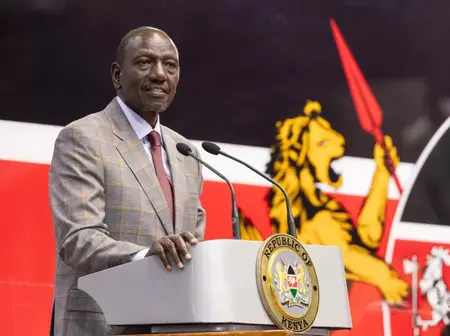
    President William Ruto has backed an argument by his economic adviser David Ndii that milk shortages in supermarkets are being driven by increased demand from workers employed under the Affordable Housing Programme, saying rising employment and purchasing power have changed consumption patterns.

    Speaking on Wednesday during the Industrialisation Summit at the Kenyatta International Convention Centre (KICC) in Nairobi, Ruto said Kenya’s annual milk production had increased from about 4.6 billion litres to 5.5 billion litres last year.

    He also cited Kenya National Bureau of Statistics (KNBS) data showing a 36 per cent increase in milk processing capacity.

    The President said the increase in production and processing had coincided with a rise in the number of Kenyans able to afford milk, including workers at affordable housing construction sites.

    “People are asking, so why do we have a milk shortage? And I think a friend of mine answered very early yesterday,” Ruto said, referring to remarks by his economic adviser David Ndii.

    Ndii had attributed the shortages to increased consumption, arguing that more Kenyans were earning incomes and could now afford basic commodities such as tea and milk.

    Ruto said about two million additional Kenyans had moved into employment, including 1.1 million people working in the affordable housing sector.

    “That is how things change,” he said, arguing that rising incomes were influencing demand for goods and services.

    The President said similar changes in consumption and production were taking place in other sectors, including coffee and tea.

    “Let me conclude by saying that the same story can be done in the coffee, in the tea sector. Our numbers have changed,” he said.

    His remarks come amid reports of milk shortages in supermarkets and retail outlets, with some shops limiting purchases and consumers struggling to find certain brands.

    Ndii had previously cited increased national production and processor intake to argue that the shortages were driven by demand rather than a decline in milk supply.

    However, data on formal milk deliveries have shown fluctuations in recent months.

    An October 19 report indicated that deliveries to processors declined from 88.89 million litres in May to 75 million litres in August 2026.

    The Kenya Dairy Board attributed the decline largely to drought and pressure on animal feed, while also highlighting challenges in milk collection, processing and distribution.

    The KNBS August 2026 Leading Economic Indicators dashboard recorded formal milk intake at 77.1 million litres, down from 81.3 million litres in July.

  • Ruto: I offer internships to 15 students at my farm

    Ruto: I offer internships to 15 students at my farm

    President William Ruto has said he provides internship opportunities to between 10 and 15 university students at his farm, urging businesses to offer similar placements to help young people gain practical work experience.

    Ruto said the students receive stipends during their internships, allowing them to apply the knowledge acquired in college to real-life working environments.

    The President called on businesses and employers to open up opportunities for young people in factories, industries, manufacturing facilities and trading enterprises.

    “I am a farmer. I provide internships for between 10 and 15 young people from universities at my farm. We pay them a stipend, and I have interacted with them. They are very interesting young people because they have learnt so much in college, but they want to see it on the ground,” he said.

    He said internships lasting six months or a year would expose young people to practical work experience while helping employers identify and develop potential future employees.

    “It would give many of our young people an opportunity for a year or for six months to be able to be in a place where real work experience is happening,” Ruto said.

    He added that businesses would also play a role in sharpening the skills of young people, mentoring them and preparing them for employment.

    Ruto said such placements would help interns understand how industries operate and inspire them to pursue opportunities in different sectors.

    The President reaffirmed his administration's commitment to strengthening Kenya's manufacturing sector, saying local enterprises have the potential to produce world-class goods and compete in regional and global markets.

    Ruto said this after touring exhibition stands at the Industrialisation Summit and Changamka Festival at the Kenyatta International Convention Centre (KICC) in Nairobi, where local manufacturers are showcasing Kenyan-made products.

    He said the quality and diversity of products on display demonstrated the country's manufacturing potential and the ingenuity of local entrepreneurs.

    “From established industries to emerging enterprises, the products on show demonstrate our capacity to produce world-class goods, create value and compete in regional and global markets,” he said.

    The President said the government would focus on creating an enabling environment to attract investment, encourage innovation and expand production.

    He added that the administration was committed to sustaining the momentum by supporting Kenyan enterprises to manufacture, add value, grow and thrive.

  • World Bank: Why it costs up to Ksh162,000 to move a container from Mombasa to Nairobi

    World Bank: Why it costs up to Ksh162,000 to move a container from Mombasa to Nairobi

    World Bank: Why it costs up to Ksh162,000 to move a container from Mombasa to Nairobi

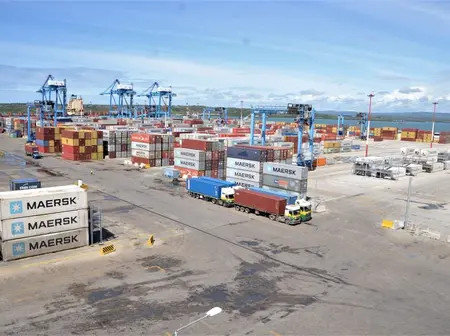
    Moving a 20-foot shipping container from Mombasa to Nairobi costs up to Ksh162,425, despite the two cities being about 480 kilometres apart, according to a new World Bank report that raises fresh questions about the cost of doing business in Kenya.

    The World Bank’s November 2026 Kenya Economic Update says that transporting the same container by road in Europe costs about Ksh93,557, nearly Ksh69,000 less, even though fuel and labour costs are higher there.

    The comparison is particularly striking because the report notes that Europe has higher fuel and labour costs.

    For Kenyan importers, manufacturers and retailers, the figures expose a costly part of the supply chain that begins after goods have already arrived at the country’s main seaport.

    The expense becomes clearer when the entire journey is considered.

    According to the World Bank, shipping a 20-foot container from China to Mombasa costs around US$2,000, equivalent to approximately Ksh259,880.

    Moving that same container from Mombasa to Nairobi adds another Ksh110,449 to Ksh162,425.

    That means the inland journey alone accounts for around one-third of the total cost of transporting the container from China to Nairobi.

    The World Bank says the problem is not simply the distance or the cost of fuel.

    “Logistics costs increase due to a combination of constraints,” the report states.

    Vehicles being transported by the SGR from Mombasa to Nairobi PHOTO/@KenyaRailways/X

    It identifies problems including Mombasa port management and congestion, administrative delays, and official and unofficial checkpoints affecting inland transport.

    For businesses, such obstacles can create uncertainty over delivery times and add expenses to moving goods. Importers dealing in machinery, raw materials and finished products must factor these costs into their operations.

    The report also raises concerns about the efficiency of the Port of Mombasa, the largest port in East Africa.

    In the World Bank’s Global Container Port Performance Index, Mombasa ranked 326th out of 348 ports assessed in 2022. In the 2024 edition, it ranked 375th out of 403 ports.

    The report contrasts this with Senegal’s Dakar Port, which improved from 371st to 108th place over the same two-year period.

    The World Bank says businesses using Mombasa face multiple inspections, recurring system downtime, rising fees and demands for bribes, all of which increase delays and costs.

    It also cites a 2025 assessment by the Shippers Council of Eastern Africa, which described logistics costs at the port as “alarmingly high”, estimating that they account for 35 to 42 per cent of the total landed cost of goods.

    The report adds that the number of agencies involved in inspections keeps expanding, bringing additional fees and increasing the risk of delays.

    The implications extend beyond clearing agents, shipping companies and importers.

    When businesses spend more to move goods from the coast to the country’s commercial centre, they face pressure on their operating costs. Depending on the market and the product, some of those expenses may eventually be reflected in prices paid by consumers.

    The World Bank warns that port congestion creates “greater uncertainty, additional costs, and foreclosed opportunities” for businesses.

    It also links higher corruption levels internationally with weaker logistics performance, pointing to bribe requests and inefficient public investment as possible contributing factors. However, it cautions that this relationship shows correlation rather than proving corruption alone causes poor logistics performance.

    For Kenya, the challenge is to make the journey from Mombasa to Nairobi more predictable, efficient and affordable.

    The question raised by the report is difficult to ignore: why should moving a container 480 kilometres inside Kenya cost up to Ksh162,425 when an equivalent journey in Europe is estimated at Ksh93,557?