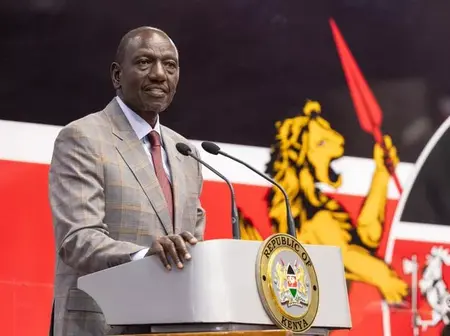
President William Ruto has backed an argument by his economic adviser David Ndii that milk shortages in supermarkets are being driven by increased demand from workers employed under the Affordable Housing Programme, saying rising employment and purchasing power have changed consumption patterns.
Speaking on Wednesday during the Industrialisation Summit at the Kenyatta International Convention Centre (KICC) in Nairobi, Ruto said Kenya’s annual milk production had increased from about 4.6 billion litres to 5.5 billion litres last year.
He also cited Kenya National Bureau of Statistics (KNBS) data showing a 36 per cent increase in milk processing capacity.
The President said the increase in production and processing had coincided with a rise in the number of Kenyans able to afford milk, including workers at affordable housing construction sites.
“People are asking, so why do we have a milk shortage? And I think a friend of mine answered very early yesterday,” Ruto said, referring to remarks by his economic adviser David Ndii.
Ndii had attributed the shortages to increased consumption, arguing that more Kenyans were earning incomes and could now afford basic commodities such as tea and milk.
Ruto said about two million additional Kenyans had moved into employment, including 1.1 million people working in the affordable housing sector.
“That is how things change,” he said, arguing that rising incomes were influencing demand for goods and services.
The President said similar changes in consumption and production were taking place in other sectors, including coffee and tea.
“Let me conclude by saying that the same story can be done in the coffee, in the tea sector. Our numbers have changed,” he said.
His remarks come amid reports of milk shortages in supermarkets and retail outlets, with some shops limiting purchases and consumers struggling to find certain brands.
Ndii had previously cited increased national production and processor intake to argue that the shortages were driven by demand rather than a decline in milk supply.
However, data on formal milk deliveries have shown fluctuations in recent months.
An October 19 report indicated that deliveries to processors declined from 88.89 million litres in May to 75 million litres in August 2026.
The Kenya Dairy Board attributed the decline largely to drought and pressure on animal feed, while also highlighting challenges in milk collection, processing and distribution.
The KNBS August 2026 Leading Economic Indicators dashboard recorded formal milk intake at 77.1 million litres, down from 81.3 million litres in July.
Leave a Reply