Lawyer Willis Otieno has criticised government economic adviser David Ndii over his explanation of the rising demand for milk in Kenya, questioning why construction workers have been brought into the discussion.
Otieno was reacting to remarks attributed to Ndii, who dismissed claims of a milk shortage, saying demand had simply increased because more people were consuming the product.
Ndii pointed to affordable housing construction sites, arguing that construction companies provide milk to their workers in large quantities.
"We don’t have a milk shortage; the demand has simply gone up, meaning there are people consuming a lot of milk. I can tell you who they are. If you visit any of our Affordable Housing sites, you will find a lot of crates of milk. That is what construction companies provide to the workers," Ndii said.
However, Otieno questioned the explanation, arguing that it failed to address the underlying challenges affecting milk production and supply.
"Imagine being the government's chief economist and offering such intellectually bankrupt reasoning to explain a basic supply problem," Otieno stated.
He further argued that blaming construction workers for increased milk consumption was not a convincing explanation for the situation.
"When you cannot explain production failures, market distortions or policy incompetence, you start blaming people building houses for drinking milk," he added.
Using bread as an example, Otieno sarcastically questioned whether masons would also be blamed if the country experienced a bread shortage.
"At this rate, if bread disappears tomorrow, will you blame masons for eating too much flour?" he posed.
Otieno concluded by saying Kenya deserved economists who could provide meaningful explanations for economic challenges rather than what he described as excuses.
"Kenya deserves economists, not professional excuse manufacturers," he said.
Salaried workers with a gross pay of over Sh32,333 a month will pocket an additional Sh2,083 each, as the National Treasury moves amendments to the pay-as-you-earn (PAYE) bands, extending relief beyond low-income workers.
The National Treasury has said it will not change the higher tax bands for those earning more than Sh32,333 but will end the Sh2,400 monthly personal reliefs across all salary levels.
President William Ruto has announced ambitious plans to manufacture leather shoes locally for all 14 million school-going children across Kenya, leveraging guaranteed domestic demand to revive the country’s leather industry.
Speaking during the Innovation Summit at the Kenyatta International Convention Centre (KICC) on Wednesday, November 4, 2026, the Head of State directed local footwear manufacturers to prepare to supply schools nationwide.
“We will now move a step further. We want you to manufacture all the shoes for our school-going children, and we have 14 million of them,” President Ruto stated, framing the initiative as a major driver for youth employment and economic growth.
To support the directive, President Ruto emphasized that the government is decentralizing leather production rather than concentrating operations exclusively in Nairobi.
The strategy relies heavily on the Ksh 5.8 billion Kenya Leather Industrial Park in Kenani, Machakos County—unveiled in September 2026 by Deputy President Kithure Kindiki—which features modern tanning, processing, and manufacturing infrastructure. The government aims to establish satellite ecosystems across counties to ensure regional participation in the supply chain.
This expansion builds on a similar policy implemented in June, when the President issued a strict ban on foreign military and police boots. By October 2026, all security agency footwear was sourced entirely from domestic producers.
Despite owning Africa’s third-largest livestock population and ranking 11th globally with approximately 80 million animals, Kenya has historically underutilized its leather potential.
According to data from the World Bank and the Kenya Leather Development Council:
Kenya ranks 87th globally in leather apparel exports, earning just Ksh 68 million ($527,000).
The country ranks 101st in imports, spending Ksh 285 million ($2.2 million) on foreign leather products.
President Ruto noted that channeling the local demand of 14 million students directly to domestic tanneries and shoe factories will reverse these trade imbalances and capitalize on Kenya’s vast raw material reserves.
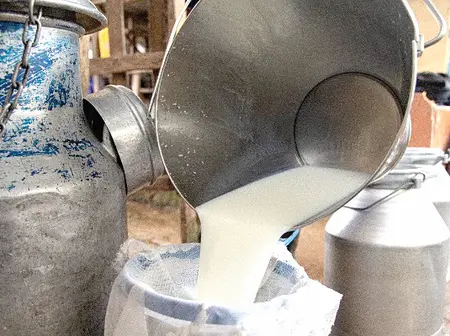
President William Ruto and his economic adviser David Ndii are facing questions over their explanation for Kenya’s milk shortages, after linking rising demand to newly employed Kenyans, including workers on affordable housing projects.
Their argument is that more people earning wages can afford milk, pushing consumption higher. But official figures reveal another side of the story: although Kenya’s annual milk production increased in 2025, the volume reaching formal processors declined for three consecutive months between May and August 2026.
The figures raise a crucial question: are newly employed workers driving supermarket stockouts, or are problems in milk production and distribution also responsible?
On Wednesday, November 4, 2026, Ruto defended Ndii’s explanation, citing increased employment and the purchasing power of workers.
“There are too many people now who can afford some tea and some milk because we have close to another two million people who are not working. Now they are working. 1.1 million of them are in the affordable housing space,” Ruto said.
The President argued that increased employment was changing consumption patterns as more Kenyans gained the ability to buy basic commodities.
The explanation is economically plausible. However, the number of people employed does not, by itself, establish how much additional milk they consume or how much they contribute to supermarket shortages.
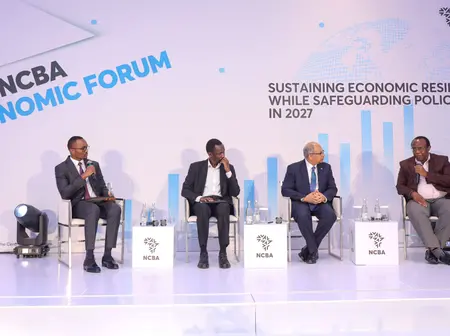
Speaking at the NCBA Economic Forum in Nairobi on Tuesday, November 3, 2026, Ndii questioned whether reduced national supply was responsible for the stockouts.
“If there is no reduction in supply, and there is actually a very sharp increase in both production and the intake by processors, what can explain the stock-outs on the shelves?” Ndii asked.
He pointed to affordable housing construction sites as an example of rising consumption.
“If you go to any of our construction sites, where we are doing affordable housing, where there are a couple of hundred thousand people working every day, you will find crates of milk sitting there,” he said.
But the examples do not quantify the workers’ total consumption. No worker-specific breakdown cited in these reports establishes the volume of milk consumed at housing sites or its share of national demand.
The Kenya National Bureau of Statistics (KNBS) reported that annual milk production increased from 5.3348 billion litres in 2024 to 5.5211 billion litres in 2025, a rise of 3.5 per cent.
However, KNBS’s Leading Economic Indicators, August 2026 report shows formal-sector milk intake fell from 88.89 million litres in May to 84.44 million in June, 81.32 million in July and 77.13 million in August.
That is a decline of approximately 13.2 per cent between May and August. Intake also fell by 5.1 per cent between July and August alone.
The data does not prove that total national milk production declined by the same amount. It measures milk entering formal processing channels, not all milk produced or sold through informal markets.
Nevertheless, it demonstrates why higher annual production does not automatically guarantee steady supplies of packaged milk in supermarkets.
Agriculture Cabinet Secretary Mutahi Kagwe has identified drought, inadequate animal feed and competition from brokers as factors affecting formal milk deliveries.
“There is a shortage of animal feed in areas where cows normally graze on green pasture. A well-fed cow is not the same as one that isn’t, and therefore there is a reduction in the quantity of milk,” Kagwe said.
Kagwe revealed brokers offering farmers better prices were also diverting milk away from processing companies, leaving supermarkets short of supplies even where milk remained available through informal channels.
Partly plausible, but not proven. Ruto and Ndii offer a credible explanation for how rising employment could increase milk demand.
However, the available data does not establish that affordable housing workers are a major cause of supermarket stockouts. KNBS figures and the government’s own statement point to supply-chain pressures that must also be considered.
The key unanswered question is how much milk the new workforce consumes compared with the volume no longer reaching formal processors. Without that evidence, attributing the shortage primarily to housing workers goes beyond what the published figures establish.
The Central Bank of Kenya (CBK) has received bids worth KSh99.47 billion from investors seeking to purchase two reopened Treasury bonds.In results released on Wednesday, November 4, 2026, the CBK said it accepted KSh70.86 billion in bids for the 15-year and 30-year Treasury bonds.
Businesses last month raised prices of goods and services at second-highest pace in three years to protect their profit margins as rising fuel, transport and purchase costs eat into earnings, threatening to undermine a private-sector recovery driven by improving customer demand
The latest Stanbic Bank Kenya Purchasing Managers’ Index (PMI) shows that while companies are receiving more orders, mounting cash-flow difficulties and inflationary pressures are limiting their ability to expand production, clear backlogs and hire more workers.
Kenya’s cost of doing business is back in focus after David Ndii proposed a dedicated function to oversee regulatory requirements and the charges imposed on businesses. Speaking at the NCBA Economic Forum 2026, Ndii argued for a more coordinated approach to monitoring regulations, with attention to the fees, licences and administrative obligations that affect companies.
The proposal addresses a concern raised during the forum about the accumulation of charges across government agencies. Businesses must navigate different regulatory requirements while managing the financial and administrative costs associated with operating in Kenya.
Ndii’s proposal centres on giving regulatory oversight a clearly defined institutional responsibility. A dedicated function would monitor the rules affecting businesses and examine how new requirements add to existing compliance obligations.
The issue is particularly relevant to smaller enterprises, which often have fewer resources to manage multiple licences, inspections and administrative processes. Companies operating across different sectors can also face requirements from several agencies, adding to the complexity of compliance.
Dr Bimal Kantaria raised concerns about the number of fees and levies affecting exporters. He referred to 47 charges and five additional levies, arguing that regulatory costs contribute to the difficulties facing Kenyan businesses competing in international markets.
His comments also connected regulatory costs with logistical challenges affecting horticultural exports. Charges imposed at different stages of production, transportation and export can add to the cost of getting Kenyan goods to overseas buyers.
For businesses operating on tight margins, these expenses affect pricing and competitiveness. Smaller exporters and producers must also account for the administrative time involved in meeting different requirements.
The debate highlighted the relationship between regulation and the ability of businesses to invest and expand. Predictable rules allow companies to plan their operations, while multiple and fragmented requirements can complicate investment decisions.
Gossip’s closing remarks at the forum also emphasised lower business costs, accountability and economic diversification as priorities for Kenya’s private sector.
A dedicated regulatory oversight function would place greater attention on the cumulative cost of government requirements. The broader policy question concerns how Kenya can maintain effective regulation while ensuring that businesses are not burdened by unnecessary administrative expenses.
For SMEs, exporters and larger companies, the cost of compliance forms part of the wider operating environment. Ndii’s proposal puts responsibility for examining that burden at the centre of the business policy discussion.
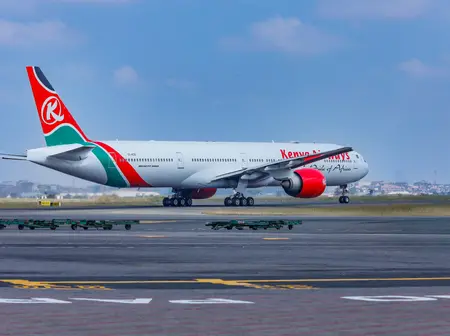
Kenya Airways cargo operations could play a greater role in supporting agricultural exporters under a proposal by Dr Bimal Kantaria to lease two dedicated freighter aircraft. Speaking at the NCBA Economic Forum 2026, Kantaria proposed one aircraft serving the United Kingdom and another covering the wider European market.
The proposal addresses the cost and capacity challenges facing Kenya’s horticultural exporters, particularly businesses that depend on reliable airfreight to transport fresh produce to overseas buyers.
Kantaria’s proposal involves leasing two cargo aircraft through Kenya Airways, with separate coverage for the UK and European markets. The arrangement would give exporters a dedicated cargo option serving two important destinations for Kenyan produce.
Fresh produce exports depend on transportation arrangements that can preserve quality and meet delivery schedules. Airfreight capacity is therefore an important part of the economics of exporting horticultural products.
Kantaria argued that Kenya needs to address the logistical constraints affecting exporters, including the availability and cost of transporting goods to international markets.
Kenya’s horticultural sector competes in markets where delivery times, transport costs and product quality influence commercial performance. Exporters must manage these requirements while competing with suppliers from other producing countries.
A dedicated cargo arrangement through Kenya Airways could provide another route for moving Kenyan produce to buyers in Britain and Europe. The proposal also places the national carrier within a wider discussion about how aviation infrastructure can support trade and agricultural exports.
Kantaria’s comments extended beyond airfreight. He raised concerns about delays at the Port of Mombasa, including vessel waiting periods of 45 to 50 days, and the financial costs associated with delays affecting fertiliser shipments.
He also discussed the burden of multiple charges and levies facing exporters. These costs form part of the operating environment for companies that must move goods through several stages before reaching international customers.
The combination of transport costs, administrative charges and supply-chain delays affects the competitiveness of Kenyan exports.
The two-aircraft proposal places cargo capacity within the broader question of how Kenya can support its export industries. Horticultural exporters need transport options that connect production areas with overseas markets while managing the cost of moving perishable goods.
For Kenya Airways, the proposal points to a potential role in supporting agricultural trade through dedicated freight services. For exporters, the wider issue is whether the country’s transport infrastructure can support the volume, timing and cost requirements of international markets.
There is always that one friend who reaches for the bill before anyone else has had a chance to open their wallet. At dinner, on a weekend getaway or when booking a group activity, they are quick to pay, trusting that everyone will send their share later.
It may seem like a harmless gesture of generosity, but being the friend who always picks up the tab can come at a cost.
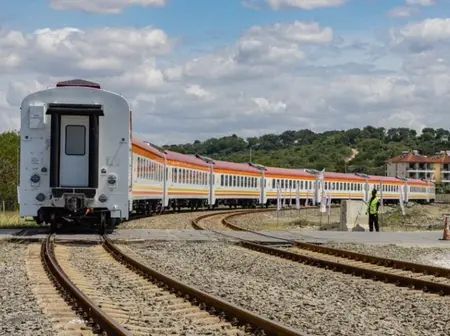
Kenya could have saved up to Ksh117 billion during the initial construction of the Mombasa–Nairobi Standard Gauge Railway (SGR) if it had matched Tanzania’s construction cost per kilometre, according to the World Bank.
The estimate, equivalent to US$900 million, appears in the lender’s November 2026 Kenya Economic Update, which examines how governance weaknesses affect public spending, economic growth and job creation.
“With the same cost metric as the Tanzanian line, Kenya could have saved up to US$900 million in initial construction costs,” the report states.
The World Bank estimates that at least 30 per cent of the potential savings is attributable to governance challenges, including non-competitive contracting, land speculation and fraud involving land titles, valuations and compensation payments.
The findings raise questions about value for money in major infrastructure projects as Kenya faces substantial public debt and repayment obligations.
The World Bank puts Kenya’s Mombasa–Nairobi SGR construction cost at US$7.6 million per kilometre, compared with US$5.7 million for Tanzania’s Dar es Salaam–Dodoma railway and US$5.3 million for the Djibouti–Addis Ababa line.
Using the report’s approximate Kenyan shilling equivalents, the costs were: Kenya SGR: Ksh988 million per kilometre, Tanzania railway: Ksh741 million per kilometre and Djibouti–Addis Ababa railway: Ksh689 million per kilometre.
Kenya’s railway therefore costs approximately Ksh247 million more per kilometre than Tanzania’s and Ksh299 million more than the Djibouti–Addis Ababa line, placing it about 33 per cent above Tanzania’s benchmark.
Applying Tanzania’s cost metric to Kenya’s railway produces the estimated US$900 million, or approximately Ksh116 billion to Ksh117 billion, in potential initial construction savings.
The figure is a hypothetical comparison, not a confirmed amount of recoverable public money or proof that the entire cost difference was stolen.
The report identifies governance weaknesses as a significant contributor to the potential savings.
“Of this amount, at least 30 percent is considered attributable to governance challenges,” the World Bank says.
The concerns include direct contracting instead of competitive tendering, land speculation, and fraud involving land titling, valuation and compensation payments.
The lender warns that limited competition can weaken scrutiny of contract prices and create opportunities for inflated costs.
“Once contracts are awarded to connected companies, this also raises the likelihood of further collusion and cost markups during project execution,” the report states.
The World Bank does not say that 30 per cent of the entire SGR budget has been proven stolen. Its estimate refers to at least 30 per cent of the potential savings.
The comparison is notable because Kenya’s SGR is diesel-powered, while the Tanzania and Djibouti–Addis Ababa lines are electrified. Electrification requires additional infrastructure, although the World Bank cautions that the projects differ in specifications, construction periods, terrain and other physical conditions.
All three railways are single-track lines. The Djibouti–Addis Ababa railway was built between 2011 and 2016 and has an elevation gain of approximately 2,300 metres. Kenya’s Mombasa–Nairobi line was constructed between 2014 and 2017, with an elevation gain of about 1,600 metres.
Tanzania’s Dar es Salaam–Dodoma line was built between 2017 and 2024, with an elevation gain of approximately 1,060 metres.
The Ethiopian line therefore faced more mountainous terrain and a greater elevation gain than Kenya’s railway.
The World Bank acknowledges that land acquisition costs were significantly higher in Kenya but says they do not fully explain the cost difference. Tanzania’s railway was also built later and to a higher specification, including electrification.
The comparison does not establish that every additional shilling spent on Kenya’s SGR resulted from corruption. It identifies governance weaknesses as an explanation for part of the potential savings.
SGR flagged in corruption risk assessment
The findings echo Transparency International Kenya’s June 2026 Corruption Risk Assessment of Infrastructure Projects in Kenya, which examined vulnerabilities in major public investments, including the SGR.
The World Bank references the assessment, noting that the railway was highlighted as particularly vulnerable to corruption risks. The assessment considered procurement transparency, public participation, oversight and access to project information.
The concerns are especially significant for infrastructure financed through public borrowing, where construction costs affect taxpayers through debt repayments and other fiscal commitments.
The SGR comparison forms part of a broader warning about corruption and collusion across Kenya’s economy.
The World Bank estimates that governance weaknesses linked to corruption and collusion increase Kenya’s annual fiscal deficit by approximately two percentage points of gross domestic product through higher public expenditure and lower revenue collection.
The resulting deficits increase borrowing requirements and add to the country’s debt pressures. The lender also identifies governance concerns in sectors such as electricity and logistics, where weak oversight and non-competitive contracts can raise costs for businesses and consumers.
The report argues that corruption can undermine investment and productivity while reducing resources available for essential public services.
The lender recommends stronger competition and transparency in public procurement, alongside more effective oversight of public investment.
Its proposals include fully implementing electronic government procurement, improving access to contract information, publishing comprehensive public-project data and increasing transparency around beneficial ownership to reveal who ultimately owns companies receiving government contracts.
Other recommendations include strengthening oversight institutions, following up on Auditor-General recommendations and applying procurement rules effectively to public-private partnerships and other contracting arrangements.
For taxpayers, the estimated Ksh116 billion to Ksh117 billion represents the potential cost of failing to achieve comparable construction costs, not a confirmed amount that can be recovered.
The World Bank’s central finding is that governance challenges account for at least 30 per cent of those potential savings. It does not establish that the entire difference was caused by corruption or that the full amount was stolen.