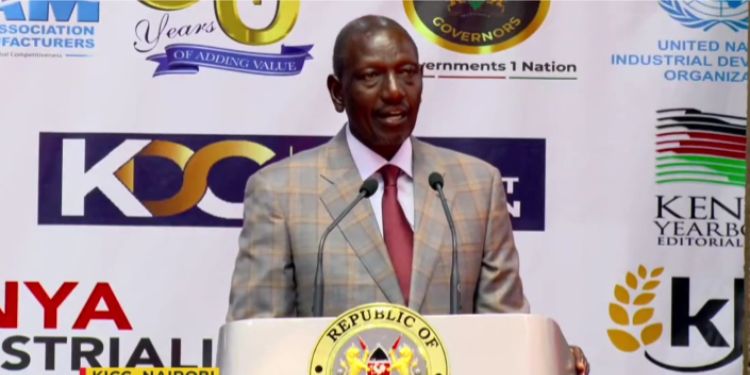
President William Ruto has announced that Kenya is no longer on the commercial safeguards list for sugar, ending a 25-year period under the restrictions.Speaking at the Kenya International Convention Centre (KICC) in Nairobi on November 4, Ruto attributed the development to increased local sugar production, saying the country now produces enough sugar and no longer needs the safeguards.
Category: Economy&Finance
-
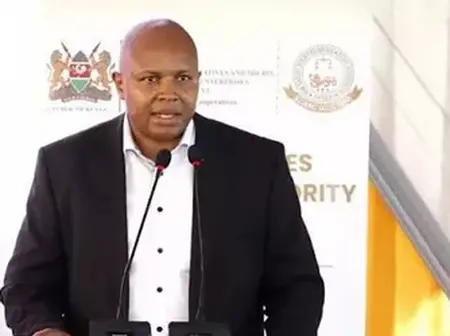
Suspect fraud in your SACCO? SASRA urges members to speak up, promises confidentiality
SACCO members and the public can now report suspected fraud, theft, bribery and misuse of funds in regulated savings and credit cooperatives anonymously, as the regulator steps up efforts to protect members’ savings.
The Sacco Societies Regulatory Authority (SASRA) is urging members, employees, board members, suppliers and other stakeholders to report suspected wrongdoing, saying they do not need to prove allegations before making a disclosure.
In a whistleblower awareness campaign, the authority said information from insiders and members of the public could help uncover financial irregularities, strengthen accountability and prevent losses in SACCOs.
“Your information can help protect members’ savings and strengthen accountability,” SASRA said in its public awareness message.
The regulator said reports should be based on reasonable belief and provide as much detail as possible to help it assess the concerns and determine whether further action is necessary.
Among the issues members are encouraged to report are suspected theft or misuse of SACCO funds and assets, falsification of financial statements, bribery, demands for kickbacks, abuse of office and conflicts of interest in decision-making.
Other reportable offences include irregular procurement, questionable payments, unauthorised disposal of SACCO property and disclosure of confidential information belonging to members or the institution.
SASRA is also seeking information on deliberate destruction, removal or alteration of records to conceal wrongdoing, as well as attempts to cover up misconduct or failure to act on reported violations.
The authority said its Whistle Blower Policy allows individuals to submit information without revealing their identities.
“ You do not have to prove the allegation before reporting. Report what you reasonably believe to be true,” the regulator said.
It also pledged to handle disclosures confidentially and protect the identities of those who come forward.
However, SASRA cautioned that investigations or court proceedings could sometimes reveal the source of information or require a witness to provide a statement. Where a whistleblower is identifiable, the authority said it would discuss the implications and offer support through the process.
The regulator further assured people reporting in good faith that they would be protected even if their allegations were later found to be inaccurate or could not be substantiated.
It warned against intimidation or victimisation of whistleblowers, urging anyone subjected to retaliation because of a disclosure to report the matter.
SASRA said concerns can be submitted through telephone, WhatsApp, email, post or an arranged meeting with the authority.
To facilitate investigations, whistleblowers are encouraged to provide the name of the SACCO involved, individuals suspected of wrongdoing, details of what happened, the location and time of the incident, and any supporting documents or information available.
Those comfortable sharing their contact details may also provide them to allow investigators to seek clarification or additional information.
The authority has distinguished whistleblower reports involving suspected fraud and corruption from ordinary complaints about SACCO products, services or customer care.
Members with service-related grievances are expected to first use their SACCO's complaints management process, while allegations involving fraud, corruption or concealment of wrongdoing should be clearly identified when reporting to the regulator.
SASRA said individuals who feel their concerns have not been adequately addressed, or fear victimisation, may escalate the matter to the relevant government agency.
The campaign comes as the regulator seeks to strengthen oversight and protect savings held by millions of Kenyans through the SACCO movement.
“Your voice matters. Report early. Help secure SACCO funds,” SASRA said.
-

How to Register for NYOTA AGPO Digital Training
Interested applicants can enrol by dialling the zero-rated USSD short code *254# and selecting the NYOTA AGPO option.Applicants will then be required to complete the registration process before receiving an SMS containing a link to the digital training platform.The government, in partnership with Safaricom, is also arranging a subsidised data bundle to help successful applicants access the online training.
-
World Bank warns of fuel price surge as Mbadi promises EPRA’s pump relief for Kenyans
Kenyan motorists could get relief from soaring fuel prices, but a fresh warning from the World Bank suggests the country’s cost-of-living crisis could face another major test as global energy prices are projected to rise by 32 per cent in 2026.
Treasury Cabinet Secretary John Mbadi has indicated that the government plans to use the fuel stabilisation fund during the November pricing review to cushion consumers against rising petroleum costs, potentially reversing some of the increases experienced by motorists.
His announcement comes against a difficult international economic backdrop, with the World Bank projecting that overall commodity prices will increase by 23 per cent this year as the conflict in the Middle East disrupts oil supplies and pushes energy costs higher.
In its October 2026 Commodity Markets Outlook, released on October 28, 2026, the World Bank warned that energy prices were heading towards a four-year high, reversing three consecutive years of declines.
The institution projected that Brent crude oil would average $91 per barrel in 2026, compared with $69 in 2025, before declining to $79 in 2027.
For Kenya, which relies on imported petroleum products, sustained increases in international oil prices could put additional pressure on fuel import costs, transport charges, food distribution and household budgets.
The warning raises questions about how much relief the government can deliver through the stabilisation fund if international petroleum prices continue climbing.
Speaking during an interview on a local vernacular TV station on Tuesday, November 3, 2026, Mbadi explained that the government deliberately avoided spending money from the stabilisation fund during the October fuel price review to preserve resources for the next adjustment.
“When we saw the stabilisation fund going down, in fact, during the recent fuel price review, we did not use the stabilisation fund because European countries and the West are entering winter, which means energy demand is going up,” Mbadi stated.
The Treasury CS said the government had anticipated that international fuel prices could increase in November as European countries prepare for winter, when demand for energy products traditionally rises.
He explained that retaining the available funds would allow the government to intervene if the anticipated increase materialised.
“So we projected that fuel prices in November might go up, so we did not use the funds last month so that we can use them this month to reduce the prices of fuel. It is a balancing act,” he said.
Mbadi’s remarks offer hope to motorists who have been hit by successive increases in the cost of petroleum products. However, he did not disclose the amount of money currently available in the stabilisation fund or specify how much pump prices could fall.
The government’s intervention will therefore depend on the resources available and the actual costs of importing petroleum products when EPRA conducts its next review.
The World Bank’s projections highlight the growing pressure facing countries that depend on imported energy, particularly developing economies where higher fuel costs can quickly feed into the prices of essential goods and services.
According to the report, global oil supply is expected to decline by 5.2 per cent in 2026, representing the largest contraction in more than four decades outside the 2020 global recession.
Oil consumption is also forecast to fall by 2.5 per cent, as elevated prices force households and businesses to reduce their energy use.
Despite the anticipated decline in consumption, production is expected to remain below demand, forcing countries to withdraw more oil from their inventories.
This is particularly concerning because depleted reserves leave the international market more exposed to fresh supply disruptions.
Ayhan Kose, the World Bank’s Deputy Chief Economist and Director of the Prospects Group, warned that the simultaneous shocks were threatening economies across the world.
“Commodity markets are being hit by several major shocks at once,” Kose said.
“Higher energy costs and trade disruptions are driving up prices across a broad range of commodities, threatening to worsen inflation, food insecurity, and economic growth.”
He added that protecting vulnerable populations and supporting developing economies struggling with heavy debt burdens should be a priority.
For Kenya, the implications extend beyond the cost of filling a vehicle’s tank. Higher petroleum prices can increase the cost of transporting agricultural produce, distributing manufactured goods and operating businesses that depend on fuel.
Public transport operators may also face higher operating expenses, creating pressure to increase fares if fuel costs continue rising.
The World Bank’s warning is particularly significant because it projects that food commodity prices will increase by approximately 10 per cent in 2026 and another 7 per cent in 2027.
The cumulative increase of about 18 per cent over the two years is expected to be driven by disruptions to grain shipments, El Niño-related threats to agricultural harvests and higher fuel and fertiliser costs.
Fertiliser prices alone are forecast to rise by 14 per cent in 2026, adding pressure to agricultural production expenses.
These developments could create another challenge for Kenyan households, which are already sensitive to increases in the prices of maize flour, cooking oil, vegetables and other essential commodities.
When fuel becomes more expensive, transporters and distributors face higher costs of moving goods from farms and manufacturing centres to markets and retail outlets.
Farmers also face the possibility of paying more for fertiliser and other energy-dependent agricultural inputs.
If these costs are passed down the supply chain, consumers could ultimately bear the burden through higher retail prices.
The World Bank warned that the situation could become significantly worse if the Middle East conflict escalates, attacks on Black Sea grain shipments intensify and an unusually strong El Niño damages agricultural production.
Under this adverse scenario, Brent crude could average $105 per barrel in 2027, while food commodity prices could be 12% higher than the institution’s baseline forecast, surpassing their 2022 levels.
Such an outcome would threaten to push more people into extreme poverty, particularly in countries already struggling with food affordability and economic pressures.
The international developments come as Kenyan motorists contend with the latest increase in domestic pump prices announced by the Energy and Petroleum Regulatory Authority.
In its October 14 review, EPRA increased Super Petrol by Ksh12.93 per litre, diesel by Ksh9.90 and kerosene by Ksh28.49.
Consequently, motorists in Nairobi are currently paying a maximum of Ksh226.96 per litre for Super Petrol, Ksh227.76 for diesel and Ksh219.87 for kerosene.
The prices took effect on October 15 and remain applicable until November 14, 2026.
The increases have intensified concerns over the cost of public transport, goods distribution and household energy expenses, particularly for low-income families that spend a significant portion of their earnings on essential commodities.
Mbadi has maintained that the government uses subsidies to prevent international price increases from being transferred entirely to consumers.
“We do not want fuel prices to increase significantly. Besides the VAT, there is a certain amount of money that we use to stabilise the prices. It is called a subsidy that we pay those who sell us fuel so that they do not increase the prices of fuel,” he explained.
The intervention is intended to compensate oil marketers for part of the additional costs, allowing consumers to benefit from more stable pump prices.
However, the stabilisation mechanism also depends on the availability of public funds, raising questions about how long the government can sustain subsidies if global petroleum prices remain elevated.
Even as the government considers using public funds to cushion motorists, Mbadi has defended the various levies imposed on petroleum products, arguing that removing them would create financing gaps elsewhere in the economy.
He specifically cited the Road Maintenance Levy, which helps finance the construction and maintenance of roads.
The CS argued that lowering fuel prices by eliminating such charges would not necessarily reduce the overall cost of transport if the government failed to maintain the road network.
“Something like the Road Maintenance Levy, we must ensure that our roads are constructed. Now we have better roads. Remember that even if fuel prices go down, but the roads are bad, you will still spend more on fuel,” Mbadi stated.
-

See Kenya’s top brands and how consumer trust determines purchasing decisions
Kenyan consumers are looking beyond price and promotional offers when choosing products and services, placing greater importance on quality, reliability and brands they can trust, a new research has revealed.This is putting businesses under pressure to demonstrate consistent value and build reputations that influence purchasing decisions.
-
Informal workers lose up to 20 per cent of daily earnings to bribes, World Bank says
Informal workers in Kenya lose up to 20 per cent of their daily earnings to bribes demanded by frontline public officials, including traffic police, inspection services and municipal agencies, a new World Bank report shows.
The November 2026 Kenya Economic Update identifies bribery as one of the challenges affecting workers in the informal sector, warning that unofficial payments reduce incomes and limit opportunities for business growth.
The report estimates that informal workers account for 83.8 per cent of Kenya’s workforce, making them particularly vulnerable to corruption involving public officials.
Under a section examining governance constraints affecting earnings and opportunities in the informal sector, the World Bank notes that workers frequently encounter demands for payments when dealing with frontline institutions.
“Informal workers face demands for bribes from frontline institutions such as traffic police, inspection services, and municipal agencies. Reports put the share of bribe fees paid by riders at 5–20 percent of daily earnings (KSh 50–100 daily, plus occasional larger bribe demands),” the report states.
The payments add to the financial pressures facing self-employed people and small-scale operators who depend on daily earnings to meet household expenses and sustain their businesses.
The report further estimates that informal workers can lose up to 20 per cent of their daily earnings to demands from frontline officials.
It states that “Informal workers face frequent demands for bribes from frontline institutions such as traffic police and municipal inspectors—it is estimated that informal workers can lose up to 20 percent of their daily earnings to these kinds of bribes.”
The findings point to the financial impact of corruption on workers who already operate with limited resources and have to meet expenses such as transport, supplies, taxes and business operating costs.
A survey conducted in Kisumu County found that nearly 47 per cent of boda boda drivers had experienced police harassment, mainly through threats of arrest or fines.
Of those who faced threats, almost 79 per cent reported paying bribes to avoid further action.
Data from Transparency International’s bribery index also show that self-employed people are particularly exposed, with nearly half of those surveyed in recent rounds reporting payments after interacting with authorities.
The World Bank report also draws attention to the disproportionate burden of bribery on poorer Kenyans.
Afrobarometer data show that people experiencing higher levels of lived poverty are more likely to pay police bribes to avoid problems.
Their probability of making such payments is between 10 and 14 percentage points higher than that of people in lower poverty quartiles.
The findings suggest that unofficial payments further reduce the resources available to low-income households, leaving less money for essential needs and investment in income-generating activities.
With informal employment accounting for the largest share of Kenya’s workforce, the report warns that corruption at the frontline can undermine productivity and restrict opportunities for businesses to expand.
The economic implications extend beyond individual workers, with the World Bank linking corruption to lower investment, productivity and economic growth.
Its modelling suggests that moderate anti-corruption reforms could expand Kenya’s Gross Domestic Product (GDP) by nearly 9 per cent by 2035 compared with the status quo.
Stronger reforms could increase GDP by more than 22 per cent and generate millions of additional better jobs. Household consumption could also rise by up to 27 per cent.
To address bribery involving frontline officials, the report recommends introducing clearer rules, rotating staff at checkpoints and reducing the criminalisation of minor traffic offences.
It also calls for action against wider institutional and political incentives that allow corruption to persist.
The proposed measures are intended to reduce opportunities for officials to demand unofficial payments and protect the earnings of workers operating in the informal sector.
-
Nearly half of Kenya’s medium-sized businesses face pressure to give bribes, World Bank finds
Nearly half of Kenya’s medium-sized businesses face pressure to offer gifts to public officials to obtain government services, permits and other processes, according to a new World Bank report.
The findings raise fresh questions about the real cost of doing business in Kenya, where companies trying to grow may face an additional burden before they can expand, innovate or create jobs.
The World Bank’s November 2026 Kenya Economic Update found that 48.2 per cent of medium-sized firms, employing between 20 and 99 workers, reported being expected to give gifts to public officials “to get things done”.
The figure is more than twice the average of 19 per cent recorded among medium-sized firms across Sub-Saharan Africa and four times the 11.9 per cent reported across all economies covered by the comparison.
The report’s findings suggest that businesses in the critical growth stage between small enterprises and large corporations may be particularly exposed to corruption-related pressure.
The World Bank says medium-sized businesses appear to face especially strong pressure because their expansion brings them into more frequent contact with public institutions.
As companies grow, they require more permits, licences and access to land. Those interactions can create opportunities for officials to demand unofficial payments, the report explains.
“Growing firms will need more permits, licenses, and access to land compared to smaller firms,” the report states.
It adds that expanding businesses can become attractive targets for officials who see them as having more resources to pay bribes, but less protection and direct access to senior decision-makers than larger companies.
The figures show that the pressure is not limited to medium-sized enterprises. Some 35.7 per cent of small firms, employing five to 19 people, also reported being expected to give gifts.
Among large firms with at least 100 employees, the figure stood at 30.7 per cent.
However, the gap between Kenya and its regional peers is particularly striking for medium-sized businesses. In Sub-Saharan Africa, 19 per cent of firms in this category reported the same expectation, compared with Kenya’s 48.2 per cent.
Beyond the money businesses may lose through unofficial payments, the World Bank warns that corruption can undermine their ability to grow, train workers and introduce new products.
Analysis of the 2025 Kenya Enterprise Survey found that firms expected to give gifts or that had experienced bribery requests were less likely to provide formal employee training, introduce product or process innovations, or invest in research and development.
The report says firms that experienced at least one bribery request were between five and 10 percentage points less likely to provide formal training or introduce a new product.
They were also five percentage points less likely to introduce a new production process.
The consequences extend to business performance. Firms reporting bribery requests or informal payments recorded lower growth in labour productivity and sales, with the report estimating differences of between two and four percentage points.
The World Bank describes the impact as substantial, warning that corruption can undermine the transition towards formal businesses and the creation of new formal jobs.
That matters in an economy where growing firms are expected to expand employment opportunities.
The report argues that stronger governance and control of corruption could reduce the costs and uncertainty facing businesses.
For entrepreneurs in Nairobi, Mombasa, Kisumu and other commercial centres, the findings raise a practical question: how much harder is it for a business to grow when accessing public services comes with expectations of unofficial payments?
The World Bank says improvements in governance can generate economic gains by reducing the costs and uncertainties faced by firms.
But the findings also point to the need for accountability beyond policy promises.
Business owners, particularly those running medium-sized enterprises, can help establish how these demands occur, which public processes are most affected and whether unofficial payments delay investment or recruitment.
The report does not establish that every firm pays a bribe, nor does it identify every institution responsible. Its findings measure firms’ reported expectations and experiences.
Still, the central warning is difficult to ignore: when nearly half of medium-sized businesses say they are expected to give gifts to get things done, corruption is not simply an ethical concern. It is a potential obstacle to business growth, productivity and job creation.
-

Kenya Linked to Multi-Million-Dollar US Bank Fraud Case as Suspect Attempts to Flee
Kenya has been mentioned in a US$370 million bank fraud case involving 14 defendants accused of participating in a nationwide bank account takeover conspiracy targeting thousands of Americans.According to an indictment announced by the US Attorney’s Office for the Northern District of Texas on November 3, 2026, 35-year-old Muhamed Dieye of Dallas, Texas, allegedly led the scheme.
-

Best Crypto Exchanges for Stock and Commodity Futures
For traders who already use USDT and want to add stock futures trading to their crypto activity, BYDFi offers a practical starting point. Its stock contracts use USDT margin and a trading interface consistent with its perpetual futures products. Its markets also include gold and silver perpetuals, giving users several traditional-market exposures within one platform.
-
The tycoons pumping billions into Kenya’s industrial future
From cement and sugar factories to cooking gas terminals, soft drinks and oil refining, some of Africa's wealthiest investors are positioning themselves in industries expected to benefit from Kenya's growing demand for essential goods and infrastructure.
The business tycoons, who include Narendra Raval, Aliko Dangote, Rostam Aziz, Jaswant Rai, Mohammed Dewji, Edha Nahdi Munif and Abdallah Nahdi, are committing billions of shillings to Kenya’s factories, energy infrastructure and industrial acquisitions, betting that the country’s expanding economy will generate lucrative returns from essential goods and services.