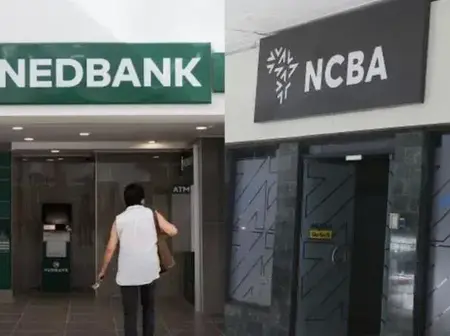
NCBA Group PLC has confirmed the completion of Nedbank Group Limited’s partial offer to acquire a 66 per cent stake in the Kenyan financial services group.In a statement on Wednesday, November 4, NCBA disclosed that the transaction was completed on Tuesday, November 3, following the transfer of 1,087,362,891 ordinary shares from accepting shareholders to Nedbank through an on-market block trade at the Nairobi Securities Exchange (NSE).
Category: Economy&Finance
-

World Bank Reveals How Kenya Could Have Saved KSh116 Billion on SGR Construction
A comparison of railway construction costs in East Africa suggests that Kenya could have saved approximately KSh116 billion (US$900 million) on the initial construction of the Standard Gauge Railway (SGR) between Mombasa and Nairobi if it had been built at a cost comparable to Tanzania's Dar es Salaam–Dodoma railway.
-

Reportage Group eyes fresh investment in Kenya as Nairobi projects hit Sh6bn
UAE-based property developer Reportage Group is exploring additional investment opportunities in Kenya as it advances three residential and hospitality projects in Nairobi valued at more than Sh6 billion.
The group says it is assessing potential development sites as it seeks to expand its local portfolio, which comprises 819 residential and hotel apartments across Nairobi.
The expansion plans emerged during a visit by Group Managing Director Andrea Nucera and senior executives, who inspected the company's ongoing projects, reviewed construction progress and held discussions with its local management team.
“Kenya is an important market for Reportage Group, and our experience here reinforces our confidence in its long-term potential. As we progress with our existing developments, we are also exploring opportunities to expand our presence through additional projects,” said Nucera.
The group said it would focus on developments that respond to market demand while incorporating technology and sustainable building practices to improve efficiency, resource management and property performance.
The planned expansion comes as Kenya's residential and hospitality sectors record improved performance, supported partly by rising international visitor numbers and demand for quality housing.
According to Knight Frank's Kenya Market Update for the first half of 2026, international arrivals through Jomo Kenyatta International Airport and Moi International Airport increased by 13.1 percent to 506,622 in the first quarter of 2026, compared with the same period last year.
The property consultancy also reported that prime residential sale prices increased by 6.2 percent in the first half of 2026 compared with December 2025, reflecting sustained demand amid a shortage of quality housing.
Reportage's Kenya investment plans form part of a wider African expansion strategy covering South Africa, Nigeria, Ethiopia, Angola and Rwanda.
The regional tour coincided with the launch of Reportage Bay in Angola, where the developer is establishing two residential communities within Dubai Investments Park Angola.
The Angola development programme has an estimated investment value of $500 million, signalling the group's broader push into African property markets.
-
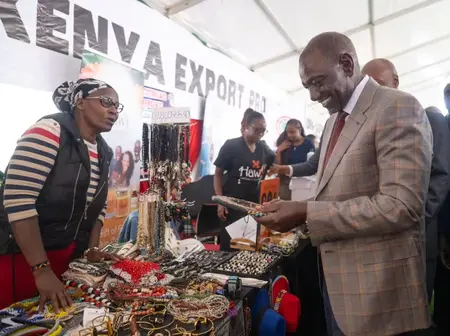
Ruto opens Industrialisation Summit, 2026 in Nairobi
President William Ruto has today presided over the official opening of the Kenya Industrialisation Summit, 2026 happening at KICC, Nairobi.
The summit, which started Tuesday, November 3 and set to end Saturday, November 7, is a major platform bringing together industry leaders, manufacturers, investors, policymakers, entrepreneurs, and other stakeholders to discuss the future of Kenya's industrial and economic development.
It focuses on driving industrial growth through investment, manufacturing, trade, innovation, and sustainable financing.
The event provides an opportunity to engage with the people and organisations shaping Kenya's industrial landscape, exchange ideas, explore investment opportunities, and strengthen partnerships that support local production and economic transformation.
Participants will also experience the Changamka Shopping Festival, a manufacturing expo celebrating locally manufactured products and promoting the Buy Kenya, Build Kenya initiative. The festival offers businesses an opportunity to showcase products, connect with consumers, and expand market reach.
The summit is an important opportunity for business networking, knowledge sharing, investment promotion, and collaboration across Kenya's manufacturing and industrial sectors.
It is themed “Driving Industrial Growth Through Investment, Manufacturing, Trade, Innovation and Sustainable Financing”.
-
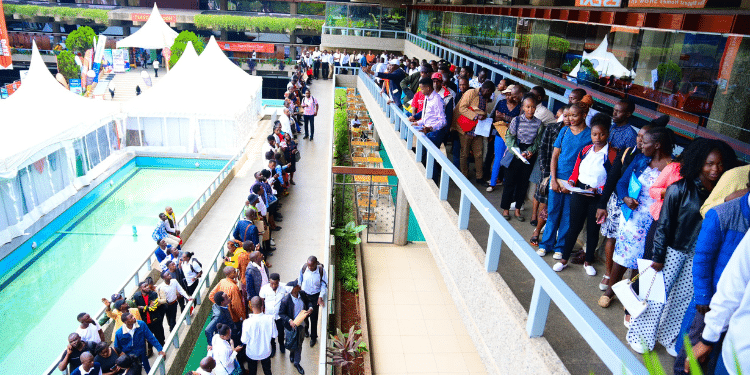
Why Kenyan Companies Are Not Hiring Despite Rising Sales
Kenyan companies are slowing down recruitment despite receiving more orders and recording stronger sales, with rising operating costs and cash-flow difficulties emerging as some of the pressures facing businesses.The latest Stanbic Bank Kenya Purchasing Managers’ Index (PMI) shows that new orders grew at the fastest pace in almost a year in October, driven by increased customer activity, referrals, higher footfall and new contracts.
-

‘Buy our tea or else’: Kirinyaga farmers spend night at buying centre in protest
Tea farmers in Kirinyaga Central have vowed to suspend deliveries to Kiawakara Buying Centre 11, also known as KN Eleven, until a colleague's rejected produce is accepted, escalating a dispute that has seen them spend the night at the facility.The farmers staged the protest after a collection clerk allegedly rejected green leaf belonging to one of their colleagues on Monday, citing poor quality without providing a satisfactory explanation.
-

David Ndii: Affordable housing construction workers causing milk shortage
Speaking on Tuesday, he referred to figures from the Kenya National Bureau of Statistics (KNBS), which indicate that milk production had increased by 20 per cent to approximately 5.6 billion litresHe further claimed that milk deliveries to processing companies had risen by 34 per cent during the same period.
Ndii questioned why supermarkets were experiencing stock shortages despite the reported growth in production and processing volumes, arguing that increased consumption could explain the situation.He pointed to workers at construction sites as an example, noting that hundreds of thousands of people employed in affordable housing projects and other developments consume milk daily.
According to him, milk is among the basic supplies provided to workers at some construction sites, suggesting that changing consumption habits, particularly among lower-income households, could be contributing to the increased demand.
His comments come against the backdrop of persistent reports of milk shortages across supermarkets and retail outlets, with some retailers introducing purchase limits while consumers struggle to find their preferred brands.
However, an October 19 report presented a different picture of milk deliveries to processors, indicating that formal milk intake had fallen from 88.89 million litres in May to 75 million litres in August 2026, representing a decline of approximately 16 per cent.
The Kenya Dairy Board attributed the reduction largely to prolonged dry conditions and rising pressure on animal feed supplies. The report also highlighted difficulties affecting milk collection, processing and distribution.
Similarly, the KNBS August 2026 Leading Economic Indicators report recorded formal milk intake at 77.1 million litres, down from 81.3 million litres in July, representing a 5.1 per cent decline.
These figures highlight the difference between overall milk production and the quantities entering formal processing channels, since increased national output does not automatically translate into steady processor deliveries or sufficient packaged milk supplies in retail outlets.Despite the concerns raised by the declining formal deliveries, Ndii maintained that rising consumer demand could be a major factor behind the shortages being witnessed in shops.
The supply challenges have also coincided with an increase in milk prices. KNBS figures showed that fresh packaged milk prices rose by six per cent in September, while ultra-high-temperature (UHT) milk recorded an eight per cent increase.
-

Jubilee Asset Management Launches the Fourth Financial Advisory Centre in Meru
Jubilee Asset Management Limited (JAML), a wholly owned subsidiary of Jubilee Holdings, has today officially opened its fourth Financial Advisory Centre in Kenya, expanding its presence to Meru. The Centre is part of Jubilee’s commitment to bringing professional investment advisory and wealth management services closer to individuals, businesses and institutions across the Mt.
-
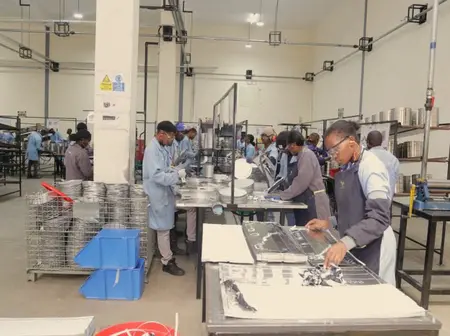
World Bank raises concern over low paying jobs in Kenya
The World Bank has raised concerns over low pay and poor working conditions in Kenya, warning that nearly 84 per cent of jobs in the country remain informal despite growth in employment.
Qimiao Fan, the World Bank Division Director for Kenya, Rwanda, Somalia and Uganda, said most informal jobs were associated with lower wages, low productivity and limited protection for workers.
Speaking on Wednesday, November 4, 2026, during the launch of the 34th edition of the Kenya Economic Update, Fan said the country faced the challenge of creating better-paying and more productive employment opportunities.
He noted that while the number of jobs was growing, the quality of employment remained a major concern, particularly for workers in the informal sector.
“Almost 84 per cent of jobs remain informal. And obviously those informal jobs often come with lower pay and lower productivity and limited protection of the workers,” Fan said.
The World Bank official argued that Kenya needed to move beyond measuring employment growth by the number of jobs created and focus on whether those opportunities provided decent earnings and adequate protection.
Fan also highlighted the growing gap between the number of young people entering Kenya’s labour market and the formal employment opportunities available.
He said close to one million young people join the labour force every year, but the economy has created an average of only 120,000 to 150,000 formal-sector jobs annually in recent years.
“We know there are close to a million young people coming into the labour force every year. But on average in the last few years, only about 120,000 to 150,000 formal sector jobs are created. So the gap is quite, quite large,” he said.
The figures highlight the pressure facing Kenya’s labour market, with many people seeking employment opportunities outside the formal sector.
Fan said the challenge was therefore not only to manage the country’s economic pressures but also to create more and better jobs.
The World Bank director also linked the quality of employment and workers’ earnings to governance challenges, particularly corruption.
He said weak governance affected businesses, increased the cost of essential services and ultimately weighed on the earnings of workers and households.
According to Fan, 39 per cent of firms surveyed identified corruption as a major constraint to doing business in Kenya.
The World Bank estimated that corruption and collusion widened Kenya’s fiscal deficit by approximately two percentage points of GDP, while also increasing the cost of basic services such as electricity and logistics.
Fan said addressing governance weaknesses could unlock significant economic benefits, including improved employment opportunities and better living standards.
The report’s modelling suggests that ambitious governance reforms could support approximately 7.7 million additional and better-quality jobs by 2035.
It also estimates that moderate reforms could raise GDP by nearly 9 per cent relative to the current economic path, while more ambitious changes could increase it by more than 20% compared with a no-reform scenario.
-
Bolt Named Among Kenya’s Top 10 Strongest Brands in 2026
Bolt, the leading on-demand mobility platform, has been named among Kenya’s Top 10 strongest brands in the 2026 Superbrands ranking, securing eighth position nationally and reinforcing its standing as one of the country’s leading brands in the travel, transport and ride-hailing category.