
Diamond Bay Residences Westlands is one of the property developments My Diaspora Nexus recently visited on the ground to give approved members a closer look at what is actually taking shape behind the photographs, architectural renders and sales material.Imagine sitting thousands of kilometres away, scrolling through photographs of an apartment development in Nairobi.
Category: Economy&Finance
-
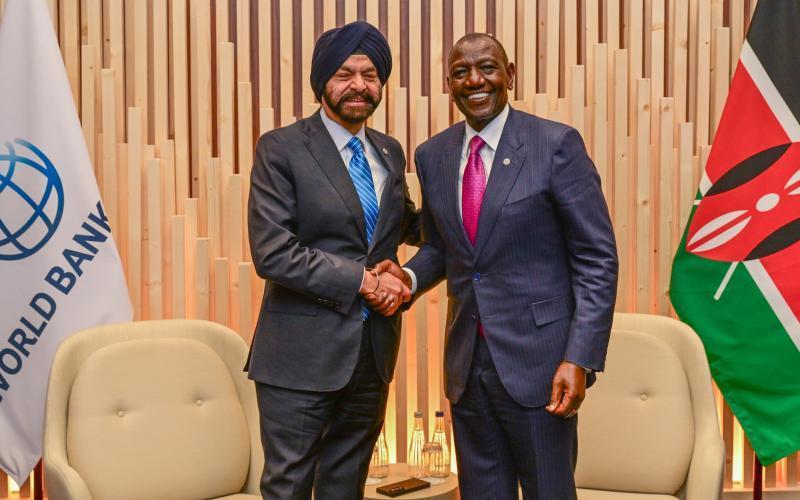
Why Kenya’s Inflation Rose to 7.3% – World Bank
WhyThe World Bank has revealed that Kenya’s annual inflation rose to 7.3 percent in October 2026, up from 4.6 percent in 2025.The World Bank has revealed that Kenya’s annual inflation rose to 7.3 percent in October 2026, up from 4.6 percent in 2025.
-

Kenya Could Have Saved KSh116 Billion on SGR Construction – World Bank Report
Corruption?According to the report, Kenya's Mombasa–Nairobi SGR cost approximately KSh988 million per kilometre, compared to KSh741 million for Tanzania's Dar es Salaam–Dodoma railway.A comparison of railway construction costs in East Africa suggests that Kenya could have saved approximately KSh116 billion (US$900 million) on the initial construction of the Standard Gauge Railway (SGR) between Mombasa and Nairobi if it had been built at a cost comparable to Tanzania's Dar es Salaam–Dodoma railway.
-
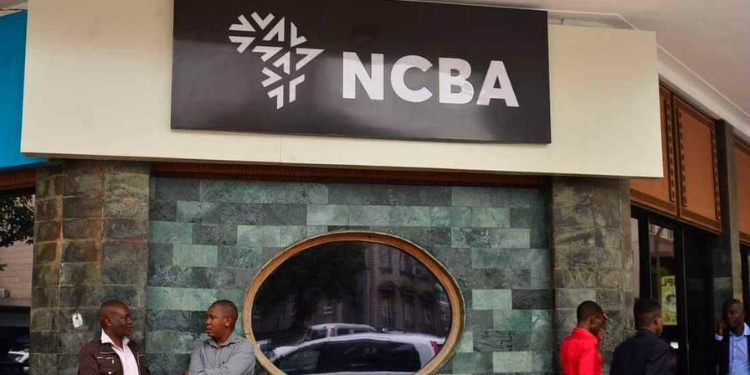
NCBA Announces Leadership Changes After Takeover
NCBA Group PLC has announced changes to its leadership structure with the appointment of Michael Howard Davis and Anél Bosman as directors of the company and Esther Wanjiku Kung’u as Group Company Secretary.The appointments took effect on November 3, 2026, according to a public notice issued by the lender’s board of directors.
-

Sueh Owino Shows Off Stylish Mud House, Outdoor Kitchen at Rural Homestead
Kenyan food influencer and YouTuber Sueh Owino has given fans a glimpse of her rural lifestyle, showcasing a beautifully designed mud house, a traditional outdoor kitchen and a thriving vegetable garden.
The content creator shared a video documenting an afternoon at her village homestead, where she has been gradually developing a property using natural and locally sourced materials.
The home features a traditional mud-walled structure topped with a thick makuti roof, wooden doors and small windows, blending indigenous construction techniques with practical features for modern-day living.
Inside, the house has treated earthen floors designed to be waterproof and easy to clean. The walls were constructed using a mixture of red soil, sand, water and rice straw.
One of the standout features of the homestead is a separate outdoor kitchen designed for traditional cooking.
The structure combines masonry, stonework and natural supports, including tree trunks, while a thatched roof provides shelter without completely enclosing the cooking area.
The kitchen is fitted with running water taps, washing and food preparation areas, as well as a wood-fired cooking stove.
The compound also features a vegetable garden with raised beds where different leafy greens and other produce are grown.
Stone pathways connect the various sections of the property, while additional facilities, including a gazebo and poultry areas, are still being developed.
Sueh was also captured working around the compound, giving followers a glimpse of the everyday activities involved in maintaining the homestead.
Sueh and her husband have been gradually transforming the property after he gifted her the land.
The couple have embraced traditional building techniques and natural materials as they work towards creating a comfortable rural home away from the demands of urban life.
In May 2025, Sueh shared videos documenting the early stages of the mud house project, including the construction and roofing process. She also showed her involvement in preparing the surrounding land for vegetable farming.
Her latest video offers a closer look at the progress made since then, particularly the addition of the outdoor kitchen, garden and other facilities.
Sueh is widely known for her food content, through which she showcases traditional cooking methods and elaborate meals prepared for her husband.
-

Kenya records KSh740 billion in crypto transactions as stablecoins dominate market activity
Kenya’s crypto market recorded KSh740 billion ($5.7 billion) in transactions in the year to June 2026, according to blockchain analytics firm Chainalysis. The reported volume represents a 38% increase from KSh505 billion ($3.89 billion) in the preceding period, placing Kenya ahead of Ethiopia as Africa’s third-largest cryptocurrency economy. The figures point to a market where stablecoins have a prominent role, with Bitcoin accounting for only 2% of Kenyan crypto transactions.
South Africa led the regional rankings with $39.3 billion (about KSh5.1 trillion) in cryptocurrency activity, followed by Nigeria at $38.1 billion (about KSh4.9 trillion). Kenya’s $5.7 billion placed it ahead of Ethiopia, which recorded $3.7 billion (about KSh480 billion), an 8% decline over the period, according to Chainalysis.
The difference in asset composition is one of the more notable features of Kenya’s position. Chainalysis reported that Bitcoin accounted for 2% of transactions in Kenya, compared with 92% in Nigeria, 59% in Ghana and 22% in South Africa. That places Kenya among the markets where stablecoins have a particularly prominent role in cryptocurrency activity, reflecting demand for digital dollar-denominated value in payments and business transactions.
The figures add a market-size dimension to a pattern already visible in Kenya’s digital finance sector. Stablecoins have featured in discussions about cross-border payments, access to foreign currency and the movement of money between businesses operating across different markets. Their appeal lies partly in the ability to transfer dollar-denominated value through blockchain networks, with local currency conversion and payment services connecting those transfers to conventional financial systems.
TechTrendsKE’s May reporting on African payment infrastructure examined how firms such as PawaPay and Kotani Pay were positioning stablecoins within existing payment networks. PawaPay’s Freddie Omany described settlement delays of up to four days in some markets before the use of stablecoin infrastructure, while Kotani Pay’s Felix Macharia discussed the role of stablecoins in giving small businesses and importers access to dollar liquidity.
That activity also extends beyond specialist crypto exchanges. TechTrendsKE reported in May that African exchanges including Luno, Bitget, Busha and OKX were placing greater attention on payments, business services and compliance alongside trading. Busha’s business transfer services were among the examples of how cryptocurrency platforms were pursuing commercial use cases beyond individual buying and selling.
For Kenyan businesses, the demand for dollar-linked payment options sits within a wider market shaped by foreign-currency needs. Kenya’s foreign-currency deposits reached KSh1.52 trillion, with deposits rising by KSh240.57 billion year on year, according to figures covered by TechTrendsKE on October 27. The banking data points to the scale of dollar holdings within the formal financial system, where companies and households maintain foreign-currency balances for trade, payments and other obligations.
Stablecoins offer another route for moving dollar-denominated value, particularly where businesses need to settle transactions across borders. TechTrendsKE’s July reporting on Verto described a payment model combining local currency collection, stablecoin transfers and final settlement in the recipient’s currency. Verto’s Mark Mwaniki said the company had moved more than $20 billion across African borders since its launch.
The same demand has drawn interest from companies building payment connections between crypto wallets and local financial services. In September, TechTrendsKE reported on a partnership between DCSPay and Kotani Pay that would connect USDT and USDC-funded payouts to local currency payments through mobile money and USSD channels, with Kenya among the markets targeted for expansion.
The use of stablecoins for international payments has also featured in reporting on multinational operations. Starlink was cited as an example of a company using stablecoins to repatriate payments collected in Kenyan shillings to the United States. The example illustrates how the technology can serve corporate treasury and settlement needs, in addition to remittances and smaller business transfers.
The growth in transaction activity is taking place as Kenya builds a formal regulatory framework for virtual asset businesses. The Virtual Asset Service Providers framework gives the Central Bank of Kenya and the Capital Markets Authority roles in supervising different parts of the sector, bringing crypto exchanges, wallet providers and other service operators into a licensing structure.
The regulatory framework also reaches into the stablecoin market. Kenya’s VASP rules provide for CBK approval of stablecoin issuers, alongside requirements covering reserves and redemption. The rules also prohibit providers from paying remuneration simply for holding stablecoins, a provision that shapes how issuers can structure products and attract users.
Capital requirements are another part of the framework. Kenya’s proposed thresholds include minimum paid-up capital of KSh300 million for stablecoin issuers, KSh150 million for wallet providers, KSh100 million for exchanges, KSh20 million for virtual asset managers and KSh10 million for payment processors. The requirements place a substantial financial obligation on firms seeking to operate locally, particularly smaller companies entering the market.
TechTrendsKE reported in August that the capital rules had prompted concerns about the cost of remaining in Kenya, with some industry participants warning that startups could consider other jurisdictions, including South Africa and Mauritius. The Africa Digital Assets Association also called for an extension of the licensing timetable, seeking an additional eight months to prepare for compliance.
The regulatory debate has extended to reporting obligations. In March, TechTrendsKE reported on draft stablecoin disclosure rules from the CMA that proposed regular reporting on holder numbers, transaction volumes, circulating value and reserve assets. The proposals also included daily transaction data, placing greater emphasis on how stablecoin activity is monitored and reported.
For businesses, licensing is only one part of the operating equation. TechTrendsKE’s September coverage of the VASP framework examined how access to banking, foreign exchange, liquidity and payment networks would remain important to crypto companies seeking to serve customers. A licence provides a regulatory basis for operating, while the ability to connect digital asset services to established financial infrastructure determines how those services reach businesses and consumers.
The expansion of crypto activity has also brought greater attention to transaction monitoring and financial crime controls. Stablecoin transfers can move across blockchain networks, creating a need for firms to monitor wallet activity, verify customers and assess the origin and destination of funds.
In July, TechTrendsKE reported on an investigation involving suspected transactions worth more than KSh300 million, with authorities seeking to freeze KSh115 million linked to a network of shell firms, Binance wallets and USDT transfers. The Asset Recovery Agency was involved in the case, which also highlighted the use of blockchain analytics in investigations into suspected financial crime.
The issue has implications for exchanges, wallet providers and payment companies as Kenya implements its licensing framework. TechTrendsKE’s May reporting on transaction monitoring examined how firms including Verto, Busha, Fonbnk and Choice Bank were investing in systems for fraud detection, customer onboarding, liquidity monitoring and compliance. These controls form part of the infrastructure required to handle larger transaction volumes while meeting financial services obligations.
Security risks also extend to the platforms holding or processing digital assets. TechTrendsKE reported in October that Binance had suspended withdrawals following a $6.3 billion hack, bringing attention to the operational risks facing large crypto exchanges and the role of asset freezes in responding to security incidents.
Kenya’s KSh740 billion in reported cryptocurrency transactions therefore sits within a market with several connected developments: demand for digital dollar payments, commercial use of stablecoins, a growing regulatory framework and greater scrutiny of how crypto transactions are handled. Chainalysis’ figures place the country among Africa’s largest crypto economies, while the small share attributed to Bitcoin points to a market whose activity has a distinct composition. The next stage of Kenya’s crypto market will be shaped by how payment providers, businesses and licensed virtual asset firms operate within that environment.
Go to TECHTRENDSKE.co.ke for more tech and business news from the African continent and across the world.
Follow us on WhatsApp, Telegram, Twitter, and Facebook, or subscribe to our weekly newsletter to ensure you don’t miss out on any future updates. Send tips to info@techtrendsmedia.co.ke
-
Kenya Power Announces Wednesday Outages in Parts of Nairobi and Kwale
Kenya Power has announced planned electricity interruptions in parts of Nairobi and Kwale counties on Wednesday, November 4, 2026, to facilitate routine maintenance.
The utility company said the scheduled outages would affect customers in Mwihoko, Nairobi, and the Petrocity Bonje area in Kwale County.
The interruptions are expected to last between 9am and 5pm in Nairobi, while affected customers in Kwale will experience an outage from 9am to 4pm.
In Nairobi, the planned maintenance will affect parts of Mwihoko from 9am to 5pm.
Areas to be affected include Mwithiritia SDA, St Lucy Kiriri University, Muigai, Discovery and Mutuya, as well as adjacent customers.
In Kwale County, the outage will affect the Petrocity Bonje area from 9am to 4pm.
The affected customers include Shell Bonje, Kilimanjaro Biscuits, Petrocity, Afro Afya and Premium Fuels, as well as adjacent customers.
-

Wicknell Chivayo empire: Kenyan business links under scrutiny as family begins wealth audit
The family of Zimbabwean businessman Wicknell Chivayo has begun the process of taking stock of his vast fortune following his death in a helicopter crash, raising fresh questions about his business interests in Kenya and his close relationship with President William Ruto.
-

Kenya Moves to Introduce New Rules for Imported Vehicles Under UN Standards
The proposed reforms are based on the UN World Forum for Harmonisation of Vehicle Regulations (WP.29), an international framework that establishes standards for vehicle design, production, safety testing, emissions and roadworthiness.
In a public notice issued on Tuesday, November 3, the ministry invited members of the public, professional organisations, institutions and other interested parties to submit their views on Kenya's planned accession to the international regulatory framework.
If adopted, the standards could subject imported vehicles and their components to stricter technical requirements covering safety, construction quality, emissions and type approval. Vehicles would also be required to meet applicable standards during inspections to ensure they remain roadworthy.
The government also intends to extend the requirements to locally assembled vehicles and automotive components to improve manufacturing quality and enable Kenyan products to compete in international markets.
Local vehicle assemblers and spare parts manufacturers would be expected to align their production methods, testing procedures and quality-control systems with the applicable UN requirements.
The proposed changes come amid continued reliance on imported vehicles and automotive components. According to a government assessment, Kenya imported vehicles valued at Ksh131.6 billion in 2025, alongside spare parts and related accessories worth approximately Ksh18.4 billion.
During the same period, local assembly plants produced 13,692 vehicles, operating at approximately 30 per cent of their installed capacity.
The ministry believes adopting the international standards could attract investment, create employment opportunities and strengthen the country's automotive manufacturing sector. It also expects the framework to improve road safety, promote energy efficiency and reduce pollution from motor vehicles.
Kenyans and other interested stakeholders have until Monday, November 30, to submit their recommendations through the ministry's official website, email or physical delivery to the State Department for Roads. Stakeholder consultations will also be conducted through physical and virtual meetings.
Source: https://www.facebook.com/share/1LtRJAUiC8/
-

From Earning KSh 100 A Day To KSh 300,000 A Month: How Ivy Njeri Built Nairobi Spaces
In this storyAt the height of the COVID-19 pandemic, Ivy Njeri was earning a measly ksh 100 a day working at a laundry shop.From there, she worked as a supermarket cashier, where her monthly salary was KSh 12,000. Sometimes, it would drop to KSh 6,000 because of deductions.