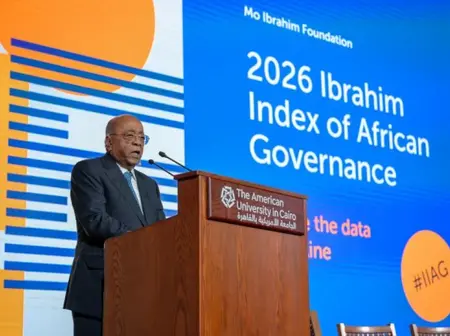
Kenya has been ranked 10th among Africa's 54 countries in the 2026 Ibrahim Index of African Governance (IIAG), scoring 61 out of 100 in an assessment that highlights both improvements and setbacks in the country's governance over the past decade.The report, released by the Mo Ibrahim Foundation on October 31, 2026, places Kenya above the continental average of 50.1 and Eastern Africa's regional average of 47.5.
Category: Economy&Finance
-
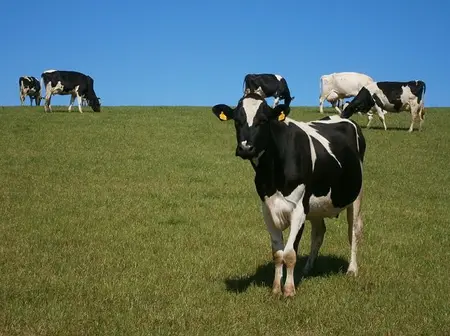
Kenya’s Dairy Recovery Will Be Won in the Middle of the Chain – Kinyanjui
By Nancy Kinyanjui, Managing Director, Avenews KenyaKenya’s dairy story this year has mostly been told at the two ends of the chain. At one end, dry weather thinned fodder and raised feed costs. At the other, shoppers in Nairobi, Nakuru and Kisumu found gaps on the shelves.
-

Crypto payments in Kenya surge to a record Sh740bn
Kenyans wired a record Sh740 billion ($5.7 billion) worth of cryptocurrencies in the year to June, highlighting the growing use of digital currencies for everyday finance such as cross-border payments and investments.
The value of cryptocurrency transactions in the country rose 38 percent from Sh505 billion ($3.89 billion), according to Chainalysis— a global crypto analytics firm.
-

How to defeat a dictator in the workplace
In continuation from last week’s Business Talk on dictatorships in the workplace, so how does a workplace dictator finally get defeated and a company recover from the damage?
Most employees hold out hope that one heroic employee will end up confronting the boss and things will get better. However, that usually does not happen.
-
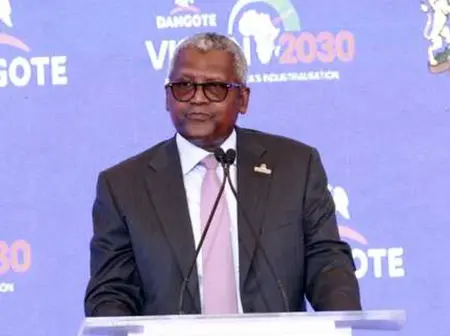
Kenya revives Turkana oil pipeline for Dangote refinery
Kenya now plans to link its Turkana oil fields to Dangote’s East African refinery in Lamu via a new pipeline, making the country’s crude a key raw material for the Nigerian billionaire’s project.
A senior economic adviser to President William Ruto has confirmed plans to revive the pipeline project, which was previously abandoned over doubts about securing funding.
-
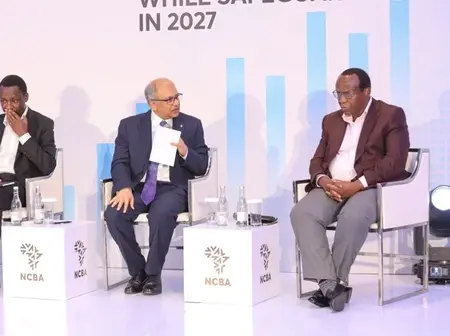
NCBA cuts Kenya’s 2026 economic growth forecast to 4.8 per cent amid global shocks
Listen to articleGlobal geopolitical tensions, volatile commodity prices and domestic fiscal pressures threaten growth, with the lender projecting a recovery in 2027.Kenya’s economic growth is expected to slow to 4.8 per cent this year, down from an earlier projection of 5.1 per cent, as global geopolitical tensions, volatile commodity prices and domestic economic pressures weigh on the country’s outlook.
-
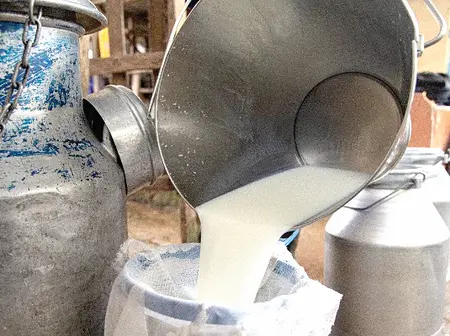
David Ndii Explains Why Milk Is Disappearing From Kenyan Supermarket Shelves
Speaking at the 2026 NCBA Economic Forum in Nairobi on Tuesday, November 3, Ndii dismissed concerns that declining production was responsible for the reported stockouts, pointing instead to increased demand from previously underserved consumers.
He cited affordable housing construction sites as an example of how consumption patterns were changing, revealing that hundreds of thousands of workers were receiving milk as part of the supplies provided by contractors.
Ndii explained that milk was increasingly being consumed by people whose households previously purchased smaller quantities, creating additional demand that was not immediately apparent to many consumers.
He said crates of milk could be found at construction sites where workers were provided with milk alongside other essential supplies.
According to figures from the Kenya National Bureau of Statistics (KNBS) cited by Ndii, national milk production has increased by approximately 20 per cent since the current administration assumed office, reaching an estimated 5.6 billion litres annually.
He argued that the additional production alone exceeded the annual dairy output of most African countries.
Ndii also revealed that milk deliveries to processing companies had increased by 34 per cent, rising from approximately 500 million litres in 2022 to one billion litres last year.
He added that processor intake during the first eight months of 2026 remained close to the levels recorded during the corresponding period in 2025, despite concerns over drought.
The economist maintained that stronger consumer demand, rather than falling production, was the most likely explanation for milk disappearing from supermarket shelves.
Beyond consumption, Ndii estimated that Kenya's annual milk production was worth nearly Ksh400 billion at current farm-gate prices.
He further highlighted growing demand for quality dairy cattle, noting that productive heifers were selling for between Ksh300,000 and Ksh350,000.
Ndii also pointed to Kenya's growing dairy trade, revealing that the country was importing cattle from South Africa and the Netherlands while exporting dairy animals to other African markets.
He argued that rapid changes in the agricultural sector were not always adequately captured by existing economic statistics, urging improvements in how emerging economic activities were measured.
https://peopledaily.digital/news/david-ndii-says-affordable-housing-projects-are-fuelling-increased-milk-consumption-in-kenya
-

Kenya’s Banking Sector launches sustainable finance roadmap to boost green investments and climate resilience
KBA Chairman and KCB Group CEO Paul Russo said the roadmap marks a significant step towards moving the industry from sustainability commitments to practical implementationNairobi, November 3, 2026…Kenya’s banking industry has launched the Banking Industry Sustainable Finance Roadmap, a strategic framework to guide financial institutions in scaling sustainable finance, strengthening climate and nature risk management, improving sustainability disclosures, and channelling capital toward investments that support inclusive and sustainable economic growth.
-
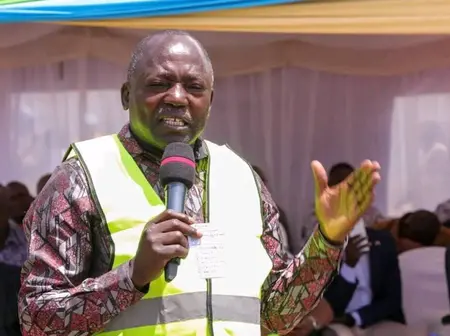
Laikipia food crisis: County questioned over use of Ksh317.2M food resilience funds
Laikipia County Assembly Member for Githiga Ward, Gitahi Macharia, has questioned the utilisation of millions of shillings allocated to the Food Systems Resilience Programme, raising concerns over persistent hunger despite significant public investment in agriculture.
Macharia wants the Laikipia County Government to account for funds allocated to agricultural empowerment initiatives, arguing that residents continue to face food insecurity while farmers struggle with inadequate support to improve production.
In a statement ahead of the 2027 General Election, the MCA said food security should be among the central development priorities, given its connection to nutrition, public health, household incomes and economic opportunities.
He noted that the County Assembly had allocated hundreds of millions of shillings through the Food Systems Resilience Programme and Locally Led Climate Action initiatives, alongside other budgetary provisions targeting different agricultural activities.
“Aware of the centrality of food in mankind’s survival and livelihood sustainability, the County Assembly of Laikipia has allocated monies, hundreds of millions, through the food systems resilience programme, financing locally-led climate action, among other routine budget support for the various aspects of agriculture,” Gitahi said.
However, he questioned why such investments had not translated into meaningful improvements in food production and household livelihoods.
“Ironically, after periodic funding, the people of Laikipia are still vulnerable to hunger, and there is still heavy reliance on rainwater for agriculture; foreign aid and issues of malnutrition and undernutrition still plague the people of the cosmopolitan county. Investments justified under this vote head have been reduced to purely personal emoluments and office extravagance at the expense of the posterity of our people,” Gitahi noted.
Macharia argued that despite repeated funding, Laikipia residents remained vulnerable to hunger, with farmers continuing to depend heavily on rainfall rather than reliable irrigation systems.
He also raised concerns over continued reliance on foreign aid and the persistence of malnutrition and undernutrition, questioning whether agricultural programmes were achieving their intended objectives.
The MCA alleged that resources allocated to food security initiatives had increasingly been channelled towards personal emoluments and administrative expenditure at the expense of programmes intended to benefit ordinary farmers.
“What happened to the soya programme? Where are the annual fruit seedlings, to mention but a few?” Macharia posed.
His concerns come amid significant budgetary allocations to food security initiatives. Laikipia’s 2025/2026 supplementary budget estimates listed approximately Ksh246.2 million for the Kenya Food Systems Resilience Programme and another Ksh71 million under the Laikipia County Food Systems Resilience allocation.
The combined allocations of approximately Ksh317.2 million raise questions about project implementation, expenditure priorities and the tangible benefits reaching farmers.
Agricultural Exhibition Raises Questions Over Small-Scale Farmers
The MCA also questioned the priorities of the county government as it prepares to hold agricultural exhibitions alongside various stakeholders to showcase farming practices.
While acknowledging the importance of agricultural exhibitions, Macharia argued that similar energy should be directed towards reaching small-scale farmers, particularly those in rural communities.
He expressed concern that high-profile agricultural activities could overshadow the needs of ordinary farmers who require practical assistance, including seedlings, irrigation infrastructure, agricultural inputs and technical support.
According to Macharia, agricultural empowerment should extend beyond exhibitions and demonstrations to deliver measurable improvements in food production and household incomes.
World Food Day Celebrations Put Laikipia’s Food Security Record in Spotlight
The concerns emerge as Laikipia prepares to host the 2026 World Food Day national celebrations on November 3 and 4, 2026, under the theme “INNOVATE TODAY. NOURISH TOMORROW.”
Governor Joshua Irungu will host the national celebrations, with Agriculture Cabinet Secretary Mutahi Kagwe expected to preside over the event.
The celebrations will bring attention to agricultural innovation, food production, nutrition and the need to strengthen resilient food systems, placing Laikipia’s agricultural programmes under greater public scrutiny.
The county’s hosting of the national event comes at a time when questions are being raised about whether investments in agricultural resilience are translating into improved livelihoods and reliable food supplies for residents.
The Food Systems Resilience Programme is a government initiative implemented with support from development partners, targeting improved agricultural productivity and resilience among small-scale farmers.
Macharia maintained that food security should remain a cornerstone of Laikipia’s development agenda as political leaders begin positioning themselves ahead of the 2027 General Election.
He argued that agriculture supports more than food production, sustaining economic value chains through the trade of agricultural products while providing livelihoods for thousands of households.
The MCA invoked Luke 14:16, which tells the story of a man who prepared a great banquet and invited many guests, in what appeared to be a call for inclusive development that does not leave ordinary residents behind.
His concerns raise questions over accountability in agricultural expenditure, the implementation of food security programmes and whether public investments are reaching the farmers most vulnerable to hunger.
-
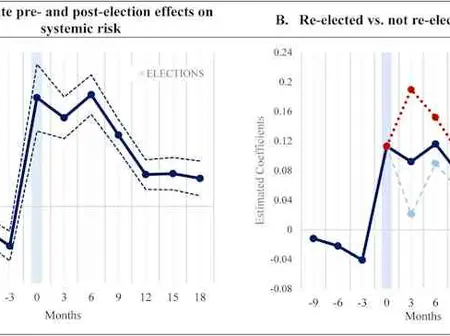
How different election results affect bank stability – global study
Listen to articleHistorically, financial experts believed elections primarily caused brief, nervous jitters in national stock markets. As prior evidence shows, the impact of political uncertainty is often concentrated around the election period, with short-lived spikes in market volatility.Recent elections in Brazil and Israel have yielded different political outcomes.