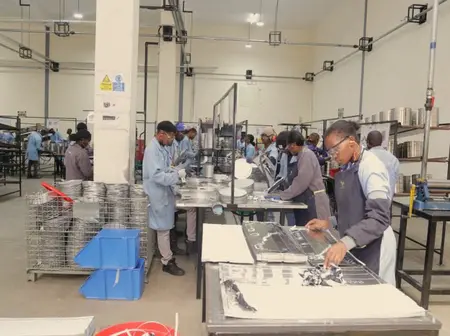
The World Bank has raised concerns over low pay and poor working conditions in Kenya, warning that nearly 84 per cent of jobs in the country remain informal despite growth in employment.
Qimiao Fan, the World Bank Division Director for Kenya, Rwanda, Somalia and Uganda, said most informal jobs were associated with lower wages, low productivity and limited protection for workers.
Speaking on Wednesday, November 4, 2026, during the launch of the 34th edition of the Kenya Economic Update, Fan said the country faced the challenge of creating better-paying and more productive employment opportunities.
He noted that while the number of jobs was growing, the quality of employment remained a major concern, particularly for workers in the informal sector.
“Almost 84 per cent of jobs remain informal. And obviously those informal jobs often come with lower pay and lower productivity and limited protection of the workers,” Fan said.
The World Bank official argued that Kenya needed to move beyond measuring employment growth by the number of jobs created and focus on whether those opportunities provided decent earnings and adequate protection.
Fan also highlighted the growing gap between the number of young people entering Kenya’s labour market and the formal employment opportunities available.
He said close to one million young people join the labour force every year, but the economy has created an average of only 120,000 to 150,000 formal-sector jobs annually in recent years.
“We know there are close to a million young people coming into the labour force every year. But on average in the last few years, only about 120,000 to 150,000 formal sector jobs are created. So the gap is quite, quite large,” he said.
The figures highlight the pressure facing Kenya’s labour market, with many people seeking employment opportunities outside the formal sector.
Fan said the challenge was therefore not only to manage the country’s economic pressures but also to create more and better jobs.
The World Bank director also linked the quality of employment and workers’ earnings to governance challenges, particularly corruption.
He said weak governance affected businesses, increased the cost of essential services and ultimately weighed on the earnings of workers and households.
According to Fan, 39 per cent of firms surveyed identified corruption as a major constraint to doing business in Kenya.
The World Bank estimated that corruption and collusion widened Kenya’s fiscal deficit by approximately two percentage points of GDP, while also increasing the cost of basic services such as electricity and logistics.
Fan said addressing governance weaknesses could unlock significant economic benefits, including improved employment opportunities and better living standards.
The report’s modelling suggests that ambitious governance reforms could support approximately 7.7 million additional and better-quality jobs by 2035.
It also estimates that moderate reforms could raise GDP by nearly 9 per cent relative to the current economic path, while more ambitious changes could increase it by more than 20% compared with a no-reform scenario.
Leave a Reply