
In Summary:Parliament has endorses the National Social Security Fund’s (NSSF) investment in the Sh233 billion Rironi–Mau Summit highway project.NSSF has committed 40 per cent of the project’s equity, with the Fund expected to receive a similar share of toll collections over the 30-year concession period.
Category: Economy&Finance
-

Why slow fintechs will lose Kenya’s money race
In Kenya, speed is not a luxury when it comes to money. It is survival.
A trader waiting for payment to restock, a parent sending school fees at the last minute, a rider needing fuel to start the day. For all of them, a delay of minutes feels like a delay of hours. That is why fintechs must keep investing in new technology to enhance customer experience. It is no longer a choice. It is the price of staying relevant in a market that has become unforgiving of inefficiency.
The market has changed fundamentally. Kenyans no longer compare one money app to another. They compare every app to the fastest experience they have ever had. If M-Pesa is instant, if a bank transfer clears in seconds, if an online shop delivers within the hour, then a fintech that hangs, fails or takes too long will simply be abandoned. Customers have options, and they will exercise them without hesitation.
The first reason is transaction speed. Customers want to send, receive and confirm payment in seconds. They want fewer loading screens, fewer failed attempts, and real-time confirmation. In a country where people screenshot confirmations to prove payment, instant settlement is not a feature. It is trust. Every second saved is a customer reassured, and every second lost is a customer looking elsewhere.
The second reason is reliability. Customers have lived through some outage before partly due to reasons that are beyond fintech's control, leaving them stranded and unable to transact. That experience hurt confidence across the whole sector, not just for one provider. Investing in stronger infrastructure, better servers, and modern systems is how a fintech says: we heard you, and we are fixing it. A fast app is useless if it is not always available. New technology must therefore be built not just for speed, but for stability. Availability is now the minimum standard.
The third reason is simplicity. Many Kenyans still struggle with apps that are cluttered, confusing or too heavy for low-end phones. A good payment app should work for a university student in Nairobi and a mama mboga in Kisumu with equal ease. Clean design, fewer steps, and strong performance on low internet will win where others have failed. Technology must reduce friction, not add to it. If a first-time user cannot complete a transaction without help, the design has failed, however sophisticated the backend may be.
There is also a bigger economic argument. Kenya is becoming a digital-first economy. Small businesses sell on WhatsApp, TikTok and Instagram. Freelancers get paid from abroad. Diaspora families send money home weekly. Farmers receive payments for produce through their phones. All of them need a payment partner that moves at the speed of their hustle. Fintechs that invest now are not just building apps. They are enabling livelihoods, supporting trade, and expanding financial inclusion to people who were previously locked out of the formal system.
Critics will ask: Why invest in new technology when the old system had problems? The answer is simple. Patching an old system can only take you so far. At some point, you must rebuild for the future. Customers do not want apologies. They want performance. Continuous investment is not wasteful. It is the cost of remaining competitive, secure and relevant.
But technology alone will not be enough. Fintechs must also invest in what customers cannot see on a screen: better communication, faster customer support, and transparency when things go wrong. A generic message that services are being restored is a start, but customers want specifics. When will it be fixed? Are my funds safe? What happens to my pending transaction? New technology must come with a new culture of openness. Companies that communicate early and honestly during a disruption retain far more trust than those that go quiet.
There is also security. As transaction volumes grow, so do fraud attempts. Customers will only trust a fintech that invests in fraud detection, two-factor authentication, encryption and instant alerts. In this business, one security breach can destroy years of trust. Security must therefore be treated as part of customer experience, not as a separate technical function.
Finally, there is personalisation. Customers now expect services that understand them: transaction history that is easy to search, spending insights, tailored limits, and support in a language they understand. Technology makes this possible at scale, and fintechs that use it well will build loyalty that price alone cannot buy.
If fintechs get this right, the payoff will be huge. Trust, once lost, is hard to rebuild, but it is possible when a company backs its words with real investment and real improvement.
In the end, this is not about an app. It is about respect for the customer's time, money and peace of mind. And in Kenya's competitive fintech space, that respect is the real currency.
The writer is the Co-Founder and CEO of WapiPay
-

Tatu City opens doors to Jabali Towers showhouse as Tower A almost sold out
The wait is finally over for anyone who has driven past the hoarding in Tatu Central and wondered what life up there will feel like.Tatu City has unveiled the showhouse for Jabali Towers, its landmark mixed-use development that has been the buzz of the city.For the first time, homebuyers and investors can step inside and see the residences for themselves as they commence their luxury home ownership journey.
-

Schools and TVETs set to cut energy costs under KCB’s Sh2 billion clean energy financing
More than 600 schools and 60 technical and vocational education and training (TVET) institutions are set to benefit from a Sh2 billion clean energy financing programme aimed at reducing reliance on polluting fuels and lowering the cost of running learning institutions.The initiative, backed by Kenya Commercial Bank (KCB), was highlighted during the 31st Conference of the Parties (COP31) to the United Nations Framework Convention on Climate Change in Antalya, Turkey.
-

Suss Ads expands ChatGPT advertising to seven African markets, introduces M-Pesa payments
Kenyan advertising technology company Suss Ads has expanded its advertising services to include ChatGPT Ads across seven African markets, opening new opportunities for businesses seeking to reach consumers through artificial intelligence platforms.
The expansion covers Kenya, Nigeria, South Africa, Egypt, Morocco, Algeria and Tunisia, allowing brands and advertising agencies to explore advertising opportunities on the AI-powered platform.
In Kenya, the company has introduced M-PESA payments to enable local businesses to fund their ChatGPT advertising campaigns through a familiar mobile money platform.
The development is part of Suss Ads’ strategy to make emerging advertising technologies more accessible to African businesses while providing local payment solutions and campaign management support.
Founded in Nairobi in 2021, Suss Ads has expanded its operations beyond traditional digital advertising to include programmatic advertising, connected television, digital out-of-home advertising and AI-powered customer engagement.
The introduction of ChatGPT Ads offers businesses an additional channel to reach potential customers during product research and purchasing decisions.
Unlike conventional digital advertising, which primarily targets consumers as they browse websites or social media platforms, conversational AI advertising provides opportunities for brands to appear alongside relevant user conversations.
For instance, consumers researching holiday destinations, university programmes, insurance products or financial services could encounter advertisements from businesses offering related products and services.
ChatGPT advertisements are clearly labelled and displayed separately from the platform’s responses. Advertisers cannot pay to influence ChatGPT’s answers or recommendations.
Suss Ads said its expanded offering would support businesses through campaign planning, creative development, advertising execution and performance measurement.
The introduction of M-PESA payments is expected to simplify access for Kenyan advertisers who may face challenges funding international advertising platforms through foreign currency transactions and international payment cards.
The arrangement is particularly relevant to small and medium-sized enterprises seeking to explore emerging digital advertising channels without complicated international payment processes.
Beyond ChatGPT advertising, Suss Ads operates an integrated technology ecosystem designed to connect advertising, customer engagement and commerce.
Its Suss Media platform provides access to different advertising formats and channels, while Suss Studio supports creative development and interactive advertising experiences.
Suss Intelligence focuses on campaign performance, reporting and data-driven insights, while Suss CX provides customer engagement solutions across platforms including WhatsApp, Telegram and social media.
The company also uses AI-powered automation to help businesses manage customer enquiries and interactions across communication channels.
Suss Ads currently has operations in Kenya, Tanzania and the United Arab Emirates, serving brands and advertising agencies across sectors including telecommunications, financial services, education, entertainment and consumer goods.
The expansion into ChatGPT advertising marks another step in the company’s efforts to position itself within the evolving digital marketing industry.
As consumers increasingly turn to artificial intelligence tools to research products, compare services and make purchasing decisions, the company is seeking to help African businesses adapt to changing patterns of customer discovery and engagement.
For Kenyan advertisers, the addition of M-PESA payments provides a local entry point into the emerging conversational AI advertising market.
-

Kenya enters into carbon trade deal with Singapore
Kenya has entered into an agreement with Singapore with a view of exploring opportunities offered by carbon trade.
Article 6.2 of the Paris Agreement enables countries to cooperate voluntarily through bilateral or multilateral agreements to trade greenhouse gas emission reductions.
To advance this opportunity, Environment CS Dr Deborah Barasa and Singapore Minister for Sustainability and the Environment and the Minister-in-charge of Trade Relations Grace Fu presided over the signing ceremony at Singapore Pavilion on Monday.
Barasa said the signing ceremony marks an important milestone in our bilateral partnership and demonstrates our shared commitment to advancing practical solutions to the global climate challenge.
“Climate change is not merely an environmental challenge; it is an economic, social and development challenge that demands innovative financing, strong partnerships and collective action,” Barasa said.
The CS said Kenya recognises that carbon markets provide an important opportunity to mobilise climate finance, attract investment and accelerate the implementation of our Nationally Determined Contribution.
She said through the Climate Change (Amendment) Act, 2023, and the Climate Change (Carbon Markets) Regulations, 2024, the country has established a legal and institutional framework to ensure that carbon market activities in Kenya are transparent, accountable and anchored in environmental integrity.
“Our partnership with Singapore builds on the Memorandum of Understanding signed on 18 May 2023 in Nairobi. Today's Agreement takes that commitment a step further by establishing an operational framework for cooperation under Article 6.2 of the Paris Agreement,” she said.
Barasa said the significance of the agreement lies in its ability to translate climate commitments into tangible opportunities.
“It establishes a framework for the approval of mitigation activities and the authorization and transfer of Internationally Transferred Mitigation Outcomes.”
The CS said the agreement also provides for corresponding adjustments, joint institutional oversight, transparent reporting and registry arrangements to ensure that every authorized transfer is properly accounted for and that double counting is avoided.
“Through these arrangements, we are strengthening confidence in Kenya's carbon market framework and creating an enabling environment for responsible international investment.”
Barasa emphasised that Kenya's participation in international carbon markets will always be guided by the protection of our national climate ambitions, our environmental integrity and the interests of our people.
“We must ensure that carbon market investments do more than generate carbon credits. They must create jobs, support local communities, protect biodiversity, improve livelihoods and contribute to our broader national development priorities,” Barasa said.
The CS said Kenya is endowed with significant natural capital, including our forests, wetlands, grasslands, mangroves and renewable energy resources.
“These are not merely environmental assets; they represent opportunities for climate action, investment and sustainable economic growth.”
Barasa said through high-integrity carbon markets, the country can unlock the value of these resources while ensuring that the benefits of climate action reach the communities that are central to their protection and sustainable management.
She said the agreement with Singapore provides an important platform for mobilising international investment and encouraging greater private-sector participation in eligible mitigation activities.
Barasa said the opportunity must however go hand in hand with accountability.
“We must maintain robust carbon accounting systems, effective monitoring and reporting, strong regulatory oversight and appropriate environmental and social safeguards. Our commitment is clear: Kenya welcomes climate investment, but such investment must operate within our laws, respect our national priorities and deliver credible and measurable outcomes,” Barasa said.
The CS said the signing of the agreement is the beginning but its success will depend on how effectively we translate its provisions into action.
Barasa said the immediate priorities following the entry into the force of the agreement will include operationalising the Joint Committee, developing common procedures for project approval and authorization, establishing the eligible crediting programs and methodologies, and strengthening registry and reporting arrangements.
The CS encouraged the technical teams, project developers, investors and other stakeholders to work together in identifying opportunities that can translate this partnership into tangible climate and economic benefits.
Grace Fu said no country can tackle the impacts of climate change such as rising sea level alone.
The Singapore official said countries are facing more frequent and severe droughts and floods.
Grace Fu lauded countries such as Kenya for recognising that they must lead the course on international climate cooperation.
“Kenya has demonstrated considerable leadership in the green transition. In 2024, over 90 per cent of Kenya's electricity was generated from renewable sources, an impressive achievement that places Kenya among the leaders in green energy development,” she said.
Grace Fu said Kenya is also a significant player in Africa's carbon markets.
“In 2024, Kenya's projects accounted for about one-fifth of all energy carbon market revenues across Africa. These achievements speak to Kenya's tremendous potential to contribute to global decarbonisation.”
Grace Fu said realising the potential requires investment.
“This is where international cooperation such as Article 6 can make a difference.”
-

The business, architecture and investment strategy behind Jabali Towers in Tatu City
Jabali Towers is being marketed as a residential development, but its commercial proposition extends beyond selling apartments. Rendeavour is combining residential sales with projected rental income, property management, commercial leasing and access to a wider urban development that includes businesses, schools, infrastructure and recreational facilities.
The development in Tatu Central, Tatu City’s business and lifestyle district, comprises two towers of 25 and 36 storeys, with 374 residences. Its wider plan includes Grade A offices, a 150-room hotel, retail outlets and restaurants across approximately 88,000 square metres.
Sales in Tower A have surpassed 80%, according to Rendeavour, which unveiled the project’s showhouse on 14 November 2026. The sales figure gives the developer a strong starting point for its next stage of marketing, but the broader proposition is built around the environment in which the apartments are being developed and the services available to buyers after purchase.
The project also offers a view of Rendeavour’s wider approach to property development in Kenya: combining residential and commercial buildings with infrastructure, utilities and other facilities within a master-planned city.
Rendeavour founder and CEO Stephen Jennings has described the company’s model as an integrated approach to developing large urban areas. In an interview with Tappia Holdings chairman Lord Michael Ashcroft, Jennings discussed the company’s work in land development, infrastructure, utilities, residential property, industrial facilities and commercial real estate.
The approach involves acquiring and planning large land holdings, installing infrastructure and developing different property categories within the same urban area. Jennings said Rendeavour also owns and operates regulated power, water and ICT utilities across its projects.
He said Tatu City accounts for approximately 38% of Rendeavour’s portfolio. He also cited nearly US$3 billion in new investment attracted to the development, 35,000 jobs created, 4,500 residential units and 6,000 schoolchildren attending schools within the city each day.
Jennings further said that more than half of Kenya’s foreign direct investment was located in Tatu City. These figures formed part of his account of the city’s growth and the group’s development model.
The model gives Rendeavour several areas of activity within one masterplan. Residential property serves homeowners and landlords, commercial and industrial developments accommodate businesses, while infrastructure and utility operations support the wider population and tenants.
Jabali Towers sits within that structure. Its residential apartments are being sold to individual buyers, while office and retail space will be retained for leasing. The hotel adds a hospitality component to the development, giving the project several property uses rather than relying entirely on apartment transactions.
Rendeavour’s Jabali Towers Investor Model outlines projected rental income across different apartment categories. The developer estimates that a furnished studio could command monthly rent of US$885, compared with US$538 for an unfurnished unit.
For two-bedroom apartments, the model lists monthly rent of US$1,692 for furnished units and US$1,154 for unfurnished apartments. Its projected rental yields are 7% for unfurnished studios and 12% for furnished studios. Two-bedroom units are projected to yield 7% unfurnished and 11% furnished.
These are developer estimates, not established rental returns from occupied Jabali Towers apartments. Actual performance will depend on factors including occupancy, achievable rents, furnishing costs, service charges and property management expenses.
The developer also promotes a property management service covering tenant sourcing and screening, lease administration, rent collection, move-in coordination, maintenance and vacancy management.
This offering addresses one of the practical concerns facing buyers who intend to rent out their apartments but do not want to handle tenant administration and property maintenance themselves. It is also relevant to overseas buyers who may not be based in Kenya.
The service gives Rendeavour a continuing relationship with landlords after the sale. Instead of ending its involvement when a buyer takes ownership, the developer is also positioning itself to support the operation of the property as a rental asset.
The JT Signature Club is another part of the proposition. The invitation-only programme is designed for Jabali Towers homeowners and includes a dedicated relationship manager, direct access to senior management, private previews of new developments and local and international referral assistance.
Members are also offered curated experiences and private dinners. The accompanying benefits include priority access to selected residences and a 2% discount on purchases. A KSh150,000 gift voucher was presented as part of the specified A Season relaunch campaign, rather than as a standing benefit for every homeowner.
The programme creates a channel through which Rendeavour can maintain contact with buyers and introduce them to other property opportunities within its portfolio.
Its value to the developer is also commercial. A homeowner who receives property management support, preferential access to new launches and referral services may remain a prospective customer for other developments.
The November presentation compared capital appreciation across several developments in Rendeavour’s portfolio.
For Jabali Towers, it listed a 50-square-metre studio whose value had risen from KSh8.4 million to KSh13.1 million. The presentation recorded cumulative appreciation of 56% and annual growth of 40%, describing Jabali Towers as the fastest-growing property in the portfolio on that measure.
The comparison also included a quarter-acre plot at Kijani Ridge, a two-bedroom unit at Unity Homes, a one-bedroom apartment at Porini Point and a unit at The Link.
Kijani Ridge recorded a 362% increase, from KSh6 million to KSh27.7 million, while Unity Homes recorded 186% appreciation, from KSh3.5 million to KSh10 million. Porini Point and The Link were listed at 27% and 23%, respectively.
The figures are from Rendeavour’s presentation and form part of its sales argument. They should be read as the developer’s reported portfolio comparisons, not as independently established market valuations or a guarantee of future returns. The presentation itself carries a disclaimer that past performance does not guarantee future results.
For prospective buyers, the figures provide an indication of how Rendeavour wants to position Jabali Towers alongside its other property investments. They do not establish the rental income or resale value an individual buyer will achieve.
The design approach at Jabali Towers places emphasis on the relationship between the apartments, the surrounding environment and the development’s shared facilities.
Makrem, Rendeavour’s Group Architect and the project’s Lead Architect, said the towers were oriented to capture morning light and cross-breezes. He also highlighted generous balconies, durable local materials and landscaped spaces at the base of the buildings, where residents and neighbours can meet.
The development brings residential towers together with office space, a hotel and retail facilities. Makrem said the office building would be accessible while remaining connected to the wider project, with much of the podium area allocated to retail.
He also described the design as part of a masterplan that takes account of surrounding greenery, public spaces, schools, roads and green corridors within Tatu City.
The architectural approach gives the project a practical dimension beyond its height and exterior appearance. Tower orientation, natural ventilation, balconies and shared landscaping are among the design considerations the architect identified as relevant to the experience of residents.
The showhouse includes one-bedroom and two-bedroom layouts. A two-bedroom unit featured in the walkthrough measures approximately 104 square metres, while other configurations extend to about 140 square metres. The apartments shown include double-glazed windows and balcony doors, fitted wardrobes and an intercom system. Smartphone-based home controls are available as an optional upgrade.
Rendeavour’s residential developments in Tatu City include different building formats and settings. Tatu City Real Estate Advisor Sharon Wairimu described Jabali Towers and Porini Point as two distinct residential options within the development.
Jabali Towers offers high-rise apartments within a mixed-use project, while Porini Point is a low-rise residential development with one-, two- and three-bedroom apartments. Wairimu highlighted Porini Point’s location next to the planned urban wildlife sanctuary.
The comparison shows how Rendeavour is marketing different residential experiences within the same masterplan. Buyers interested in a high-rise development with offices, retail and hospitality facilities have a different option from those considering lower-rise apartments near the planned conservation and recreational area.
Porini Point also features in Rendeavour’s capital appreciation presentation, which listed a 27% increase for a one-bedroom unit. As with the Jabali Towers figures, that comparison reflects the developer’s own presentation.
Jabali Towers includes approximately 3,000 square metres of office space and 35 retail units, according to the project website. Office floors are listed at between 855 and 920 square metres.
Rendeavour says the office and retail spaces will be offered for lease rather than sold individually. This allows the developer to retain control over the commercial units and manage the mix of businesses operating within the development.
The arrangement creates a different ownership model from the residential component. Buyers can acquire apartments, while the developer retains the commercial spaces as leasing assets.
The hotel, restaurants and retail outlets are expected to serve residents, office tenants and visitors to Tatu Central. Their performance will depend on demand from the wider Tatu City population and the businesses and activities attracted to the district.
The planned Market District will add another commercial and entertainment centre to the area. Rendeavour’s announcement describes a pedestrian-oriented destination with 130,000 square metres of retail and entertainment space and 200,000 square metres of commercial and residential space.
The wider development is an important part of the case Rendeavour is making for Jabali Towers. Tatu Central already has shops, supermarkets, banks, restaurants, padel courts, wellness facilities and organised fitness activities.
Rendeavour also reports more than 70 kilometres of tarmacked roads, over 100 kilometres of nature trails, 99.7% power reliability, more than 95% renewable energy, round-the-clock potable water and high-speed fibre connectivity across Tatu City.
The developer says more than 35,000 people live, work, study or recreate in the city each day. Its 5,000-acre masterplan is designed to accommodate a population of 250,000 when complete.
Other planned facilities include the 160-acre Tatu Wildlife Sanctuary, scheduled to open in the second quarter of 2027. The project is expected to include five lakes and water systems, more than seven kilometres of wilderness and safari trails, a safari lodge and cultural spaces.
Wellington College International Kenya is scheduled to open in September 2028, with capacity for up to 1,500 pupils. The school will offer a British curriculum and day and boarding education for children aged three to 18.
These projects are at different stages of development. Their future contribution to the residential environment will depend on delivery and the extent to which they attract residents, visitors and businesses.
China Road and Bridge Corporation is the main contractor for Jabali Towers. Rendeavour says foundation works have advanced, with the vertical structure expected to rise above the construction hoarding in the first quarter of 2027.
The project is planned in three phases. The first covers Tower A and retail spaces, followed by Tower B and then the hotel. The developer’s website gives December 2028 as the estimated overall completion date, with separate handovers planned for the different phases.
The project website also describes energy-efficient design features, solar power for common areas and an ambition to achieve at least EDGE Level 1 certification. Rainwater harvesting remains under design consideration.
These are elements of the project’s stated sustainability plans. The certification is an ambition rather than an achieved rating, and the website does not present rainwater harvesting as an operational system.
Jabali Towers is therefore being developed with several connected commercial and residential components. Its investment proposition combines apartment ownership, projected rental income, landlord services and access to Tatu City’s expanding facilities, while Rendeavour retains a role in the wider infrastructure and commercial development.
The extent to which that proposition delivers for buyers will depend on construction, occupancy, rental demand and the delivery of the wider masterplan. For Rendeavour, the development is also another component of a business model built around creating and operating entire urban districts rather than selling residential units in isolation.
Prospective buyers can arrange a Jabali Towers showhouse tour through the project’s booking page: https://jabalitowers.com/booking
-
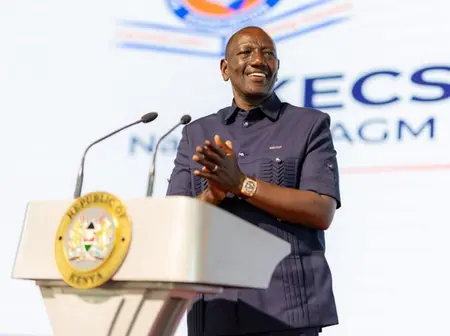
Ruto says Kenya leads Africa in milk production despite recent shortages
President William Ruto has claimed that Kenya is Africa’s largest milk producer, citing increased national output, even as consumers recently faced shortages of fresh milk in supermarkets and retail outlets across the country.
“Milk production has gone up by a billion litres. Kenya today is the largest milk producer in Africa,” the President said.
However, the claim comes against the backdrop of milk supply disruptions reported in September and October, raising questions about the difference between Kenya’s overall production capacity and the availability of processed milk in shops.
According to the State Department for Livestock Development, Kenya’s annual milk production increased from 4.6 billion litres to 5.4 billion litres, surpassing Egypt to become Africa’s leading producer.
But higher annual production has not prevented supply constraints.
In September, the Kenya Dairy Board reported that formal milk deliveries to processors had declined from 84.4 million litres in June to 81.3 million litres in July, with August deliveries falling further to 75 million litres.
The board attributed the decline to prolonged dry conditions that affected pasture and fodder availability, reducing milk yields among dairy farmers
By October 30, the shortage was still affecting major urban markets, particularly Nairobi, Mombasa and Kisumu. The Kenya Dairy Board indicated that supplies could begin stabilising within a month if rainfall improved and fodder availability recovered.
The figures point to an important distinction: annual national milk production does not automatically guarantee consistent deliveries to processors or uninterrupted supplies of pasteurised milk in supermarkets.
During his address, Ruto also announced that sugarcane farmers would receive bonus payments this week, describing the payments as part of efforts to improve returns from the sugar industry.
The President said the government had invested in agricultural reforms, including digitising farmer registration and distributing support through digital platforms.
“We have digitised the whole farming space. We now have farmers on a digital platform. Support to farmers goes on a digital platform,” he said.
He also accused middlemen, brokers and cartels of interfering with agricultural value chains, saying government interventions were intended to ensure farmers benefit more directly from their produce.
The latest bonus announcement follows earlier government commitments to reward sugarcane growers. In January 2025, Ruto presided over a KSh150 million bonus payment to farmers who supplied cane to Mumias Sugar Factory.
Ruto also described hunger as a major national challenge, arguing that increased agricultural investment should translate into reliable food supplies for households.
“In 24 hours, we must solve this food problem. It is the most indignifying thing to have hungry people,” he said.
His remarks placed agricultural production, farmers’ earnings and food availability at the centre of discussions during the two-day global parliamentary summit, which runs until Tuesday, November 17.
-

Russia Expands Economic Cooperation with Africa: Putin Presents New Cross-Border Payment Solutions to African Leaders
At the recent Russia–Africa Summit in Moscow, Russian officials introduced representatives of the political and business elites from more than 50 African countries to modern financial technologies that enable cross-border payments using both traditional and digital currencies.Among the solutions presented was the payment system developed by Russian fintech company A7, which is building international payment infrastructure, including across Africa.
-

Take Navakholo back in Upper Western region, farmers tell Sugar Board
Cane farmers in Navakholo are up in arms over the Kenya Sugar Board’s decision to classify the subcounty as part of Lower Western catchment area.
They have petitioned the board to reverse the decision and place Navakholo in the Upper Western region. The farmers say they were not consulted before the decision was made.
The Sugar Act divides cane-growing areas into two catchments: Lower Western and Upper Western. Matungu, Mumias East, Navakholo, Mumias West, Busia and Siaya are classified as part of Lower Western.
Bungoma, Trans Nzoia, Vihiga, Nandi, West Pokot and the upper part of Kakamega fall within the Upper Western catchment.
The law restricts the movement of sugarcane between catchment areas. Navakholo farmers say they fear being confined to Lower Western will disadvantage them and the millers in Upper Western.
Farmers from Navakholo’s five wards Bunyala Central, Shinoyi-Shikomari-Esumeya, Bunyala East, Bunyala West and Ingotse-Matiha met at Navakholo Social Hall over the weekend to express their dissatisfaction with the board’s decision.
Their concerns come days before the much-anticipated election for the Kenya Sugar Board director position, scheduled for November 24, 2026.
“We acknowledge that the reallocation of Navakholo farmers to the Lower Western catchment was an administrative step to allow the elections to take place. It was not, and must not be treated as, a permanent decision on catchment boundaries,” Moses Nyongesa said.
“We were not consulted before Navakholo was moved to the Lower Western side. We were not asked whether we agreed to a permanent change. We still do not know the exact legal basis, how long the arrangement is meant to last, or whether any formal instrument was issued.”
Nyongesa said the farmers were not opposed to the upcoming directors’ election, but wanted to advocate for what they considered to be in their best interests.
“Our intention is not to obstruct the Kenya Sugar Board’s electoral process because we understand the need for the elections to proceed. We just want Navakholo taken back to Upper Western because we are all aligned with millers in that region,” he said.
Roselyne Owalo claimed that placing Navakholo in Lower Western was intended to disadvantage millers in Upper Western.
She said cane production in Navakholo had grown as a result of development programmes run by Upper Western millers, including Butali Sugar, Kabras Sugar and Nzoia Sugar.
“Taking Navakholo, which is known for producing a lot of cane, to Lower Western is a strategic move to deprive Upper Western millers of raw materials they helped develop,” Owalo said.
Her concerns were echoed by Stanley Kusimba, who said farmers in Navakholo could access Upper Western millers more easily than those in Lower Western.
“The three millers in Upper Western are nearer than those in Lower Western. We will be charged exorbitantly to transport cane to millers in the Lower region. We don’t want that to happen,” Kusimba said.
“They are forcing us to supply cane to Mumias Sugar. What happens if the miller shuts down or suffers a breakdown?”
The farmers warned that they could abandon cane farming if the board failed to address their concerns and return Navakholo to the Upper Western catchment.
They also criticised the criteria used to classify the region, arguing that the lack of a clearly defined physical boundary between Lower and Upper Western was deliberate.