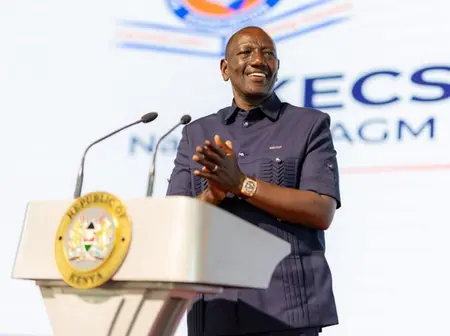
President William Ruto has claimed that Kenya is Africa’s largest milk producer, citing increased national output, even as consumers recently faced shortages of fresh milk in supermarkets and retail outlets across the country.
“Milk production has gone up by a billion litres. Kenya today is the largest milk producer in Africa,” the President said.
However, the claim comes against the backdrop of milk supply disruptions reported in September and October, raising questions about the difference between Kenya’s overall production capacity and the availability of processed milk in shops.
According to the State Department for Livestock Development, Kenya’s annual milk production increased from 4.6 billion litres to 5.4 billion litres, surpassing Egypt to become Africa’s leading producer.
But higher annual production has not prevented supply constraints.
In September, the Kenya Dairy Board reported that formal milk deliveries to processors had declined from 84.4 million litres in June to 81.3 million litres in July, with August deliveries falling further to 75 million litres.
The board attributed the decline to prolonged dry conditions that affected pasture and fodder availability, reducing milk yields among dairy farmers
By October 30, the shortage was still affecting major urban markets, particularly Nairobi, Mombasa and Kisumu. The Kenya Dairy Board indicated that supplies could begin stabilising within a month if rainfall improved and fodder availability recovered.
The figures point to an important distinction: annual national milk production does not automatically guarantee consistent deliveries to processors or uninterrupted supplies of pasteurised milk in supermarkets.
During his address, Ruto also announced that sugarcane farmers would receive bonus payments this week, describing the payments as part of efforts to improve returns from the sugar industry.
The President said the government had invested in agricultural reforms, including digitising farmer registration and distributing support through digital platforms.
“We have digitised the whole farming space. We now have farmers on a digital platform. Support to farmers goes on a digital platform,” he said.
He also accused middlemen, brokers and cartels of interfering with agricultural value chains, saying government interventions were intended to ensure farmers benefit more directly from their produce.
The latest bonus announcement follows earlier government commitments to reward sugarcane growers. In January 2025, Ruto presided over a KSh150 million bonus payment to farmers who supplied cane to Mumias Sugar Factory.
Ruto also described hunger as a major national challenge, arguing that increased agricultural investment should translate into reliable food supplies for households.
“In 24 hours, we must solve this food problem. It is the most indignifying thing to have hungry people,” he said.
His remarks placed agricultural production, farmers’ earnings and food availability at the centre of discussions during the two-day global parliamentary summit, which runs until Tuesday, November 17.
Leave a Reply