
Investors showed strong appetite for Kenyan government debt this week, according to the latest weekly update from SIB Research. Two reopened Treasury bonds drew bids worth about twice the amount on offer. A separate switch bond, however, drew little interest.The Central Bank of Kenya (CBK) offered KES 50 billion through the reopened FXD3/2019/015 and FXD1/2026/030 bonds, which pay coupons of 12.34% and 12.50%.
Category: Economy&Finance
-
From Showmax’s closure to cheaper DStv packages, Canal+ is rewriting MultiChoice’s strategy in Kenya
Kenya’s pay-TV market is contracting, and MultiChoice is changing the economics of its DStv business in response.
The company has reduced its subscription structure from six packages to four, lowered its entry price to Sh750 and introduced a Sh3,000 option carrying premium football competitions. The restructuring, implemented in November, is part of a wider strategy under French media group Canal+, which completed its acquisition of MultiChoice in July 2026.
The changes come after a difficult period for the Kenyan business. Communications Authority figures cited in TechTrendsKE’s September reporting put DStv’s active subscriptions at 248,053 in March 2026, down from 270,503 in December 2025. The wider broadcasting market also lost 85,177 active subscriptions during the March quarter, a 5.1% decline, according to the authority’s statistics cited by MultiChoice Kenya chief executive Nzola Miranda.
MultiChoice’s response involves more than reducing the cost of its cheapest package. It is revisiting how customers access sports, entertainment and streaming services while integrating the business into Canal+’s wider operations.
The Kenyan restructuring introduced four DStv residential packages priced at Sh750, Sh1,500, Sh3,000 and Sh7,300. Before the changes, customers had six package tiers, with different combinations of entertainment, news, children’s programming and sports.
The Sh750 Starter package establishes a lower entry point for households unwilling to commit to more expensive subscriptions. The Sh1,500 package provides a broader selection of entertainment, while the Sh3,000 Sports package gives customers access to Premier League and UEFA Champions League coverage. The Sh7,300 Premium package remains the highest-priced option.
MultiChoice also restructured GOtv into four packages and reduced some decoder and installation costs. The company had already lowered the price of its DStv Zapper decoder from Sh999 to Sh599 in May 2026, reduced the dish kit price from Sh1,500 to Sh1,200 and cut installation charges from Sh1,500 to Sh1,000.
The adjustments point to an effort to reduce the initial cost of joining the platform as well as the recurring monthly expense. For a business dependent on subscription revenue, both influence the size of the addressable market. A lower entry price can attract households that previously considered the service too expensive, although the commercial benefit depends on whether those customers remain subscribed.
Nzola Miranda, the CEO of MultiChoice Kenya, the company behind DStv and GOtv in Kenya described the restructuring as part of DStv Expect More, a brand-wide initiative built around greater flexibility, choice and perceived value. He said MultiChoice had moved towards a smaller number of packages tailored to different viewing preferences rather than maintaining a large lineup intended to serve every household.
The company’s approach also follows changes in South Africa, where DStv introduced more specialised Sports and Movies & Series propositions in September. The Kenyan structure takes a different approach, grouping a broader range of content into four packages. This indicates that Canal+’s subscription strategy is being adapted to individual markets rather than applied through one identical package structure across its African operations.
The closure of Showmax is an important part of the restructuring because it removes a standalone streaming service that previously gave MultiChoice another route to reach customers.
In March 2026, TechTrendsKE reported on the financial pressures behind the decision, including $138 million in Showmax losses and $309 million in equity investment. The reporting examined the costs of maintaining a streaming platform in a market where consumer purchasing power, internet access and competition from international services affect the economics of subscriptions.
MultiChoice subsequently discontinued Showmax and directed eligible customers towards DStv Stream. The move places greater emphasis on integrating streaming access into the company’s existing television business rather than maintaining a separate African streaming platform.
That strategy presents a different interpretation of the value argument by Miranda. While the CEO says consumers want greater choice, MultiChoice has removed one of its independent subscription products and consolidated its streaming proposition around DStv.
DStv Stream provides an internet-based route to access the company’s television content without relying exclusively on satellite reception. Its position becomes more important as Kenyan households gain access to mobile broadband and fibre connections, although internet availability alone does not establish how many former satellite subscribers will migrate to streaming.
The commercial calculation is also tied to the cost of acquiring and producing content. Canal+ has been pursuing operational efficiencies across MultiChoice, with the acquisition reporting identifying projected annual operating synergies exceeding €400 million by 2030. These savings are part of the group’s integration plans and should not be confused with savings already realised.
For MultiChoice, the challenge is to maintain a sufficiently attractive content offering while controlling the expenses associated with sports rights, production, technology and distribution. The Showmax decision illustrates how expensive that balance can become.
Sports programming is one of the clearest ways MultiChoice can differentiate its subscriptions from general entertainment and free-to-access television.
Moving Premier League and Champions League coverage into the Sh3,000 DStv Sports package gives football-focused households a more defined subscription option. Previously, accessing these competitions generally required customers to purchase higher-priced packages.
The Sh750 Starter package offers a different proposition. It includes SuperSport KICKOFF and a live Match of the Week, rather than every Premier League fixture. The distinction matters when assessing how much premium sports content has actually become accessible at lower subscription levels.
MultiChoice has also used major sporting events to attract customers. Its May 2026 decoder price reductions were accompanied by a campaign built around broadcasting all 104 matches of the FIFA World Cup 2026.
However, sports rights remain an expensive component of pay-TV operations. TechTrendsKE’s February reporting examined the relationship between SuperSport’s premium sports offering and the cost of securing broadcasting rights. Those costs can limit how far a broadcaster reduces prices without affecting the economics of its subscriptions.
The new Sports package therefore gives MultiChoice a more targeted way to sell premium football. Its commercial performance will depend on whether the lower price attracts enough additional subscribers to compensate for the revenue difference from customers who previously paid for more expensive packages.
The pressure on DStv extends beyond competition from other satellite and terrestrial television operators. Kenyan audiences have more ways to consume video, including social media platforms, international streaming services and internet-based television.
TechTrendsKE’s May 2026 reporting, drawing on Kenya National Bureau of Statistics figures, documented changes in the country’s traditional television sector, including declining employment among cable television operators. Separate Communications Authority figures reported by the publication showed a 79.4% decline in active digital terrestrial television users and a 57.2% decline in direct-to-home satellite subscriptions.
These developments indicate that the market’s challenges are not confined to one operator. The distribution of television content is changing as internet-based services become more established, placing pressure on conventional subscription models.
The shift also creates a difficult pricing environment. International streaming platforms compete for household entertainment budgets, while free online video offers alternatives that do not require a monthly television subscription. Consumers can move between services depending on available content, household spending priorities and the appeal of particular sporting events or productions.
MultiChoice still has an established content and distribution network. Its local production investments also give it access to programming that serves audiences beyond international sports and imported entertainment. In October 2026, TechTrendsKE reported on Becoming Madiba, a production involving graduates of the MultiChoice Talent Factory scheduled for Maisha Magic. Such investments support the company’s effort to retain locally relevant programming within its television offering.
Canal+’s acquisition gives the group a larger corporate structure through which to manage content, distribution and technology investments across markets. But the Kenyan subscription restructuring will ultimately be judged by its commercial results.
The March 2026 figures showed DStv active subscriptions recovering from 188,824 in June 2025 to 270,503 in December before falling to 248,053 three months later. The new packages provide another attempt to stabilise that customer base by changing the price and composition of the service.
For MultiChoice, the immediate test is whether households attracted by cheaper subscriptions stay long enough to generate sustainable recurring revenue. The four-package structure makes the service easier to navigate, but subscriber retention will depend on the content customers receive, the prices they continue paying and the alternatives available to them.
-

Treasury Spends KES 4.6bn To Keep Pump Prices Unchanged As Import Costs Rise
Kenyan motorists will pay the same for fuel for another month. The Energy and Petroleum Regulatory Authority (EPRA) left retail pump prices unchanged for the 15 November to 14 December pricing cycle, but holding them there cost the government KES 4.6 billion. This is according to the latest weekly update from SIB Research.
-

ENGIE reaches financial close for the 900 megawatt (MW) Gulf of Suez 3 wind farm in Egypt
ENGIE reaches financial close for the 900 megawatt (MW) Gulf of Suez 3 wind farm in EgyptImage
-
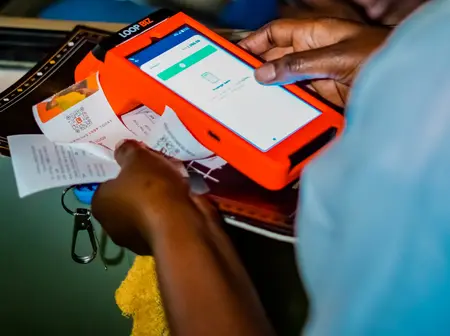
Could your checkout do more than process payments? What LOOP Biz’s eTIMS plans mean for merchants
A customer pays for a product, receives confirmation of the transaction and leaves the shop. For the merchant, however, the work connected to that sale may continue after the payment has been completed.
The transaction needs to be reflected in the business records, while the relevant tax documentation must be handled through the appropriate process. For businesses managing several payment methods and a steady flow of customers, keeping these activities organised can add to the work involved in running a checkout.
Kenya’s electronic Tax Invoice Management System, known as eTIMS, is part of the Kenya Revenue Authority’s framework for electronic tax invoicing. It provides businesses with a way to issue electronic tax invoices and support the recording of sales for tax purposes.
For merchants using digital payment systems, the practical question is how payment acceptance and tax invoicing can fit into the same business workflow.
LOOP Biz, NCBA’s merchant platform, includes a PDQ device that supports card and mobile money payments. At the platform’s October 2026 launch, eTIMS enablement was presented as an upcoming addition to the PDQ experience. Its current release status and the exact functions available need to be confirmed with LOOP before merchants can rely on it.
A payment confirmation and a tax invoice serve different purposes.
A payment confirmation records that a customer has made a payment through a particular channel. A tax invoice provides the relevant transaction information required for tax documentation.
A merchant may accept payment through a card, M-Pesa or another supported channel and still need to complete the applicable invoicing process. The payment method alone does not establish that the transaction has been issued as an eTIMS-compliant invoice.
For businesses, understanding this distinction is important when reviewing their checkout procedures. They need to know how sales are recorded, how invoices are issued and how the information is retained for their accounting and tax processes.
The KRA provides eTIMS solutions for businesses to issue electronic tax invoices. Merchants should consult the authority’s current guidance or a qualified tax professional to establish the requirements that apply to their business and transactions.
LOOP Biz PDQ is designed to help merchants accept different payment methods at the point of sale. It supports Visa and Mastercard chip and contactless payments, M-Pesa Till and Paybill, M-Pesa STK push and LOOP STK push.
For a customer paying through M-Pesa STK push, the cashier enters the transaction amount on the device. The customer receives a prompt on their phone and approves the payment using their PIN.
The device brings several payment options into the checkout process. When connected to inventory management, sales can also update stock records automatically.
An eTIMS integration would address another part of the transaction workflow: electronic tax invoicing. For merchants, the usefulness of that integration will depend on how invoices are generated, what information is captured and how the records can be accessed afterwards.
The exact process should be established from the live product rather than assumed from the presence of a payment device.
Before relying on a PDQ-based invoicing workflow, a business should understand how the system operates in practice.
The first question is whether eTIMS functionality is currently live on the device and available to the merchant’s business category. A planned feature should not be treated as an available service.
Merchants should also establish whether an invoice is generated automatically after a successful payment or whether the cashier must complete additional steps. They need to know what information is required, whether customer details can be captured at the counter and how corrections or cancellations are handled.
Another consideration is access to records. Business owners and finance teams may need to retrieve invoices, review transaction histories and reconcile sales with their accounting processes.
The treatment of different payment methods should also be clear. A merchant should establish whether the same invoicing process applies to card payments, M-Pesa transactions and other supported channels, and what happens when a transaction is reversed or a payment fails.
Finally, businesses should ask whether there are additional setup requirements, subscription charges or configuration steps associated with the integration.
Even when a digital system automates part of the invoicing process, employees need to understand their responsibilities.
Cashiers should know how to enter the correct transaction amount, confirm payment status and follow the required invoicing steps. Managers may need to review records, while finance teams may be responsible for reconciling invoices and sales information.
A business should establish who can access different records and how errors are reported. This is particularly important for retailers with several employees or outlets, where inconsistent procedures can create gaps in transaction records.
Training should cover the full checkout process, including what staff should do when a payment is unsuccessful, a customer requests an invoice or a transaction needs to be corrected.
For merchants, the longer-term value of connected business systems lies in how different parts of the transaction can be managed together.
LOOP Biz brings payment acceptance into the merchant platform, with inventory management available as a paid addition for eligible businesses. The PDQ can process supported payment methods, while connected inventory tools can update stock records following sales.
An eTIMS-enabled workflow could add electronic tax invoicing to that process, subject to the functionality that LOOP has released and the requirements applicable to each business.
Merchants considering the service should confirm its current availability, setup requirements, fees and supported transaction types directly with LOOP. They should also continue to follow KRA guidance on their invoicing obligations.
The aim for a business is a checkout process in which payment, stock records and tax documentation are handled consistently. The practical benefit will depend on how well the systems work together and how reliably the business uses them.
-
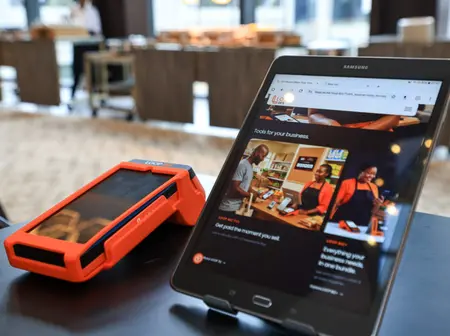
Struggling to keep track of stock? LOOP Biz brings inventory management closer to everyday business operations
Knowing what is available for sale can be a daily exercise in checking shelves, updating notebooks, reviewing supplier messages and trying to reconcile what has moved for a small business.
When sales pick up, that routine becomes harder to maintain. A product may run out before the next order arrives, while slow-moving items continue to occupy valuable shelf space.
These gaps can affect cash flow and customer service. A customer who comes in looking for an item that appears in the shop’s records but is no longer available may leave without making a purchase. An owner who orders stock based on incomplete records may tie up money in products that are not selling.
Digital inventory management offers a way to bring these records into a more organised system. Through LOOP Biz, NCBA is extending its business platform with inventory management tools designed to help eligible merchants keep track of stock and related activity through a web-based back office.
The inventory management subscription costs KSh1,990 per month before tax. It is available through LOOP Biz web for registered limited liability companies and partnerships. The inventory functionality is therefore distinct from the core LOOP Biz experience available to sole traders through the mobile app.
A business can begin managing inventory with a notebook or spreadsheet. These methods may be sufficient when the product range is small and one person handles most transactions. As the business grows, however, maintaining accurate records becomes more demanding.
A digital inventory system gives the business a central record of its products and available quantities. Rather than relying on separate notes kept by different employees, authorised users can work from the same information.
The LOOP Biz inventory dashboard is designed to give merchants an overview of their stock position, including views of pending orders, out-of-stock alerts and top customers. The product catalogue also displays stock quantities and identifies items that are running low.
For a shop owner, these records can support everyday decisions. A low-stock alert can prompt a reorder before a product disappears from the shelves. A view of pending orders can help the business follow up on goods that have been requested or are awaiting fulfilment.
The value of such a system depends on the accuracy of the information entered into it. Staff still need to record incoming stock correctly, account for returns and ensure that sales are reflected in the system.
One of the practical additions is the relationship between LOOP Biz PDQ transactions and inventory management.
When inventory management is active, sales made through the PDQ can automatically update stock records. This reduces the need for a merchant to record every sale separately in an inventory book or spreadsheet.
Consider a retailer selling several units of the same product throughout the day. With manual records, the owner or employee must remember to deduct each sale from the stock count. If the update is missed, the recorded quantity may no longer reflect what is physically available.
An integrated process can reduce that administrative work by linking the sale to the stock record. It also gives the business a more current view of its inventory, provided products have been entered correctly and the relevant transactions are captured through the system.
For merchants who accept different payment methods, it is important to understand which transactions feed into the inventory record and how adjustments are handled. Businesses should confirm the supported workflows during setup.
Inventory records can help owners make decisions about what to replenish and what may need attention.
The launch demonstration also showed product catalogue imports using a template, which can make it easier to add multiple products without entering every item individually. Shelf-life settings were presented as another feature, allowing businesses to receive alerts that can help them manage products approaching expiry.
These functions are particularly relevant to businesses handling a large catalogue or goods with limited shelf lives. A retailer dealing in food, cosmetics or other time-sensitive products may need to monitor expiry dates alongside quantities.
LOOP Biz uses AI-powered inventory intelligence that can forecast demand and flag slow-moving stock. and is his functionality is available on the web platform, with an app version planned for 2027 and other features like QR-code scanning for stock updates
Inventory management can involve several people: an owner who oversees purchasing, a manager who supervises the shop and an assistant who receives or updates stock.
LOOP Biz includes staff roles and permissions intended to help businesses control what different employees can access. For example, an employee responsible for updating stock may be given access to inventory tasks without being given the same access to financial information as the business owner.
The arrangement can help establish clearer responsibilities as a business expands beyond a single operator. Owners should still review the permissions assigned to each employee and ensure that access reflects their actual duties.
At KSh1,990 per month before tax, the inventory management subscription gives eligible businesses access to a digital system for managing product records, stock levels and related workflows.
The cost should be considered alongside the business’s existing processes. A merchant who manages a small number of products may have different requirements from a retailer handling hundreds of stock lines across several employees.
Businesses should also account for the cost of the PDQ separately. The device has its own subscription or one-off payment arrangement, according to the LOOP Biz campaign information.
For merchants already using LOOP Biz, the additions bring payment acceptance and stock management closer together. A sale can be recorded through the PDQ while the inventory system updates the corresponding stock position.
That connection can make routine administration more manageable, while giving owners a clearer record to work with when planning orders, reviewing products and assigning staff responsibilities. The quality of the decisions that follow will still depend on accurate records and consistent use of the system.
-
NCBA gains international investor exposure following Nedbank’s acquisition of controlling stake
NCBA Group is entering a new phase of international market exposure while retaining its position as a publicly traded Kenyan bank following Nedbank’s acquisition of a controlling stake. Its addition to the MSCI Frontier Markets Index places the lender among securities used by international investors to track equity markets classified as frontier economies.
MSCI named NCBA among the three largest additions in its November 2026 index review, alongside Oman Arab Bank and Bangladesh’s BRAC Bank. The review, announced on November 11, includes 12 securities entering the main Frontier Markets Index and 10 deletions. The changes will take effect after the close of trading on November 30.
NCBA is the only Kenyan security being added in the November country-level review. Its selection gives the bank representation in an international benchmark followed by asset managers and institutional investors seeking exposure to frontier market equities.
The inclusion comes with a notable ownership development. South Africa’s Nedbank completed its acquisition of a 66% controlling stake in NCBA in October, leaving the remaining 34% with minority shareholders. The transaction transferred the bank’s controlling ownership to an international financial group without ending its listing on the Nairobi Securities Exchange.
The ownership transition involved a substantial transaction on Kenya’s stock exchange. On November 3, approximately 1.087 billion NCBA shares changed hands through a block trade valued at KSh107.7 billion, according to TechTrendsKE’s reporting on the transaction.
The transfer followed Nedbank’s acquisition of the controlling stake and established the South African lender’s majority ownership of the Kenyan banking group. Eligible NCBA shareholders also received 43,631,052 newly issued Nedbank shares, representing approximately 8.37% of the enlarged South African bank, alongside KSh23.2 billion in cash payments.
NCBA’s continued NSE listing leaves minority investors with exposure to the Kenyan banking group even under its new controlling shareholder. This is relevant to the MSCI development because the index inclusion concerns NCBA’s listed equity rather than a separate listing or ownership arrangement created by Nedbank.
The timing of the two developments should also be distinguished. MSCI’s November review used an October 20 price cut-off, while the large NCBA share transfer was completed on November 3. The bank’s inclusion should therefore be understood as an index review decision rather than an outcome of the subsequent ownership transfer.
MSCI indices serve as reference points for investment funds, portfolio managers and institutional investors assessing markets and allocating capital. A company’s inclusion can bring its shares into the investment universe of funds that track the relevant benchmark, although the scale of any resulting demand depends on the company’s index weighting and the amount of capital following the index.
For NCBA, inclusion creates an additional channel through which international investors can encounter its shares. It does not automatically mean that all funds tracking the MSCI Frontier Markets Index must purchase the stock, nor does it establish that foreign investment or trading liquidity will rise by a predetermined amount.
The wider investment environment provides some context. US investors increased their holdings in Kenyan securities by 45% in 2025 to KSh258 billion, equivalent to approximately $1.9 billion, according to US Treasury figures reported by TechTrendsKE. The holdings stood at approximately KSh178 billion in 2024.
Those figures cover Kenyan equities and long-term debt securities, meaning they cannot be treated as direct measurements of foreign investment in NSE-listed shares. They nevertheless provide an indication of the scale of US investor exposure to Kenyan financial assets.
NCBA’s index inclusion is therefore taking place within a market that continues to attract international investment interest across different asset classes. The bank’s position in an MSCI benchmark adds a listed corporate security to that investment landscape.
Kenya’s domestic capital markets are also developing their own index-based investment structures, particularly around listed banking institutions.
In November 2026, the NSE added Family Bank to its Banking Sector Index, expanding the benchmark to 12 listed banking institutions. NCBA was among the original constituents when the index was launched in October 2025.
The domestic benchmark provides a way to measure the performance of listed Kenyan banks using market capitalisation adjusted for free float. Its methodology differs from MSCI’s international frontier markets classification, which groups eligible securities across several countries.
The Capital Markets Authority had also approved the Wall Street Africa Banking Sector ETF in August 2026. The proposed exchange-traded fund is designed to give investors exposure to Kenyan banking stocks through a single investment product linked to the domestic banking sector benchmark.
These developments represent separate investment structures. The NSE Banking Sector Index measures a domestic group of listed banks, while the MSCI Frontier Markets Index provides international exposure to selected companies across frontier economies. The WSA ETF, in turn, offers a locally domiciled investment route rather than replicating MSCI’s international benchmark.
For NCBA, participation in both domestic and international market benchmarks places its shares within different investment frameworks. The MSCI changes are scheduled to take effect after trading closes on November 30, giving the bank a new position in the international frontier markets investment universe while its shares remain listed in Nairobi.
-

SHA announces nationwide door-to-door visits to enhance registration
The Social Health Authority (SHA) has announced a nationwide door-to-door visit as a way of bringing services closer to the people and providing an opportunity for direct engagement with the members of the public.The nationwide registration is expected to begin today, November 16, to December 15, 2026.
-
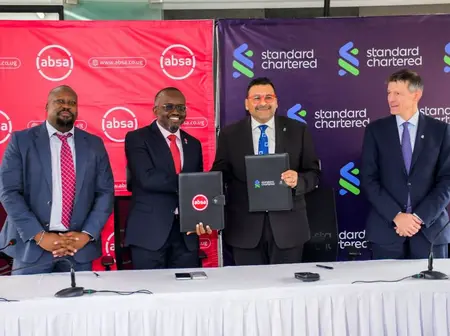
Inside Absa’s Takeover of Standard Chartered Uganda and What It Means for Your Money
Thousands of banking customers in Uganda are beginning a new chapter after Absa Bank Uganda took over Standard Chartered Bank Uganda’s wealth and retail banking business, ending the latter’s direct involvement in personal banking in the country.The transaction was completed on Friday, November 13, 2026, following regulatory approvals and a transition process that began when the two banks announced their agreement in October 2025.
-

Tatu City’s Jabali Towers unveils showhouse as Tower A sales surpass 80%
Jabali Towers has unveiled its showhouse in Tatu City’s Tatu Central district as sales in its first tower surpass 80%, giving prospective buyers an opportunity to view the residences ahead of the development’s next construction stage.
The showhouse launch took place on 14 November 2026. The mixed-use development comprises two towers of 25 and 36 storeys, with 374 residences, Grade A office space, a 150-room hotel, retail outlets and restaurants across approximately 88,000 square metres.
Rendeavour, the developer of Tatu City, said sales in Tower A had exceeded 80%, with demand coming from Kenyan and international buyers interested in residential property and investment opportunities within the development.
“Today’s buyers are increasingly looking beyond the four walls of an apartment. They want access to quality education, recreation, workplaces and everyday conveniences without the challenges of long commutes,” said Preston Mendenhall, Group Chief Operating Officer and Country Head of Rendeavour Kenya.
Mendenhall said the showhouse would allow buyers to experience the quality of the residences, adding that purchasing property at an early stage of a master-planned development offered an opportunity to acquire an asset as the surrounding area develops.
Designed by international architecture firm Spectrum, Jabali Towers combines residential apartments with office, retail and hospitality facilities. The project is backed by a partnership involving Saudi Arabia’s Mabani Aljazeera Group.
China Road and Bridge Corporation (CRBC) is the main contractor for Jabali Towers. Rendeavour said foundation works had made significant progress, with the building structure expected to rise above the construction hoarding in the first quarter of 2027.
Jabali Towers is the second vertical development in Tatu Central, Tatu City’s business and lifestyle district. The surrounding area already includes shops, supermarkets, banks, restaurants serving international cuisines and recreational facilities such as padel courts, wellness facilities and organised fitness activities.
The development will also connect to the planned Market District, a pedestrian-oriented destination for shopping, entertainment, business and residential activities. The project is expected to include 130,000 square metres of retail and entertainment space, alongside 200,000 square metres of commercial and residential space.
Tatu City has more than 100 kilometres of nature trails running through former coffee estates, according to Rendeavour. The developer also reports more than 70 kilometres of tarmacked roads, 99.7% power reliability, over 95% renewable energy, round-the-clock potable water supply and high-speed fibre connectivity.
The city’s recreational plans include the 160-acre Tatu Wildlife Sanctuary, which is scheduled to open to the public in the second quarter of 2027. Rendeavour describes it as the only urban wildlife sanctuary in the world.
Tatu City is also preparing to welcome Wellington College International Kenya, a British international school scheduled to open in September 2028. The school has appointed Gareth Parker-Jones, Head Master of Rugby School in the United Kingdom, as its Founding Master.
More than 35,000 people live, work, study or recreate at Tatu City each day, according to the developer. The 5,000-acre development is designed to accommodate a population of 250,000 when complete and is Kenya’s first operational mixed-use Special Economic Zone.
Tatu City’s masterplan was shortlisted in the Masterplanning category at the World Architecture Festival 2026.
Prospective buyers can arrange a Jabali Towers showhouse tour through the project’s booking page: https://jabalitowers.com/booking