
Listen to articleThe farmers say dependence on rainfall has made farming increasingly difficult, while the cost of adopting modern techniques remains beyond the reach of many households.Small-scale farmers in the Coast region say the high cost of agricultural machinery, inadequate irrigation facilities and limited access to farming expertise are holding back production, despite the availability of land suitable for cultivation.
Category: Economy&Finance
-

U.S. Embassy and U.S.–Kenya Alumni Association to hold trade forum
The U.S. Embassy in Nairobi and the U.S.–Kenya Alumni Association will bring together entrepreneurs, investors, business leaders, policymakers, and U.S. exchange program alumni tomorrow (Nov 16), for the U.S.–Kenya Alumni Forum, an event focused on transforming longstanding ties into new opportunities for trade, investment, and economic collaboration.
-

Safaricom wants M-Pesa to become a bigger financial services platform under Boniface Mungania
Safaricom is building a financial services business that reaches well beyond mobile money transfers, with merchant financing, investment products, insurance and business management tools becoming part of the M-Pesa ecosystem.
The expansion gives Boniface Mungania, the company’s Chief Financial Services Officer, responsibility for a portfolio whose growth will depend on how effectively Safaricom converts its payments network into a distribution platform for other financial products.
The scale of that operation is already visible in Safaricom’s half-year results for the six months ended September 30, 2026. The company reported KSh7.1 billion in financial services revenue, an increase of 55.3%, alongside 17.5 million credit customers and 3.4 million money market fund customers. It also reported 67,500 insurance policies issued, representing growth of 852.2%.
These figures describe a business with several established revenue and customer segments rather than a payments operation looking for its first adjacent market. M-Pesa itself generated KSh100.1 billion, equivalent to 42.8% of Safaricom’s total revenue during the period.
The distinction between the two revenue categories is important. M-Pesa’s transaction business remains the dominant contributor, while the financial services portfolio provides additional activities through which Safaricom can earn revenue and deepen customer engagement.
Mungania took over the financial services division after Esther Masese Waititu left the company in July 2026. He became interim head in August, with his substantive appointment taking effect on November 1 following regulatory approvals. His previous responsibilities included M-Pesa business development, product development, payments and public sector digital transformation.
Safaricom’s payment strategy is already moving towards higher transaction volumes rather than maximising charges on every payment.
During the first half of FY2027, M-Pesa processed 12.9 billion chargeable transactions, representing growth of 48.2%. Revenue increased by 13.6% to KSh100.1 billion, a slower rate than transaction growth. Safaricom attributed part of this difference to its decision to reduce the cost of certain transactions to encourage greater usage.
The company reported that 63% of consumer payment transaction volumes were zero-rated. Approximately 81% of Lipa na M-Pesa and Pochi la Biashara merchant transactions were also free.
Monthly chargeable transactions per customer rose from approximately 13 to 13.5 in 2020 to 51, according to the company’s reported figures.
The commercial logic is to encourage customers and businesses to conduct more of their daily financial activities through M-Pesa. A larger volume of affordable transactions can support other services, including credit, merchant solutions, savings and insurance distribution.
This approach also helps explain Mungania’s description of M-Pesa as a Techfin rather than a conventional fintech product. He sees the service as a technology platform that enables financial services, rather than a financial services operation that subsequently adopted technology.
He does not expect M-Pesa to replace banks and insurance companies. Instead, he envisages financial institutions connecting their products to the platform and using its distribution capabilities to reach customers.
The distinction has commercial implications for Safaricom. It can expand its financial services offering through partnerships without necessarily assuming responsibility for every underlying financial product.
Mungania’s emphasis on transaction data also fits this model. He cites Fuliza as an example of a product developed after Safaricom identified customers whose M-Pesa transactions failed because their wallets lacked sufficient balances.
The company used the observed behaviour to develop an overdraft service. Fuliza facilitated KSh1.15 trillion in lending during the six months to September 2026, according to the original interview.
For Mungania, the value of such products extends beyond the revenue they generate. He told Business Daily that an overdraft enabling a trader to increase sales represents a more meaningful outcome than the financial performance of the platform alone.
Small businesses provide one of the clearest opportunities for Safaricom to extend M-Pesa’s role.
The company reported 4.5 million merchants during the first half of FY2027, representing growth of 90.3%. Pochi la Biashara accounted for 3.2 million customers, while Lipa na M-Pesa had 1.3 million merchants.
Merchant transactions reached 4.7 billion, increasing by 52.6%, while merchant revenue grew 34.6% to KSh8.18 billion.
Safaricom’s plans for this segment go beyond providing businesses with a way to collect payments. Its merchant strategy includes credit, reconciliation, invoicing and business administration tools that could give traders more ways to manage their operations through the platform.
Pochi la Biashara illustrates the reasoning behind this expansion. Before its introduction, some merchants relied on ordinary peer-to-peer M-Pesa transfers to receive business payments. Safaricom identified that these transactions were mixing business receipts with personal payments.
The dedicated merchant product gave businesses a way to separate the two activities.
Safaricom is now extending that proposition through lending. In October 2026, the company extended Fuliza overdrafts to Pochi la Biashara users, bringing short-term credit closer to merchants who already receive payments through M-Pesa.
The proposed integration with the Kenya Revenue Authority provides another indication of where merchant services could go. In October, TechTrendsKE reported discussions between Safaricom and KRA over an arrangement that would allow electronic tax invoices to be generated on behalf of merchants receiving payments through M-Pesa.
The proposal involved reverse invoicing, with invoices potentially transmitted to KRA at the end of the day. It was still under discussion in the reporting and should not be confused with an operational service.
Safaricom has also been working on the payment acceptance side. Its October partnership with Pesapal introduced NFC tap-to-pay and dynamic QR payment capabilities at merchant tills. The company announced an ambition to expand Scan-to-Pay acceptance from more than 60,000 outlets to 500,000 within 12 months.
Together, these developments show how merchant payments can provide an entry point into a wider range of business services. A merchant who uses M-Pesa to collect money could also access financing, pay suppliers, reconcile transactions and manage business records through connected services.
For Safaricom, the opportunity lies in becoming more deeply embedded in the daily operations of small businesses, rather than relying exclusively on the fees generated when customers send and receive money.
The expansion of digital credit presents a different set of responsibilities for the financial services division.
Fuliza has demonstrated how transaction patterns can help Safaricom identify demand for short-term borrowing. However, the company’s merchant lending experience also shows why loan disbursements and customer numbers cannot serve as the only measures of performance.
TechTrendsKE reported in October that Safaricom’s Taasi Till merchant credit portfolio had recorded an 8% non-performing loan ratio. The company acknowledged challenges associated with digital credit, including financial stress and over-indebtedness.
Its stated response includes tighter exposure controls, behavioural scorecards and more purpose-led credit. Safaricom also uses data-driven and AI-enabled models, with human oversight, to assess customer eligibility, affordability and risk.
The company reported that the number of customers eligible to borrow through Fuliza had risen to 18.1 million in the year to March 2026, from seven million a year earlier.
That figure refers to eligible borrowers, not necessarily customers who actively borrowed during the reporting period.
The lending portfolio therefore presents Mungania with two connected priorities: extending access to credit while maintaining the quality of the loans being issued.
A product that allows a merchant to borrow against expected business activity can support working capital needs. But if the lending model does not adequately assess repayment capacity, the same transaction data used to identify opportunities can expose the company to deteriorating loan performance.
This becomes particularly relevant as Safaricom extends credit beyond individual consumers into businesses with different cash-flow patterns and operating requirements.
The financial services division will need to balance the commercial opportunity in a large customer base against the cost of defaults and the consequences of lending beyond customers’ ability to repay.
Safaricom has also established a growing presence in savings and investments through its Ziidi platform.
The company reported KSh25.6 billion in Ziidi assets under management during the first half of FY2027, alongside 3.4 million money market fund customers.
Its investment offering has expanded beyond the original money market fund. Ziidi Trader, introduced in February 2026, allows customers to buy and sell shares listed on the Nairobi Securities Exchange.
In October, Safaricom introduced Ziidi Shari’ah with Gulfcap Investment Bank. The Sharia-compliant money market fund allows customers to begin investing with KSh100 and make subsequent contributions from KSh10.
These products extend M-Pesa’s role from facilitating payments to providing access to investment services through a mobile distribution channel.
Safaricom’s wealth management business had reported KSh21.1 billion in assets under management in FY2026, according to its October reporting. The KSh25.6 billion Ziidi figure reported for the first half of FY2027 provides a more recent measure of the platform’s investment activity.
Insurance is another part of the portfolio. Safaricom reported 67,500 policies issued during the first half of FY2027, an 852.2% increase.
The company can use M-Pesa’s customer reach to distribute products developed with specialist financial institutions, reducing the need for customers to interact with multiple separate channels to access financial services.
Mungania’s previous work in M-Pesa product development and business development gives him experience with the commercial relationships and technology infrastructure supporting this model.
Mungania’s career at Safaricom began in 2007 as a customer care representative. He joined after graduating in biochemistry from Jomo Kenyatta University of Agriculture and Technology and spending six months working as a medical sales representative.
His subsequent assignments included M-Pesa business development and product development. Former Safaricom chief executive Bob Collymore later recommended him for a consultancy with Vodafone in Qatar, where he worked on mobile money solutions targeting diaspora remittances to home countries.
He subsequently returned to Nairobi and took up other responsibilities within Safaricom, including Payments Tribe Lead and Director of Public Sector Digital Transformation. His work in the latter position earned him the Order of the Grand Warrior (OGW) award.
He succeeds Waititu, who became closely associated with M-Pesa’s development during her tenure and was widely known as Mama M-Pesa.
The responsibilities facing her successor extend across several businesses whose performance depends on different commercial and operational factors. Payments require affordable and reliable infrastructure, merchant services depend on sustained business engagement, lending requires effective risk assessment, while investment and insurance products rely on distribution arrangements with specialist institutions.
Safaricom’s My OneApp adds another layer to this strategy. The application combines services previously available through separate M-Pesa and MySafaricom applications, bringing payments, connectivity, savings, investments, credit and insurance into one digital environment.
The company reported 4.5 million monthly active users, 7.3 million downloads and KSh2 trillion in transactions processed through the application. It has also introduced AI-powered recommendations, which Safaricom said reached 17.7 million customers monthly.
For Mungania, the challenge is to make the different financial services work as a connected offering while preserving the reliability and customer confidence that have supported M-Pesa’s position in the market.
He has said that financial products should be judged by their effect on customers, citing the example of an overdraft helping a trader increase sales.
That approach places the performance of Safaricom’s financial services business beyond the volume of transactions, loans or policies issued. Its commercial success will also depend on whether customers and businesses continue to find practical value in the products distributed through M-Pesa.
-
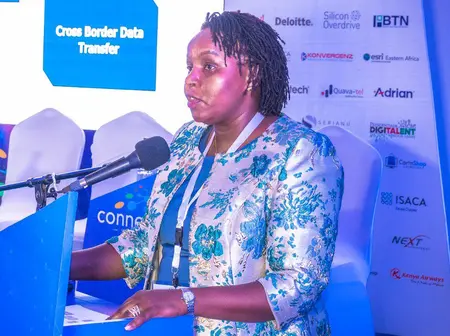
Court casts doubt on ODPC’s power to order businesses to compensate privacy victims
Kenya’s data protection enforcement framework is facing a legal test over the authority to impose financial compensation on businesses found responsible for privacy violations. The High Court has questioned whether the Office of the Data Protection Commissioner (ODPC) can independently determine damages payable to individuals, even though the Data Protection Act gives affected persons a right to seek compensation.
The decision could give companies a new legal argument when contesting monetary awards issued by the regulator. It comes after the ODPC developed a record of financial enforcement against organisations handling personal information, with compensation claims becoming a material part of its work.
TechTrendsKE reported in January 2026 that more than KSh30 million had been paid to individuals during 2025 following data protection violations. The cases involved businesses accused of mishandling customer information, using personal photographs without consent and continuing direct marketing after individuals had objected.
The High Court’s decision does not invalidate those previous awards. However, it introduces a question about the legal authority through which the Commissioner has been issuing them.
The ODPC’s compensation decisions have affected businesses across several sectors, including financial services, healthcare, lending and digital commerce.
Among the cases reported by the regulator, Standard Investment Bank was ordered to pay Andrew Endovo KSh50,000 after sending him an unsolicited promotional email without his consent. Platinum Credit was ordered to compensate Philip Bolo KSh900,000 after continuing direct marketing communications despite his objection.
Moja Expressway Company, which operates the 27-kilometre Nairobi Expressway, was ordered to pay former employee Cyrus Mwaniki Ndung’u KSh500,000 for using his photograph to promote electronic toll collection services without his permission. Tech Limited also faced a KSh2.6 million compensation order, which it subsequently challenged at the High Court.
These cases illustrate the financial exposure organisations face when their handling of personal information falls short of the requirements established by the Data Protection Act.
The regulator’s enforcement record predates the latest compensation disputes. In an April 2025 analysis, TechTrendsKE reported that the ODPC had issued 51 determinations in 2024, with average fines of approximately KSh522,308 per case.
Those administrative fines serve a different purpose from compensation awarded to individuals. The distinction is central to the latest court decision because the judge questioned whether the Commissioner can exercise both the regulator’s enforcement functions and the authority to determine damages payable to an affected person.
Justice Francis Andayi set aside a KSh1.25 million compensation award issued against a Nairobi healthcare business following a complaint involving CCTV cameras installed in a clinical examination room.
The patient, identified as GW, argued that the cameras compromised her privacy. The healthcare provider disputed the ODPC’s findings and presented forensic evidence concerning the footage.
The High Court did not determine whether the alleged privacy violation occurred. Instead, it examined whether the Commissioner had the legal authority to order the business to compensate the complainant.
The dispute centred on the relationship between Section 65 of the Data Protection Act and Regulation 14(3)(e) of the subsidiary legislation.
Section 65 provides a right to compensation for individuals who suffer damage because of a contravention of the Act. However, Justice Andayi observed that the provision does not expressly assign the Commissioner the responsibility of determining whether damage has occurred or calculating the compensation payable.
The judge distinguished between the regulator’s authority to investigate complaints, impose administrative penalties and issue enforcement notices, and the separate function of deciding monetary claims between parties.
In his interpretation, the Act expressly establishes the Commissioner’s enforcement powers but does not provide an equivalent explicit grant of authority to award damages.
The judgment also questioned whether Regulation 14(3)(e) could introduce a substantive power that Parliament had not expressly provided for in the parent legislation.
The legal principle relied upon by the judge was that statutory agencies and tribunals can exercise only powers conferred on them by law. A regulation cannot independently create substantial jurisdiction beyond the authority granted by the enabling Act.
The judgment goes beyond statutory interpretation. Justice Andayi also questioned the procedure followed when the ODPC issued the compensation award.
The regulator had investigated the complaint, considered the healthcare provider’s response and issued a monetary determination. The judge was concerned that the process had not provided an adequate hearing at which both sides could contest the evidence and address the compensation claim.
He questioned whether the same Commissioner could investigate an alleged violation, effectively prosecute the complaint and then determine the financial remedy without safeguards required by the rules of natural justice.
The judge said the determination of whether an individual had suffered damage following a data protection violation had not been expressly assigned to the Commissioner by the Act.
He also observed that the legal issue required consideration through an appropriate judicial review application or constitutional petition.
“Even if a hearing were to be conducted, I again doubt that it would be by the same Data Commissioner to be the one investigating, then prosecuting it and then deciding. That would be against all the rules of natural justice,” the judge said.
The patient and the Data Commissioner maintained that Section 65, read together with Regulation 14, authorised the watchdog to issue compensation orders. They also relied on previous High Court decisions supporting the regulator’s administrative remedies.
Justice Andayi, however, found that the earlier authorities relied upon had not adequately addressed whether the compensation provision in the regulations exceeded the powers granted under the Data Protection Act.
He declined to strike down Regulation 14(3)(e) or declare all previous ODPC compensation awards unlawful. Such a challenge, he said, required proceedings specifically directed at the validity of the subsidiary legislation, with the Attorney-General given an opportunity to participate.
The decision therefore leaves the regulation in place while exposing its legal foundation to a potential challenge.
Businesses cannot treat the judgment as an automatic cancellation of previous compensation orders. The underlying right of individuals to seek compensation under Section 65 also remains.
The dispute comes as the ODPC continues handling complaints involving sensitive medical information and the privacy obligations of healthcare institutions.
In April 2026, the regulator ordered St. Luke Orthopaedic & Trauma Hospital Eldoret to pay Merceline Akoth Odeyo KSh525,000 following a complaint involving the disclosure of medical information.
According to TechTrendsKE’s reporting, the patient received medical test results belonging to another person on two occasions. The complaint also concerned the sharing of her medical information with an external laboratory without her knowledge or consent.
The hospital attributed the incident to human error and argued that the information shared was limited to identification details. The Commissioner found that the hospital had not demonstrated explicit and informed consent or adequately protected the patient’s personal information.
The determination included compensation for emotional distress and the mishandling of sensitive medical data.
The Eldoret case illustrates the financial consequences of privacy failures in healthcare, where organisations process information that can expose particularly sensitive aspects of an individual’s life.
The Nairobi dispute involves a different allegation, concerning surveillance within a clinical examination room. Its outcome, however, introduces a legal issue that extends beyond hospitals to every organisation subject to the Data Protection Act.
Hotels, financial institutions, digital lenders, telecommunications companies and technology businesses all handle personal information and must comply with statutory requirements governing its collection, storage and use.
The ODPC’s ability to investigate complaints and enforce compliance remains intact. The unresolved issue concerns the legal route through which it can determine compensation.
The legal dispute comes as Kenya’s data protection regulator prepares for a leadership transition following Immaculate Kassait’s six-year tenure as the country’s first Data Commissioner.
In a November 13, 2026 assessment published by TechTrendsKE, Kassait’s record included more than 13,000 complaints handled, 459 determinations issued and 206 enforcement and penalty notice actions. The regulator had also registered approximately 28,000 data controllers and processors.
Kassait has called for amendments to the Data Protection Act to address emerging challenges involving artificial intelligence, sensitive personal information, penalties and data governance. Her proposals also include stronger investigative powers for cases involving organisations outside Kenya and additional time to determine complex complaints.
President William Ruto nominated Lydia Sitienei Chelagat, formerly Director of Legal Services at the Communications Authority of Kenya, to succeed Kassait on November 10, 2026. Her nomination was forwarded to the National Assembly for consideration.
The incoming Commissioner will inherit an institution with a substantial enforcement record and an expanding regulatory mandate. However, the High Court’s examination of compensation powers introduces a legal issue that could influence how the ODPC pursues financial remedies against organisations found to have violated data protection requirements.
For businesses, the judgment provides grounds to scrutinise the statutory basis and procedures behind compensation orders. For individuals, Section 65 continues to recognise the right to seek compensation when personal information is mishandled.
The eventual determination of whether the Commissioner can independently award those damages will depend on a direct judicial examination of the regulation underpinning that authority.
-

The Founder Is Not a Renewable Resource Without Maintenance
The company praises its founder’s stamina until every decision, customer escalation, and late payment requires the same exhausted person. What looks like dedication can become a dangerous concentration of operating risk.WHO estimates that depression and anxiety account for roughly 12 billion lost working days globally each year, costing about $1 trillion in lost productivity.
-

A Price That Never Changes Can Quietly Price You Out of Business
An entrepreneur keeps the selling price unchanged to protect customers. Meanwhile, input costs rise, and every sale contributes less toward rent and wages. The business appears considerate until it can no longer afford to open.Agile pricing means reviewing prices as costs, capacity, and demand change.
-

The Desktop Factory Still Needs Factory Economics
A 3D printer can make a complicated part without a traditional production line. It cannot make weak demand, poor quality control, or an unpriced hour of labour disappear.Micro-manufacturing can serve short runs, prototypes, replacement parts and customized products where tooling costs or minimum orders make conventional production unattractive.
-

A Trademark Is Cheaper to Check Before the Signboard Goes Up
The entrepreneur launches a name, prints packaging and builds recognition. Then another business claims the brand. Even a defensible dispute can consume money that the company intended to spend on stock.Intellectual-property protection begins with knowing what the business owns and what it may be using without permission.
-

The Corporate Partnership Can Open Doors and Quietly Lock Others
A startup signs with a major corporation and gains something it could not buy easily: distribution, credibility or access to customers. The same agreement may also create concentration, exclusivity and payment obligations the founder barely noticed during the announcement.Partnerships work when each party contributes something specific and captures enough value to keep contributing.
-

Flexible Labour Is Not the Same as a Disposable Workforce
Contract labour can help a small business match capacity to demand. It also creates a temptation to expect permanent-employee commitment while offering workers little predictability or support.The ILO’s 2021 research documented growth in digital labour platforms from at least 142 in 2010 to more than 777 in 2020.