Category: Economy&Finance

  • US-Based Kenyan Caregiver Opens Her Own Restaurant in Seattle After Career Switch

    US-Based Kenyan Caregiver Opens Her Own Restaurant in Seattle After Career Switch

    A Kenyan woman who moved to the United States and built a career in caregiving is celebrating a major milestone after venturing into entrepreneurship and opening her own restaurant in Seattle, Washington.

    Wanjiru Kagira

    Jane Wanjiru Kagira is the proud owner of Safari Njema Restaurant, a business she established after transitioning from caregiving to the hospitality industry.

    Her journey reflects the determination of many Kenyans in the diaspora who continue to explore opportunities beyond the professions that initially took them abroad.

    PAY ATTENTION:TUKO is in WhatsApp Channels now! Subscribe and read news in your favourite messenger.

    Having worked in the caregiving industry, Jane eventually took a bold step towards pursuing her entrepreneurial ambitions, turning her dream of owning a business into reality.

    Nairobi mtumba businesswoman celebrates owning truck months after buying new car

    Through Safari Njema Restaurant, she is not only establishing herself as an entrepreneur but also creating employment opportunities for other people, including fellow Kenyans living in the US.

    Her achievement is particularly significant for Kenyans in the diaspora, many of whom relocate abroad in search of better opportunities but eventually discover other paths to financial independence and business ownership.

    Jane's transition from caregiving to running a restaurant demonstrates that one's professional journey does not have to follow a single path.

    With determination, hard work and a willingness to take risks, it is possible to venture into an entirely different industry and build something of one's own.

    Her restaurant is also creating an opportunity for Kenyans in Seattle to connect with a familiar community through a Kenyan-owned establishment.

    As news of her achievement circulates among Kenyans online, many have congratulated her for taking the entrepreneurial leap and encouraged Kenyans living in Seattle to support her business.

    Source: TUKO.co.ke

  • Horticulture exporters face new levy as government proposes tighter industry controls

    Horticulture exporters face new levy as government proposes tighter industry controls

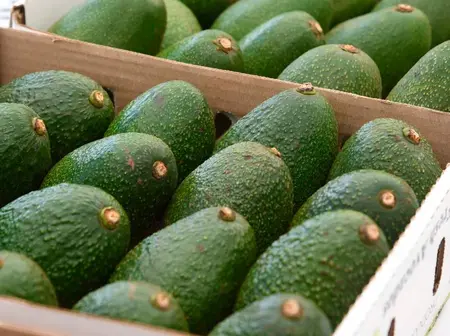
    cartons bd

    Export of horticultural produce, including fruits, vegetables and flowers, will attract a levy of 0.25 percent under proposed regulations aimed at promoting, developing and regulating the industry to meet international standards on product quality and food safety.

    The levy, calculated on the customs value of exported horticultural produce and avocado crude oil, could put upward pressure on the prices of Kenyan produce in overseas markets, including avocados, mangoes, pineapples, French beans and snow peas.

  • The Flood Is a Business Risk Before It Becomes a News Story

    The Flood Is a Business Risk Before It Becomes a News Story

    thumbnail

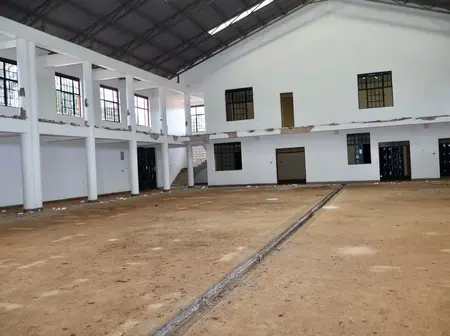
    The cheapest warehouse on the shortlist may be cheap because water already knows the address. A founder comparing rent without assessing drainage can save money every month until one afternoon erases the calculation.Climate resilience belongs in location, procurement and financing decisions. Flood exposure, heat, water availability and power reliability can affect stock, worker safety and delivery.

  • Online traders targeted in proposed law seeking tougher penalties for substandard goods

    Online traders targeted in proposed law seeking tougher penalties for substandard goods

    thumbnail

    Listen to articleThe growth of online marketplaces has created challenges for the regulator, with the existing law lacking clear provisions on how products sold through digital platforms should be monitored and regulated.Businesses operating online could face increased regulation and tougher penalties for selling products that fail to meet quality and safety standards if proposed changes to the law governing the Kenya Bureau of Standards (Kebs) are adopted.

  • Engineers demand a nationwide audit of buildings after 9 die in 2 days

    Engineers demand a nationwide audit of buildings after 9 die in 2 days

    Engineers demand a nationwide audit of buildings after 9 die in 2 days

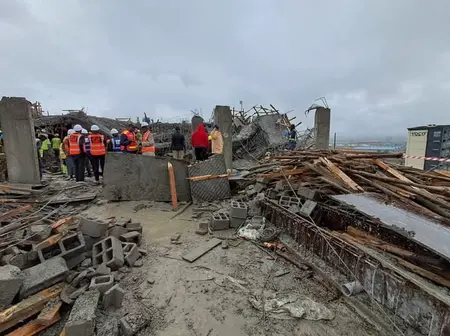
    The Institution of Engineers of Kenya (IEK) has called for urgent nationwide construction safety audits and independent investigations following two building-related tragedies in Syokimau and Riverside that reportedly claimed at least nine lives within two days.

    The institution also linked the latest tragedies to the October 23, 2026, Eastleigh building collapse, which resulted in eight confirmed fatalities, warning that recurring construction failures demanded immediate national intervention.

    “Enough is enough,” IEK declared, calling on government agencies, regulators, developers and construction professionals to address weaknesses across the building sector.

    The institution said it had deployed structural engineers to the affected sites immediately after the incidents to assess the situations and support rescue teams.

    IEK also conveyed condolences to families who lost relatives and wished those injured a speedy recovery.

    The engineers’ institution cautioned against drawing conclusions about the causes of the two latest incidents before independent technical investigations are completed.

    It noted that the Syokimau and Riverside incidents involved different construction activities and should therefore be examined separately.

    In Syokimau, IEK said preliminary technical assessments pointed to the temporary structures supporting the concrete slab as a key area requiring investigation.

    “In Syokimau, our preliminary assessment indicates that investigations should focus on the temporary works supporting the slab (formwork, falsework and vertical props), including their design and pre-pour inspection, and on the concrete placement procedures,” the statement read.

    A press release dated Saturday, November 14, 2026, IEK said the incidents, which occurred on November 13 and 14, which had left several workers injured and others unaccounted for, raising fresh concerns about construction standards, professional supervision and regulatory enforcement. PHOTO/@TheIEK

    For the Riverside incident, the institution said investigators should examine the support system around the excavation and its retaining walls, which failed during construction.

    “In Riverside, attention should be given to the system supporting the excavation and its retaining walls, which failed during construction. The adequacy of that system and of the construction method must be thoroughly examined,” IEK stated.

    However, the institution emphasised that the observations were preliminary and did not establish responsibility.

    “These are preliminary technical observations, not conclusions on cause or responsibility. Accountability must be based on independent, evidence-based investigations,” the statement added.

    IEK called on the National and County Governments, National Construction Authority (NCA), Engineers Board of Kenya (EBK), Directorate of Occupational Safety and Health Services and National Building Inspectorate to take coordinated action.

    The institution also wants appropriate action taken against individuals or companies found responsible for negligence, professional misconduct or failure to comply with statutory requirements.

    It further urged authorities to require developers to engage registered professional engineers for project design and supervision throughout construction until an Occupation Certificate is issued.

    On workers’ safety, IEK called for strict compliance with Occupational Safety and Health requirements, including the provision of personal protective equipment and the employment of skilled workers.

    “Enforce compliance with approved designs, project registration requirements, professional site supervision and statutory safety requirements, with particular attention to geotechnical investigations, excavation safety, temporary works design and pre-concreting inspections,” the institution stated.

    A press release dated Saturday, November 14, 2026, IEK said the incidents, which occurred on November 13 and 14, which had left several workers injured and others unaccounted for, raising fresh concerns about construction standards, professional supervision and regulatory enforcement. PHOTO/@TheIEK

    It also proposed coordinated, risk-based inspections of high-risk construction projects across the country and a national review of construction safety regulations, inspection and enforcement mechanisms.

    The institution maintained that developers, contractors and building owners must comply with legal, regulatory and technical requirements, including engaging competent and registered professionals throughout construction.

    “Any member of IEK whose engagement on a project ends before construction is complete should promptly notify NCA, EBK and the relevant County Government,” the statement read.

    The institution’s intervention comes amid renewed scrutiny of construction safety following the successive incidents, with its demands placing responsibility on regulators, county governments, developers and professionals to strengthen oversight and prevent further loss of life.

  • EPRA Maintains Fuel Prices for November-December Despite Rising Import Costs

    EPRA Maintains Fuel Prices for November-December Despite Rising Import Costs

    The Energy and Petroleum Regulatory Authority (EPRA) has maintained fuel prices across Kenya for the November-December 2026 pricing cycle, keeping the cost of petrol, diesel and kerosene unchanged for the next 30 days.

    In a statement issued on Saturday, November 14, the regulator announced that the maximum retail pump prices for Super Petrol, Diesel and Kerosene would remain at the same levels between November 15 and December 14, 2026.

    The decision comes despite an increase in the average landed cost of imported refined petroleum products, with the government injecting KSh4.6 billion from the Petroleum Development Levy Fund (PDLF) to cushion consumers against higher international costs.

    “In accordance with Section 101(y) of the Petroleum Act 2019 and Legal Notice No.192 of 2022, the Energy & Petroleum Regulatory Authority (EPRA) has calculated the maximum retail prices of petroleum products which will be in force from 15th November 2026 to 14th December 2026.Taking into account, the weighted average cost of imported refined petroleum products in the period under review, the maximum allowed retail petroleum pump prices for Super Petrol, Diesel and Kerosene remain unchanged,” stated EPRA.

    Motorists in Nairobi will continue purchasing Super Petrol at KSh226.96 per litre, Diesel at KSh227.76 and Kerosene at KSh219.87.

    EPRA attributed the unchanged pump prices to the government’s intervention through the Petroleum Development Levy Fund, which helped offset increases in the cost of importing petroleum products.

    “The Government has applied KShs.4.6 Billion from the Petroleum Development Levy Fund to stabilize the computed petroleum pump prices for the November-December 2026 cycle,” the regulator said.

    The prices include Value Added Tax (VAT) at 8 per cent, in line with government policy.

    EPRA reported that the average landed cost of imported Super Petrol increased by 6.11 per cent, from US$977.55 per cubic metre in September 2026 to US$1,037.30 per cubic metre in October.

    The landed cost of Diesel also rose by 6.73 per cent, increasing from US$1,065.38 to US$1,137.09 per cubic metre.

    Meanwhile, Kerosene recorded a 0.71 per cent increase, with its average landed cost rising from US$1,098.31 to US$1,106.11 per cubic metre.

    The regulator explained that without the government subsidy, consumers would have faced increases of KSh8.58 per litre for Super Petrol, KSh10.54 for Diesel and KSh1.16 for Kerosene.

    The decision to maintain local pump prices came against the backdrop of declining international crude oil prices.

    In its weekly bulletin released on Friday, November 13, the Central Bank of Kenya (CBK) reported that Murban crude oil had dropped to US$90.07 per barrel on November 12, from US$94.04 recorded on November 5.

    The figures represented a reduction of US$3.97 per barrel, equivalent to approximately 4.22 per cent, within seven days.

    The CBK attributed the movement partly to easing concerns over possible military escalation in the Middle East.

    The shilling also remained stable against the US dollar, exchanging at KSh129.96 on November 12, unchanged from November 5.

    Other international oil benchmarks recorded weekly losses. According to Reuters, Brent crude futures settled at US$95.84 per barrel on Friday, November 13, gaining two cents during the day’s trading but losing approximately 2.5 per cent over the week.

    US West Texas Intermediate (WTI) crude futures settled at US$88.56 per barrel, down 18 cents on the day and also approximately 2.5 per cent for the week.

    The declines marked the second consecutive week of losses for both benchmarks, with Reuters citing concerns about excess global oil supply and weaker demand in the United States.

    International crude oil prices are among the factors considered by EPRA when calculating monthly fuel prices. Other components include shipping, insurance, distribution expenses, taxes and applicable levies.

    The latest review follows an increase in pump prices during the October-November 2026 pricing cycle, which ran from October 15 to November 14.

    In its announcement on Wednesday, October 14, EPRA increased the maximum retail prices of Super Petrol, Diesel and Kerosene by KSh12.93, KSh9.90 and KSh28.49 per litre, respectively.

    Following the adjustments, Super Petrol retailed at KSh226.96 per litre in Nairobi, while Diesel sold at KSh227.76 and Kerosene at KSh219.87.

    In Mombasa, Super Petrol retailed at KSh223.81 per litre, Diesel at KSh224.61 and Kerosene at KSh216.71.

    EPRA attributed the increases to the weighted average cost of imported refined petroleum products during the review period.

    Before the October increase, EPRA had maintained the maximum retail prices of Super Petrol, Diesel and Kerosene during the September-October 2026 pricing cycle, which ran from September 15 to October 14.

    During that period, Super Petrol retailed at KSh214.03 per litre in Nairobi, while Diesel sold at KSh217.86 and Kerosene at KSh191.38.

    In Mombasa, Super Petrol retailed at KSh210.87 per litre, Diesel at KSh214.58 and Kerosene at KSh188.09.

    EPRA reported that the average landed cost of imported Super Petrol had declined by 7.87 per cent, from US$948.92 per cubic metre in July to US$874.26 in August.

    However, Diesel recorded an 11.86 per cent increase in its landed cost, rising from US$855.59 to US$957.05 per cubic metre.

    Kerosene also registered an increase of 9.71 per cent, with its landed cost rising from US$915.01 to US$1,003.87 per cubic metre.

    The regulator has previously explained that Kenya imports all its petroleum products in refined form, making local pump prices sensitive to international petroleum costs and fluctuations in the exchange rate between the US dollar and the Kenyan shilling.

    For the September-October review, EPRA used an average exchange rate of KSh129.72 against the US dollar in calculating the maximum retail prices.

  • 20 Vacancies Open At Equity Bank

    20 Vacancies Open At Equity Bank

    thumbnail

    VacancyLocationClosing DateActionsSenior AML Manager – Transaction MonitoringKenyaNov 26, 2026Apply‌Manager – Transaction MonitoringKenyaNov 26, 2026Apply‌Manager – Testing (Data & Analytics)KenyaNov 26, 2026Apply‌Senior Manager – Testing (Data & Analytics)Kenya

  • Senators demand answers as Sh200 million Webuye milk plant found neglected, vandalised

    Senators demand answers as Sh200 million Webuye milk plant found neglected, vandalised

    thumbnail

    Listen to articleThe legislators were particularly concerned about the newly installed generator valued at Sh5 million, whose components had been removed before it could be put into operation.Senators have directed the Bungoma County Government to explain the deteriorating state of the Webuye Milk Processing Plant after finding the facility neglected and vandalised during an oversight visit.

  • EPRA fuel review: Why prices in Kenya remained constant despite continued fall in global crude oil prices

    EPRA fuel review: Why prices in Kenya remained constant despite continued fall in global crude oil prices

    EPRA fuel review: Why prices in Kenya remained constant despite continued fall in global crude oil prices

    Kenyan motorists will have to wait longer for relief at the pump despite a continued decline in international crude oil prices, after the Energy and Petroleum Regulatory Authority (EPRA) retained fuel prices for another 30 days.

    In its latest monthly review announced on Saturday, November 14, 2026, EPRA maintained the prices of Super Petrol, Diesel and Kerosene for the period November 15 to December 14, 2026, keeping consumers exposed to the high fuel costs recorded in the previous pricing cycle.

    In Nairobi, a litre of Super Petrol will continue retailing at Ksh226.96, Diesel at Ksh227.76 and Kerosene at Ksh219.87.

    According to CBK’s Weekly Bulletin released on November 13, 2026, Murban crude oil prices declined to USD90.07 (Ksh 11,713.60) per barrel on November 12, 2026, down from USD94.04(Ksh 12,229.90)on November 5, 2026, representing a drop of approximately 4.2 per cent.

    The Kenyan shilling also remained stable against the US dollar, exchanging at Ksh129.96, unchanged from November 5, 2026.

    However, the latest EPRA review reveals that the cost of importing refined petroleum products into Kenya moved in the opposite direction during the period used to calculate domestic fuel prices.

    One of the main reasons motorists are yet to benefit from the decline in crude oil prices is the difference between crude oil prices and the international prices of refined petroleum products.

    Kenya imports its petroleum requirements in refined form rather than importing crude oil for local refining.

    This means that changes in crude oil benchmarks do not automatically translate into immediate reductions in the cost of petrol, diesel and kerosene.

    According to EPRA, the average landed cost of imported Super Petrol increased by 6.11 per cent, from USD977.55(Ksh 127,130.38) per cubic metre in September to USD1,037.30(Ksh 134,900.87) in October 2026.

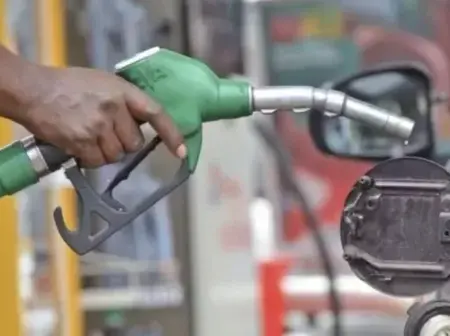
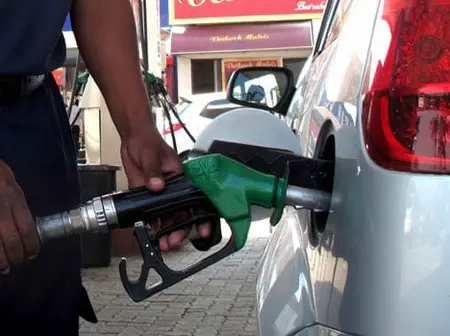
    A fuel pump at a petrol station. PHOTO/@EPRA_KE/X

    Diesel recorded a bigger increase of 6.73 per cent, rising from USD1,065.38 (Ksh 138,552.67)to USD1,137.09 (Ksh 147,878.55) per cubic metre.

    Kerosene also registered an increase of 0.71 per cent.

    These increases meant that despite the recent correction in crude oil prices, the cost of bringing refined petroleum products into the country remained higher during EPRA’s review period.

    The timing of international price movements also matters because the regulator calculates local pump prices using the weighted average cost of imported refined petroleum products during the relevant pricing period.

    Consequently, a decline recorded in the international market towards the end of a pricing cycle may not immediately be reflected in the next month’s domestic prices.

    Another major factor behind the unchanged pump prices is the government’s intervention through the Petroleum Development Levy Fund.

    EPRA disclosed that the government applied Ksh4.6 billion from the fund to stabilise fuel prices during the November-December 2026 pricing cycle.

    Without the intervention, motorists would have faced another round of increases despite the regulator maintaining the existing pump prices.

    According to EPRA, Super Petrol would have increased by Ksh8.58 per litre, Diesel by Ksh10.54 and Kerosene by Ksh1.16.

    The intervention therefore prevented a potential increase in the cost of all three petroleum products.

    The latest move follows October’s significant fuel price increases, when EPRA raised Super Petrol by Ksh12.93 per litre, Diesel by Ksh9.90 and Kerosene by Ksh28.49.

    The increases pushed petrol prices in Nairobi to Ksh226.96, Diesel to Ksh227.76 and Kerosene to Ksh219.87, levels that have now been retained for another month.

    The decision to maintain pump prices offers temporary stability to motorists, transport operators and businesses that rely heavily on petroleum products.

    However, it also means households will continue bearing the impact of elevated fuel costs, particularly through transportation, food distribution and other essential services.

    Diesel prices are particularly significant because the product is widely used by public transport vehicles, trucks, agricultural machinery and industrial equipment.

    A sustained reduction in international refined petroleum prices could eventually create room for cheaper fuel in Kenya, provided other cost components do not offset the decline.

    These include the exchange rate, importation expenses, distribution costs, taxes and government levies.

    For now, the government’s Ksh4.6 billion intervention has prevented another increase, but motorists will have to wait for subsequent pricing reviews to establish whether the recent decline in global oil prices will translate into meaningful relief at local petrol stations.

  • Govt Announces New Saudi Jobs Pathway for Kenyan Workers

    Govt Announces New Saudi Jobs Pathway for Kenyan Workers

    thumbnail

    Kenya has unveiled new recruitment rules for citizens seeking employment opportunities in Saudi Arabia following the signing of a Letter of Intent between the two countries aimed at reducing recruitment costs, increasing job opportunities and streamlining labour migration.In a public post on November 14, Labour Cabinet Secretary Alfred Mutua said he signed the agreement in Riyadh after talks with Saudi Arabia’s Vice Minister in the Ministry of Human Resources and Social Development, Dr Abdullah bin Nasser Abuthnain.