
Tatu City has unveiled the luxury showhouse for Jabali Towers, its landmark mixed-use development in Tatu Central, the city’s business and lifestyle district, giving homebuyers and investors their first opportunity to experience the prestigious residences taking shape in Africa’s leading new city.The launch comes as sales in Tower A surpass 80%, reflecting strong demand from Kenyan and international buyers seeking premium homes and investment opportunities in Tatu City, which is a new city for East Africa, the fastest-growing region in the world with a population of more than 500 million.
Category: Economy&Finance
-

Why Families Prefer Gated Communities When Looking to Buy a Flat in Hyderabad
Hyderabad has become a preferred residential destination for families seeking a balance between work, education, recreation, and everyday convenience. The city offers established neighbourhoods as well as developing residential corridors, giving homebuyers a wide range of choices across different lifestyles.For families planning to buy a flat in Hyderabad, the surrounding community and access to essential facilities can be as important as the home itself.
-

Nelly Chemutai: How Nandi Woman Went From Cleaning Hotels To Landing A Senior Position At Global Pharmaceutical Giant Sanofi
In this storyFrom cleaning hotel rooms in Sweden to landing a lucrative job at one of the world’s largest pharmaceutical companies, Nelly Chemutai has seen it all.Nelly, who is in her early 30s, works as a Senior Quality Assurance Specialist in Research and Development at Sanofi, the French pharmaceutical multinational whose headquarters are based in Paris.
-

Safaricom explains requirements for changing M-Pesa till names

Safaricom has clarified the requirements for changing the names displayed on M-Pesa tills, saying customers must submit supporting business registration documents before their requests can be processed.
The clarification followed a complaint by a customer, Ronnie Alexis, who questioned why he was being asked to provide a Business Registration Certificate despite having registered his M-Pesa Till as a personal account.
In a post on Safaricom’s social media page on Saturday, November 14, 2026, Alexis said the name displayed whenever customers made purchases through his Till was his personal name rather than the name of the products he sells.

He explained that he had requested a name change through email but was subsequently asked to submit a Business Registration Certificate and other supporting documents.
The customer questioned the requirement, arguing that he had registered a personal Till and did not operate a formally registered business.
“I don’t want it to be for a big business that will require me to provide certificates and KRA,” he said.
Responding to the complaint, Safaricom said changing the name associated with a Till could only be done after the customer submitted the required documentation.
“We understand your concern. However, a change of Till name can only be processed upon submission of the required documentation,” the telecommunications company stated.
Safaricom asked the customer to share the requested Business Registration Certificate and any other supporting documents communicated through email to allow the request to be reviewed.
“Without the required documents, we are unable to effect the name change,” the company added.

In a subsequent response, Safaricom apologised for the inconvenience and advised Alexis to visit any Safaricom Shop with his identification document for assistance.
According to the company’s official M-PESA Business Till guide, a notification number is the mobile number attached to a Till that receives SMS notifications when customers make payments. A nominated number, on the other hand, is the personal M-PESA-registered number authorised to withdraw funds from the business store.
This means a merchant’s personal number does not automatically become the Till’s transaction-notification line simply because it is the nominated number.
The two numbers serve different purposes within the Business Till system.
The notification number is primarily linked to payment alerts, while the nominated number provides authorised access to the Till’s services.
Rono is a digital journalist with a proven track record in newsroom leadership and content creation. Currently a Digital Writer for People Daily Digital, Emmanuel’s career is rooted in a lifelong passion for storytelling. Let's talk here: emmanuel.rono@mediamax.ke or ronoemmanuel685@gmail.com
-

West Pokot’s water gamble: Can mega dam turn years of scarcity into economic prosperity?
For decades, unreliable rainfall and limited access to water have constrained economic activity in West Pokot, leaving households struggling to meet basic needs, farmers exposed to crop losses and livestock keepers vulnerable to prolonged dry spells.
In a region where agriculture and livestock production support a significant share of livelihoods, water scarcity has often meant more than an environmental challenge. It has translated into lost income, reduced food production and limited opportunities for economic growth.
Now, a multi-billion-shilling investment in the Siyoi-Muruny Water Project is raising hopes of reversing that cycle, with the potential to reshape the region’s agricultural fortunes and improve access to essential services.
But as the project takes shape, a bigger question remains: Can a mega dam turn water security into sustained economic prosperity for communities that have long depended on increasingly unpredictable rainfall?
Implemented by the National Water Harvesting and Storage Authority (NWHSA), the project is designed to provide clean and reliable water to approximately 350,000 people by 2035.
While improved access to drinking water is a major objective, the project’s wider economic significance lies in its potential to support irrigation, strengthen livestock production and reduce the vulnerability of rural households to climate-related shocks.
For farmers, reliable water supplies could mark a significant shift from dependence on seasonal rainfall to more predictable agricultural production.
When rains fail, farmers risk losing entire planting seasons, while prolonged dry spells can increase production costs and reduce household incomes. Access to dependable water could help address some of these challenges by opening up opportunities for irrigation, crop diversification and increased agricultural productivity.
The potential benefits extend to livestock farming, a critical source of income and livelihood for many households in West Pokot. During prolonged droughts, the drying up of rivers, streams and other traditional water sources puts pressure on livestock, often forcing farmers to travel longer distances in search of water.
The scale of the Siyoi-Muruny project reflects the ambition to address water shortages through an integrated harvesting, treatment and distribution system.
The project includes a water treatment plant at Kabichbich, designed to process approximately 38,800 cubic metres of water daily at full capacity.
It also incorporates storage tanks with a combined capacity of 17.865 million litres, more than 127 kilometres of bulk water transmission and distribution pipelines, and an additional 11.2-kilometre raw water pipeline.
The infrastructure is expected to serve communities across Kapenguria, Makutano, Siyoi, Chepararia, Kaibos, Korelach and Kishaunet.
By linking water harvesting, treatment, storage and distribution, the project seeks to address both the availability of water and the challenge of delivering it to communities.
For the towns and trading centres expected to benefit, improved water access could also support small businesses, institutions and other economic activities that depend on consistent supplies.
Water reliability is particularly important for enterprises such as hotels, restaurants, food-processing businesses and agricultural ventures, where interruptions can increase operating costs and limit expansion.
The project could therefore have implications beyond individual households, potentially improving the environment for investment and business growth in the region.
NWHSA Chief Executive Officer Eng. Julius K. Mugun says the investment is intended to deliver benefits that go beyond the construction of water infrastructure.
“Our commitment at NWHSA is to ensure that strategic water infrastructure projects translate into tangible benefits for Kenyans. Siyoi-Muruny is an important investment in the future of West Pokot and the wider North Rift region. Our focus is not just on constructing dams but on improving livelihoods, supporting agriculture and strengthening the country’s water security,” Mugun said.
The project comes at a time when climate variability is putting additional pressure on communities whose livelihoods depend heavily on rainfall.
For households that rely on rain-fed agriculture, prolonged dry spells can wipe out expected harvests, while water shortages can force livestock keepers to spend more resources securing water for their animals.
Harvesting and storing water during periods of adequate rainfall could provide a buffer against these challenges, helping communities maintain access to water during unfavourable weather conditions.
The economic argument for the investment is therefore also about reducing losses.
When farmers have more dependable water sources, they have a better opportunity to plan production, protect livestock and maintain household incomes even when rainfall patterns become unreliable.
However, the availability of stored water alone will not automatically translate into increased agricultural production.
For the project to deliver its anticipated economic benefits, farmers must be able to access water for productive use, while the necessary distribution systems, irrigation facilities and management structures must be put in place.
The cost of accessing water will also matter. If supplies are unreliable or too expensive for ordinary households and small-scale farmers, the project’s potential to transform livelihoods could be significantly limited.
Despite its ambitious targets and extensive infrastructure, the ultimate measure of the Siyoi-Muruny project will be its ability to deliver consistent, accessible and affordable water over the long term.
The treatment plant’s projected capacity and the extensive pipeline network represent significant investments, but their success will depend on efficient operations, regular maintenance and sustainable water management.
There is also the question of whether communities living around the infrastructure will experience tangible improvements in their access to essential services.
NWHSA Board Chairperson Dr Jane Mwikali has emphasised the importance of ensuring that communities neighbouring major infrastructure projects also benefit from the investments.
“The Authority has outlined plans for additional corporate social responsibility initiatives, including the construction of a modern school and a health facility for neighbouring communities,” she said.
Such interventions could complement the project’s water infrastructure by improving access to essential services and supporting better living conditions for surrounding communities.
After more than a decade of construction delays, the Siyoi-Muruny project represents a significant infrastructure investment for West Pokot.
-
Kenya faces maize production crisis as El Niño rains threaten farms with flooding
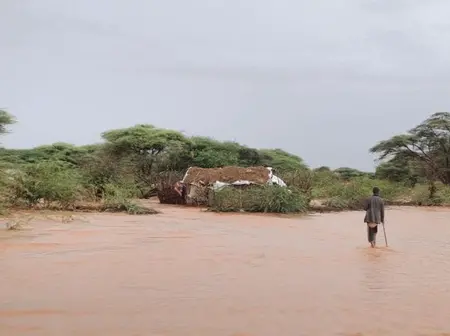
Kenya is facing a fresh threat to its food production after months of poor rainfall left major maize-growing counties with significant yield deficits, even as strengthening El Niño conditions threaten to bring heavy rains, flooding and further agricultural losses.
A new assessment by the Famine Early Warning Systems Network (FEWS NET) estimates that Kenya’s national maize yields could record deficits of approximately 28 per cent, with losses reaching 43 per cent in high-potential production counties following prolonged dry spells and above-average temperatures during the June–September 2026 season.
The November 13 report identifies Trans Nzoia, Uasin Gishu and Nakuru among the counties that experienced substantial rainfall deficits during critical stages of crop development.
The warning comes as Kenya enters the peak of its October–December short-rains season, with forecasts indicating that rainfall could intensify from November, bringing opportunities for agricultural recovery but also increasing the threat of flash floods, riverine flooding and waterlogging.
FEWS NET says the combination of strengthening El Niño conditions and a positive Indian Ocean Dipole (IOD) is likely to enhance cumulative rainfall across much of East Africa, although the distribution and intensity of the rains remain uncertain.
Kenya’s agricultural outlook has deteriorated following months of inadequate rainfall and unusually high temperatures that affected crops during critical growing stages.
According to FEWS NET, Trans Nzoia, Uasin Gishu and Nakuru experienced substantial rainfall deficits, contributing to below-average maize production prospects.
The report describes the impact of the June–September season as significant moisture stress across major agricultural production zones.
“Poor rainfall performance, prolonged dry spells and above-average temperatures throughout the June–September 2026 season resulted in significant moisture stress and below-average crop production,” the assessment states.
Preliminary assessments indicate national maize yield deficits of approximately 28 per cent, with losses of up to 43 per cent across high-potential production counties.
The figures raise concerns about the country’s domestic maize supply, particularly given the importance of the North Rift region to national grain production.
The effects of erratic rainfall have also extended beyond the major maize-producing counties.
In western and coastal Kenya, particularly Siaya, Kilifi and Kwale, isolated rainfall events in late September and early October triggered premature planting.
However, the rains were followed by prolonged dry spells, undermining crop establishment.
FEWS NET warns that the false starts are “likely to necessitate replanting in affected areas”, potentially increasing production costs for farmers who have already invested in seeds, fertiliser and land preparation.
The assessment adds that most of eastern and southeastern Kenya had yet to plant by the reporting period, although rainfall expected in early to mid-November could support planting and crop establishment.
This creates a narrow opportunity for farmers to recover from the earlier dry conditions, provided the rains arrive in sufficient quantities without becoming excessively intense.
While farmers need adequate rainfall to restore soil moisture and support crop development, FEWS NET warns that excessive precipitation could introduce another round of agricultural disruption.
The report identifies flooding, flash floods and waterlogging as major threats during the remainder of the October–December season.
Already, heavy rainfall has triggered flooding and rapidly rising river levels in parts of eastern Kenya.
In Moyale, seasonal rivers reportedly reached bankfull levels within 24 hours following estimated rainfall of 133 millimetres on October 28.
Tana River County also experienced localised flooding during the same week.
The developments illustrate the risks associated with sudden, intense rainfall, particularly in areas exposed to river flooding.
FEWS NET warns that flood risks remain elevated across East Africa, particularly in flood-prone locations, given the likelihood of cumulative above-average rainfall in November and December.
The agency’s assessment indicates that rainfall is expected to intensify from November onwards, with much of Kenya among the areas likely to receive enhanced precipitation.
However, the report cautions that the spatial and temporal distribution of rainfall could vary significantly.
This means that some farming areas could benefit from improved soil moisture while others face crop damage, waterlogging and disruptions to agricultural activities.
For farmers who have already suffered losses from inadequate rainfall, excessive precipitation could further complicate planting, crop development and harvesting activities.
FEWS NET attributes the anticipated increase in rainfall partly to strengthening El Niño conditions alongside a positive Indian Ocean Dipole.
The two climate patterns are expected to enhance cumulative October–December rainfall across much of East Africa, with November identified as the likely peak rainfall month.
The assessment indicates that the Indian Ocean Dipole is expected to weaken slightly but remain positive, while El Niño is forecast to strengthen further, reaching its peak around December 2026.
“Current climate outlooks indicate a high likelihood of El Niño conditions persisting into early 2027,” the report states.
The prolonged influence could extend rainfall-related risks beyond the current short-rains season.
For Kenya, the expected rains present an opportunity to improve agricultural production, replenish depleted water resources and support pasture regeneration, particularly in areas that experienced prolonged dry conditions.
FEWS NET reports that pasture and surface water resources across several pastoral areas are already beginning to recover following the establishment of the October–December rains, although recovery remains uneven.
Eastern Kenya has also shown gradual improvement, with Garissa, Tana River and Lamu among the counties that have benefited from above-average rainfall in October.
However, the agency cautions that the anticipated increase in rainfall could also heighten the risk of flooding, waterlogging and disruptions to farming activities.
The emerging outlook leaves Kenya confronting two agricultural challenges simultaneously: recovering from significant rainfall deficits that have weakened maize production while preparing for potentially damaging heavy rains.
The extent of the recovery will depend not simply on how much rain the country receives, but also on where it falls, how intensely it arrives and whether farmers can successfully establish and protect their crops.
-

Rironi-Mau Summit: 300 traders face uncertain future as Rift Valley viewpoint tourism takes shape
Nearly 300 traders, employees and small-scale vendors who depended on businesses at Kenya’s Great Rift Valley Viewpoint face an uncertain future following demolitions linked to the ongoing Rironi-Mau Summit highway expansion.
The demolitions have affected roadside curio shops where traders sold Maasai shukas, soapstone carvings, beads, bangles, necklaces and other souvenirs to motorists and tourists travelling between Nairobi and Nakuru.
Some businesses have already been brought down, while traders who were still operating expressed concern over eviction notices and the possibility of losing access to the location permanently.
The uncertainty comes as the government announces plans to transform the famous viewpoint through cable cars, redesigned curio shops and hotels.
Roads and Transport Cabinet Secretary Davis Chirchir announced the proposed developments on November 10, 2026, during an inspection tour of the ongoing highway construction.
However, he did not provide details on how traders affected by the road expansion would be accommodated in the proposed redevelopment.
The traders’ concerns extend beyond the demolition of individual business premises.
Bernard Kihiu Njoka, secretary of the Kwa Mathore Viewpoint Community Based Organisation, told the Daily Nation that the group had 50 kiosks selling different products at the attraction.
According to Njoka, each kiosk employed four additional people, translating to approximately 200 workers associated with the businesses.
He said the traders received a notice of intended demolition from the Kenya National Highways Authority (KeNHA) on March 24, giving them 30 days to demolish their structures and vacate.
Some premises have since been demolished, leaving other traders uncertain about when they will be required to leave.
A separate estimate from traders puts the number of people who depended on commercial activities around the viewpoint at close to 300, including business owners, employees and small-scale vendors.
The figures represent estimates of people involved in the trading economy rather than a confirmed register of 300 individual shop owners.
The planned redevelopment could change the commercial arrangement at the Great Rift Valley Viewpoint.
Chirchir said the government intends to introduce cable cars connecting the A8 highway corridor to the A8 South escarpment corridor.
The proposed system would allow visitors to travel in suspended passenger cabins while viewing the Great Rift Valley.
“It will be world-class, with cable cars connecting the A8, the corridor which we are in now, to the A8 South, the escarpment corridor. It will be a magnificent tourism site,” Chirchir said.
The Cabinet Secretary also announced plans to establish modern curio shops and attract private investors to put up hotels.
“We are going to do curio shops that will encourage tourists to stop and want to spend time. We will probably get investors putting up hotels,” he said.
Chirchir added that the existing viewpoint required redesigning because its current layout did not adequately address visitor safety.
The announcement did not specify the cost of the cable car system, its construction timeline or the proposed arrangements for the new commercial facilities.
The proposed modern curio shops raise an immediate question for traders whose businesses have already been disrupted by the highway expansion.
The government has not publicly outlined whether affected traders will receive priority when the new commercial spaces become available.
It has also not provided details on the number of shops to be constructed, their ownership structure, rental charges or the criteria for allocating business premises.
These details will determine whether existing small-scale traders can return to the viewpoint or whether the new commercial facilities will operate under a different business arrangement.
Traders have previously asked the government to relocate them rather than permanently remove their businesses from the attraction.
Their concern is that losing access to the viewpoint also means losing access to the motorists and tourists who provided their main customer base.
The Great Rift Valley Viewpoint redevelopment is being proposed alongside the wider Rironi-Mau Summit highway expansion, which President William Ruto launched on November 28, 2025.
The highway project covers the Nairobi-Nakuru-Mau Summit route and the Nairobi-Mai Mahiu-Naivasha corridor.
While Chirchir has outlined the government’s tourism vision for the viewpoint, the implementation details of the proposed cable cars, hotels and commercial facilities remain unclear.
For the affected traders, the immediate issues are relocation, access to alternative business premises and whether they will be considered for the new curio shops.
Until the government clarifies these arrangements, nearly 300 people reportedly dependent on the viewpoint’s trading activities remain uncertain about the future of their businesses and employment.
-

EPRA maintains fuel prices for November-December 2026 after government intervention
The Energy and Petroleum Regulatory Authority (EPRA) has maintained fuel prices for the November 15 to December 14, 2026 pricing cycle, cushioning motorists and households from higher pump prices despite an increase in international petroleum costs.In its latest monthly review released on Saturday, November 14, the regulator announced that Super Petrol, Diesel and Kerosene prices would remain unchanged for the next 30 days.
-

Dangote-Linked Firm Gains Kenya Pipeline Voting Rights as MPs Halt CBK Lending Rules
Hello, Janeffer here. Welcome to today’s edition of The Business Roundup. In this edition, we focus on these three top stories:Dangote-Linked Company Gets Voting Rights at KPCCBK Ordered to Suspend Lending RulesKPMG Latest AppointmentsMajor This WeekDangote-Linked Company Gets Voting Rights at Kenya Pipeline
-
EPRA: Govt spent Ksh4.6B to keep diesel, kerosene and petrol prices unchanged in Kenya
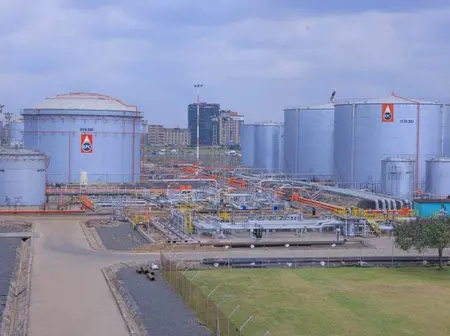
The Kenyan government has spent Ksh4.6 billion from the Petroleum Development Levy Fund to prevent increases in diesel, kerosene and petrol prices, cushioning consumers from higher fuel costs in the latest monthly price review.
The Energy and Petroleum Regulatory Authority (EPRA) announced that maximum retail pump prices for Super Petrol, Diesel and Kerosene will remain unchanged for the period between November 15 and December 14, 2026.
The decision follows an increase in the cost of importing refined petroleum products, which would otherwise have resulted in higher pump prices across the country.
In a press release issued on Saturday, November 14, 2026, EPRA said the government had intervened by using money from the Petroleum Development Levy Fund to stabilise the November-December 2026 fuel price cycle.
“The Government has applied KShs.4.6 Billion from the Petroleum Development Levy Fund to stabilize the computed petroleum pump prices for the November-December 2026 cycle,” EPRA stated.
Without the government intervention, diesel prices would have increased by Ksh10.54 per litre, Super Petrol by Ksh8.58 per litre and Kerosene by Ksh1.16 per litre.
Diesel would have recorded the highest increase, placing additional pressure on public transport operators, businesses and households through potentially higher transportation and distribution costs.
The decision also protects households that depend on kerosene for cooking and lighting, while motorists will continue purchasing petrol at the existing maximum retail prices.
EPRA attributed the pressure on domestic fuel prices to rising landed costs of imported petroleum products between September and October 2026.
The average landed cost of imported diesel increased by 6.73 per cent, rising from Ksh133,934 per cubic metre in September 2026 to Ksh142,949 in October.
Super Petrol recorded a 6.11 per cent increase, with its landed cost rising from Ksh122,893 to Ksh130,404 per cubic metre over the same period.
Meanwhile, the landed cost of imported kerosene increased by 0.71 per cent, moving from Ksh138,074 per cubic metre in September to Ksh139,055 in October.
Despite the increases, EPRA confirmed that the maximum allowed retail pump prices for all three petroleum products would remain unchanged.
“Taking into account the weighted average cost of imported refined petroleum products in the period under review, the maximum allowed retail petroleum pump prices for Super Petrol, Diesel and Kerosene remain unchanged,” the regulator said.
The regulator further confirmed that the announced fuel prices include Value Added Tax (VAT) at 8 per cent, in line with government policy to cushion consumers from the negative effects of high petroleum prices.
EPRA said the latest monthly fuel price review was conducted in accordance with Section 101(y) of the Petroleum Act, 2019, and Legal Notice No.192 of 2022.
The Ksh4.6 billion intervention means Kenyan motorists, transport operators and households will avoid additional fuel expenses during the November-December pricing period.
The next EPRA fuel price review will determine whether the prices of Super Petrol, Diesel and Kerosene will change in the subsequent pricing cycle.