Kenya is facing a fresh threat to its food production after months of poor rainfall left major maize-growing counties with significant yield deficits, even as strengthening El Niño conditions threaten to bring heavy rains, flooding and further agricultural losses.
A new assessment by the Famine Early Warning Systems Network (FEWS NET) estimates that Kenya’s national maize yields could record deficits of approximately 28 per cent, with losses reaching 43 per cent in high-potential production counties following prolonged dry spells and above-average temperatures during the June–September 2026 season.
The November 13 report identifies Trans Nzoia, Uasin Gishu and Nakuru among the counties that experienced substantial rainfall deficits during critical stages of crop development.
The warning comes as Kenya enters the peak of its October–December short-rains season, with forecasts indicating that rainfall could intensify from November, bringing opportunities for agricultural recovery but also increasing the threat of flash floods, riverine flooding and waterlogging.
FEWS NET says the combination of strengthening El Niño conditions and a positive Indian Ocean Dipole (IOD) is likely to enhance cumulative rainfall across much of East Africa, although the distribution and intensity of the rains remain uncertain.
Kenya’s agricultural outlook has deteriorated following months of inadequate rainfall and unusually high temperatures that affected crops during critical growing stages.
According to FEWS NET, Trans Nzoia, Uasin Gishu and Nakuru experienced substantial rainfall deficits, contributing to below-average maize production prospects.
The report describes the impact of the June–September season as significant moisture stress across major agricultural production zones.
“Poor rainfall performance, prolonged dry spells and above-average temperatures throughout the June–September 2026 season resulted in significant moisture stress and below-average crop production,” the assessment states.
Preliminary assessments indicate national maize yield deficits of approximately 28 per cent, with losses of up to 43 per cent across high-potential production counties.
The figures raise concerns about the country’s domestic maize supply, particularly given the importance of the North Rift region to national grain production.
The effects of erratic rainfall have also extended beyond the major maize-producing counties.
In western and coastal Kenya, particularly Siaya, Kilifi and Kwale, isolated rainfall events in late September and early October triggered premature planting.
However, the rains were followed by prolonged dry spells, undermining crop establishment.
FEWS NET warns that the false starts are “likely to necessitate replanting in affected areas”, potentially increasing production costs for farmers who have already invested in seeds, fertiliser and land preparation.
The assessment adds that most of eastern and southeastern Kenya had yet to plant by the reporting period, although rainfall expected in early to mid-November could support planting and crop establishment.
This creates a narrow opportunity for farmers to recover from the earlier dry conditions, provided the rains arrive in sufficient quantities without becoming excessively intense.
While farmers need adequate rainfall to restore soil moisture and support crop development, FEWS NET warns that excessive precipitation could introduce another round of agricultural disruption.
The report identifies flooding, flash floods and waterlogging as major threats during the remainder of the October–December season.
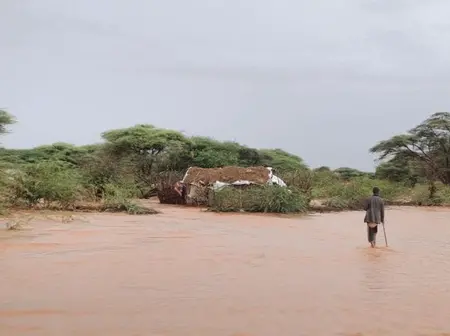
Already, heavy rainfall has triggered flooding and rapidly rising river levels in parts of eastern Kenya.
In Moyale, seasonal rivers reportedly reached bankfull levels within 24 hours following estimated rainfall of 133 millimetres on October 28.
Tana River County also experienced localised flooding during the same week.
The developments illustrate the risks associated with sudden, intense rainfall, particularly in areas exposed to river flooding.
FEWS NET warns that flood risks remain elevated across East Africa, particularly in flood-prone locations, given the likelihood of cumulative above-average rainfall in November and December.
The agency’s assessment indicates that rainfall is expected to intensify from November onwards, with much of Kenya among the areas likely to receive enhanced precipitation.
However, the report cautions that the spatial and temporal distribution of rainfall could vary significantly.
This means that some farming areas could benefit from improved soil moisture while others face crop damage, waterlogging and disruptions to agricultural activities.
For farmers who have already suffered losses from inadequate rainfall, excessive precipitation could further complicate planting, crop development and harvesting activities.
FEWS NET attributes the anticipated increase in rainfall partly to strengthening El Niño conditions alongside a positive Indian Ocean Dipole.
The two climate patterns are expected to enhance cumulative October–December rainfall across much of East Africa, with November identified as the likely peak rainfall month.
The assessment indicates that the Indian Ocean Dipole is expected to weaken slightly but remain positive, while El Niño is forecast to strengthen further, reaching its peak around December 2026.
“Current climate outlooks indicate a high likelihood of El Niño conditions persisting into early 2027,” the report states.
The prolonged influence could extend rainfall-related risks beyond the current short-rains season.
For Kenya, the expected rains present an opportunity to improve agricultural production, replenish depleted water resources and support pasture regeneration, particularly in areas that experienced prolonged dry conditions.
FEWS NET reports that pasture and surface water resources across several pastoral areas are already beginning to recover following the establishment of the October–December rains, although recovery remains uneven.
Eastern Kenya has also shown gradual improvement, with Garissa, Tana River and Lamu among the counties that have benefited from above-average rainfall in October.
However, the agency cautions that the anticipated increase in rainfall could also heighten the risk of flooding, waterlogging and disruptions to farming activities.
The emerging outlook leaves Kenya confronting two agricultural challenges simultaneously: recovering from significant rainfall deficits that have weakened maize production while preparing for potentially damaging heavy rains.
The extent of the recovery will depend not simply on how much rain the country receives, but also on where it falls, how intensely it arrives and whether farmers can successfully establish and protect their crops.
Leave a Reply