The overseas quotation is lower. The purchase order looks sensible. Then a shipping delay empties the shelf, an emergency airfreight bill arrives, and the local supplier, once dismissed as expensive, begins to look surprisingly reasonable.Localization is best understood as a risk-and-cost decision rather than a slogan about where goods should come from.
Category: Economy&Finance
-

The outdated 1974 standards law KEBS wants changed
The Kenya Bureau of Standards (KEBS) is pushing for sweeping changes to the law governing its operations, saying the current legislation is increasingly inadequate to deal with emerging business practices, particularly the growing trade in online marketplaces.The proposed changes, contained in the Standards Bill, seek to give the regulator new powers to oversee a rapidly changing business environment, strengthen enforcement through tougher penalties and improve consumer protection.
-
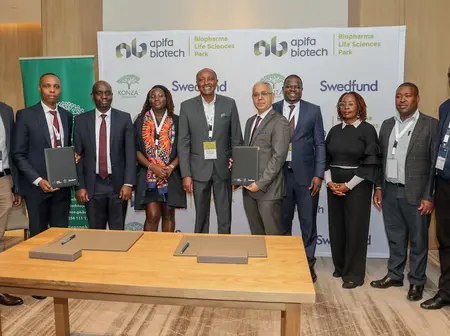
Kenya’s first Biopharma Life Sciences Park to be established at Konza Technopolis: What this means…
NAIROBI, Kenya | November 12, 2026 – Kenya’s ambition to become a regional pharmaceutical manufacturing hub has received a major boost, with Apifa Biotech securing support from Swedfund, Sweden’s development finance institution, to fund preparatory studies for the proposed Biopharma Life Sciences Park at Kenya’s flagship smart city, Konza Technopolis.
-
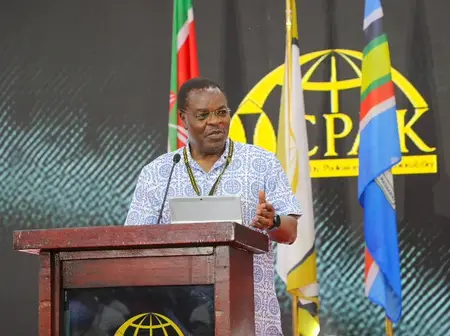
EACC warns accountants against using expertise to facilitate corruption
Listen to articleHe warned that remaining silent in the face of wrongdoing allows corruption to persist, urging professionals and members of the public to speak out against unethical conduct regardless of who is involved.Ethics and Anti-Corruption Commission (EACC) Chairperson Dr David Oginde has challenged accountants to uphold ethical standards and resist using their professional expertise to facilitate corruption.
-

Large Buyers Need Strong Suppliers: Faith Kaithia
If you doubled your order to your key suppliers tomorrow, how many of them could afford to deliver it?Faith Kaithia, who is a Senior Manager, Commercial Partnerships at agri-fintwch firm Avenews Kenya, says this year has made that question real for many of Kenya’s food buyers.
-
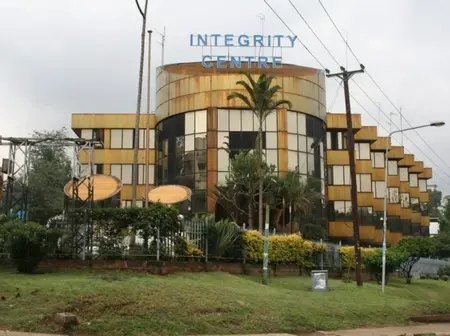
EACC pushes for cross-border crackdown to recover billions in stolen public assets
The Ethics and Anti-Corruption Commission (EACC) has called on African countries to strengthen cross-border cooperation in tracking illicit financial flows and recovering public assets suspected to have been acquired through corruption.
The commission warned that differences in national laws, delays in investigations and poor coordination between jurisdictions continue to complicate efforts to trace and recover proceeds of crime transferred beyond national borders.
The concerns emerged during the 4th COMESA–International Relations Society of Kenya (IRSK) Annual Conference held in Nairobi from November 11 to 13, 2026.
During a plenary session on November 13, experts drawn from the financial, legal, judicial and asset recovery sectors discussed the challenges facing African anti-corruption agencies in recovering stolen wealth.
The session was led by the Africa Anti-Corruption Studies and Research Centre (CEREAC) and moderated by its Executive Director, Dr Susan Kinyeki.
Among the participants was Grace Maina, a Senior Legal Officer in the Asset Recovery Department at the EACC.
The discussions focused on how countries can work together to identify, trace, freeze and recover assets transferred across borders through illicit financial transactions.
According to the EACC, the experts identified Mutual Legal Assistance (MLA) as a critical tool in facilitating investigations involving foreign jurisdictions.
“The November 13 session, moderated by CEREAC Executive Director Dr Susan Kinyeki, brought together experts from the financial, legal and judicial sectors, including Grace Maina, Senior Legal Officer in the Asset Recovery Department at the Ethics and Anti-Corruption Commission (EACC),” EACC said in a statement shared on Saturday, November 14, 2026.
“Discussions highlighted the importance of Mutual Legal Assistance (MLA) in facilitating cross-border investigations, while identifying legal differences, delays and inadequate coordination as key obstacles to asset recovery.”
The mechanism allows countries to formally request assistance from one another in obtaining evidence, financial records and other information needed to investigate and prosecute criminal activities.
However, the experts warned that differences in legal systems, slow responses to requests and inadequate coordination between countries could frustrate asset recovery efforts.
They called for closer cooperation between anti-corruption agencies, financial institutions, prosecutors and judicial authorities to ensure that stolen public resources do not remain beyond the reach of investigators simply because they have been moved to another country.
Kenya already has a legal framework for obtaining assistance from foreign jurisdictions in criminal investigations and asset recovery.
The Mutual Legal Assistance Act, 2011 provides for cooperation in obtaining evidence, tracing property, freezing assets, seizure and confiscation of proceeds of crime.
Under the law, Kenya can assist another country in identifying and tracing assets connected to criminal proceedings. It also provides mechanisms for giving effect to foreign confiscation orders, subject to applicable Kenyan laws and legal requirements.
This framework is particularly important in cases where investigators suspect that proceeds of corruption have been transferred into foreign bank accounts, companies or other property holdings.
The effectiveness of such investigations, however, depends on the willingness and ability of the countries involved to respond to requests and cooperate with one another.
The renewed push for international cooperation comes as Kenya continues to report progress in recovering assets linked to corruption and unexplained wealth.
EACC recovered approximately Ksh3.6 billion in corruptly acquired assets during the 2025/2026 financial year.
The commission had also recovered assets worth Ksh3.4 billion in the 2024/2025 financial year.
EACC officials further indicated that the agency had recovered more than Ksh30 billion worth of corruptly acquired assets over the preceding decade.
The Kenya National Bureau of Statistics’ 2026 Economic Survey also reported that the value of public assets traced by the EACC increased to Ksh22.9 billion in 2024/2025, while recovered assets stood at Ksh3.4 billion.
The commission also averted losses estimated at Ksh16.5 billion during the same financial year through disruption of corruption networks.
The Nairobi conference also examined how digital financial services and emerging technologies are changing the financial crime landscape.
Experts noted that developments in financial technology have created additional challenges for authorities seeking to identify and prevent the movement of illicit funds.
The discussions highlighted the importance of strengthening financial investigations and improving information-sharing between institutions that may hold crucial records about suspicious transactions.
The experts consequently called for more coordinated action involving investigative agencies, financial institutions, prosecutors and judicial authorities.
The conference was held under the theme, “Harnessing Africa’s Continental and Regional Institutions for Peace, Resilience and Transformation Amid a Fragmenting Global Order.”
It brought together diplomats, government officials, academics and policy practitioners to discuss regional integration, economic security, peace and governance.
-
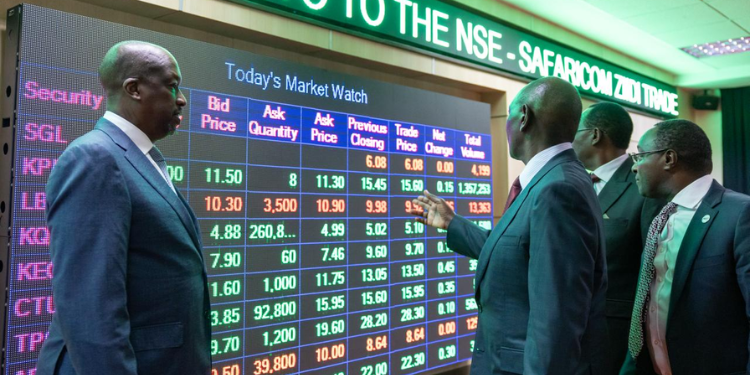
Investors Record Sharp Drop in Share Trading as CBK Releases New Data
Investors at the Nairobi Securities Exchange (NSE) traded fewer shares during the week ending November 12, 2026, as equity turnover plunged by more than 96 per cent, according to the latest Central Bank of Kenya (CBK) report.Data released by the Central Bank on Friday, November 13, showed that equity turnover dropped to KSh 4.15 billion during the week, down from KSh 109.88 billion recorded in the previous week ending November 5.
-
Kenya Power Announces Electricity Interruptions in Nyeri and Kiambu Counties on Saturday
Kenya Power has announced planned electricity interruptions in parts of Nyeri and Kiambu counties on Saturday, November 14, 2026, to facilitate routine maintenance.
The scheduled exercise will affect customers in Ihwagi and Ragati in the Mt Kenya Region, as well as Ruiru Kimbo, Murera Coffee and Ruaka in Kiambu County.
The interruptions are expected to last from 8am to 5pm in the Ihwagi and Ragati areas, while customers in the two Kiambu locations will experience outages between 9am and 5pm.
In Nyeri County, the planned maintenance will affect customers in Ihwagi Market, Ragati Tea Factory and surrounding areas from 8am to 5pm.
The affected areas include Ihwagi Market, Ihwagi C/Fact, Ihwagi Secondary School, Gathehu Village, Gatondo Secondary School, Kariki TBC, Kiawaiguru TBC, Gitemaini TBC, Itundu Market, Kangiri TBC, Gachugu-ina TBC, Kiarage TBC, Giakaibei Market, Giakaibei Secondary School, Ndumanu Village, Kanjuri High School, Kanjuri Market, Giagathege TBC, Kiunjugi TBC, Kariambi TBC, Gitima-ini Market, Kiangengi Market, Ragati Tea Factory, Kagochi Market, Ragati Forest Station, Kianjiru-ini TBC, One KM, Safaricom Boosters, Airtel Boosters and adjacent customers.
In Kiambu County, Kenya Power will interrupt electricity supply in Ruiru Kimbo and Murera Coffee from 9am to 5pm.
The affected areas include Murera Kimbo, Murera Coffee, Mugutha, Ruiru KU Model School, DC Kwa Kairu, GSU Ruiru, Spur Mall, NIBS, Toll Station, Ruiru Golf Club, Mona Park, Mulberry, Kwa Chief, Wankan, Paul Mwai, Happy Church, Courtesy Beach, Green Ridge, Mugutha Secondary School, Murera Primary School, St. Martins Catholic Church, Mugutha One Four, Judea Estate, Mugutha Police, Neema Estate, River Line Estate, Dam Ridge Estate, Ruera Dam, Makaburi Village, Wa Kariuki, Apollos, Behind Spur Mall and adjacent customers.
Residents and businesses in Ruaka will also experience a planned electricity interruption between 9am and 5pm.
The affected areas include Ruaka Town, Kyuna Road, Joyland, Getrude Hospital, Quickmart Ruaka, Cleanshelf Ruaka, Total Service Station, Gikwaru Drive and adjacent customers.
Customers in the affected areas have been advised to plan accordingly during the scheduled maintenance period.
-
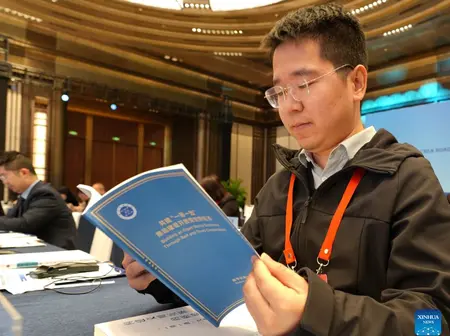
Think Tank Report Highlights Belt and Road Role in Open World Economy
The Belt and Road Initiative is playing a key role in building an open world economy, according to a report released Tuesday by Xinhua Institute, a high-end think tank affiliated with Xinhua News Agency.Titled “Building an Open World Economy Through Belt and Road Cooperation,” the report includes a preface, three chapters and a conclusion, reviewing the initiative’s achievements and outlining its future direction in promoting sustained global openness.
-

Kenyans Abroad Send Home Less Money as Remittances Decline
Remittances sent home by Kenyans living abroad declined by 1.9 per cent in October 2026, with inflows dropping to Ksh55.95 billion from Ksh57.03 billion recorded in October 2025, according to the Central Bank of Kenya (CBK).In its weekly bulletin on November 13, CBK noted that this represented a decrease of approximately Ksh1.08 billion compared to the same month last year.