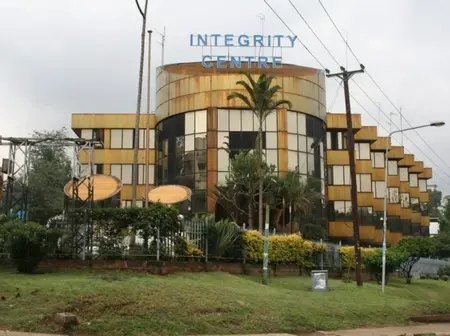
The Ethics and Anti-Corruption Commission (EACC) has called on African countries to strengthen cross-border cooperation in tracking illicit financial flows and recovering public assets suspected to have been acquired through corruption.
The commission warned that differences in national laws, delays in investigations and poor coordination between jurisdictions continue to complicate efforts to trace and recover proceeds of crime transferred beyond national borders.
The concerns emerged during the 4th COMESA–International Relations Society of Kenya (IRSK) Annual Conference held in Nairobi from November 11 to 13, 2026.
During a plenary session on November 13, experts drawn from the financial, legal, judicial and asset recovery sectors discussed the challenges facing African anti-corruption agencies in recovering stolen wealth.
The session was led by the Africa Anti-Corruption Studies and Research Centre (CEREAC) and moderated by its Executive Director, Dr Susan Kinyeki.
Among the participants was Grace Maina, a Senior Legal Officer in the Asset Recovery Department at the EACC.
The discussions focused on how countries can work together to identify, trace, freeze and recover assets transferred across borders through illicit financial transactions.
According to the EACC, the experts identified Mutual Legal Assistance (MLA) as a critical tool in facilitating investigations involving foreign jurisdictions.
“The November 13 session, moderated by CEREAC Executive Director Dr Susan Kinyeki, brought together experts from the financial, legal and judicial sectors, including Grace Maina, Senior Legal Officer in the Asset Recovery Department at the Ethics and Anti-Corruption Commission (EACC),” EACC said in a statement shared on Saturday, November 14, 2026.
“Discussions highlighted the importance of Mutual Legal Assistance (MLA) in facilitating cross-border investigations, while identifying legal differences, delays and inadequate coordination as key obstacles to asset recovery.”
The mechanism allows countries to formally request assistance from one another in obtaining evidence, financial records and other information needed to investigate and prosecute criminal activities.
However, the experts warned that differences in legal systems, slow responses to requests and inadequate coordination between countries could frustrate asset recovery efforts.
They called for closer cooperation between anti-corruption agencies, financial institutions, prosecutors and judicial authorities to ensure that stolen public resources do not remain beyond the reach of investigators simply because they have been moved to another country.
Kenya already has a legal framework for obtaining assistance from foreign jurisdictions in criminal investigations and asset recovery.
The Mutual Legal Assistance Act, 2011 provides for cooperation in obtaining evidence, tracing property, freezing assets, seizure and confiscation of proceeds of crime.
Under the law, Kenya can assist another country in identifying and tracing assets connected to criminal proceedings. It also provides mechanisms for giving effect to foreign confiscation orders, subject to applicable Kenyan laws and legal requirements.
This framework is particularly important in cases where investigators suspect that proceeds of corruption have been transferred into foreign bank accounts, companies or other property holdings.
The effectiveness of such investigations, however, depends on the willingness and ability of the countries involved to respond to requests and cooperate with one another.
The renewed push for international cooperation comes as Kenya continues to report progress in recovering assets linked to corruption and unexplained wealth.
EACC recovered approximately Ksh3.6 billion in corruptly acquired assets during the 2025/2026 financial year.
The commission had also recovered assets worth Ksh3.4 billion in the 2024/2025 financial year.
EACC officials further indicated that the agency had recovered more than Ksh30 billion worth of corruptly acquired assets over the preceding decade.
The Kenya National Bureau of Statistics’ 2026 Economic Survey also reported that the value of public assets traced by the EACC increased to Ksh22.9 billion in 2024/2025, while recovered assets stood at Ksh3.4 billion.
The commission also averted losses estimated at Ksh16.5 billion during the same financial year through disruption of corruption networks.
The Nairobi conference also examined how digital financial services and emerging technologies are changing the financial crime landscape.
Experts noted that developments in financial technology have created additional challenges for authorities seeking to identify and prevent the movement of illicit funds.
The discussions highlighted the importance of strengthening financial investigations and improving information-sharing between institutions that may hold crucial records about suspicious transactions.
The experts consequently called for more coordinated action involving investigative agencies, financial institutions, prosecutors and judicial authorities.
The conference was held under the theme, “Harnessing Africa’s Continental and Regional Institutions for Peace, Resilience and Transformation Amid a Fragmenting Global Order.”
It brought together diplomats, government officials, academics and policy practitioners to discuss regional integration, economic security, peace and governance.
Leave a Reply