Kenya’s decision to maintain petrol and diesel prices for another month comes at a critical time for long-distance travellers, with bus companies already publishing December 2026 fares ahead of the Christmas holiday rush.
The decision means motorists and transport operators will not face another pump-price increase during the first weeks of the festive travel season, despite higher costs of importing petroleum products.
In Nairobi, a litre of Super Petrol continues to retail at a maximum of Ksh226.96, while Diesel remains at Ksh227.76 and Kerosene at Ksh219.87.
However, the unchanged prices come as long-distance bus operators begin preparing for increased passenger numbers, with some already communicating their December travel charges.
One of the companies to publish its festive season fares is ENA Coach, which has outlined the amounts passengers will pay on several routes connecting Nairobi to Western Kenya, Nyanza and the Coast.
In an update shared on Wednesday, November 11, 2026, ENA Coach addressed travellers preparing for the December holidays, publishing its latest fare schedule for various destinations.
“Have you secured a ticket? These are the Dec rates as of now,” the company stated in a post on its official Facebook page.
According to the published schedule, passengers travelling between Nairobi and several Western Kenya and Nyanza destinations will pay between Ksh1,700 and Ksh1,800, depending on their routes.
Some of the routes attracting a Ksh1,800 fare include Nairobi to Busia through Nambale, Kakamega and Kapsabet, Nairobi to Kisumu through Ahero, and Nairobi to Port Victoria through Funyula and Bumala.
Travellers heading to Kisii through Oyugis and Nyamira through Kendu Bay, Sondu and Kadongo will pay Ksh1,700.
For passengers travelling from selected Western Kenya and Nyanza towns to Mombasa, ENA Coach has listed a fare of Ksh3,000 across several routes, including journeys originating from Busia, Kisumu, Mbita, Kendu Bay and Port Victoria.
The timing of EPRA’s announcement is significant because diesel is a major operating expense for long-distance buses and other commercial transport vehicles.
Keeping diesel prices unchanged gives operators some predictability in their fuel expenditure as they prepare for the increase in passenger demand expected towards Christmas.
However, stable pump prices do not necessarily translate into unchanged passenger fares. Transport companies also consider vehicle maintenance, staff expenses, route distances, demand and seat availability when determining their charges.
This means passengers should not automatically expect lower fares simply because EPRA has maintained fuel prices.
EPRA’s decision followed an increase in the average landed cost of imported petroleum products between September and October 2026.
The government applied Ksh4.6 billion from the Petroleum Development Levy Fund to prevent the additional import costs from being transferred to consumers.
“The Government has applied Kshs.4.6 billion from the Petroleum Development Levy Fund to stabilise the computed petroleum pump prices for the November-December 2026 cycle,” EPRA stated in its November 14 press release.
The authority added that without the intervention, Super Petrol would have increased by Ksh8.58 per litre, Diesel by Ksh10.54 and Kerosene by Ksh1.16.
The intervention therefore provides temporary relief to transport operators and other fuel consumers as the country approaches the festive season.
This means the next announcement will come as the Christmas travel period approaches its peak, potentially attracting attention from passengers and transport operators planning their operations.
For now, the combination of unchanged fuel prices and published December bus fares gives travellers an opportunity to estimate their transport budgets and secure tickets ahead of the holiday rush.
Whether the stability at fuel stations will translate into stable bus fares throughout December will depend on subsequent fuel price reviews and individual transport companies’ pricing decisions.
Ethiopia’s ambitious plan to construct 1.5 million homes over the next five years is raising fresh questions about the cost, efficiency and affordability of Kenya’s flagship Affordable Housing Programme, which has mobilised billions of shillings from workers and employers.
The comparison comes at a time when governments across Africa are under pressure to address growing housing shortages, rising construction costs and the inability of millions of low-income households to access decent homes.
While Ethiopia is positioning its latest housing initiative as a major expansion of supply through government investment, private developers and public-private partnerships, Kenya has adopted a financing model largely anchored on a compulsory housing levy, complemented by government funding and private investment.
But the two programmes face a common test: whether the money and resources committed will translate into completed homes that ordinary citizens can afford.
Ethiopian Prime Minister Abiy Ahmed announced in July 2026 that his government was targeting at least 1.5 million new houses over five years, following what he described as the construction of 1.2 million homes across the country over the preceding seven years.
According to the Ethiopian Broadcasting Corporation, the new programme will involve government agencies, private investors and public-private partnerships, with the administration also looking to introduce modern construction technologies, including 3D construction methods.
The government says it is developing long-term financing arrangements that will allow low- and middle-income households to save towards homeownership, while providing rental alternatives for people unable to purchase houses.
The announcement represents an ambitious attempt to expand housing supply beyond major urban centres, with the government indicating that the programme will also cover rural communities.
However, the 1.5 million figure remains a target rather than an independently verified delivery record. Ethiopia has yet to provide a publicly detailed breakdown of the new programme’s projected cost, financing commitments, construction timetable and expected price per housing unit.
Under the Affordable Housing Act, 2024, employees contribute 1.5 per cent of their gross monthly salaries, with employers required to make a corresponding contribution.
The programme is also supported by government resources, private developers, public-private partnerships and housing finance arrangements.
The World Bank’s February 2026 project appraisal document indicates that the housing levy had mobilised more than Ksh130 billion by the time of its assessment.
The programme targets 250,000 housing units annually, with an ambition of delivering one million homes by 2027.
However, the scale of the financing has not always matched the pace of completed construction.
Data from the Controller of Budget’s National Government Budget Implementation Review Report for the 2025/26 financial year shows that the Affordable Housing sub-programme spent Ksh122.18 billion against a revised allocation of Ksh124 billion, representing a budget absorption rate of approximately 99 per cent.
Despite the high expenditure, only 1,836 affordable housing units were completed and handed over during the financial year.
Another 1,380 units were substantially complete but were awaiting handover.
The programme achieved 24.5 per cent completion of works against an annual target of 52 per cent for projects covering 217,654 housing units.
This left a shortfall of 27.5 percentage points, raising questions about the relationship between the money being spent and the physical progress being achieved.
The figures do not necessarily mean that the entire Ksh122.18 billion was spent on the 1,836 completed homes alone. The expenditure also supports ongoing projects, infrastructure and other implementation activities.
Nevertheless, they illustrate the challenge facing Kenya: converting substantial financial commitments into completed and occupied housing units.
Although Ethiopia’s latest 1.5 million-home initiative is still at the planning and implementation stage, the country has experience with large-scale government-led housing schemes.
Its Integrated Housing Development Programme (IHDP), launched in 2006, sought to provide low-cost condominium housing, particularly in urban areas.
A World Bank study titled Unlocking Ethiopia’s Urban Land and Housing Markets examined the programme’s performance and found that it had produced approximately 383,000 housing units at the time covered by the research.
The study estimated that the average total government cost of delivering one unit, including land, infrastructure, construction, administration and other expenses, was 647,007 Ethiopian birr, equivalent to approximately US$23,292(Ksh 3,029,124.60) under the report’s historical exchange-rate assumptions.
It also found that the government recovered only about 35 per cent of the cost of producing an average unit through sales.
The researchers estimated that subsidies for the 383,000 homes amounted to approximately 150 billion birr, or US$5.3 billion(Ksh 689.27 billion).
More importantly, the World Bank identified a major affordability problem.
Even the cheapest studio apartments under the programme were beyond the reach of the bottom 40 per cent of households in the cities examined.
The findings suggest that constructing large numbers of houses does not automatically guarantee that the poorest households can afford them.
A separate assessment by the Centre for Affordable Housing Finance in Africa estimated Ethiopia’s annual housing need at approximately 471,000 units up to 2025, illustrating the scale of the country’s accumulated housing shortage.
These findings are relevant to Ethiopia’s new initiative because they demonstrate the importance of balancing construction targets with sustainable financing and the purchasing power of intended beneficiaries.
However, the historical IHDP findings should not be treated as the financial performance of the new 1.5 million-home programme, which has a different financing framework.
Kenya’s housing programme has also been designed around different income groups.
The World Bank’s 2026 appraisal document identifies three broad categories: social housing for households earning below Ksh20,000 monthly, affordable housing for those earning between Ksh20,000 and Ksh149,999, and affordable middle-class housing for higher-income households.
The programme uses different delivery mechanisms, including tenant-purchase arrangements, mortgage refinancing and partnerships with private developers.
However, the World Bank notes that housing affordability remains a major constraint.
Its assessment estimates that Kenya has a housing deficit exceeding two million units, while formal housing supply remains below 50,000 units annually against demand of more than 250,000 units.
The report also indicates that approximately 75 per cent of formal workers earn below Ksh50,000 monthly, placing conventional mortgage products beyond the reach of many households.
This raises an important question about whether the housing units being constructed are affordable to the people who need them most.
Affordable prices on paper are not necessarily affordable in practice if a household cannot meet the required deposit, monthly instalments or other associated costs.
The government has attempted to address this challenge through tenant-purchase arrangements and long-term financing.
A direct verdict on which country is getting better value for money would be premature because the two programmes are at different stages and their financing structures are not identical.
Ethiopia’s 1.5 million-home target covers a five-year period and combines public financing with private investment and partnerships.
Kenya’s programme has a compulsory revenue collection mechanism, established project pipelines and publicly reported expenditure and construction figures.
On financial accountability, Kenya has an advantage in the availability of regular budget implementation reports and independent audits. However, the latest delivery figures show that high budget absorption has not translated into comparable progress in completed houses.
Ethiopia, meanwhile, has set an ambitious target and says it has expanded construction capacity, but the new programme needs more transparent information on its financing, unit costs, construction milestones and beneficiary selection to allow an independent assessment of its value.
The comparison also highlights a fundamental lesson from Ethiopia’s earlier housing programme: the success of a housing initiative should not be measured by the number of buildings constructed alone, but by whether intended beneficiaries can afford to occupy and retain them.
For Kenya, the challenge is to demonstrate that the billions collected through the housing levy are producing homes at a pace and price that justify the compulsory contributions.
For Ethiopia, the challenge is to avoid repeating the affordability and subsidy problems identified in its previous housing scheme as it embarks on an even larger construction drive.
Ultimately, the country that delivers the greatest value will not necessarily be the one that announces the largest housing target or collects the most money.
It will be the one that delivers quality, serviced homes at a sustainable cost, makes them accessible to low-income households and demonstrates that public and private resources are being used efficiently.
Rono is a digital journalist with a proven track record in newsroom leadership and content creation. Currently a Digital Writer for People Daily Digital, Emmanuel’s career is rooted in a lifelong passion for storytelling. Let's talk here: or
Kenya Power has announced planned electricity interruptions in parts of Nairobi, Machakos, Turkana, Uasin Gishu and Nyeri counties on Sunday, November 15, 2026, to facilitate routine maintenance.
The scheduled exercise will affect several residential estates, businesses, roads and institutions, with most interruptions expected to run between 9am and 5pm. However, some areas in Machakos County will experience longer outages extending to 8pm.
Electricity supply will be interrupted in parts of Parklands from 9am to 5pm.
The affected areas include 3rd, 4th and 5th Parklands, part of Wangapala, Diamond 1 and 2, Highridge KPLC Staff Quarters, TRV Plaza, part of Mpaka Road, Jalarain Road, part of General Mathenge Road and adjacent customers.
Customers along parts of Enterprise Road and the whole of Migwani Road will experience an outage between 9am and 5pm.
The affected customers include Styroplast Ltd, Steel Africa, Hannan Tissue, Tetra Park, Fine Spinners, the whole of Migwani Road and adjacent customers.
Karatasi Brand and adjacent customers will also be without electricity between 9am and 5pm.
Another planned interruption will affect parts of Enterprise Road and Clesoi Road from 9am to 5pm.
The affected areas include Paper Converters, Bins Ltd, Rollmill, Panafric Transformers, Mahindra, Omar Water, part of Falcon Estate, Falcon Police Post, Falcon Catholic Church and adjacent customers.
Residents and businesses in Athi River will experience two separate planned interruptions on Sunday.
The first outage will run from 8am to 8pm, affecting Alpharama, Old Mombasa Road, Petrocity, Sabaki Estate, Greatwall Gardens (part of Phases 1 and 2), Tamarind, London Distillers, Lifecare, Saphire Business Park, Signature Mall, Ngwata, KPLC Offices Mlolongo, Apex TMD, Saj Ceramics, Oriental Godowns, Athi River Sokoni, Senior Staff Estates and adjacent customers.
A second interruption, scheduled from noon to 8pm, will affect Crystal Rivers, Sunset Boulevard, Greatwall Gardens (part of Phases 1, 3, 4 and 5), Welding Alloys, Riverpark Estate, Kims Business Park, Nova School and adjacent customers.
In Turkana County, electricity supply will be interrupted in Lokichar, Kasuroi and Kapese between 8am and 5pm.
The affected areas include Lokichar Town, Nalemsekon, Kasuroi, Kamarese, Kapese, Arid Summit Hotel and adjacent customers.
Customers in Kamukunji Estate and surrounding areas will experience an electricity interruption from 9.30am to 4.30pm.
The outage will affect Kamukunji Estate and adjacent customers.
In Nyeri County, planned maintenance will affect parts of Mukurweini and Gaturia from 8am to 5pm.
The affected areas include South Tetu Girls Water Pump, Mukurweini Boys, Gaturia Market and adjacent customers.
Kenya Power customers in all the affected areas have been advised to make alternative arrangements during the scheduled maintenance periods.
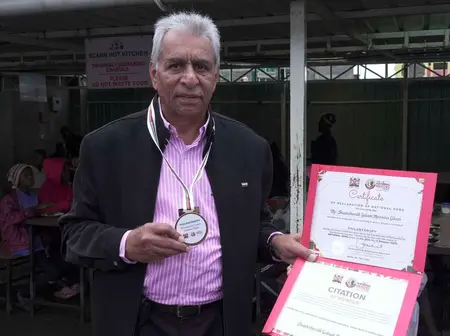
When the COVID-19 pandemic struck in 2020, Shamsher Gilani had only recently retired from a four-decade career as finance director of Gilani’s Supermarket.Yet, while many people would have welcomed the opportunity to slow down, he found himself taking on a new responsibility: ensuring that vulnerable children and families in Nakuru’s informal settlements did not go hungry.
An Indian national has been arrested at Jomo Kenyatta International Airport (JKIA) over allegations of defrauding an investor of approximately Ksh172.3 million in a gold investment deal involving a promised consignment of 210 kilograms of the precious metal.The Directorate of Criminal Investigations (DCI) identified the suspect as Maheshbhai Rameshbhai Bhadra, who was intercepted shortly after arriving in Kenya aboard a flight from Dubai, United Arab Emirates.
Labour and Social Protection Cabinet Secretary Alfred Mutua announced the development on Saturday, November 14, after signing a Letter of Intent with Saudi Arabia's Vice Minister for Human Resources and Social Development, Dr Abdullah bin Nasser Abuthnain, during a meeting in Riyadh.
The agreement establishes a framework for cooperation between the two countries, with an initial three-month pilot programme designed to make recruitment more affordable for Kenyan job seekers.
One of the key measures under the arrangement is the introduction of an agreed ceiling on the total cost of recruitment. The initiative seeks to address expensive recruitment fees that have prevented many Kenyans from accessing employment opportunities abroad.
Mutua explained that reducing these costs would allow workers to retain more of their earnings, save money and invest in their future.
The employment opportunities will cover several sectors of the Saudi Arabian economy, including transport, hospitality, education, healthcare, construction, retail and the oil and gas industry.
Among the targeted professions are drivers, teachers, tutors, medical practitioners, hospitality workers and construction employees.
The government will work through the National Employment Authority (NEA) to identify recruitment agencies interested in participating in the programme. Interested agencies will be required to submit their details and supporting documents for consideration by Saudi authorities.
Participation in the three-month pilot will be voluntary, with agencies expected to demonstrate their ability to operate within the agreed recruitment cost ceiling.
Kenya will also facilitate compliance checks, assess medical centres and accelerate the processing of candidates' documents, while Saudi Arabia will work with its embassy in Nairobi to speed up visa processing.
Meanwhile, Mutua cautioned Kenyans against dealing with unlicensed recruitment agents promising overseas employment. He urged job seekers to verify recruitment agencies through the National Employment Authority before surrendering money or personal documents.
The two governments will review the programme after three months to assess its performance and determine whether it should be extended or adjusted.
The agreement comes as Kenya intensifies efforts to address unemployment by expanding access to international labour markets while seeking better working conditions and remuneration for its citizens.
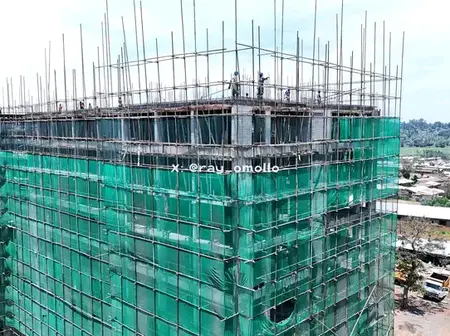
According to Omollo, the development will provide 293 housing units distributed across two high-rise blocks measuring 14 and 15 floors.
The project also incorporates commercial and community facilities intended to serve residents and the surrounding neighbourhood.
Among the planned amenities are shops, a community centre, a playground, landscaped outdoor spaces and essential utility services.
The development is expected to address part of the housing shortage while supporting the transformation of Awendo into a town capable of accommodating increased economic activity.
Beyond providing homes, the project is also creating employment opportunities for local residents.
It is offering trainees practical construction experience, helping them acquire skills that can support their pursuit of professional certification and future employment in the building industry.
Omollo noted that housing remains an important component of the government's wider development agenda, particularly in towns expected to benefit from renewed industrial activity.
The Awendo project is among the developments expected to contribute to the government's affordable housing programme while supporting the long-term renewal of towns across the Sugar Belt.
Its completion is expected to provide new residential and community facilities in the area.
Equity Group’s Africa Recovery and Resilience Plan (ARRP) is built around an ambitious expansion of financial inclusion, enterprise financing and economic transformation across the African continent.Equity Group 2030 Targets:▸ 100 million customers across its markets.▸ 5 million borrowing businesses and 25 million borrowing customers.
“When you think about our relationship with China, we always think about it from a very unilateral perspective, where we get things from China,”NAIROBI, November 2026: For many Kenyan businesses, China is a source of affordable products, machinery and technology.
China has reached a major milestone in electric aviation after its first independently developed 10-tonne electric commercial aircraft successfully completed its maiden piloted flight.The aircraft, known as the CE-25A, took to the skies on Saturday, November 14, 2026, in Binzhou, Shandong Province, with two pilots and a flight-test engineer on board.