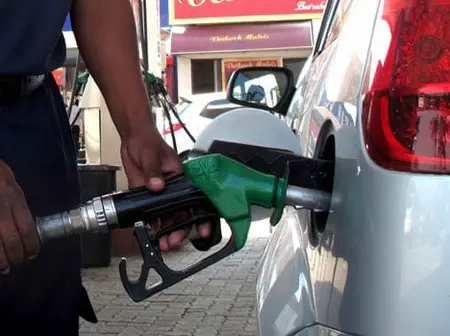
Kenyan motorists will have to wait longer for relief at the pump despite a continued decline in international crude oil prices, after the Energy and Petroleum Regulatory Authority (EPRA) retained fuel prices for another 30 days.
In its latest monthly review announced on Saturday, November 14, 2026, EPRA maintained the prices of Super Petrol, Diesel and Kerosene for the period November 15 to December 14, 2026, keeping consumers exposed to the high fuel costs recorded in the previous pricing cycle.
In Nairobi, a litre of Super Petrol will continue retailing at Ksh226.96, Diesel at Ksh227.76 and Kerosene at Ksh219.87.
According to CBK’s Weekly Bulletin released on November 13, 2026, Murban crude oil prices declined to USD90.07 (Ksh 11,713.60) per barrel on November 12, 2026, down from USD94.04(Ksh 12,229.90)on November 5, 2026, representing a drop of approximately 4.2 per cent.
The Kenyan shilling also remained stable against the US dollar, exchanging at Ksh129.96, unchanged from November 5, 2026.
However, the latest EPRA review reveals that the cost of importing refined petroleum products into Kenya moved in the opposite direction during the period used to calculate domestic fuel prices.
One of the main reasons motorists are yet to benefit from the decline in crude oil prices is the difference between crude oil prices and the international prices of refined petroleum products.
Kenya imports its petroleum requirements in refined form rather than importing crude oil for local refining.
This means that changes in crude oil benchmarks do not automatically translate into immediate reductions in the cost of petrol, diesel and kerosene.
According to EPRA, the average landed cost of imported Super Petrol increased by 6.11 per cent, from USD977.55(Ksh 127,130.38) per cubic metre in September to USD1,037.30(Ksh 134,900.87) in October 2026.
Diesel recorded a bigger increase of 6.73 per cent, rising from USD1,065.38 (Ksh 138,552.67)to USD1,137.09 (Ksh 147,878.55) per cubic metre.
Kerosene also registered an increase of 0.71 per cent.
These increases meant that despite the recent correction in crude oil prices, the cost of bringing refined petroleum products into the country remained higher during EPRA’s review period.
The timing of international price movements also matters because the regulator calculates local pump prices using the weighted average cost of imported refined petroleum products during the relevant pricing period.
Consequently, a decline recorded in the international market towards the end of a pricing cycle may not immediately be reflected in the next month’s domestic prices.
Another major factor behind the unchanged pump prices is the government’s intervention through the Petroleum Development Levy Fund.
EPRA disclosed that the government applied Ksh4.6 billion from the fund to stabilise fuel prices during the November-December 2026 pricing cycle.
Without the intervention, motorists would have faced another round of increases despite the regulator maintaining the existing pump prices.
According to EPRA, Super Petrol would have increased by Ksh8.58 per litre, Diesel by Ksh10.54 and Kerosene by Ksh1.16.
The intervention therefore prevented a potential increase in the cost of all three petroleum products.
The latest move follows October’s significant fuel price increases, when EPRA raised Super Petrol by Ksh12.93 per litre, Diesel by Ksh9.90 and Kerosene by Ksh28.49.
The increases pushed petrol prices in Nairobi to Ksh226.96, Diesel to Ksh227.76 and Kerosene to Ksh219.87, levels that have now been retained for another month.
The decision to maintain pump prices offers temporary stability to motorists, transport operators and businesses that rely heavily on petroleum products.
However, it also means households will continue bearing the impact of elevated fuel costs, particularly through transportation, food distribution and other essential services.
Diesel prices are particularly significant because the product is widely used by public transport vehicles, trucks, agricultural machinery and industrial equipment.
A sustained reduction in international refined petroleum prices could eventually create room for cheaper fuel in Kenya, provided other cost components do not offset the decline.
These include the exchange rate, importation expenses, distribution costs, taxes and government levies.
For now, the government’s Ksh4.6 billion intervention has prevented another increase, but motorists will have to wait for subsequent pricing reviews to establish whether the recent decline in global oil prices will translate into meaningful relief at local petrol stations.
Leave a Reply