
The Nairobi Securities Exchange ended Monday’s session mixed. The broad NASI slipped 0.1% and the NSE 20 fell 0.2%, while the NSE 25 and the N10 each gained 0.1%.Equity turnover rose 2.4% to USD 2.6 million. Foreign investors were more active than at the end of last week: local investors’ share of trading fell to 80.9%, from 92.8% on Friday.
Category: Economy&Finance
-

Prime Bank profit up 23pc on income from government securities
Prime Bank’s net profit for the nine months to September rose 23.2 percent to Sh5.33 billion on higher earnings from government securities and lower cost of funds.
The lender, which has a regional interest through investment in partner banks outside the East African Community, recorded a profit after tax of Sh4.33 billion in a similar period last year.
-
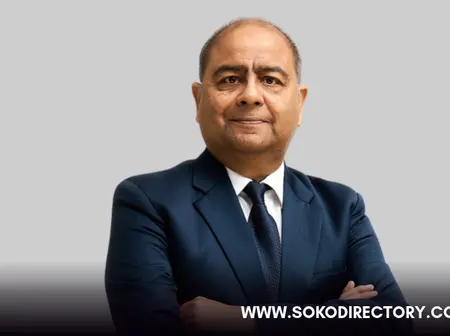
Air France-KLM Appoints Rajat Kumar as Country Sales Manager for Kenya
Air France-KLM has appointed Rajat Kumar as Country Sales Manager for Kenya, bringing his regional commercial experience to the airline group’s efforts to strengthen its presence and partnerships in the East African market.Kumar brings more than 30 years of experience in the aviation industry, including extensive international experience in sales management, country operations and commercial strategy across Africa, the Middle East and Asia.
-
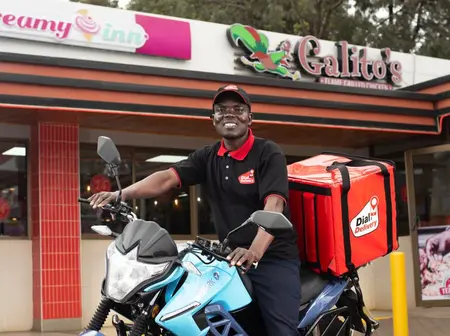
The business behind Kenya’s food deliveries is expanding into groceries, subscriptions and customer loyalty
Simbisa Brands’ decision to take full ownership of its Kenyan delivery business points to a commercial contest that is becoming more complicated than the competition between food-ordering apps. Restaurant groups are investing in direct delivery operations even as Bolt Food and Glovo expand their merchant networks into groceries, household products and other retail categories. The Kenya food delivery market is developing along two competing models: businesses building their own distribution channels and technology platforms seeking to aggregate more of the country’s everyday spending.
Simbisa completed its acquisition of the remaining 25% stake in Kutuma Kenya for approximately KSh85.8 million, giving it full ownership of the delivery operation behind its Dial-A-Delivery service, according to reporting by TechTrendsKE. The transaction followed a period of growth for the business. Kutuma handled 3.23 million delivery orders in the financial year ended June 2026, a 59% increase on the previous year, the publication reported.
The acquisition gives Simbisa greater control over an operation that serves its restaurant brands, including Galito’s and other businesses in its portfolio. Kutuma has also indicated ambitions to develop beyond a dedicated restaurant delivery service and into a wider marketplace serving independent restaurants and other merchants.
That possibility puts the business in a different position from a conventional restaurant-owned ordering app. If Kutuma expands its merchant base, it will compete for orders with the same aggregators that restaurants use to reach customers beyond their own channels.
The economics behind restaurant-owned delivery are becoming more relevant as established food businesses seek closer relationships with customers.
Kuku Foods East Africa, which operates KFC in the region, has also discussed the role of its own ordering application alongside third-party delivery services. Kuku Foods CEO Jacques Theunissen said orders placed through KFC’s Uganda app were generating additional demand rather than simply replacing orders coming through Glovo.
That position suggests restaurants can use their own digital channels and aggregator partnerships for different purposes. A proprietary application gives a restaurant more direct access to customers and their ordering behaviour, while an aggregator offers access to a wider marketplace and an existing delivery network.
Simbisa’s acquisition gives that strategy a financial dimension. Full ownership of Kutuma allows the group to retain control over its delivery operation and make decisions about how the service develops. The marketplace ambition could also allow it to serve merchants beyond its own restaurant brands.
The model carries its own operating demands. A restaurant group running delivery infrastructure must manage technology, customer support, courier availability and fulfilment costs. It also needs enough order volume to support those expenses. Aggregators spread their technology and delivery infrastructure across multiple merchants, giving them a different cost structure.
The two models can therefore coexist, although their commercial interests may overlap when they compete for the same customer and transaction.
Bolt Food’s expansion into supermarket and retail orders provides a clear example of how the marketplace model is developing.
In June 2026, Bolt Food partnered with Quickmart to bring more than 12,000 products from over 60 stores onto its platform, according to TechTrendsKE’s reporting. The selection included groceries, household goods, beverages and wellness products. The integration gave Bolt Food a retail offering that could serve customers with purchasing needs beyond prepared meals.
The partnership predates Ivy Maingi’s appointment as Bolt Food Kenya’s general manager in June 2026. In a November interview, Maingi said grocery and retail had grown to account for more than 20% of the platform’s business in Kenya, with the category recording triple-digit year-on-year growth.
She also described an average ordering frequency of approximately four times a month across the platform. According to Maingi, grocery purchases are contributing to that frequency because customers can return to previous baskets and repeat routine orders. A household that orders takeaway at the weekend may also use the app during the week for items such as nappies, tissues and fresh produce.
The commercial implications extend beyond the delivery fee. A broader catalogue gives a platform more opportunities to engage customers, while repeat purchasing can help merchants reach consumers who may not otherwise visit their physical stores. It also gives retailers another route to serve customers who weigh delivery costs against the time and expense of travelling to a supermarket.
Glovo is pursuing a similar multi-category strategy. The company reported 40% order growth in Kenya over the previous year, with more than 6,000 merchants and over 2,200 active daily riders, according to TechTrendsKE. Glovo also said its platform had generated more than KSh20 billion in cumulative sales for merchant partners since entering Kenya in 2019.
Those figures provide an indication of the scale of its local marketplace, although they measure different aspects of the business from Bolt Food’s reported retail contribution. Glovo’s order growth cannot be directly compared with Bolt’s retail share, and its cumulative merchant sales are not equivalent to platform revenue.
The competitive direction is clearer than any direct ranking: delivery platforms are trying to make their applications useful across more purchasing occasions. Restaurant meals can attract a customer to the platform, while groceries and other products give that customer reasons to return during the week.
The expansion into retail creates opportunities for merchants and platforms, but it also changes what an effective delivery operation must handle.
Restaurant orders generally involve prepared products, defined menus and established kitchen processes. Grocery and supermarket orders can involve larger baskets, product substitutions, fresh produce and a wider range of picking requirements. The delivery platform must coordinate those processes while maintaining accurate order information and reasonable fulfilment times.
For retailers, the appeal lies partly in reaching customers through an existing digital marketplace. Quickmart’s integration with Bolt Food placed thousands of products within an application already used for transport and food delivery. Glovo’s merchant network offers a comparable route into online sales for businesses that may not have the resources to build and maintain their own ordering platforms.
The opportunity also extends to product discovery and advertising. Glovo has discussed retail media as part of its commercial strategy, using the platform to give brands and products greater visibility during the purchasing process. Its reporting on customer searches suggests that users frequently search by product category rather than a particular brand. That creates potential value for merchants and consumer brands seeking to influence what customers choose.
For the platforms, a larger catalogue can increase order frequency and create additional commercial relationships. But the value of that activity depends on fulfilment costs, merchant economics and customer retention. More orders do not automatically translate into stronger margins if each transaction requires expensive delivery or significant promotional spending.
Bolt Food’s subscription offering illustrates another way platforms are trying to influence purchasing behaviour. Bolt Plus costs KSh280 a month and provides free delivery on eligible orders from participating merchants, alongside benefits on eligible Bolt rides. Maingi described the subscription as a way to encourage customers to order more frequently.
Her explanation of the model included a contribution from participating merchants, which pay slightly more for Plus customers. The commercial proposition depends on whether additional order volume makes that higher merchant cost worthwhile.
The subscription also places more pressure on the platform to maintain a sufficiently broad network of participating businesses. Customers are unlikely to value a delivery membership if the merchants they regularly use are excluded or if the service cannot fulfil orders reliably.
Bolt Plus entered a market where Glovo Prime and Uber One had already introduced subscription-based benefits. The three products use membership to encourage more frequent engagement with their respective platforms, although their pricing and benefits differ.
For customers, subscriptions can make delivery costs more predictable. For platforms, they offer recurring income and a way to encourage repeat transactions. Merchants may benefit from additional orders, but the financial arrangement depends on the fees charged and the value of the customers attracted through the membership.
The model creates a commercial calculation that goes beyond the monthly subscription price. A customer paying KSh280 for Bolt Plus may place more orders because eligible deliveries no longer carry the usual delivery fee. Bolt must then balance the cost of those benefits against subscription income, merchant contributions and the additional volume generated.
The question for merchants is whether Plus customers spend enough to compensate for the higher participation cost. A rise in order frequency could improve sales, but the value depends on basket size, product margins and the cost of preparing and fulfilling each order.
That is particularly relevant for smaller restaurants and retailers, which may have less room to absorb platform charges than larger chains. Maingi has identified the merchant app, viable unit economics and responsive support as important factors in whether businesses remain on a delivery platform.
The expansion of delivery categories also places greater demands on the people and infrastructure responsible for fulfilment.
Bolt’s separate parcel service, Bolt Send, passed one million deliveries in Kenya, according to TechTrendsKE. The company reported that order volumes increased by more than 135% between January and July 2026, with Nairobi accounting for over 95% of the orders. Bolt Send’s growth is evidence of activity in the company’s wider delivery operation, although parcel figures should not be treated as Bolt Food performance.
The two services operate in different segments, but they illustrate the potential value of a delivery network that can serve multiple types of demand. A courier network handling parcels and food may offer operational flexibility when demand varies across categories. That depends on how the platform manages availability, routing, service standards and the specific requirements of each order type.
Maingi has also said Bolt is encouraging couriers to use electric motorcycles through partnerships with electric vehicle providers. She estimated that electric bikes can reduce fuel costs by approximately 30% and said their maintenance costs are lower. She linked improved courier earnings to better retention and fewer service problems, although the fuel-saving figure and its operating assumptions were not independently established in the interview.
Courier regulation adds another responsibility to the operating model. TechTrendsKE has reported on the Communications Authority’s app-based courier licensing framework, which includes requirements concerning sender and recipient verification, parcel declarations, tracking and record retention. Those provisions are particularly relevant as platforms extend their services into general parcel delivery.
For food and retail platforms, reliable fulfilment remains central to customer retention. A broader product catalogue can bring more transactions onto an application, but late deliveries, missing items and inconsistent service can undermine the value of that convenience. The operational challenge grows as platforms handle different merchants, products and delivery requirements across more locations.
Kenya’s delivery businesses are therefore competing on several fronts. Simbisa is strengthening its ownership of a restaurant-linked delivery operation, while Bolt Food and Glovo are extending their marketplaces into more categories of retail. Subscriptions give platforms another way to encourage repeat orders, and courier networks remain essential to turning that demand into completed transactions.
The eventual balance between these models will depend on whether each can make delivery commercially sustainable for the businesses supplying the products, the people fulfilling the orders and the customers paying for the service.
-

Treasury injects Sh1bn in Consolidated Bank after 7-year wait
The National Treasury has injected Sh1 billion in Consolidated Bank of Kenya as the lender continued to report profit growth after years of making losses.
Consolidated Bank reported a four-fold growth in net profit for the nine months to September 2026 riding on earnings from government securities and lower interest expenses following mobilisation of cheaper deposits.
-

KCB wraps up Common Cents comedy tour with the final show in Nairobi
KCB Bank over the weekend concluded its Common Cents comedy tour with a final show at the Louis Leakey Auditorium, Nairobi National Museum, bringing customers together for an evening of laughter, entertainment and financial education.The event provided a fun and interactive platform for customers to engage with the Bank’s Common Cents campaign while learning about the importance of making informed financial decisions and developing healthy money management habits.
-
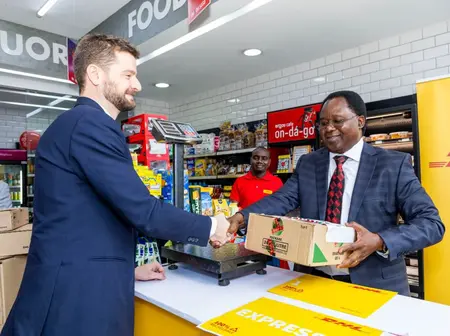
DHL And Rubis Energy Kenya Bring Shipping Services Closer To Customers Nationwide
DHL Express Kenya and Rubis Energy Kenya have entered into a retail partnership that will make shipping services more accessible for customers nationwide. Under the partnership, 60 Rubis service stations across Nairobi, the Coast region, Nyanza, Nakuru and Naivasha will operate as DHL Service Points, allowing customers to conveniently send documents and parcels through DHL’s global network.
-

Inside Safaricom’s fight to keep customers safe in the age of AI scams
When Safaricom announced its half-year results earlier this month, the headline numbers told a story of a business in strong health. Net income attributable to shareholders rose 35.9% to KES58.2 billion in the six months to September 2026. M-PESA, the company’s flagship mobile money service, passed KES100 billion in half-year revenue for the first time.
Behind those figures, however, sits a less visible challenge that grows with every new customer, transaction and digital product: keeping people safe.
M-PESA processed 27.4 billion transactions during the period, up 25.2% on the previous year, for 27.86 million paying customers. Each one is a potential target for fraudsters, who are increasingly turning to social engineering, fake promotions and AI-powered tools to deceive users.
“Security is actually trust,” said Nicholas Mulila, Group Chief Risk Officer at Safaricom, speaking to TechTrends on the sidelines of the results announcement. “And one of the things that we continue to do is to invest very heavily in terms of security.”
For Mulila, protecting customers starts long before a product reaches the market. Safaricom has built mandatory checkpoints into its product development process, so that nothing launches without passing dedicated reviews.
“Because of the addition of technology, we are very keen to ensure that we innovate in a safe, secure and private manner,” he said. “In every product that comes out, there’s always a gate for security specifically, there’s a gate for safety, there’s a gate for privacy. Very critical, that’s the first thing.”
The approach reflects a wider shift in how large technology companies manage risk. Security and privacy are treated as core design requirements from the outset, rather than features added after launch.
That matters more as Safaricom expands beyond connectivity and mobile money into areas such as lending, investments, enterprise cloud and digital public infrastructure. Each new service brings new data, new integrations and new potential vulnerabilities.
Even the most secure systems, however, can be undermined by human behaviour. Mulila said social engineering, where fraudsters manipulate people into handing over money or information, remains one of the most persistent threats facing Safaricom customers.
“Our customers are susceptible to social engineering, and one of the things we’ve been trying to do over time is to continue to educate our customers, to continue to make them aware, to continue to just tell them to be alert, because these scams come in different ways,” he said.
A common tactic is impersonation, with fraudsters calling customers and claiming to be from Safaricom. Mulila stressed that the company calls customers from only one official number.
He warned that the risk will rise over the coming weeks, as fraudsters take advantage of the festive season.
“Especially now we are going into Christmas, you’re going to see a lot of people coming up with fake promotions,” he said.
Safaricom’s message to customers is simple: you cannot win a promotion you did not enter. The company runs awareness campaigns across digital platforms, TV and radio, and directly in the market through its retail and agent networks.
Privacy by design
As one of Kenya’s largest holders of personal data, Safaricom faces growing scrutiny over how it collects, stores and uses customer information.
Mulila said the company began building a formal privacy programme years ago, modelling it on the European Union’s General Data Protection Regulation (GDPR). He described the GDPR as more demanding than Kenya’s Data Protection Act, 2019.
“One is to ensure that we look at accesses to our system, for example, who can access what, what information can go out there,” he said. “We are very keen on protecting personally identifiable information, what we call PII, which has been very critical for us.”
Safaricom recently received privacy certification, he said, and continues to pursue further digital certifications.
One visible result of the privacy programme is data minimisation on M-PESA. Safaricom has reduced the amount of personal information that is visible to the other party during transactions, a change that started with person-to-person transfers and has since been extended to other transaction types. The aim is to limit how much customer data is exposed and could be misused by fraudsters.
Cyber threats escalate
Beyond fraud targeting individual customers, Safaricom faces a rapidly evolving cyber threat landscape.
Kenya is among the world’s most targeted countries. Check Point Research ranked it the fourth most attacked country globally in October 2026, with organisations facing an average of 4,302 cyber attacks a week, up 46% year on year. The Communications Authority of Kenya (CA) reported that distributed denial-of-service (DDoS) attacks more than doubled to 72.16 million in the year to June 2026.
“Cyber security is one of the biggest operational risks for the business,” Mulila said. “Over the years, we continue to invest a lot in both the tools, in the systems and in people.”
He said Safaricom has spent the past three to four years building its in-house cyber security capability, at a time when such skills were scarce in Kenya.
The company’s approach rests on three pillars. The first is secure by design, building security into systems and products from the start. The second is asset protection, regularly reviewing and patching systems. The third is building a wider cyber-secure community.
“Cyber is where you cannot say that I’ll protect myself, and when I protect myself, I’m fine,” he said. “You have to protect your ecosystem.”
As part of that effort, Safaricom hosted a cyber security summit to raise awareness that cyber security is everyone’s responsibility. It also offers monitoring support to business customers who want it, watching their systems on their behalf and alerting them to threats.
“We have the capability to actually monitor your system. We’re not doing anything, but we monitor it for you, and we’ll be able to tell you what is happening,” Mulila said. “And that way, we’ll create a very strong cyber programme.”
AI as an opportunity and threat
AI sits at the centre of both Safaricom’s growth plans and its risk strategy.
On one hand, fraudsters are using AI to make scams more convincing, from cloned voices to fabricated documents and deepfake videos. On the other, Safaricom is using AI to detect threats faster and anticipate risks to its customers.
“We have embraced AI a lot. We are able to predict actually some of the customer trends and some of the things that will impact our customers,” Mulila said.
To make sure its own AI systems are built responsibly, Safaricom is pursuing a formal AI certification.
“AI is a big, big opportunity, but as well, a big, big threat for businesses,” he said. “Even as we continue to embrace AI, we continue to embrace secure development. One of the things that we are doing at the moment, we are actually pursuing an AI certification, and I think by February, we’ll be certified for AI.”
For Mulila, the fight against fraud is never finished. As fraudsters change tactics, Safaricom’s defences and its customer education must keep pace.
“Customers need to be constantly made aware,” he said. “So that’s exactly what we are doing.”
With millions of Kenyans relying on M-PESA for everything from paying school fees to running small businesses, the stakes could hardly be higher. Safaricom’s growth depends not only on new products and services, but also on keeping the trust of the customers who use them every day.
-

Elon Musk joins ‘Bring Jensen Back’ campaign to reinstate ex-Nvidia boss
Allies of Jensen Huang are trying to rally support for the former Nvidia boss to get his job back after resigning last week over a scandal involving extramarital affairs, one involving an alleged Chinese spy.
SpaceX boss Elon Musk and Tim Sweeney, chief executive of Fortnite-maker Epic Games, are among those backing a campaign to get the AI chip giant's board to "Bring Jensen Back".
Huang resigned as chief executive of Nvidia after the emergence of two affairs, one of whom was with a woman suspected of spying for China and another allegedly with one of his employees.
It has created a crisis for one of the world's most valuable firms which is a key part of the AI industry and its huge expansion.
An open letter calling for Nvidia's board to give Huang his job back while an internal probe is conducted has received more than 175,000 signatures, including Musk and Sweeney, according to a website named "Stand with Jensen".
The campaign group said it is made up of current and former Nvidia employees, partners, shareholders and supporters.
"We write with gratitude for Jensen Huang and with a clear demand to the board: bring Jensen back while an independent investigation establishes the facts, unless and until you can provide compelling evidence that his removal is in NVIDIA's best interests," the letter said.
Allies of the ex-Nvidia boss wrote they were "concerned that Jensen was removed without meaningful due process".
Huang had been expected to weather the storm following the revelation of an affair involving Alice Huang, alleged to be a Chinese spy.
However, he resigned last Thursday after a second extra-marital relationship emerged, this time allegedly with an executive at Nvidia who reported to him.
The scandal-hit tech boss is now discussing a possible return to Nvidia with confidants, according to the Financial Times.
The newspaper quoted one ally saying that a "war room" of Silicon Valley executives was being convened to lobby for the former Nvidia boss's reinstatement.
A representative for Jensen Huang declined to comment on the report.
The so-called war room also wants to get support for Huang from the White House.
While President Donald Trump recently spoke in glowing terms about Huang, the scandal has created tensions between the US Treasury and Commerce departments over shipments of high-end Nvidia chips to Alice Huang's former firm, Megaspeed.
It has raised questions about the possibility that the chips may have ended up in China despite US export restrictions.
The former Nvidia boss has agreed to testify in Congress, including before the House Select Committee on China.
The BBC understands that the likelihood of Huang being reinstated is low while the Nvidia's internal investigations are ongoing.
The FBI is also investigating the affair between the former Nvidia boss and Alice Huang, according to Trump.
Musk claimed that "critical deals" involving Nvidia's technology would be lost following Huang's resignation.
"Jensen drove supply chain brilliantly at Nvidia but many of those deals were a handshake with Jensen, not a written contract.
"Without Jensen, at least some of those critical deals will be lost," he posted on X.
He later added: "If Jensen gave me his word about compute delivery or I asked for components to be accelerated, he always came through."
If Huang was reinstated, it would face scrutiny from Washington. Treasury Secretary Scott Bessent has called for Nvidia to hire its next chief executive from outside the company.
Shareholders in Nvidia also want Huang back at Nvidia's helm.
In an open letter to the board, Brad Gerstner, founder of Altimeter Capital and Atreides Management boss Gavin Baker called for management to leave "all options on the table, including the potential return of Jensen Huang".
Lord Sarfraz, a member of the UK's House of Lords, has also written to Nvidia's new chair, Harvey Jones, urging the firm's directors to give "serious consideration" to Huang's return following the investigation.
For the moment, Nvidia's chief financial officer Colette Kress is leading the firm and will present the company's results on Tuesday.
-
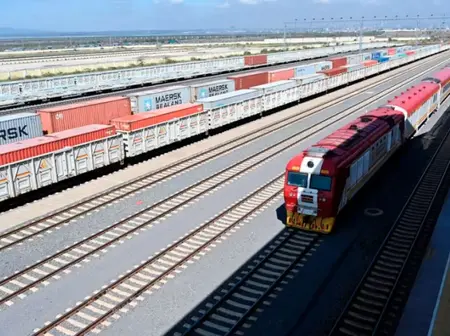
A railway built on debt: How corruption risks inflated Kenya’s SGR bill
Wonders do not cease, others border on a puzzle. From 2014, Kenya began the construction of a diesel-powered railway and paid more per kilometre than its two immediate neighbours who built electrified ones. The World Bank’s latest Kenya Economic Update asks why, and the answer it gives is not mainly about terrain or engineering, it is about poor governance, ethical impropriety, and the cost of corruption to a whole nation.