
For some people, welcoming visitors into their homes does not mean giving them access to every room. While guests may comfortably sit in the living room, share meals in the kitchen and use the washroom, the bedroom remains strictly off-limits.Even when a visitor is a close friend, relative or family member, some homeowners prefer keeping their bedroom doors closed throughout the visit.
Category: Economy&Finance
-
Safaricom explains why your Okoa Jahazi limit can be higher than your Fuliza limit
Safaricom has explained why some customers receive higher borrowing limits on Okoa Jahazi than on Fuliza, clarifying the factors used to determine how much subscribers can access through the two services.
The telecommunications company issued the clarification after an M-PESA customer questioned why Safaricom had allocated him an Okoa Jahazi limit of Ksh1,000 but restricted his Fuliza overdraft to just Ksh200.
The customer, identified on X as @AFCNdiwa, asked why the two limits differed despite being offered on the same mobile number.
“Why give me okoa jahazi of 1,000 and fuliza of 200?” the customer posed.
In response, Safaricom explained that Fuliza limits are determined using several factors, including customers’ usage of its services, repayment history and credit standing.
“Hello @AFCNdiwa, kindly dial *334# to refresh your Fuliza limit. This is allowed once in 30 days,” the company stated.
Safaricom encouraged the customer to save frequently, conduct more M-PESA transactions and continue using other services such as calls, data and SMS.
The company also revealed that it considers how customers repay other credit facilities, including Okoa Jahazi, as well as their credit scores with Credit Reference Bureaus (CRBs).
“We also check on your loan repayment history including Okoa Jahazi and the credit score with the Credit Reference Bureau. You will be notified via SMS once your limit is reviewed,” Safaricom added.
Although both services allow customers to access credit when they do not have sufficient funds, Okoa Jahazi and Fuliza operate differently.
Okoa Jahazi is an airtime advance service that allows eligible Safaricom subscribers to borrow airtime or bundles and repay the amount through subsequent top-ups.
According to Safaricom’s published Okoa Jahazi terms and conditions, the maximum amount a customer can request is based on their historical airtime spending on the network.
The service provides advance airtime in denominations of up to Ksh1,000, subject to individual eligibility.
Safaricom charges a 10 per cent service fee on each Okoa Jahazi request, subject to a minimum fee of Ksh0.50.
Fuliza, on the other hand, is an M-PESA overdraft facility that enables eligible customers to complete transactions when their wallet balances are insufficient.
Unlike Okoa Jahazi, which is linked to airtime consumption, Fuliza involves a credit assessment that considers a wider range of a customer’s financial behaviour.
This means a subscriber who regularly purchases airtime and qualifies for a Ksh1,000 Okoa Jahazi advance may still receive a much lower Fuliza limit if their credit assessment does not support a higher overdraft.
Safaricom’s response highlights several factors that influence how much customers can borrow through Fuliza.
The company encourages customers to transact more frequently through M-PESA as part of efforts to build their usage history.
However, regular transactions alone do not guarantee an increase in the overdraft limit.
In October 2026, Safaricom explained that customers who frequently transact through M-PESA may still retain low Fuliza limits because the lending assessment considers other factors beyond transaction volumes.
Safaricom also considers how customers settle their borrowing obligations.
This includes repayment of Okoa Jahazi advances and other credit facilities associated with their identification details.
Customers who consistently delay repayment may have a weaker borrowing profile when the system reviews their eligibility for a higher Fuliza limit.
The company encourages subscribers to continue using its other services, including airtime, voice calls, data and SMS.
Safaricom considers these activities when assessing customers’ overall usage patterns.
The company has previously explained that its credit assessment is not based exclusively on the amount of money moving through M-PESA.
Another important consideration is a customer’s credit standing with Credit Reference Bureaus.
In a November 12, 2026 response to another customer, Safaricom said Fuliza limits are adjusted at the lending bank’s discretion and depend partly on the customer’s credit listing status.
The company advised the customer to dial *433# to check their CRB status.
A customer’s credit history can therefore affect their eligibility for a higher overdraft even when they regularly use M-PESA and other Safaricom services.
Safaricom has given customers a specific USSD option for requesting a review of their Fuliza limits.
According to the company’s latest guidance, the process can be completed once every 30 days.
Customers should:
Safaricom says customers will receive an SMS notification once their limits have been reviewed.
However, refreshing a limit does not guarantee an increase. The review is conducted through the lending assessment process, and the final decision rests with the participating bank.
-
Pending bills rise 11pc, surpass Sh500bn mark
Unpaid government suppliers and contractors’ bills increased 11.7 percent to Sh523.7 billion at the end of September, hurting the cash flow of small and medium-sized businesses.
Data from the National Treasury shows State pending bills rose from Sh468.5 billion in December 2025, reversing a previous downward trend that points to the accumulation of new supplier bills.
-
Investors share Sh244bn State interest windfall in 3 months
Investors in government securities earned Sh243.85 billion in interest payments in three months to September 2026, marking a 21.3 percent increase over the same period last year.
The payments, channelled to holders of Treasury bonds and bills, rose from Sh201.01 billion in the corresponding quarter last year, highlighting the growing returns accruing to investors lending money to the government.
-

Mukuru Affordable Housing: Water and 7 other things to check before renting an apartment
The water crisis reported by residents of Nairobi’s Mukuru Affordable Housing project has highlighted the importance of checking essential services before moving into an apartment.According to the residents, they have gone five months without running water, forcing some to fetch supplies from outside the estate and carry heavy containers upstairs, with those living on higher floors facing additional challenges when lifts break down.
-
Air France-KLM appoints Rajat Kumar Country Sales Manager for Kenya
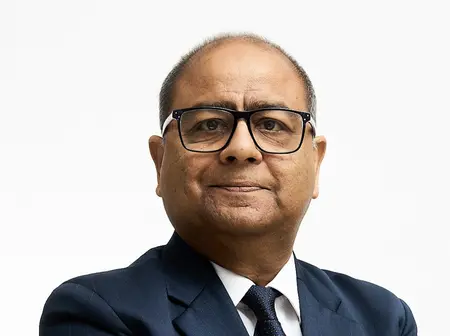
Air France-KLM has appointed Rajat Kumar to be its Country Sales Manager for Kenya as the airline group seeks to strengthen its presence in East Africa.Kumar will oversee the group’s sales operations in Kenya while retaining responsibility for Tanzania, where he has served as Country Manager since February 2024.
-

Why Quickmart shares are falling days after listing at Nairobi Securities Exchange
Quickmart Supermarket shares came under pressure at the Nairobi Securities Exchange (NSE) on Friday, November 13, 2026, emerging as the day’s biggest loser after shedding 7.19 per cent of their value.
The supermarket chain’s shares declined from Ksh8.90 recorded on Thursday, November 12, to Ksh8.26 at the close of Friday’s trading session, according to a daily market report published by Kingdom Securities.
In its November 13 market wrap, the investment firm reported that “Quickmart Supermarket led the losers after declining by 7.19%,” placing the retailer ahead of Shri Krishna Overseas, whose shares fell by 2.34 per cent, and Umeme Limited, which declined by 2.27 per cent.
The decline came despite Quickmart recording significant trading activity, with shares worth Ksh57.82 million changing hands during the session.
This made the supermarket the second-most traded counter at the NSE on Friday, behind ABSA Bank Kenya, which recorded a market turnover of Ksh99.59 million. Co-operative Bank Group followed with Ksh40.59 million.
Despite the decline in its share price, Quickmart attracted interest from foreign investors during the trading session.
According to Kingdom Securities, foreign investors purchased Quickmart shares worth Ksh12.04 million against sales valued at Ksh1.77 million, resulting in net foreign inflows of Ksh10.27 million.
This placed the supermarket among the counters that attracted the highest foreign investor interest during Friday’s session.
Kenya Pipeline Company recorded the largest foreign net inflow at Ksh12.29 million, followed by Quickmart at Ksh10.27 million and KCB Group at Ksh1.54 million.
The foreign investor activity came as international investors collectively turned net buyers at the Nairobi bourse, recording net inflows of Ksh13.97 million compared to net outflows of Ksh102.02 million in the previous trading session.
Kingdom Securities reported that “Foreign investors turned net buyers,” with purchases amounting to Ksh33.39 million against sales of Ksh19.43 million.
Quickmart’s decline came on a day when the broader equities market recorded modest gains, with all the major indices closing higher.
The Nairobi All Share Index (NASI) advanced by 0.08 per cent to 241.74 points, while the NSE 10, NSE 20 and NSE 25 indices gained 0.04 per cent, 0.34 per cent and 0.32 per cent respectively.
The Banking Index also advanced by 0.50 per cent to close at 284.07 points, pushing the market’s total capitalisation up by 0.08 per cent to Ksh4.09 trillion.
However, overall trading activity weakened, with equity turnover declining by 56.49 per cent to Ksh333.30 million from Ksh766.03 million recorded in the previous session.
The number of shares traded also dropped by 34.19 per cent to 18.79 million from 28.55 million.
Uchumi Supermarket emerged as the day’s top gainer, advancing by 6.40 per cent, followed by Longhorn Publishers, which gained 4.96 per cent, and Eveready East Africa, which rose by 4.21 per cent.
-

Coffee farmers raise alarm over cherry theft, seek stronger legal protection
Coffee farmers risk losing income before their harvest reaches the market, as theft of coffee cherries raises questions about whether existing protections are strong enough to safeguard their crop.
Coffee cherries are picked from trees and delivered for processing. Their value represents months of work, farm maintenance and spending on inputs.
When cherries are stolen before delivery, farmers lose the produce they expected to sell, and the effort invested in that harvest may bring no return.
The issue has drawn attention to regulations being developed to implement the Coffee Act. The Kenya Coffee Producers Association (KCPA) says the rules should do more than establish administrative procedures. It wants farmers’ interests, particularly ownership of their produce, to be central to the law.
Cherry theft can cut into the income farmers depend on after tending their trees and paying production costs. It can leave growers questioning how to recover the value of stolen produce and what protection is available when their property is taken.
KCPA representative Peter Gikonyo says the regulations should protect farmers’ property rights and their right to administrative justice. This means farmers should be treated fairly when decisions affecting their produce are made and have avenues to seek redress when their rights are violated.
Samuel Macharia, a coffee farmer from Komothai Factory, says the proposed regulations could provide a lasting response to coffee cherry theft.
The regulations will guide how the Coffee Act is implemented. KCPA says gaps in the Act should be addressed during this process, although the concerns raised do not specify every proposed change or enforcement measure being sought.
A law may recognise farmers’ rights, but protection depends on whether the rules explain how those rights are applied, how complaints are handled and what happens when coffee is stolen.
Without workable enforcement and accessible ways to report and pursue cases, legal safeguards may offer little help to a farmer who has lost a harvest.
The debate is about more than regulating the coffee industry. It concerns whether growers can protect the crop they own and receive the earnings their labour is meant to generate.
For farmers, the test will be whether regulations offer practical protection from cherry theft and a fair process when disputes arise not simply whether new rules are published.
-

How Kenyans are building wealth from Sh100-a-day investments
What if the first step towards building wealth was not a salary increment, a lucrative business or a windfall, but simply Sh100 a day? That seemingly insignificant amount, often spent on small everyday purchases, could be the starting point of an investment habit that grows over time.
With investment products accepting contributions from as little as Sh100, Kenyans no longer need to wait until they have thousands of shillings to enter the investment market. The question is whether small, consistent contributions can translate into meaningful wealth, and what it takes to make the money grow.
-

Safaricom reveals next step for Kenyans whose wrong M-PESA reversal requests are rejected
Safaricom has given customers another route to take when an M-PESA reversal is rejected by recipients of the mistaken transaction.
The telco has advised Kenyans who send money to the wrong M-PESA number and fail to recover it through the reversal process to visit one of its customer service shops for further assistance.
Safaricom issued the guidance after an M-PESA customer questioned what happens when a person who receives money mistakenly refuses to return it, leaving the sender unable to recover the funds.
The customer, identified on X as Kiarie Rukahu, said he had initiated a reversal but was subsequently asked to contact the recipient, whom he did not know.
He sought to establish whether Safaricom could intervene and recover the money when the recipient declined to cooperate.
“What happens when I do a reversal and the one whom I sent money by mistake declines to return the money and am requested to contact them and I never know them? Can’t Safaricom help reverse that money?” he asked.
In response, Safaricom apologised for the inconvenience and directed him to visit a company shop with his identification document for assistance with the reversal.
“Hello KiarieRukahu, apologies over the inconvenience. Kindly visit a Safaricom shop with your ID, for assistance with the reversal,” the company stated.
Safaricom also shared a link to its customer service page, where customers can find the locations of its shops and their opening hours.
Safaricom has previously explained that a reversal request can be disputed or cancelled by the person who receives the money.
In a response to another customer in July 2026, the company advised that when a recipient disputes a reversal, the sender should contact them directly to request a refund or report the matter to the police for assistance.
The telco explained that it cannot independently withdraw money from a recipient’s M-PESA wallet once a transaction becomes disputed.
This creates a difficult situation for customers who have mistakenly transferred money to strangers, particularly where the recipient refuses to cooperate or cannot be reached.
In November 2026, Safaricom reiterated the position after another customer complained about a cancelled reversal.
“Sorry, the recipient cancelled the reversal, please follow up with him or report to the police for follow up on reversal disputes,” Safaricom Care stated.
Safaricom provides customers with a reversal process for transactions involving money sent to the wrong recipient.
One of the commonly used methods is forwarding the original M-PESA confirmation message to 456 to initiate a reversal request.
Customers can also use the M-PESA app and Safaricom’s customer-care channels to seek assistance with transaction-related issues.
However, initiating a reversal does not mean that the money will automatically be returned. The recipient may dispute the request, requiring further intervention.
Customers whose requests are rejected should retain their M-PESA confirmation messages and transaction details when seeking assistance or reporting the dispute.
The company has also reminded customers to take precautions before completing M-PESA transactions to avoid sending money to the wrong person.
In its response to Kiarie, Safaricom recommended using the mySafaricom App and the HAKIKISHA feature to verify transaction details before sending money.
HAKIKISHA allows customers to confirm the recipient’s registered name before completing a transaction, giving them an opportunity to establish whether the details match the intended recipient.
The company shared links to the mySafaricom App for both Android and iOS users, encouraging customers to use the platform when making transactions.
The advice comes as M-PESA continues to facilitate everyday payments and money transfers for millions of Kenyans, making mistaken transactions a recurring customer concern.