
Listen to articleThe new November 2026 survey shows that the two leaders are ahead of other potential presidential candidates, with support for several opposition figures declining as Sifuna's popularity rises.President William Ruto and Nairobi Senator Edwin Sifuna have emerged as the most preferred candidates in the 2027 presidential election, tying at 31 per cent in a new poll by TIFA Research.
Category: Politics
-
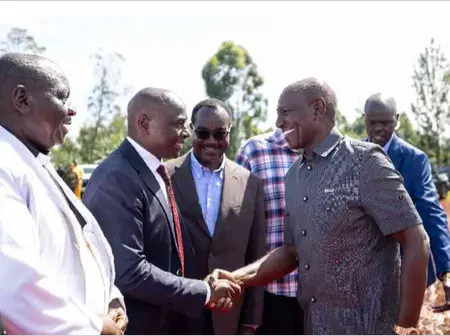
Toxic Backlash Deepens the Ruto-Gachagua Rift
President William Ruto and his former deputy, Rigathi Gachagua, have renewed a bitter public war of words, drawing condemnation from clergy who warn that the inflammatory rhetoric threatens peace.
The rivalry has festered since Mr Gachagua's impeachment as Deputy President. He has vowed to make Mr Ruto a one-term president, while the President has described him as tribal, corrupt and unfit for public office.
The latest round began in Kiambu, where Mr Gachagua mocked the President's thin frame and promised him sleepless nights. Mr Ruto responded by accusing critics of tribalism and hatred, then escalated by accusing unnamed individuals of theft and murder, while also commenting on the physical appearance and lifestyles of some opponents.
Mr Gachagua fired back with allegations of historical violence and corruption, invoking the 2007 Kiambaa church tragedy and the recent Gen Z protests. None of these claims has been publicly substantiated.
The exchange has drawn widespread criticism. Amnesty noted that accusations of rape, defilement and murder are increasingly used as campaign tools, with no follow-up investigations, leaving victims without justice.
Deputy President Kithure Kindiki, however, has vowed to counter critics who insult the President. A Nation editorial observed that the insults and body shaming have occurred at funerals, political rallies and even religious services.
With campaigns for the 2027 General Election not yet officially underway, the tone has already raised concern. Kenyans expect their leaders to debate jobs, the cost of living and public services, not to trade personal insults.
Unchecked hostility risks deepening ethnic and political divisions, particularly in a country with a painful history of election-related violence.
Both leaders have a responsibility to restore civility and put policy before personal attacks. Decency in public discourse is not optional; it is essential to protecting national unity ahead of the vote.
Source:https://www.standardmedia.co.ke/politics/article/2001562087/from-accusations-of-extortion-to-murder-tribal-jibes-and-body-sha
-

UDA Reclaims Lead as Kenya’s Most Popular Party at 25%, Linda Mwananchi Second
The latest findings place the Linda Mwananchi Movement, also identified alongside the Tent Party of Kenya (TEP), second with 17 per cent, while the Orange Democratic Movement (ODM) has dropped to third place with 10 per cent.
The results signal a shift in political party popularity ahead of the 2027 General Election, with UDA recording an eight-percentage-point increase from its June 2026 rating of 17 per cent. ODM, meanwhile, has lost half of its previous 20 per cent support.
The survey also places the Democracy for Citizens Party (DCP), associated with former Deputy President Rigathi Gachagua, fourth with nine per cent support. The Wiper Democratic Movement follows with five per cent, while Jubilee Party records four per cent, according to the published findings.
The findings indicate a significant change from TIFA's June 2026 survey, which had ranked ODM first with 20 per cent, followed by UDA at 17 per cent and DCP at 12 per cent.
In the latest survey, the ruling party has overtaken its competitors, while ODM has experienced a notable decline in national party identification.
The Linda Mwananchi grouping's 17 per cent rating also places it ahead of ODM in the latest party preference rankings, highlighting the growing influence of political realignments within the opposition.
Despite the changing rankings, a considerable proportion of Kenyans remain undecided about their political affiliation. TIFA's latest findings put this group at 28 per cent, suggesting that party loyalties remain unsettled ahead of the next general election.
The survey results offer a snapshot of public political preferences and do not necessarily predict how Kenyans will vote in 2027.https://www.facebook.com/share/p/1EGJjTgvAU/
-
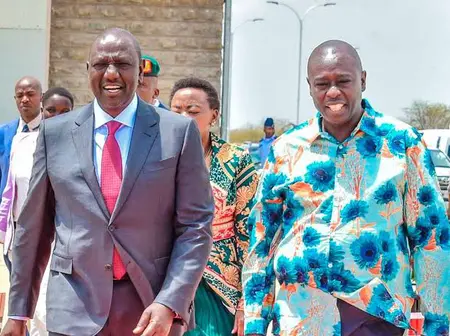
President Ruto and Former Deputy Gachagua Renew Bitter Political Hostilities
The escalation follows a series of bare-knuckled exchanges where President Ruto publicly accused his former principal assistant of acting like the biblical Herod by frustrating and intimidating emerging young leaders, urging him to leave rising politicians alone.
In a blistering counter-attack, Gachagua fired back by directly questioning the President's stance on youth leadership, drawing reference to the casualties from the 2024 Gen Z protests and subsequent demonstrations to challenge the administration's human rights record.
The toxic exchange has rapidly deteriorated into intense personal jibes, accusations of political sabotage, and historical cross-examinations, setting an aggressive tone as both camps position themselves for the 2027 polls.
In response to the spiraling hostility, religious leaders and interfaith councils have voiced deep concern, cautioning that unchecked political rhetoric risks fracturing the country along ethnic and regional fault lines.
The clergy have strongly condemned the use of derogatory language, body shaming, and threats of political exclusion, calling upon political actors to exercise restraint and prioritize national unity over personal ambitions.
As civic watchdogs echo these appeals for peace, the growing friction underscores the volatile nature of contemporary Kenyan politics, where high-stakes realignments continue to push the boundaries of public discourse.
Observers note that this growing animosity between the country's former top executives signals an increasingly polarized electoral environment, where personal vendettas frequently eclipse substantive policy debates.
Faith organizations and civil society groups have consequently intensified calls for immediate moral accountability among political elites to prevent the degeneration of public discourse into widespread civil unrest.
https://x.com/KTNNewsKE/status/2120713246264971276?a=fOXZnfEI9YUVFiyvsIw&s=20
-
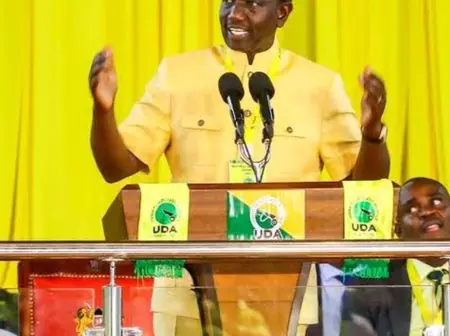
TIFA survey: UDA regains lead as the most popular party at 25%; Linda Mwananchi Movement/TEP second
UDA Reclaims Top Spot in Latest TIFA Poll as ODM Suffers Major Drop, Sifuna’s Movement Comes Second
The United Democratic Alliance (UDA) has reclaimed its position as Kenya’s most popular political party, overtaking its competitors in the latest opinion survey by Trends and Insights For Africa (TIFA).
According to findings reported by Citizen Digital, UDA commands 25 per cent support, placing it ahead of the Linda Mwananchi Movement, associated with The Equitable Party (TEP), which has attracted 17 per cent.
The Orange Democratic Movement (ODM), which has maintained a strong presence in Kenya’s political landscape for years, trails in third position with 10 per cent.
The latest rankings point to changing political preferences among Kenyans as the country gradually moves towards the 2027 General Election.
UDA’s return to the leading position comes as a boost to the ruling party, which is expected to rely on its national structures and grassroots networks to strengthen its support ahead of the next election.
However, the emergence of Linda Mwananchi Movement in second place is among the notable developments in the survey. The political outfit, linked to Nairobi Senator Edwin Sifuna, appears to be attracting considerable attention as it seeks to establish itself as an alternative political force.
Its 17 per cent rating puts it seven percentage points ahead of ODM, raising questions about the party's position amid ongoing internal political disagreements and shifting alliances.
ODM's third-place ranking at 10 per cent also presents a significant challenge for the party as it seeks to maintain its influence and political relevance.
With the 2027 elections approaching, the latest findings are likely to generate fresh debate among political leaders and supporters.
-
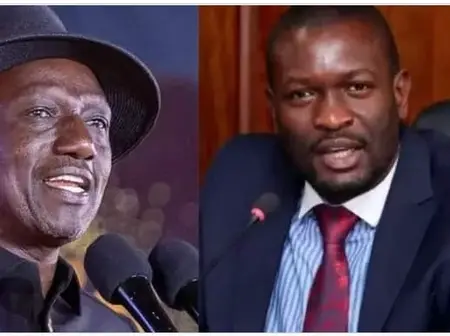
Tight Race as Ruto And Sifuna Tie At 31% Each In Latest Tifa Poll Ahead Of 2027
President William Ruto and Linda Mwananchi leader Edwin Sifuna are now tied as joint frontrunners ahead of the 2027 presidential election, according to the latest opinion poll by Tifa Research.
The poll, released on November 12, 2026, shows Ruto and Sifuna each commanding 31% support among Kenyans asked who they would prefer as the next president.
According to Tifa, Ruto's support has grown consistently, from 18% in August 2022, to 19% in September 2025, 26% in November 2025, 24% in May 2026, 24% in June 2026, and now 31% in November 2026.
Sifuna's rise has been even more remarkable. The Nairobi Senator had 0% support in August 2022, September 2025, November 2025, and May 2026. He jumped to 5% in June 2026, 10% in the following survey, and then surged to 15%, before hitting 31% in November 2026.
The poll shows other presidential aspirants are losing ground.Kalonzo Musyoka, who peaked at 25% in May 2026, has now declined to 9% in November 2026. He had 23% in September 2025, 19% in November 2025, and 13% in June 2026 before the latest drop.
Fred Matiang'i has steadily declined from 32% in August 2022, to 21% in September 2025, 19% in November 2025, 6% in May 2026, 6% in June 2026, and now just 5% in November 2026.
Rigathi Gachagua, who peaked at 9% in May 2026, has declined to 4% in November 2026, after recording 4% in September 2025, 7% in November 2025, and 7% in June 2026.
Ndindi Nyoro records 1% support in November 2026, having been at 1% since May 2026.
Other candidates combined have also fallen to 1%, after peaking at 14% in September 2025.
The number of undecided voters remains high at 16% in November 2026, down from 20% in June 2026, but up from 28% in August 2022. Those who gave no response remain low and stable at 4%.
For Ruto, the poll is a boost. Despite criticism over the cost of living, protests, and opposition unity talks, he remains the joint most preferred candidate, and his numbers are going up.
For Sifuna, the poll is a major breakthrough. Just weeks after leaving ODM and launching his Linda Mwananchi Movement, he is now being seen by many Kenyans as a serious presidential contender and the face of the new opposition.
His supporters say the numbers prove that Kenyans want fresh leadership and a break from the old political order. They argue that Sifuna's message of defending ordinary citizens, Linda Mwananchi, is resonating across the country.
Critics, however, say it is still too early. They argue that polls can change quickly, and that 2027 is still many months away. They also point to the high number of undecided voters, who could swing the election either way.
But one thing is clear from the Tifa poll: the 2027 race is no longer a one-man show. It is now a two-horse race between Ruto and Sifuna, with other aspirants struggling to keep up.
If the trend continues, Kenya could be heading for one of its most competitive presidential elections in history.
-

Breaking: Ruto and Sifuna Tied at 31% in Shock TIFA Poll as Kalonzo, Matiang’i and Gachagua Slide
President William Ruto and Nairobi Senator Edwin Sifuna have emerged as joint front-runners in the 2027 presidential race, each commanding 31 per cent support, according to a new TIFA Research poll.
The survey, released on Thursday, November 12, places the two ahead of other contenders as support for several opposition figures continues to decline.
Ruto's numbers have climbed from 24 per cent in TIFA's May poll to 31 per cent now.
Sifuna's rise has been even sharper. He registered zero per cent in May 2025, rising to 10 per cent in May and 15 per cent in June before reaching 31 now.
Former Vice President Kalonzo Musyoka, once the leading opposition contender, has fallen to 9 per cent, down from 25 per cent in November 2025.
Former Interior Cabinet Secretary Fred Matiang'i has dropped to 5 per cent, from 14 per cent in June.
Former Deputy President Rigathi Gachagua attracted 4 per cent, down from a peak of 9 per cent recorded in May.
Kiharu MP Ndindi Nyoro registered 1 per cent, while other hopefuls collectively dropped to 1 per cent from a peak of 14 per cent in September 2025.
Undecided voters made up 15 per cent, down from 20 per cent in June.
TIFA's party-support numbers also put UDA at 25 per cent, with Linda Mwananchi at 17 and ODM at 10.
TIFA noted in May that the absence of a dominant opposition challenger could ultimately work in Ruto's favour.
Sifuna, who leads the Linda Mwananchi Movement Party, has been pushing for a single joint opposition ticket.
Gachagua has said the opposition is working towards identifying a single presidential candidate to face Ruto.
Kalonzo has said he could back Sifuna, but that polls must not pick the opposition ticket.
Meanwhile, ODM leader Oburu Odinga has announced the party will not field a presidential candidate in 2027 and backs Ruto's re-election bid.
Poll numbers are snapshots, not predictions, and a tie at 31 per cent is within any reasonable margin of error.
With the election less than a year away, the 2027 contest is heating up rapidly.
Link:
https://www.facebook.com/share/1H1JvdFKHh/
-

24-Year-Old Criticises Ruto’s Administration, Accuses Government of Prioritising Public Relations
The remarks have added to the growing public debate about the performance of the Kenya Kwanza administration and its handling of issues affecting citizens. According to the criticism, Kenyans need leaders who are willing to listen to their concerns and take practical steps towards addressing them rather than concentrating mainly on presenting a positive image of the government.
The comments also reflect frustrations among some young people who want greater accountability from those holding public office. Young Kenyans have increasingly used social media platforms and other public forums to express their views on governance, the economy, employment opportunities and the cost of living.
For many of them, government performance is measured not only by announcements and development promises but also by the changes citizens experience in their daily lives. The criticism of Ruto's administration comes amid continued discussions about taxation, unemployment, public debt and the cost of essential goods and services.
These issues have remained central to conversations about the country's economic direction, with citizens calling for policies that respond to their financial difficulties. The 24-year-old's remarks also raise questions about the relationship between government communication and public accountability.
The comments are likely to resonate with Kenyans who expect government officials to provide answers to pressing national concerns. As the administration continues implementing its development agenda, its ability to address public concerns and demonstrate progress will remain an important measure of its leadership. The debate highlights the growing expectation that young people want to play an active role in holding leaders accountable for their decisions.
SOURCE: https://www.facebook.com/share/p/1GabbCWTav/
-

UDA Regains Political Popularity: What the Latest Poll Reveals About Kenya’s Political Landscape
President William Ruto’s United Democratic Alliance (UDA) has reclaimed its position as Kenya’s most popular political party, while support for the Orange Democratic Movement (ODM) has suffered a dramatic decline, according to a national opinion poll released on Thursday by TIFA Research.
The November 2026 survey indicates a major realignment in the country's political landscape less than a year before the August 2027 General Election. UDA’s popularity surged by eight percentage points over the past five months, climbing from 17 per cent in June 2026 to 25 per cent. This rebound places the ruling party back at the summit of national party standings, recovering steadily from a low of 15 per cent recorded in late 2025.
Conversely, ODM experienced the steepest drop among major political outfits. Its approval rating was cut in half, plummeting from 20 per cent in June to just 10 per cent. The sharp downturn pushes the long-standing opposition party into third place, overtaken by the newly ranked Linda Mwananchi movement, which entered the national standings in second place with 17 per cent support. Meanwhile, the Democracy for the Citizens Party (DCP) ranked fourth at 12 per cent.
Despite these shifting loyalties, voter apathy remains a defining factor. The proportion of Kenyans who remain undecided or unaffiliated with any political party held steady at 28 per cent, representing a crucial battleground for party leaders ahead of next year's polls.
https://www.facebook.com/share/p/1DbfCmYFmA/
-

Linda Mwananchi Leads Nairobi Political Affiliation Poll as 2027 Election Race Takes Shape
However, the specific Nairobi figures could not be independently verified against a published TIFA report available at the time of writing.
In its June 2026 national survey, TIFA placed ODM at 20 per cent in overall party support, followed by UDA at 17 per cent and DCP at 12 per cent. The survey also found that 28 per cent of respondents did not identify with any political party.
The June survey was conducted between June 13 and June 22, 2026, through face-to-face interviews with 2,048 adults across all 47 counties. TIFA reported a national margin of error of plus or minus 2.18 percentage points.
Separately, an October 2026 national poll by Research 8020 placed Linda Mwananchi at 25 per cent, ahead of UDA at 23 per cent. DCP recorded nine per cent, while ODM and Wiper each received eight per cent.
The emergence of Linda Mwananchi has added another dimension to political realignments ahead of the 2027 elections. The movement is associated with Nairobi Senator Edwin Sifuna and other political leaders who have questioned ODM's cooperation with President William Ruto's administration.
The reported Nairobi figures, if confirmed, would indicate a competitive political landscape in the capital.
However, party affiliation surveys represent public opinion at a particular time and should not be interpreted as predictions of actual election results.https://x.com/citizentvkenya/status/2120798361255362580?a=pNaFuYYZKPSI-8WSV-Y&s=20