Category: Politics

  • NEWS IN: Sifuna’s Linda Mwananchi Overtakes ODM, Becomes 2nd Most Popular Party In Kenya, Details

    NEWS IN: Sifuna’s Linda Mwananchi Overtakes ODM, Becomes 2nd Most Popular Party In Kenya, Details

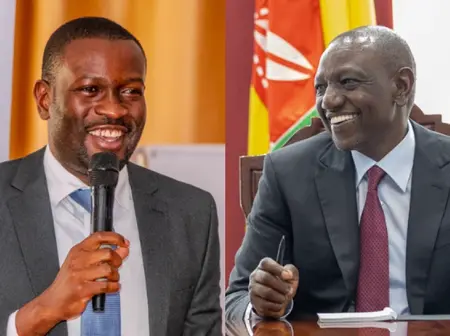
    A nationwide survey released by TIFA Research on Thursday, November 12, 2026, shows that Linda Mwananchi commands 17 per cent support, placing it behind President William Ruto’s United Democratic Alliance (UDA), which leads with 25 per cent.

    ODM, which previously enjoyed 20 per cent support in TIFA’s June survey, has dropped to 10 per cent, leaving it in third position.

    According to TIFA, Linda Mwananchi has gained considerable support from voters who previously identified with ODM, describing its emergence as an unprecedented development in Kenya’s multiparty political landscape.

    The survey also reveals the geographical distribution of support for the two political formations. Linda Mwananchi enjoys 40 per cent backing in Western Kenya, 26 per cent in Nairobi, 18 per cent in Nyanza and 16 per cent at the Coast.

    ODM, on the other hand, maintains 33 per cent support in Nyanza, while recording 14 per cent at the Coast, 10 per cent in Western Kenya and nine per cent in Nairobi.

    The findings come amid an escalating political dispute between Sifuna’s faction and the ODM leadership under Oburu Oginga.

    The disagreements emerged following differences over ODM’s cooperation with Ruto’s administration and the direction the party should take ahead of the 2027 General Election.

    An earlier TIFA survey conducted in June showed that 74 per cent of ODM supporters identified with the Linda Mwananchi faction associated with Sifuna, Siaya Governor James Orengo and Embakasi East MP Babu Owino. The rival Linda Ground faction attracted 20 per cent.

    Linda Mwananchi has since embarked on establishing its national leadership structures, with Trans Nzoia Governor George Natembeya proposed to lead its presidential campaign.

    The party is scheduled to hold its National Delegates Convention on Friday, November 13, where proposed leadership changes and its transition will be considered.

    However, the planned meeting faces a legal challenge over questions surrounding the selection of delegates and the appointment of officials.

    TIFA cautioned that the popularity figures do not automatically translate into election victories, noting that Linda Mwananchi still faces the challenge of building a nationwide political network capable of supporting its candidates in the 2027 elections.

    https://peopledaily.digital/inside-politics/sifunas-linda-mwananchi-overtakes-odm-to-become-kenyas-second-most-popular-party-tifa


  • Opposition Leaders Get Clear Message on When to Announce 2027 Presidential Candidate

    Opposition Leaders Get Clear Message on When to Announce 2027 Presidential Candidate

    The findings show that although many opposition supporters want the coalition to settle on its presidential ticket early, there is no clear agreement on the most suitable time to make the announcement.

    According to the survey released on Thursday, November 12, 45 per cent of respondents want the opposition to reveal its presidential candidate and running mate between January and March 2027.

    Another 35 per cent believe the announcement should be made before the end of 2026, while 16 per cent prefer that the coalition waits until between April and June next year. Three per cent were undecided.

    Tifa noted that while early next year was the most popular choice, a considerable number of opposition supporters wanted the leaders to reach an agreement before the year ends.

    The survey comes at a time when opposition figures are holding consultations in an effort to build a united political front capable of challenging Ruto's re-election bid.

    Democracy for the Citizens Party (DCP) leader Rigathi Gachagua has been at the centre of the negotiations, hosting several opposition leaders at his Wamunyoro residence in Nyeri County.

    Following a meeting with DAP-K leader Eugene Wamalwa and Wiper Party leader Kalonzo Musyoka on October 26, Gachagua expressed confidence that the leaders would eventually settle on one presidential candidate.

    Other politicians believed to be interested in the opposition ticket include Jubilee Party leader Fred Matiang'i, People's Liberation Party leader Martha Karua and Linda Mwananchi's Edwin Sifuna.

    The research also examined whether supporters believe the different opposition formations can overcome their political differences and work together before the next election.

    On this question, 57 per cent said it was very likely that the Linda Mwananchi and Ukombozi opposition groups would unite, while 22 per cent considered such an arrangement somewhat likely.

    However, 8 per cent viewed unity as not very likely, with another 7 per cent ruling it out completely. Six per cent were undecided.

    The findings suggest that despite competition for the presidential ticket, most opposition supporters remain hopeful that their leaders will eventually agree on a common political position.

    Tifa conducted the survey through face-to-face interviews involving 2,036 respondents across nine regions between October 26 and November 5, 2026. It has a margin of error of plus or minus 2.16 per cent.

    Source:https://www.the-star.co.ke/news/2026-11-12-opposition-supporters-divided-on-when-to-name-flagbearer?fbclid=IwZXh0bgNhZW0CMTEAcGRvZgNzcnRjBmFwcF9pZA8yNzUyNTQ2OTI1OTgyNzkAAR_SLy1JmT7fALXc6jBUew3ClaXJPPfjtr2kmq2IfZCVrmLAlCmdowMWKIk3Vw_aem_aWDRHnPmK4uTJVNs26ndxA

  • Gladys Wanga Praises Ruto, Says President Has Delivered on His Promises to Kenyans

    Gladys Wanga Praises Ruto, Says President Has Delivered on His Promises to Kenyans

    Homa Bay Governor Gladys Wanga has praised President William Ruto, saying his leadership stands out because he has made promises, presented clear plans and taken steps to fulfil his development agenda.

    Speaking about the President's leadership, Wanga said Ruto is different from other leaders because he does not stop at making promises but also works towards implementing them.

    According to Wanga, good leadership should be measured by the ability to turn campaign promises into real projects and programmes that improve the lives of ordinary citizens.

    "The difference between President Ruto and other people is that he has made a promise, put forward a plan, presented an agenda and implemented it," Wanga said.

    Her remarks are likely to attract attention as Kenya continues to prepare for the 2027 General Election, with political leaders already taking positions ahead of the next political contest.

    Wanga has been among leaders who have openly supported the President's development agenda. Her latest comments also show the confidence some government allies have in Ruto's leadership and his plans for the country.

    Since taking office in September 2022, Ruto has focused on several key areas, including affordable housing, healthcare, education, agriculture and job creation.

    The government has continued to defend its development programmes, arguing that they are aimed at improving the economy and creating more opportunities for Kenyans.

    However, the President's administration has also faced criticism from some Kenyans over the high cost of living, taxation and the slow pace of some government projects.

    As the 2027 elections approach, leaders supporting Ruto are expected to use his development record to convince voters to give him another term.

    Wanga's statement adds to the growing political debate about whether the President has delivered enough on the promises he made during the 2022 campaigns.

    For now, the message from the Homa Bay governor is clear: she believes Ruto should be judged by his plans and the projects his government has put into action.

    source:https://www.facebook.com/share/1XCnWwpzYM/

  • List Of Most Popular Parties In Kenya 2026, Sifuna’s Linda Mwananchi Overtakes ODM Party

    List Of Most Popular Parties In Kenya 2026, Sifuna’s Linda Mwananchi Overtakes ODM Party

    According to a nationwide survey released by TIFA Research on Thursday, November 12, 2026, UDA commands 25 per cent support, followed by the Linda Mwananchi Movement associated with Nairobi Senator Edwin Sifuna at 17 per cent.

    The findings indicate changing political loyalties ahead of the August 2027 General Election, with the emergence of Linda Mwananchi coinciding with a decline in ODM's popularity.

    TIFA reported that UDA's support had increased from 17 per cent in June to 25 per cent in November, restoring its position at the top of the party popularity survey.

    The Democracy for the Citizens Party (DCP), associated with former Deputy President Rigathi Gachagua, follows with nine per cent, while Wiper Patriotic Front has five per cent. Jubilee Party records four per cent.

    Regionally, UDA enjoys considerable support in Northern Kenya at 60 per cent and Central Rift at 56 per cent. Its support stands at 24 per cent in Coast, 22 per cent in Western and 20 per cent in both Lower Eastern and South Rift.

    However, the party records eight per cent in Nairobi and 10 per cent in the Mt Kenya region.

    ODM's declining numbers come amid disagreements within the party over its relationship with Ruto's administration and the direction it should take following the death of longtime party leader Raila Odinga.

    TIFA estimates that ODM has lost half of its previous popularity, with Linda Mwananchi attracting a considerable section of its traditional support.

    In Nairobi, Linda Mwananchi records 26 per cent compared with ODM's nine per cent. In Western Kenya, the movement commands 40 per cent, while ODM stands at 10 per cent.

    The survey also examined the presidential race, placing Ruto and Sifuna at 31 per cent each, suggesting that party popularity and individual presidential support are producing different results.

    The findings come as Linda Mwananchi prepares for its National Delegates Conference scheduled for November 13, amid a legal challenge involving its proposed party rebranding.

    TIFA conducted the survey between October 26 and November 5, interviewing 2,036 randomly selected adults across all 47 counties through face-to-face interviews.

    https://peopledaily.digital/inside-politics/uda-emerges-as-kenyas-most-popular-party-as-odm-falls-to-third-tifa

  • Ruto and Sifuna Tie at 31% as TIFA Reveals Kenya’s Most Popular Presidential Candidates

    Ruto and Sifuna Tie at 31% as TIFA Reveals Kenya’s Most Popular Presidential Candidates

    A new opinion poll by TIFA Research has placed President William Ruto and Nairobi Senator Edwin Sifuna at the same level of popularity among Kenyans seeking to become the country's next president. According to the reported findings, both leaders have registered 31% support, highlighting the competitive nature of Kenya's changing political environment.

    The development is particularly significant for Sifuna, whose growing presence in national political discussions has continued to attract attention. His position in the reported survey places him in the same percentage bracket as the incumbent, creating an interesting talking point in the emerging presidential contest.

    For President Ruto, the 31% figure represents the level of support recorded in this particular survey. As the sitting Head of State, his popularity remains an important subject in discussions about the government's performance, economic conditions and public confidence in national leadership.

    The poll also comes at a time when opposition leaders are discussing possible alliances and the importance of presenting a united candidate against the ruling establishment. The question of who should carry the opposition's presidential ticket is likely to remain a major issue as the 2027 elections approach.

    Sifuna's reported rating could also influence discussions within opposition circles, particularly among leaders seeking to build a common political platform. However, popularity in an opinion poll does not automatically translate into party nominations, coalition agreements or electoral victories.

    It is also important to remember that opinion polls represent public views at a particular moment. They are not election results, and the figures can change depending on political developments, campaign activities and the issues dominating public debate.

    Ultimately, the reported 31%-31% tie introduces another important dimension to Kenya's presidential debate. It raises questions about the changing political landscape, the influence of emerging opposition figures and the ability of established leaders to maintain public support.

    As the country moves closer to 2027, Kenyans will be watching how political alliances, leadership decisions and national issues shape the contest.

    What is your view? Can Edwin Sifuna maintain this level of popularity as the 2027 General Election approaches? Share your thoughts in the comments.

    https://www.facebook.com/share/p/1CPUNLkcvD/

  • New TIFA Poll Names Top Choice for Ruto’s 2027 Running Mate as Three Big Names Tie at 4%

    New TIFA Poll Names Top Choice for Ruto’s 2027 Running Mate as Three Big Names Tie at 4%

    The poll indicates that 55 per cent of respondents who back President Ruto's re-election prefer retaining Kindiki on the ticket.

    TIFA notes that these findings point to strong backing for continuity within the Kenya Kwanza administration rather than picking a new deputy.

    Behind Kindiki, Homa Bay Governor and ODM chairperson Gladys Wanga emerges in second place with 12 per cent support among Ruto's base.

    Mining and Blue Economy Cabinet Secretary Hassan Joho takes the third spot, attracting 9 per cent of the surveyed supporters.

    Further down the list, three prominent political figures find themselves locked in a dead heat at 4 per cent each.

    ODM party leader Oburu Oginga, Prime Cabinet Secretary Musalia Mudavadi, and National Assembly Speaker Moses Wetang'ula all share this fourth-place tie.

    Meanwhile, Wycliffe Oparanya garnered 2 per cent support, while Kirinyaga Governor Anne Waiguru recorded 1 per cent.

    The survey also reveals a notable pocket of uncertainty among the President's supporters regarding the deputy slot.

    Nine per cent of the respondents stated they were undecided on who should deputise Ruto in 2027, while another 2 per cent declined to respond.

    This running mate data comes alongside broader presidential preference figures from the same November 12, 2026 TIFA Research release.

    In the top race, President William Ruto and Nairobi Senator Edwin Sifuna are tied as the most preferred presidential candidates at 31 per cent each.

    Wiper Party leader Kalonzo Musyoka trails in third place at 9 per cent, followed by Jubilee Party leader Fred Matiang'i at 5 per cent and former Deputy President Rigathi Gachagua at 4 per cent.

    With voter preferences continuing to shift, political alliances and running mate choices remain central to the road to 2027.

    SOURCE

  • Kenyans Reacts After Sifuna Ties With Ruto As Most Preferred Presidential Winner In 2027 With 31%

    Kenyans Reacts After Sifuna Ties With Ruto As Most Preferred Presidential Winner In 2027 With 31%

    Linda Mwananchi Movement party leader Nairobi City county Senator Edwin Sifuna, and President William Ruto. Photo courtesy.

    Kenyans have reacted to the latest opinion polls results released by Trends and Insights for Africa (TIFA) today, showing that Linda Mwananchi Movement party leader Edwin Sifuna is currently tying with incumbent President William Ruto, as the most preferred presidential winner in 2027 general elections.

    In response to the results as quoted and reported by Citizen Television this afternoon, where President William Ruto and Senator Edwin Sifuna have tied at 31% as most preferred presidential winner of 2027 general elections, followed by Wiper leader Kalonzo Musyoka with 9% and Jubilee Party leader Fred Matiang'i with 5%, Kenyans have expressed their views about them.

    Where most of them seemed to loud the results arguing that it is now becoming clear, that Sifuna is likely going to win the next year's general elections. Since his popularity is rapidly growing and by next year he will be more popular than any other candidate. They added that Ruto and his allies might not believe it how Sifuna is going to defeat him.

    However a few of them have doubted the poll results claiming that it might not be genuine. They argued that Ruto is more popular and cannot be equated with Sifuna, while others have argued that the poll might have been sponsored to pressure the opposition to name Sifuna as its presidential flag bearer.

  • TIFA: Majority of Kenyans oppose Broad-based govt

    TIFA: Majority of Kenyans oppose Broad-based govt

    TIFA: Majority of Kenyans oppose Broad-based govt

    A majority of Kenyans remain opposed to the broad-based government arrangement between President William Ruto and the late former Prime Minister Raila Odinga, with new findings showing that dissatisfaction continues to outweigh support more than a year after the political agreement was announced.

    A survey released by TIFA Research on Thursday, November 12, 2026, found that 43 per cent of respondents oppose the arrangement, compared with 32 per cent who support it.

    Another 25 per cent either had no opinion or were unaware of the cooperation arrangement between the ruling United Democratic Alliance (UDA) and the Orange Democratic Movement (ODM).

    The findings suggest that despite continued political engagements between leaders from the two parties, the arrangement has yet to attract majority support among Kenyans.

    The Broad-Based Government was launched following the Gen-Z protests of June 2024, bringing together President Ruto and Raila in an agreement aimed at cooperation and addressing concerns raised during the demonstrations.

    Young protesters in Nairobi streets, demanding rejection of 2024/25 Finance Bill. PHOTO/Kenna Claude

    TIFA’s latest findings show that support for the arrangement has remained relatively stable in recent surveys, while opposition has declined.

    In June 2026, 30 per cent of respondents supported the BBG, while 52 per cent opposed it. In November, support increased slightly to 32 per cent, while opposition fell to 43 per cent.

    The research firm observed that “despite this nearly constant level of support over TIFA’s last three surveys, the level of those opposed to it has continued to decline (from 56% to 52% and currently at 43%).”

    It also noted that the combined proportion of respondents with no opinion or unaware of the arrangement had returned to 25 per cent, similar to the level recorded in May 2025.

    TIFA said it was unclear why the proportion had increased from 18 per cent in June 2026.

    The survey revealed significant regional differences in attitudes towards the political arrangement.

    Northern Kenya recorded the highest support at 68 per cent, followed by Central Rift at 57 per cent.

    Nyanza recorded 38 per cent support, while Coast registered 37 per cent.

    The arrangement attracted its lowest support in Mt Kenya, where only 12 per cent of respondents backed it, followed by Nairobi at 13 per cent.

    Opposition was particularly high in Nairobi and Mt Kenya, where 57 per cent of respondents in each region said they opposed the arrangement.

    TIFA observed that Northern Kenya had consistently recorded the highest support, although the latest survey showed a significant increase from 43 per cent in June 2026 to 68 per cent in November.

    The findings come amid growing disagreements within ODM over its relationship with Ruto’s UDA and the party’s political direction ahead of the 2027 General Election.

    TIFA linked dissatisfaction among the parties’ traditional support bases, particularly within ODM, to the divisions that have emerged in the longstanding opposition party.

    The research firm noted that Nairobi Senator Edwin Sifuna’s presidential bid under the Linda Mwananchi Movement had emerged against this background.

    TIFA identified two key demands shaping ODM’s negotiations: the deputy president position and zoning of its political strongholds to prevent UDA and other Kenya Kwanza parties from fielding candidates in those areas.

    The research firm also questioned whether the silence surrounding the Ten-Point Agenda launched by Ruto and Raila meant that the reform commitments were being abandoned.

    “What position ODM will take if neither of its core election-related demands are met remains to be seen,” TIFA stated.

    The latest findings therefore place the future of the Broad-Based Government arrangement under continued public scrutiny as political parties negotiate their positions ahead of the next election.

  • The Powerful Kisii Chief Who Hid Jomo Kenyatta From British Arrest in 1952

    The Powerful Kisii Chief Who Hid Jomo Kenyatta From British Arrest in 1952

    Senior Chief Musa Nyandusi, the father of former Cabinet Minister Simeon Nyachae, once risked his position by secretly helping Kenya’s founding President, Jomo Kenyatta, evade British colonial authorities.

    Their relationship dates back to the 1940s when Kenyatta was campaigning for African rights and self-rule. During a tour of Western Kenya to popularise African nationalism, Kenyatta sought out Nyandusi, whose influence within the colonial administration had spread across the country. He subsequently stayed at the chief’s home.

    Despite deriving his power and wealth from serving the British Crown, Nyandusi privately sympathised with the African nationalist movement and opposed European discrimination against Africans.

    On October 15, 1952, Kenyatta was campaigning for self-rule in Kisii when he received information that the colonial administration intended to arrest him.

    Nyandusi offered him shelter for the night and helped him escape to Nairobi. However, the British authorities were furious when they discovered the chief's actions.

    When questioned, Nyandusi defended himself by explaining that he had merely hosted a visitor as part of fulfilling African obligations of hospitality.

    Kenyatta was eventually arrested five days later.

    https://www.kenyans.co.ke/news/46969-how-kenyatta-nyachae-relationship-was-born

  • Ruto and Sifuna Lead 2027 Presidential Preference Poll With 31% Each

    Ruto and Sifuna Lead 2027 Presidential Preference Poll With 31% Each

    President William Ruto and Nairobi Senator Edwin Sifuna are tied as Kenyans’ preferred presidential candidates ahead of the 2027 General Election, according to a new opinion poll by TIFA Research.

    The survey, released on Thursday, November 12, puts both leaders at 31 per cent, marking a notable rise in support for Sifuna, who has gained attention as a potential contender in the presidential race.

    Ruto's rating has also increased over the years, rising from 18 per cent in August 2022 to 31 per cent in the latest survey. Sifuna, meanwhile, recorded a jump from 10 per cent in November 2025 to his current rating.

    The findings point to a changing political landscape as leaders begin positioning themselves ahead of the next General Election, which is scheduled for August 2027.

    Jubilee Party leader Fred Matiang'i, who previously featured prominently in presidential preference surveys, recorded a significant decline. His support has dropped from 32 per cent in August 2022 to five per cent in November 2026.

    Wiper Patriotic Front leader Kalonzo Musyoka also recorded a lower rating, falling from 25 per cent in August 2022 to nine per cent in the latest survey.

    Former Deputy President Rigathi Gachagua received four per cent, while Kiharu MP Ndindi Nyoro recorded one per cent support.

    The poll also examined who Ruto's supporters would prefer as his running mate should he seek another term in office.

    Deputy President Kithure Kindiki emerged as the leading choice, attracting 55 per cent support among respondents who back the president.

    The findings place Kindiki ahead of other possible contenders for the deputy president position, although the survey figures do not amount to a formal announcement of Ruto's running mate.

    The latest ratings offer a snapshot of voter preferences at this stage of the political cycle. However, the figures may change as parties settle on candidates, alliances take shape and campaigns gather momentum ahead of the 2027 polls.

    Opinion polls measure views at the time they are conducted and do not determine the eventual election outcome.

    LINK: https://www.facebook.com/share/1AA7x2GFFa/