Category: Politics

  • Winnie Asks Kenyans Which Party She Should Use in 2027 — Here Are Her Two Priorities

    Winnie Asks Kenyans Which Party She Should Use in 2027 — Here Are Her Two Priorities

    East African Legislative Assembly (EALA) MP Winnie Odinga has sparked fresh political debate after launching an online poll asking Kenyans to advise her on the political direction she should take ahead of the 2027 General Election.

    Winnie presented several options, including remaining in the Orange Democratic Movement (ODM), joining the broad-based government arrangement or moving to the Edwin Sifuna-led Linda Mwananchi Movement.

    The poll has attracted attention as political realignments continue within ODM following disagreements over the party's relationship with President William Ruto's administration.

    Winnie's question has also raised fresh speculation about her political ambitions, particularly after she expressed interest in contesting the Nairobi senatorial seat in the 2027 elections.

    Her possible move to Linda Mwananchi would be significant because the movement has attracted several leaders opposed to ODM's cooperation with the Kenya Kwanza administration.

    The faction, associated with Sifuna, has been vocal in demanding that ODM maintains its independence and avoids entering political arrangements that could weaken its position ahead of the next election.

    However, remaining in ODM would also carry political significance for Winnie, considering her family's long association with the party and the legacy of her late father, former Prime Minister Raila Odinga.

    The online poll comes amid growing uncertainty over the direction ODM will take as different factions push for competing political strategies.

    Winnie's decision could therefore attract considerable attention from supporters who believe she has an important role to play in shaping the party's future.

    Her political relationship with Sifuna and other Linda Mwananchi leaders will also be closely watched as the movement continues expanding its presence across the country.

    Although the poll does not necessarily represent a final decision, it has opened a new conversation about her political future.

    With the 2027 elections approaching, Kenyans will be waiting to see whether Winnie chooses ODM, Linda Mwananchi or another political arrangement.
  • The biggest mistake some veteran politicians are making is idolizing Riggy G – Ledama Olekina

    The biggest mistake some veteran politicians are making is idolizing Riggy G – Ledama Olekina

    In his latest remarks, Ledama argued that some experienced politicians were wrongly idolising Gachagua instead of concentrating on building their own political influence and strengthening their support among Kenyans.

    The senator's comments come at a time when opposition leaders are engaged in intense discussions over possible alliances and the search for a suitable presidential candidate ahead of the 2027 General Election.

    Gachagua, popularly known as Riggy G, has increasingly positioned himself as an influential figure within the opposition following his fallout with President William Ruto.

    His political activities have attracted several leaders, with some openly supporting his efforts to bring together different opposition formations ahead of the next elections.

    However, Ledama's remarks suggest that not everyone is convinced by the growing political influence surrounding the former Deputy President.

    The Narok senator appeared to caution experienced politicians against treating individual leaders as political saviours, arguing that doing so could undermine their independence and ability to make strategic decisions.

    His comments are particularly significant given the ongoing disagreements among opposition figures over leadership, political influence and the distribution of responsibilities within a possible coalition.

    Former Interior Cabinet Secretary Fred Matiang'i, former Public Service Cabinet Secretary Justin Muturi and other opposition leaders have featured prominently in discussions about the country's political future.

    Meanwhile, Gachagua has continued engaging different political leaders as he seeks to consolidate support against Ruto's administration.

    Ledama's latest position is likely to generate reactions, especially among supporters of the former Deputy President.

    With the 2027 elections approaching, the debate over who controls the opposition and who deserves political loyalty is expected to intensify as different camps seek to strengthen their bargaining power.

  • Arati Makes Bold Invitation to Matiang’i Amid Gachagua Feud

    Arati Makes Bold Invitation to Matiang’i Amid Gachagua Feud

    According to Arati, Matiang'i is a sober and experienced leader who deserves a political home that respects him, unlike the current opposition where Gachagua is allegedly causing division.

    The Kisii Governor also warned Gachagua that he would not be allowed to fly out of the country through JKIA, a remark that has sparked mixed reactions online.

    Matiang'i, who hails from Kisii, has been under pressure from both sides. While the opposition wants him to remain and fight for the flagbearer ticket, ODM wants him to join the broad-based government side.

    Political analysts say if Matiang'i joins ODM, it would be a major boost for the party in Kisii and Nyamira, regions where he enjoys massive support. It would also be a huge blow to Gachagua's camp, which has been banking on Matiang'i to deliver the Gusii vote.

    The opposition is currently facing supremacy battles, with leaders like Kalonzo Musyoka, Eugene Wamalwa and Matiang'i accusing Gachagua of arrogance.

    Matiang'i is yet to respond to Arati's invitation.

    Link: https://www.facebook.com/100040319114203/posts/2040782890608995/?app=fbl

  • Gachagua Sends Bold Message to Muturi and Matiang’i, Reveals What Will Decide 2027 Presidential Race

    Gachagua Sends Bold Message to Muturi and Matiang’i, Reveals What Will Decide 2027 Presidential Race

    Gachagua's remarks come amid growing political discussions within the opposition as leaders position themselves ahead of the next General Election.

    The former Deputy President has been at the centre of efforts to bring together different opposition leaders, with several political figures expressing interest in challenging President William Ruto in 2027.

    However, disagreements over who should lead the opposition continue to threaten efforts to establish a united political front.

    Muturi and Matiang'i are among the leaders whose political ambitions and influence have attracted attention as discussions about the opposition's presidential candidate gather momentum.

    By emphasising the importance of numbers, Gachagua appeared to remind his political colleagues that popularity, regional support and the ability to mobilise voters would play a significant role in determining who eventually captures State House.

    His remarks also highlight the difficult calculations facing opposition leaders as they consider whether to support one presidential candidate or pursue separate political ambitions.

    In Kenya's presidential elections, securing support across different regions and building strong political alliances are often crucial factors. This means that even leaders with impressive policy proposals must demonstrate that they can translate their ideas into actual votes.

    Gachagua has previously maintained that opposition unity will be necessary to defeat Ruto, although questions remain about the process of identifying a single flagbearer.

    The latest remarks have added another dimension to the ongoing debate, particularly as leaders continue holding consultations and exploring possible political partnerships.

    With the 2027 General Election drawing closer, attention will now turn to how Muturi, Matiang'i and other opposition figures respond to Gachagua's position on the presidential contest.

  • “If I Made Ruto President, Why Can’t I?” Gachagua Speaks on His 2027 Presidential Ambitions

    “If I Made Ruto President, Why Can’t I?” Gachagua Speaks on His 2027 Presidential Ambitions

    Speaking on Tuesday, November 3, 2026, Gachagua said that if he played a role in helping Ruto become President, there was no reason he could not also work towards achieving his own political ambitions.

    "Kama nilimsaidia Ruto akawa rais, kwani mimi siwezi kujisaidia?" Gachagua posed, suggesting that he believes he also has the ability to pursue higher political office.

    The remarks come at a time when political activities are increasing ahead of the 2027 General Election, with opposition leaders holding meetings and discussing possible alliances.

    Gachagua, who was removed from office in October 2024, has since become one of the key figures in the opposition. He is the leader of the Democracy for the Citizens Party (DCP), which is seeking to build its political support across the country.

    His latest comments also come amid ongoing discussions within the United Opposition over who should carry the presidential ticket in the next election.

    Several leaders have expressed interest in the political contest, while others have called for unity before a final decision is made.

    Gachagua has previously maintained that opposition leaders should agree on their presidential candidate through consultations rather than engaging in public disagreements.

    His relationship with other opposition figures has also attracted attention following recent exchanges over respect, leadership and the direction of their political partnership.

    Meanwhile, President Ruto continues to face competition from opposition leaders as the country moves closer to the next election.

    Gachagua's latest statement has added another dimension to the discussion about his political ambitions and the future of the opposition.

    Could the former Deputy President be preparing to pursue the country's top seat in 2027?

  • Gachagua Will Run For Presidency: Opposition MP Claims As The Opposition War Intensifies

    Gachagua Will Run For Presidency: Opposition MP Claims As The Opposition War Intensifies

    Saboti MP Caleb Amisi has said that DCP leader Rigathi Gachagua will run for president in 2027, advising other serious opposition contenders to accept the reality and start looking for their own votes.

    In a statement, Amisi said any serious presidential candidate in the opposition should come to terms with the fact that Gachagua will be on the ballot. His message was aimed at leaders who have been hoping that the former Deputy President would step aside for a single opposition candidate.

    Amisi also pointed to the legal side of the matter. He said the case challenging Gachagua's impeachment is before the court and will run throughout the election period. According to him, the former Deputy President remains innocent until proven otherwise. This is Amisi's own reading, and the court has not yet delivered a final ruling on whether Gachagua is eligible to run.

    The statement lands in the middle of a tense stretch for the opposition. Fred Matiang'i has accused Gachagua of arrogance and pride, warning it could split the camp.

    Gachagua has publicly backed Kalonzo Musyoka and Edwin Sifuna as coalition talks continue, which makes the question of his own ambitions more complicated. If he does run, the opposition would likely face a crowded field and a divided vote, a scenario that Matiang'i has said is the president's only path to victory.

    Amisi ended by thanking the public for their attention. Gachagua has not commented on the statement, and the other opposition leaders have yet to respond.

    https://x.com/Honcalebamisi/status/2117652919243714826

  • Hii Imeenda: Ole Kanchory Tells The Opposition The Only Way To Defeat Ruto

    Hii Imeenda: Ole Kanchory Tells The Opposition The Only Way To Defeat Ruto

    Saitabao ole Kanchory has told the opposition that the best plan it has left is to prepare to be a strong opposition between 2027 and 2032. He made the remark in a short post on X, where he said the way the cookie is crumbling, that is the only viable plan now. He ended with the Swahili line "Hii imeenda," which roughly means this is gone.

    His words read as a gloomy assessment of the opposition's chances of unseating President William Ruto next year. Instead of pushing a plan to win State House, he appears to be urging leaders to accept that the contest may not go their way and to focus on building a firm presence in Parliament and county assemblies. He did not name any leader or give figures.

    The remark comes at a tense time for the opposition. Fred Matiang'i has accused Rigathi Gachagua of arrogance and pride, warning that it could split the camp, while Kalonzo Musyoka was heckled at the launch of Edwin Sifuna's Linda Mwananchi party. Caleb Amisi has also said Gachagua will run for president, which points to a crowded and divided field.

    Kanchory had earlier described Kalonzo as the most valuable player in the next election, so his latest message marks a sharper tone. Matiang'i has warned that Ruto's only pathway is a split opposition, and Kanchory's post suggests he fears that outcome is becoming likely.

    Supporters of the opposition may see the post as a hard dose of realism that could push leaders to unite, while government allies are likely to treat it as an admission of weakness. Kanchory has not elaborated further. Either way, it shows how nervous some opposition voices have become about the road to 2027.

    https://x.com/Saitabao/status/2117660865419755788

  • Rigathi Gachagua Lectures Opposition as He Reveals the Strategy They Can Use to Beat Ruto

    Rigathi Gachagua Lectures Opposition as He Reveals the Strategy They Can Use to Beat Ruto

    Former Deputy President Rigathi Gachagua has delivered a strong message to opposition leaders, urging them to abandon political comfort and embrace aggressive grassroots mobilisation if they hope to defeat President William Ruto in the 2027 General Election.

    Speaking on Tuesday, November 3, 2026, at his Wamunyoro residence in Nyeri County, the Democracy for Citizens Party (DCP) leader argued that the opposition cannot win the presidency through meetings, political statements and endless negotiations without establishing a strong connection with voters.

    Gachagua maintained that the most important ingredient in defeating Ruto would be unity backed by numbers. He challenged opposition principals to demonstrate their individual political influence by mobilising supporters in their respective regions.

    According to the former Deputy President, leaders must understand their contribution to the opposition's overall numerical strength before discussing positions and sharing political responsibilities.

    Gachagua also appeared to caution politicians who spend considerable time discussing coalition arrangements while neglecting the actual work of convincing Kenyans to support their political movement.

    Drawing from his experience in the 2022 presidential election, he maintained that grassroots mobilisation played a significant role in Ruto's victory and should not be underestimated by those seeking to unseat him.

    The DCP leader has consistently advocated for opposition unity, although disagreements over leadership, presidential ambitions and the coalition's direction continue to shape discussions among key political figures.

    He also pointed to the 2002 National Rainbow Coalition (NARC) victory, arguing that opposition leaders can achieve a similar outcome if they put aside personal interests and agree on a common political objective.

    His remarks came on the same day he hosted former Kitui Governor Charity Ngilu at his Wamunyoro residence, with discussions touching on opposition unity and lessons from previous political alliances.

    As the country gradually moves towards the 2027 elections, Gachagua's latest message signals his determination to push the opposition towards a coordinated campaign centred on grassroots support rather than political rhetoric.

    https://x.com/StandardKenya/status/2117637896673083565?a=GE2J3XYafnlwTMh-XPw&s=19

  • Sierra Leone Makes Major Decision After Second Round of ICJ Judge Voting

    Sierra Leone Makes Major Decision After Second Round of ICJ Judge Voting

    Sierra Leone has withdrawn Professor Charles Chernor Jalloh from the International Court of Justice race and backed Kenya’s candidate, Professor Phoebe Okowa.

    The decision came after the second round of voting failed to settle the contest for the remaining seat.

    Sierra Leone’s representative to the United Nations announced that the country would no longer support Jalloh and would instead back Okowa.

    The move was intended to bring African support together behind the Kenyan candidate as voting continued.

    The envoy said divisions among African countries could leave the continent without enough representation on the court.

    He argued that protecting Africa’s place on the bench was more important than supporting an individual national candidate.

    The representative also cited Okowa’s legal experience and her achievement as the first African woman elected to the United Nations International Law Commission.

    Okowa had a difficult second round, receiving 87 votes in the General Assembly and four in the Security Council.

    She needed at least 97 votes in the Assembly and eight in the Council to secure election.

    Candidates must win an absolute majority in both bodies, which vote separately, to join the 15-member court.

    Four candidates had already secured the required support in both bodies during the first round.

    They included representatives from the United Kingdom, France, Jordan and Singapore.

    Okowa was seeking a full nine-year term after joining the court in November 2025 to fill a vacancy left by Judge Abdulqawi Ahmed Yusuf.

    Her current term was due to end on February 5, 2027, with new terms scheduled to begin the following day.

    Sierra Leone’s decision removed Jalloh from the contest and added its support to Kenya’s effort to retain a place on the court.

    The voting later moved to a third round, where Okowa faced Peru’s Luz del Carmen Ibáñez Carranza.

    Okowa won with 13 votes in the Security Council, while her rival received none, securing re-election for a full term from 2027 to 2036.

    https://www.facebook.com/share/1BeLF4Gd8k/

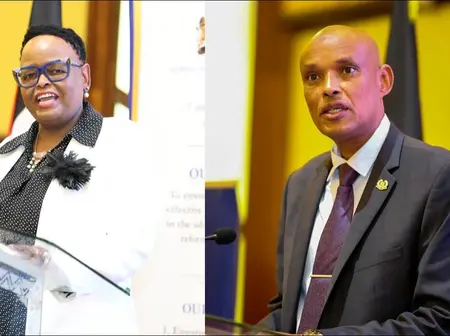
  • CJ Koome, DCI Amin Clash Over Political Gangs as Kenya Heads Towards 2027 Elections

    CJ Koome, DCI Amin Clash Over Political Gangs as Kenya Heads Towards 2027 Elections

    The disagreement emerged during a National Council on the Administration of Justice (NCAJ) event on Tuesday, November 3, where the two senior officials raised concerns about the increasing use of young people in organised criminal activities.

    Koome challenged the police to move beyond arresting individuals involved in violent attacks and instead investigate the powerful people suspected of recruiting, financing and coordinating the gangs.

    The Chief Justice argued that arresting young people carrying out attacks would not solve the problem if those providing money and other resources remained untouched.

    She maintained that the young people involved in criminal activities were often being exploited by individuals who wanted to use them to advance their interests.

    "Listening to the report by the National Police Service, what I know about organised crime is a crime against humanity; we need to map these areas and as police you need to arrest financiers… the goons are our children and they are being sustained by financiers," Koome stated.

    However, Amin, who represented Inspector General of Police Douglas Kanja, criticised the Judiciary over what he described as the frequent release of suspects accused of participating in gang-related activities.

    The DCI boss argued that releasing suspects on minimal bond terms could weaken police efforts to address organised criminal activities, particularly where individuals return to the streets and allegedly continue committing similar offences.

    He called on the courts to prioritise the prosecution and determination of cases involving criminal gangs, warning that delays and repeated releases could undermine efforts to deter offenders.

    "We are calling upon the Judiciary to expedite the prosecution and trial of all gang-related offences. We have taken note that frequent release of suspects on minimal bond undermines deterrence and allows repeat offenders to return to the streets to continue perpetuating their activities," Amin said.

    The exchange came as a report presented during the NCAJ meeting revealed that the number of identified organised criminal gangs in Kenya had increased from 89 to 109.

    Western Kenya recorded the highest number, with 38 groups, followed by the Rift Valley with 22 and Nairobi with 20. Nyanza had 12, Coast 11, Eastern three, North-Eastern two and Central one.

    The figures have raised concerns about the country's preparedness to handle possible security challenges as political activities intensify ahead of the next General Election.

    Council of Governors Chairperson Muthomi Njuki also weighed in on the matter, calling for the restoration of prosecutorial powers to strengthen enforcement of county laws.

    Meanwhile, NCAJ Director General Dr Moses Maranga reported a significant increase in crime, putting the rise at 157 per cent, while warning that serious offences remained a concern.

    Law Society of Kenya member Tom K'opere also raised concerns over continued abductions, including cases involving young lawyers, despite ongoing efforts by security agencies to address criminal activities.

    The developments have placed renewed attention on the relationship between law enforcement agencies and the Judiciary, particularly regarding investigations, arrests, prosecution and the handling of suspects.

    As preparations for the 2027 elections continue, the police have pledged to pursue individuals suspected of financing and facilitating criminal activities, including those allegedly recruiting young people into organised gangs.

    The debate has also highlighted the need to establish accountability across the entire criminal network rather than focusing exclusively on individuals found carrying out attacks.

    Koome's position puts pressure on investigators to identify those allegedly funding criminal groups, while Amin's remarks underline the police service's concerns about the prosecution process and the treatment of suspects once they appear in court.

    Source