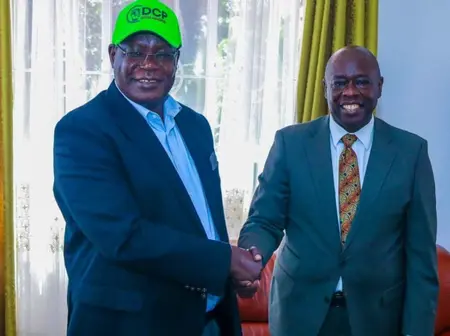
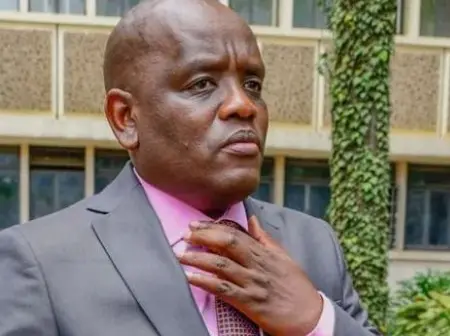
The latest development comes as Gachagua continues strengthening his political influence in the Mount Kenya region, where he is seeking to consolidate support for his party.
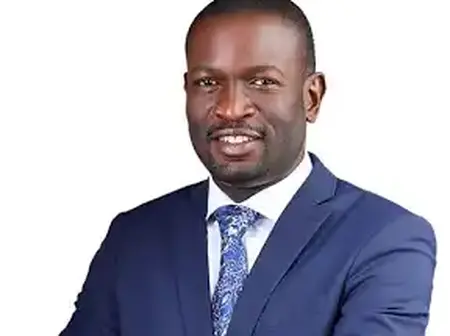
The decision by the new entrant to join DCP is expected to attract attention, particularly as political realignments continue gathering momentum across the country.
Gachagua has been actively welcoming leaders from different political backgrounds, with the party positioning itself as an alternative platform for politicians seeking elective positions in 2027.
The former Deputy President has repeatedly maintained that DCP is focused on giving Kenyans an opportunity to elect leaders who understand their challenges and are committed to addressing them.
The latest defection also comes shortly after former Kiambu Governor James Nyoro joined the party, in a development that strengthened Gachagua's political presence in the county.
Mount Kenya remains an important political region, with several leaders already positioning themselves ahead of the next presidential election.
The growing number of politicians joining DCP could therefore strengthen Gachagua's efforts to establish a strong grassroots network across the region.
The announcement has also attracted attention on social media, with a Facebook post shared on Monday, November 23, highlighting the latest political development.
Supporters of the former Deputy President are likely to view the latest entry as another indication that his political camp is attracting interest from leaders seeking a new political home.
However, the real test for DCP will be whether it can translate the growing number of political entrants into grassroots support and electoral victories in 2027.
As political competition intensifies, more leaders are expected to make decisions about the parties they intend to use in the coming elections.
A moment of silence during a gathering at Nzoia Sugar Company has drawn attention after Member of Parliament Waluke appeared to lose patience and urged those present to join in the ruling side’s campaign slogan.
MP Waluke has challenged attendees who have remained quiet during the event, insisting that people who have turned up to welcome President William Ruto should participate with enthusiasm.
His remarks have come as the President has addressed a gathering linked to the Nzoia Sugar Company bonus payment.
According to remarks shared from the event, the legislator has questioned why some people have attended the meeting without joining supporters in chanting the slogan.
He has maintained that anyone who has chosen to attend such a gathering should take part in the atmosphere rather than remain silent.
The MP has suggested that showing support at an event has involved more than simply being physically present.
In his view, joining the 'Tutam' chants has demonstrated enthusiasm and solidarity with the group welcoming the Head of State. His comments have therefore placed the crowd’s reaction at the centre of attention.
The moment has emerged as leaders have continued to use public gatherings to communicate support for Ruto and promote their messages ahead of the 2027 General Election.
Slogans have remained a familiar feature of such meetings, often giving supporters an opportunity to express their political positions collectively.
At the same time, the reaction from those attending has highlighted how audiences have not always responded uniformly to political calls.
While some supporters have joined in chants, others have sometimes remained quiet, prompting leaders to encourage greater participation.
The Nzoia event has also carried significance because it has focused on a bonus payment for workers associated with the sugar company.
The issue has attracted public interest in the region, where the performance and future of the sugar sector have remained important concerns for workers and residents.
The MP’s remarks have consequently added a political moment to an event that has focused on workers’ interests. His appeal has underlined the expectation among some leaders that supporters should demonstrate their backing during presidential visits.
Representing the Parliament of Kenya at the 48th Ordinary Meeting of the East African Community (EAC) Council of Ministers on Monday, November 23, 2026, Amisi stepped beyond routine diplomatic formalities to deliver a pointed message on governance and electoral integrity across East Africa.
Addressing delegates from partner states, the Saboti legislator argued that regional peace and cohesion across the bloc can only be achieved if member governments strictly uphold the rule of law, promote social justice, and safeguard democratic principles.
Turning his focus directly onto Nairobi, Amisi described Kenya as the sole remaining stable democracy in the East African region—before cautioning that this status could rapidly unravel during the upcoming 2027 polls if electoral flaws are left unaddressed.
His remarks in Kampala have ignited lively political discussion back home for three distinct reasons.
First, taking domestic complaints about Kenya’s electoral framework onto an international EAC platform elevates local political disputes into a regional diplomatic concern.
While opposition figures frequently critique electoral institutions at domestic rallies, raising alarms about a "convoluted electoral system" before East African ministers signals a deliberate push to place Kenya’s 2027 preparedness under regional and international scrutiny.
Second, Amisi’s warning lands right in the middle of heightened national tension surrounding the Independent Electoral and Boundaries Commission (IEBC).
Over the past week, top opposition principals—including Rigathi Gachagua, Kalonzo Musyoka, Martha Karua, and Fred Matiang’i—staged a walkout during a consultative meeting with the IEBC over unresolved transparency questions, while leaders like Ndindi Nyoro have issued warnings regarding the ongoing recruitment of a substantive IEBC Chief Executive Officer.
Amisi’s Kampala intervention reinforces the opposition’s broader narrative that current administrative and legal gaps in the electoral commission could undermine public trust ahead of 2027.
Third, the statement has drawn scrutiny due to Amisi’s own evolving political posture ahead of the next election cycle.
Having publicly parted ways with the Orange Democratic Movement’s broad-based alignment with government to champion his own political vehicle—the Patriotic Movement (PM)—Amisi has positioned himself as a vocal critic of both state institutions and entrenched political alliances.
Supporters online praised the lawmaker for boldly defending democratic accountability on a regional stage, while political rivals dismissed his remarks as early campaign posturing aimed at rallying opposition voters in Western Kenya.
In a statement shared after the engagement, Mbadi described elders as custodians of culture, wisdom and values. He noted that their guidance remains important in bringing people together and encouraging leaders and community members to act responsibly.
His message places emphasis on the role respected community figures can play beyond cultural ceremonies and traditional responsibilities. Through their experience and counsel, elders can help encourage dialogue, promote peaceful coexistence and remind political actors to put the community's long-term interests first.
However, the impact of such engagements will depend on whether the concerns raised are followed by practical action. Continued dialogue between elders, political leaders and residents can help ensure that the issues discussed receive attention and that calls for peace are reflected in conduct throughout the campaign period.
Mbadi's meeting with the Homa Bay chapter of the Luo Council of Elders highlights the place of consultation and community guidance in preparations for the elections. His remarks offer a reminder that political competition need not come at the expense of cohesion and mutual respect.
What do you think about the role of elders in promoting unity and peaceful leadership as elections approach? Share your views, remarks and comments in the comment section.
Gachagua received Nyoro on Monday afternoon, November 23, 2026, at the DCP national headquarters in Nairobi, describing the former county chief’s decision as a response to consultations with his constituents and confirming that Nyoro will run for governor on the DCP ticket.
Nyoro, who previously served as Kiambu governor and ran on a Jubilee ticket in 2022, brings prior county administration experience and established political networks into DCP as the party works to consolidate support across vote-rich Kiambu and the wider Mount Kenya region.
His defection follows a string of recent arrivals into DCP from Mount Kenya, including delegations of Kiambu aspirants and sitting lawmakers who crossed over at Gachagua’s Wamunyoro residence days earlier.
In Kenya’s pre-election landscape, high-profile party switches in populous counties like Kiambu carry substantial weight because they signal shifting grassroots momentum and complicate ticket battles for rival outfits.
Observers note that bringing a former governor onto the DCP slate strengthens Gachagua’s local mobilization structure in Kiambu, even as primary competition among aspiring DCP contenders and rival camps is set to intensify.
At the same time, continued defections from Jubilee underscore the fluid party loyalties reshaping Mount Kenya politics ahead of formal nomination timelines.
With less than nine months remaining before Kenyans head to the ballot box on August 10, 2027, how Nyoro’s entry reshapes the Kiambu governor race and DCP’s regional strategy will remain closely watched.
A united opposition could present President William Ruto with a serious challenge in the 2027 General Election. However, political commentator Linda Mwananchi believes that the opposition must first overcome its internal differences and agree on one presidential candidate.
In a political message, Mwananchi suggested that leaders Edwin Sifuna, Kalonzo Musyoka, Rigathi Gachagua, Fred Matiang'i and David Maraga could make a powerful team if they agreed to work together.
According to the argument, President Ruto benefits when opposition leaders compete against one another instead of presenting a common front.
The commentator pointed to the 2022 presidential election, in which Ruto won with approximately 50.5 per cent of the vote, arguing that a united opposition could make the next contest more difficult for him.
Sifuna was presented as a possible candidate who could appeal to different groups, particularly young voters who have increasingly demanded accountability and better leadership.
His supporters believe his outspoken political style and ability to engage younger Kenyans could give the opposition a fresh image.
However, bringing the different leaders together may not be easy.
Kalonzo has remained active in presidential politics for years, while Gachagua has built his own political following in the Mount Kenya region. Matiang'i and Maraga also have supporters who may have different expectations about the country's political future.
The biggest challenge could therefore be agreeing on who should lead the proposed coalition.
The 2027 election is still ahead, and it remains unclear whether the opposition leaders will reach an agreement.
For now, the debate raises an important question: could Sifuna unite the opposition, or will political ambitions stand in the way of a common candidate?
Although opposition leaders have repeatedly declared their commitment to challenging President William Ruto, their latest political engagements have raised questions about who will eventually control the coalition's direction and secure its presidential ticket.
The latest developments suggest that the opposition's biggest challenge may not be attracting supporters but managing the competing interests of its own leaders.
On Saturday, November 21, People Daily reported that Jubilee Party leader Fred Matiang'i, Narc Kenya leader Martha Karua, Kiharu MP Ndindi Nyoro and Siaya Governor James Orengo were preparing for a joint political tour of Kirinyaga County.
Their growing political association has attracted attention because of its potential influence on the opposition's leadership arrangements and the selection of its presidential candidate.
However, the emergence of this political grouping has also raised questions about whether a new centre of influence is developing within the broader opposition movement.
The debate became more prominent on Sunday, November 22, when opposition leaders held political engagements in Kirinyaga County.
According to Citizen Digital, Karua called for greater respect among opposition principals, insisting that every leader should be given an opportunity to participate in the search for the coalition's presidential candidate.
She also emphasised the importance of developing a common manifesto that would explain what the opposition intends to do if it wins the 2027 election.
Her remarks highlighted two major challenges facing the coalition: agreeing on a presidential candidate and establishing a common political programme.
Meanwhile, former Deputy President Rigathi Gachagua has continued strengthening his political influence through regional mobilisation.
During his engagements in Embu on November 22, Gachagua discussed the importance of bringing together different political regions to challenge the current administration.
His strategy highlights the importance of Mount Kenya, Kisii, Lower Eastern and the Coast in the emerging opposition calculations.
However, regional mobilisation alone does not guarantee that different political leaders will eventually agree on one presidential candidate.
The differences in political positioning became particularly interesting when Matiang'i and Nyoro dismissed suggestions that the opposition was breaking into competing factions.
According to reports published by Citizen Digital and The Star on November 22, the leaders maintained that the opposition remained united and would eventually present one presidential candidate.
Their reassurance came amid growing speculation about the emergence of competing political centres within the broader opposition.
The presidential succession question became even more complicated following another development involving former Attorney General Justin Muturi.
On November 22, Muturi declared that his Democratic Party had settled on Wiper leader Kalonzo Musyoka as its preferred presidential candidate within the opposition.
The announcement was made during a church service in Mwala, Machakos County, where Muturi accompanied Kalonzo.
The Star reported the endorsement again on November 23, highlighting its significance in the ongoing debate over the opposition's presidential ticket.
Although Muturi's endorsement does not automatically determine the coalition's final decision, it demonstrates how individual political parties are beginning to express their preferences.
This presents a potentially difficult situation because several influential opposition figures have their own supporters, political structures and ambitions.
Kalonzo brings years of political experience and an established support base in Lower Eastern.
Gachagua has concentrated on strengthening his influence in Mount Kenya, while Matiang'i is seeking to expand his national political profile.
Karua and Orengo also bring political experience and established networks that could influence the coalition's direction.
Nyoro, meanwhile, has continued attracting attention through his political engagements and economic arguments.
The challenge is finding a political arrangement that accommodates these different interests without creating a leadership contest that weakens the coalition before the election.
The opposition must also consider the expectations of ordinary Kenyans.
Unemployment, taxation, healthcare, education, corruption and the cost of living remain important issues that could influence voting decisions in 2027.
A coalition built around personalities and regional political arrangements may attract large crowds, but voters will eventually want to understand what its leaders intend to change.
This is where the opposition has an opportunity to distinguish itself from the current administration.
A common manifesto, credible leadership arrangements and clear economic proposals could help transform its political mobilisation into a serious national alternative.
However, failure to agree on these issues could create an advantage for the ruling administration.
President Ruto does not necessarily need the opposition to collapse for his re-election campaign to benefit. If competing political interests eventually produce multiple presidential candidates, opposition votes could be divided among different political camps.
That possibility makes the coming negotiations particularly important.
The developments between November 21 and 23 have exposed a central contradiction within the opposition. Its leaders are publicly insisting on unity while individual parties and political figures are already demonstrating their preferred approaches to leadership.
Ultimately, the coalition must decide whether its collective objective is more important than the individual ambitions of its principals.
But with Kalonzo receiving Muturi's endorsement, Gachagua consolidating his regional influence and Matiang'i emerging alongside Karua and Nyoro, who will be willing to sacrifice their presidential ambitions for the sake of opposition unity, and could their failure to agree ultimately hand William Ruto another term in 2027?
Bondo MP Gideon Ochanda has called on Siaya Governor James Orengo to give up his seat, arguing that he should not continue serving as governor after moving away from the ODM party that sponsored his election.
Speaking at his residence in Bondo on Monday, November 23, Ochanda said leaders elected on a party ticket should not abandon that party while retaining the positions they won through it.
He argued that ODM or the relevant authorities should take action against elected leaders who change their political allegiance.
However, whether a governor automatically loses office after leaving the party under which they were elected is a legal question. Article 182 of the Constitution outlines the circumstances under which a governor's seat becomes vacant.
Ochanda also spoke about the political changes taking place in Siaya following the death of former ODM leader Raila Odinga. He said rival groups were already organising ahead of the 2027 General Election, pointing to political alignments around Nicholas Gumbo and George Okode.
He warned that ODM could lose ground if it waited until February or March to begin assessing potential candidates. He urged the party to identify popular aspirants early and consider negotiations to prevent divisions during the nomination process.
The MP also questioned Orengo's chances of winning another term, citing concerns about service delivery and public dissatisfaction with his leadership.
Orengo was elected Siaya governor in 2022 on an ODM ticket. In October 2026, he announced plans to establish a political vehicle for his 2027 presidential ambitions, with reports linking the initiative to the Liberal Democratic Party.
Dennis Itumbi has weighed in on the growing debate surrounding the Usawa ni Sawa slogan, suggesting that the message could have a deeper political meaning as Kenya approaches the 2027 General Election.
In a post shared on his Facebook account, Itumbi appeared to suggest that the push for equality would come with a political consequence, using the phrase "tyranny of small numbers" to communicate his message.
"And yes, there will be tyranny of small numbers," Itumbi wrote, in a brief statement that has drawn attention to the emerging political conversation surrounding the slogan.
His remarks come at a time when President William Ruto and the United Democratic Alliance (UDA) have increasingly embraced Usawa ni Sawa as part of their political messaging.
The phrase, which translates to equality is fair, has been presented as a call for fairness, equal opportunities and balanced development across the country.
Ruto has used the slogan during his public engagements, including political gatherings and national events, as his administration seeks to communicate its development agenda to Kenyans.
However, Itumbi's reference to the tyranny of small numbers introduces another dimension to the discussion.
The phrase is commonly used in political debates to describe situations where smaller groups or communities are perceived to exercise disproportionate influence over larger populations.
In Kenya, discussions about political representation, regional numbers and the distribution of national resources have remained significant issues in national politics.
The country's electoral system is based on democratic representation, with political parties and leaders frequently seeking support from different communities and regions.
Itumbi's statement could therefore be interpreted as a response to ongoing discussions about equality, political numbers and representation, although he did not provide further details explaining his remarks.
The post comes as political leaders begin positioning themselves ahead of the 2027 General Election, with different political formations developing messages aimed at attracting support across the country.
As the Usawa ni Sawa slogan gains prominence, its political interpretation and the debate surrounding equal representation are likely to remain part of Kenya's national conversation.
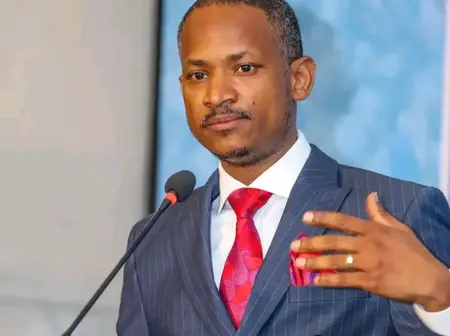
In a statement shared by Nairobi Leo on November 23, the legislator said the party was committed to conducting nominations without favouritism. He urged members to meet at the Karen headquarters, inviting them to engage with the party ahead of nominations.
The assurance puts internal party democracy at the centre of the conversation. Party nominations are closely watched because they determine who gets the opportunity to carry a party’s flag in elective contests. For aspirants, a transparent process can build confidence that their participation will be judged fairly. For ordinary members, it can reinforce the belief that their voices and choices matter.
Owino’s message is likely to attract attention from people interested in the party’s plans and how it intends to select candidates. His use of the words “free and fair” sets an expectation that the process should be open, impartial and guided by clear rules.
The announcement names Karen as the venue but does not specify the meeting time. Participants may need to confirm details before travelling.
Ultimately, the credibility of any nomination exercise will depend not only on assurances but also on how the process is conducted. Clear communication, consistent rules and transparent decisions will be essential if the party wants members to trust the outcome.
What is your view on Babu Owino’s promise of free and fair nominations, and what should parties do to ensure credible internal elections? Share your remarks, views and comments in the comment section.