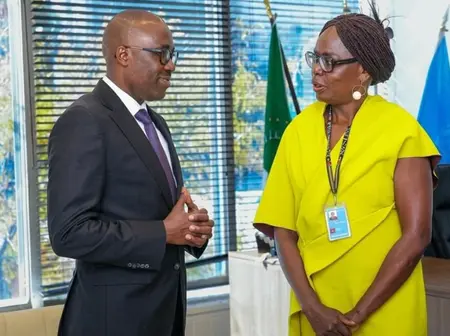
Sierra Leone has withdrawn Professor Charles Chernor Jalloh from the International Court of Justice race and backed Kenya’s candidate, Professor Phoebe Okowa.
The decision came after the second round of voting failed to settle the contest for the remaining seat.
Sierra Leone’s representative to the United Nations announced that the country would no longer support Jalloh and would instead back Okowa.
The move was intended to bring African support together behind the Kenyan candidate as voting continued.
The envoy said divisions among African countries could leave the continent without enough representation on the court.
He argued that protecting Africa’s place on the bench was more important than supporting an individual national candidate.
The representative also cited Okowa’s legal experience and her achievement as the first African woman elected to the United Nations International Law Commission.
Okowa had a difficult second round, receiving 87 votes in the General Assembly and four in the Security Council.
She needed at least 97 votes in the Assembly and eight in the Council to secure election.
Candidates must win an absolute majority in both bodies, which vote separately, to join the 15-member court.
Four candidates had already secured the required support in both bodies during the first round.
They included representatives from the United Kingdom, France, Jordan and Singapore.
Okowa was seeking a full nine-year term after joining the court in November 2025 to fill a vacancy left by Judge Abdulqawi Ahmed Yusuf.
Her current term was due to end on February 5, 2027, with new terms scheduled to begin the following day.
Sierra Leone’s decision removed Jalloh from the contest and added its support to Kenya’s effort to retain a place on the court.
The voting later moved to a third round, where Okowa faced Peru’s Luz del Carmen Ibáñez Carranza.
Okowa won with 13 votes in the Security Council, while her rival received none, securing re-election for a full term from 2027 to 2036.
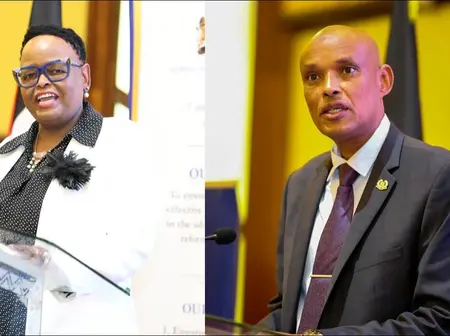
The disagreement emerged during a National Council on the Administration of Justice (NCAJ) event on Tuesday, November 3, where the two senior officials raised concerns about the increasing use of young people in organised criminal activities.
Koome challenged the police to move beyond arresting individuals involved in violent attacks and instead investigate the powerful people suspected of recruiting, financing and coordinating the gangs.
The Chief Justice argued that arresting young people carrying out attacks would not solve the problem if those providing money and other resources remained untouched.
She maintained that the young people involved in criminal activities were often being exploited by individuals who wanted to use them to advance their interests.
"Listening to the report by the National Police Service, what I know about organised crime is a crime against humanity; we need to map these areas and as police you need to arrest financiers… the goons are our children and they are being sustained by financiers," Koome stated.
However, Amin, who represented Inspector General of Police Douglas Kanja, criticised the Judiciary over what he described as the frequent release of suspects accused of participating in gang-related activities.
The DCI boss argued that releasing suspects on minimal bond terms could weaken police efforts to address organised criminal activities, particularly where individuals return to the streets and allegedly continue committing similar offences.
He called on the courts to prioritise the prosecution and determination of cases involving criminal gangs, warning that delays and repeated releases could undermine efforts to deter offenders.
"We are calling upon the Judiciary to expedite the prosecution and trial of all gang-related offences. We have taken note that frequent release of suspects on minimal bond undermines deterrence and allows repeat offenders to return to the streets to continue perpetuating their activities," Amin said.
The exchange came as a report presented during the NCAJ meeting revealed that the number of identified organised criminal gangs in Kenya had increased from 89 to 109.
Western Kenya recorded the highest number, with 38 groups, followed by the Rift Valley with 22 and Nairobi with 20. Nyanza had 12, Coast 11, Eastern three, North-Eastern two and Central one.
The figures have raised concerns about the country's preparedness to handle possible security challenges as political activities intensify ahead of the next General Election.
Council of Governors Chairperson Muthomi Njuki also weighed in on the matter, calling for the restoration of prosecutorial powers to strengthen enforcement of county laws.
Meanwhile, NCAJ Director General Dr Moses Maranga reported a significant increase in crime, putting the rise at 157 per cent, while warning that serious offences remained a concern.
Law Society of Kenya member Tom K'opere also raised concerns over continued abductions, including cases involving young lawyers, despite ongoing efforts by security agencies to address criminal activities.
The developments have placed renewed attention on the relationship between law enforcement agencies and the Judiciary, particularly regarding investigations, arrests, prosecution and the handling of suspects.
As preparations for the 2027 elections continue, the police have pledged to pursue individuals suspected of financing and facilitating criminal activities, including those allegedly recruiting young people into organised gangs.
The debate has also highlighted the need to establish accountability across the entire criminal network rather than focusing exclusively on individuals found carrying out attacks.
Koome's position puts pressure on investigators to identify those allegedly funding criminal groups, while Amin's remarks underline the police service's concerns about the prosecution process and the treatment of suspects once they appear in court.
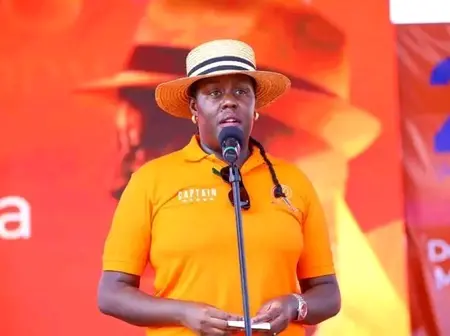
Her position became a talking point over the weekend after she missed two political events: the launch of Linda Mwananchi’s Nairobi headquarters in Lavington and an ODM rally at Jacaranda Grounds. ODM leader Oburu Oginga took part virtually.
At the Linda Mwananchi launch on Friday, organisers had reportedly reserved a front-row seat for Winnie, but she did not attend. Opposition figures at the event included Wiper leader Kalonzo Musyoka and former Deputy President Rigathi Gachagua.
Her absence from the ODM rally also drew attention. Posters carrying her image and promoting her Senate ambition had circulated on social media, raising expectations that she would attend.
Winnie announced her intention to contest the seat on October 15 during an event marking the first anniversary of her father, former Prime Minister Raila Odinga’s death. She said she was seeking the position because Nairobi Senator Edwin Sifuna was pursuing another office, adding that she intended to work with young people.
Her remarks were seen as a sign of support for Linda Mwananchi, but she has not confirmed the political platform she will use. On Monday, she shared an Instagram poll asking followers which route she should take, including joining Linda Mwananchi or remaining in ODM.
The race could involve other aspirants. Nominated Senator Crystal Asige has been associated with Linda Mwananchi, while Lang’ata MP Phelix Odiwuor, popularly known as Jalang’o, has received backing from Winnie’s brother, Raila Odinga Junior.
Winnie’s next move may clarify whether she will contest under ODM, Linda Mwananchi or another arrangement. For now, her political choice remains unsettled as parties position themselves for the 2027 contest.
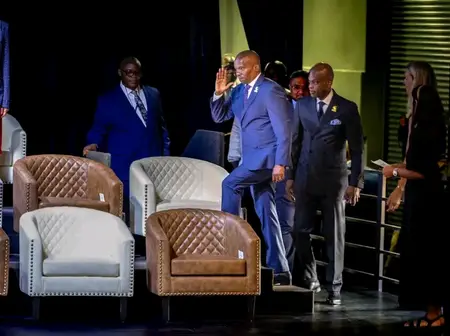
Kenya's Deputy President Kithure Kindiki has attended the opening ceremony of the 28th Commonwealth Heads of Government Meeting (CHOGM 2026) in St. John's, Antigua and Barbuda.
The opening ceremony marked the beginning of the international meeting, providing an opportunity for participating countries to discuss shared priorities and strengthen diplomatic relations.
CHOGM 2026 is being hosted in Antigua and Barbuda, bringing together heads of government, senior officials and representatives from Commonwealth member countries.
The meeting provides an important platform for discussions on economic development, international cooperation, climate change, trade, security and other issues affecting member states.
Kenya's participation reflects its continued engagement with the Commonwealth, an association of countries that cooperate on political, economic and social development matters.
Kindiki's presence at the opening ceremony also highlights Kenya's representation in international diplomatic engagements, particularly discussions involving partnerships and shared development priorities.
The Commonwealth provides member countries with opportunities to exchange ideas, strengthen bilateral relationships and explore areas of cooperation across different sectors.
The gathering is expected to provide participating leaders with an opportunity to deliberate on challenges facing their respective countries and identify possible collective solutions.
For Kenya, such international engagements offer opportunities to strengthen relationships with other member states, promote national interests and explore partnerships that support development.
The opening ceremony officially ushered in the programme of activities for the 28th Commonwealth Heads of Government Meeting, bringing together representatives from across the Commonwealth family.
As the meeting progresses, attention will focus on discussions and engagements among participating leaders, with outcomes expected to shape cooperation among member countries.
Kenya remains part of the Commonwealth's wider diplomatic framework, which provides a platform for dialogue, collaboration and addressing common challenges affecting its members.
The Deputy President's attendance underscores the country's involvement in the international gathering as participating governments seek stronger partnerships and practical solutions to shared challenges.
In a public notice shared on its official Facebook page, the Commission disowned the documents, clarifying that they were neither prepared nor authorised by its offices.
PSC cautioned members of the public against treating the circulating letters as genuine government communication, insisting that the documents had no connection to the Commission.
"The Public Service Commission wishes to alert members of the public that the letters circulating purporting to communicate the Commission’s approval for the recruitment of officers in various State Departments are FAKE and did not originate from the Commission," the agency stated.
The Commission further emphasised that it had completely disowned the communications and warned against relying on their contents when making decisions concerning government recruitment.
In a separate caution directed at government institutions, PSC urged Ministries, Departments and Agencies (MDAs) not to act on the information contained in the questionable letters.
"The Commission disowns the letters and cautions members of the public, Government Ministries, Departments and Agencies against acting on their contents," PSC added.
The latest announcement places job seekers on alert, particularly those who regularly depend on online platforms to access information about available government positions.
Although the Commission did not disclose the individuals behind the circulation of the documents, its clarification makes it clear that the letters should not be used as evidence of an approved recruitment exercise.
PSC has consequently advised Kenyans to exercise caution whenever they encounter recruitment announcements or official-looking documents claiming to have originated from the Commission.
"The public is advised to remain vigilant and verify the authenticity of any communication purportedly issued by the Commission through official channels," the agency stated.
The warning serves as a reminder to Kenyans that official-looking recruitment documents should not automatically be trusted without confirmation from the relevant government institution.
The leaders say the party chief deserves an opportunity to lead the opposition, rejecting suggestions that he should settle for a deputy president position.
They argue Musyoka has supported opposition leaders in elections and that his allies should return the favour by backing his ambition.
Wiper National Executive Committee member Omar Twaha said Musyoka had not received respect despite his contribution to uniting opposition leaders against President William Ruto.
Twaha maintained that the party did not want to divide the opposition, saying its objective remained removing Ruto through a united front.
Wiper Coast chairperson John Chamia dismissed claims that Musyoka could become Ruto’s running mate, insisting the two leaders could not work together.
The remarks follow an incident in which Musyoka was heckled during the launch of the Linda Mwananchi movement’s headquarters in Nairobi.
The interruption sparked debate about respect among opposition allies as leaders and supporters continue promoting candidates for the coalition’s presidential ticket.
The disagreement has also been fuelled by DCP deputy leader Cleophas Malala, who has urged Musyoka to support Nairobi Senator Edwin Sifuna for president.
Malala suggested Sifuna could lead the opposition ticket while an experienced politician serves as his running mate, a proposal resisted by Wiper supporters.
The Coast leaders insist Musyoka has the experience and political record to seek the presidency, warning that overlooking him could push Wiper into an independent campaign.
The developments expose the challenge facing opposition leaders as they seek a common candidate while managing competing ambitions, party interests and support ahead of 2027.
The Government is preparing to recruit additional Assistant County Commissioners following clearance from the Public Service Commission, in a move aimed at operationalising newly gazetted administrative units and bringing public services closer to communities.Interior Principal Secretary Raymond Omollo said the Ministry of Interior and National Administration would advertise the vacancies soon, urging qualified chiefs and assistant chiefs to apply.
Former Deputy President Rigathi Gachagua has hit back at Democratic Party (DP) leader Justin Muturi, questioning his criticism of the opposition’s political strategy and his claims about building support to defeat President William Ruto.
Gachagua challenged Muturi to demonstrate his own ability to mobilise voters, citing an MCA contest in Evurore in which he claimed a DP candidate secured only 35 votes against 238 garnered by a candidate associated with Ruto’s camp.
The Democracy for the Citizens Party (DCP) leader questioned how Muturi could lecture him about electoral numbers when, according to Gachagua, his own party had struggled to mobilise voters at his home polling station.
Gachagua made the remarks on Tuesday, November 3, 2026, during a meeting at his Wamunyoro residence in Nyeri, while responding to criticism from Muturi and Jubilee Party leader Fred Matiang’i, who had accused him of undermining opposition unity and pursuing a divisive political approach.
“And you want to lecture Riggy G about numbers? How? If you cannot deliver your polling station hapo kwako nyumbani, how can you deliver the presidency? Kasongo anakushinda kwako hapo nyumbani, hapo polling station yako,” Gachagua said.
Gachagua argued that leaders seeking to remove Ruto from power in the 2027 General Election must demonstrate their electoral strength instead of relying on press conferences, hotel meetings and political statements.
He maintained that winning the presidency required direct engagement with voters and the ability to mobilise sufficient numbers across the country.
“Politics is a game of numbers. The science of politics is numbers. For you to be president, we are expecting kutakuwa na 26 million to be on the same side. Lazima tupate thirteen million plus one,” he stated.
The former Deputy President said opposition leaders needed to establish how many votes they could deliver before discussing how to combine their political support bases.
He claimed to have held discussions with several opposition principals, including Nairobi Senator Edwin Sifuna, Wiper leader Kalonzo Musyoka and DAP-K leader Eugene Wamalwa, over their respective voter mobilisation targets.
He also defended his proposal to consolidate support from Mt Kenya, Ukambani and Western Kenya, arguing that the opposition needed to combine its numerical strength to defeat Ruto.
Gachagua further invoked his experience in the 2022 General Election, claiming that he had played a significant role in mobilising voters who helped Ruto win the presidency before their political fallout.
“I am a believer of numbers. I am also experienced. I delivered the presidency in the last election through mobilisation of numbers. Nilikuja nikamobilise numbers tukasaidia huyu Kasongo akakuwa raisi. Kufika pale akatugeuka,” he said.
The former Deputy President accused some opposition leaders of spending too much time in hotels and boardrooms instead of conducting grassroots campaigns.
He argued that political popularity on television and social media could not automatically translate into votes, insisting that presidential aspirants had to persuade Kenyans directly.
“There is no other formula of sending William Ruto home unless you go out and mobilise numbers. And we must discuss numbers. Some are uncomfortable to discuss numbers. They must be discussed,” Gachagua added.
His remarks came a day after Muturi accused him of undermining cooperation within the United Opposition and putting personal and regional political interests ahead of the coalition’s collective ambition.
Muturi warned that Gachagua’s insistence on political arrangements involving different blocs risked weakening the opposition’s efforts to agree on a common presidential candidate.
Matiang’i had also criticised Gachagua, describing his approach as arrogant and warning that what he termed majoritarian politics could divide the opposition.
During Tuesday’s meeting, National Organising Secretary of the Democracy for the Citizens Party (DCP), Mithika Linturi, also urged Muturi to avoid divisions within the Mt Kenya region, saying disagreements among leaders could weaken their collective political influence.
He claimed that DCP had withdrawn its candidate in Mbeere during an earlier election to give Muturi’s DP candidate an opportunity, but the arrangement had not delivered the expected result.
“Tuliingia kusaidia wewe kule Mbeere wakati tulikuwa na uchaguzi. Hata tuka withdraw candidate wa DCP ili candidate wako aweze kupata nafasi,” Linturi said.
He further urged Muturi to engage other leaders directly rather than relying on press conferences to address political disagreements.
Linturi also turned his attention to Matiang’i, whom he described as a “crying baby”, urging him to return to Kisii and consolidate his support base.
“So Bwana Matiang’i, tafadhali rudi kule Kisii. Consolidate watu wako. Wapige kura uwalete wote pamoja,” he said.
He also cited a disagreement over candidates in Ol Kalou, claiming that his party had advised Matiang’i’s side against fielding a candidate in an area where DCP had support. He said the candidate who eventually contested secured about 20 votes, while DCP won the race.
The DCP leaders have urged opposition leaders to sit down and agree on how to combine their support bases, arguing that disagreements over candidates could cost them votes in the 2027 General Election.
OpportunitiesThe government has announced plans to recruit additional Assistant County Commissioners following approval from the Public Service Commission (PSC).The government has announced plans to recruit additional Assistant County Commissioners following approval from the Public Service Commission (PSC).In a statement on Tuesday, November 3, Interior Principal Raymond Omollo said the Ministry would soon advertise the vacancies to facilitate the operationalisation of newly gazetted administrative units across the country.
DefectionThe former Senator revealed his intention to run for Governor of West Pokot County under an ODM ticket.Former Senator for West Pokot County Samuel Poghisio officially ditched KANU for the Orange Democratic Movement (ODM) on Tuesday, November 3.Poghisio was received to the party by Deputy Party Leader Simba Arati at ODM's headquarters, Chungwa House.