Category: Politics

  • Moses Kajwang: Ruto Is Our Therapist and Psychiatrist

    Moses Kajwang: Ruto Is Our Therapist and Psychiatrist

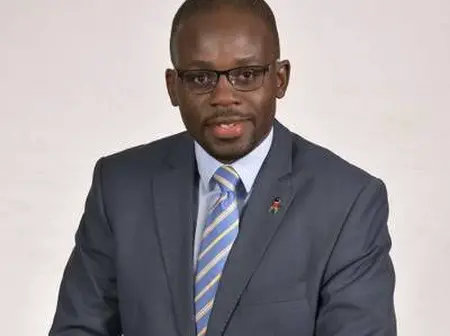
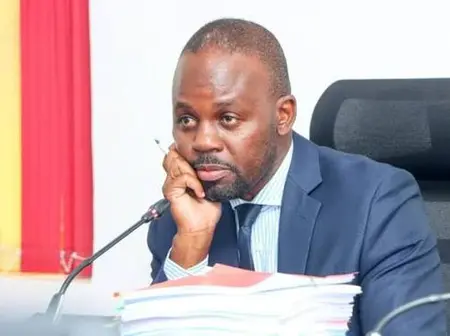
    Senator Moses Kajwang has described President William Ruto as the country's therapist and psychiatrist, making a statement that has attracted attention amid ongoing political discussions in Kenya.

    Kajwang made the remarks while commenting on the country's political environment and the President's role in addressing issues affecting Kenyans.

    Kajwang' challenges Ruto over SHA amid nurses' shortage in hospitals –  People Daily

    The senator's statement appeared to use humour to describe how President Ruto handles public concerns and responds to different situations facing the country.

    The comparison of the President to a therapist and psychiatrist has drawn interest because of the important role these professionals play in helping people deal with emotional and psychological challenges.

    A therapist helps individuals manage personal struggles, while a psychiatrist is a medical professional who deals with mental health conditions.

    Kajwang's remarks come at a time when political leaders continue to express different views about the government's performance and its relationship with ordinary Kenyans.

    President Ruto has remained a central figure in national discussions, particularly on the economy, the cost of living, government policies and preparations for the 2027 General Election.

    Political statements from leaders such as Kajwang often attract public attention, especially when they use unusual comparisons to describe the President's leadership.

    However, the senator's exact meaning and the context in which he made the remarks are important in understanding his message.

    The statement has also created room for public discussion about the responsibilities of political leaders in listening to citizens and responding to their concerns.

    As Kenya continues to experience political and economic debates, comments from elected leaders remain part of the wider national conversation about leadership and accountability.

    source:https://www.facebook.com/share/p/1Lkt5JzFLh/

  • Isaiah Yunge Shares First Photo of Wife Charlene Ruto After Viral Crying Video

    Isaiah Yunge Shares First Photo of Wife Charlene Ruto After Viral Crying Video

    Isaiah Yunge has attracted attention after sharing a photo of his wife, Charlene Ruto, for the first time since a video showing her crying before congregants in Mwanza, Tanzania, went viral on social media.

    The latest photo has sparked interest among Kenyans, with many closely following developments surrounding the President's daughter following the emotional incident that generated widespread online discussion.

    Charlene became a trending topic after Sunday's church gathering in Mwanza, where she was captured shedding tears while addressing congregants.

    The video quickly circulated across different social media platforms, prompting mixed reactions from Kenyans and other social media users.

    While some people expressed concern and offered words of encouragement, others questioned what could have triggered the emotional moment.

    Against this backdrop, Yunge's decision to share his wife's photo has attracted attention, particularly because it is his first public post featuring her since the incident.

    The development has also renewed interest in the couple's relationship, with social media users keen to see how Charlene has been doing following the emotional church moment.

    Charlene, who is President William Ruto's daughter, has maintained a public presence through her involvement in youth empowerment initiatives, business activities and various social engagements.

    Her activities often attract considerable attention, given her family background and growing profile in Kenya's public space.

    The viral Mwanza video has once again demonstrated the level of public interest surrounding the President's daughter, with even her personal moments attracting widespread reactions.

    Yunge's latest post has therefore become a talking point among social media users, many of whom are interested in the couple's latest appearance following Sunday's emotional church gathering.

    However, neither the photo nor the public attention surrounding it should be taken as confirmation of the reasons behind Charlene's tears.

    Sources;

    https://www.facebook.com/share/p/1DzkB1HdoV/

  • Moses Kajwang Sparks Debate After Calling Ruto Kenya’s Therapist and Psychiatrist.

    Moses Kajwang Sparks Debate After Calling Ruto Kenya’s Therapist and Psychiatrist.

    Moses Otieno Kajwang' Experience :: Mzalendo

    Kajwang's remarks have sparked discussions among Kenyans, with many interested in understanding the message behind his choice of words.

    The senator made the statement while discussing the country's political situation and the way President Ruto has remained at the centre of national conversations.

    His comments come at a time when the government continues to face questions from Kenyans over the economy, the cost of living, taxation and other issues affecting ordinary citizens.

    By describing Ruto as a therapist and psychiatrist, the senator used humour and strong language to make his point about the President's place in the country's political discussions.

    The statement has since attracted attention, with Kenyans expected to interpret it differently depending on their political views.

    President Ruto has continued to defend his administration, maintaining that his government is committed to improving the economy, creating employment opportunities and delivering development projects.

    However, opposition leaders and critics have continued to challenge some of the government's decisions, particularly those affecting the cost of living and public spending.

    Kajwang's latest remarks add to the ongoing political exchanges between leaders from different sides of the political divide.

    The statement is also likely to generate reactions from supporters of the President, who may offer a different interpretation of the senator's comments.

    As political discussions continue, Kenyans remain interested in hearing what their leaders have to say about the country's challenges and the direction of the government.

    For now, Kajwang's description of Ruto has become another talking point in Kenya's political debate.

    Source:https://www.facebook.com/share/p/1ErC37yDo6/

  • Local Political Rivalries vs National Optics

    Local Political Rivalries vs National Optics

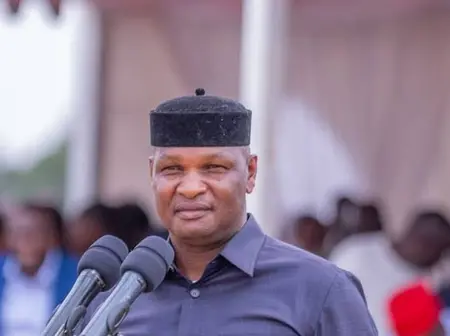
    Political temperatures soared in Kisii County following an unexpected and dramatic confrontation involving high-profile political figures. According to reports circulating from the region, Farouk Kibet reportedly sparked significant public attention and drama after allegedly chasing Kisii Governor Simba Arati and National Assembly Majority Whip Silvanus Osoro away from President William Ruto.

    ​The incident has quickly become a major talking point across political circles, drawing intense reactions from supporters and critics alike. Observers on the ground noted that the unexpected development unfolded swiftly, catching many attendees and onlookers by surprise as security and protocol dynamics played out in full public view.

    ​Political analysts point out that such high-stakes interactions often highlight the intricate power dynamics and tight-knit protocol management surrounding presidential functions. Both Simba Arati, a prominent opposition-affiliated governor, and Silvanus Osoro, a staunch ally of the ruling administration, are influential figures whose interactions with the presidency frequently command media attention.

    ​As details continue to emerge, local leaders and residents are closely monitoring the situation to gauge any potential political fallout from the dramatic episode. Authorities and spokespersons have yet to release an official statement regarding the specifics of the confrontation, leaving room for ongoing public debate and media speculation.

    https://www.facebook.com/share/p/18sqh4DAsE/

  • PHOTOS: President Ruto Hosts a High Stakes Meeting With European Union Delegation at State House

    PHOTOS: President Ruto Hosts a High Stakes Meeting With European Union Delegation at State House

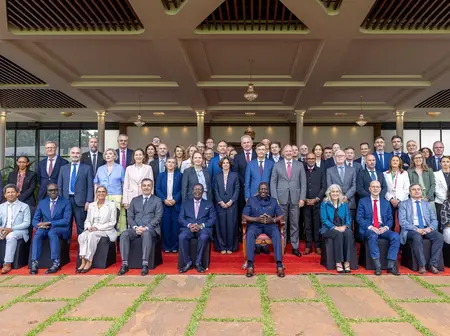
    President William Ruto has hosted heads of European Union (EU) delegations to African countries at State House, Nairobi, in a high-level diplomatic engagement aimed at strengthening relations between Kenya, Europe and the wider African continent.

    During the engagement, President Ruto called on European investors to increase their investments in key sectors of the Kenyan economy, including manufacturing, infrastructure, agriculture, energy and healthcare.

    The Head of State maintained that Kenya wants to move beyond traditional trade relations with Europe and establish partnerships that support local production, technology transfer and employment creation.

    Focus on Investment and Job Creation

    One of the major issues surrounding the engagement is the need to create more employment opportunities for young people.

    Kenya continues to face economic challenges, including unemployment, the high cost of living and pressure on households. Increased investment in manufacturing and other productive sectors could help expand economic opportunities.

    President Ruto also highlighted the European Union's Global Gateway Initiative as an important platform for mobilising financing for major development projects.

    He called for affordable financing arrangements that would allow Kenya and other African countries to implement transformative projects while giving local businesses meaningful opportunities to participate.

    Kenya's Growing Diplomatic Influence

    The meeting also highlights Nairobi's importance in international diplomacy.

    The European Union has designated its delegation in Nairobi as its fourth regional hub in Africa, further strengthening the city's position as a centre for diplomatic and multilateral engagement.

    The EU remains Kenya's largest export market, accounting for approximately 21 per cent of the country's global exports.

    What Kenyans Expect From the Engagement

    Beyond the diplomatic significance, Kenyans will be interested in understanding how these international partnerships will translate into tangible economic improvements.

    There are expectations that stronger cooperation could support investment, create jobs, improve infrastructure and open additional markets for Kenyan products.

    Ultimately, the success of the engagement will depend on the practical results delivered to citizens.

    Do you believe stronger partnerships between Kenya and the European Union can help accelerate the country's economic growth?

    Comment and share your views.

    https://www.facebook.com/share/1D5WHwrcgW/

  • Bahati Accused of Denying Content Creators Food at MP Bid Launch Event

    Bahati Accused of Denying Content Creators Food at MP Bid Launch Event

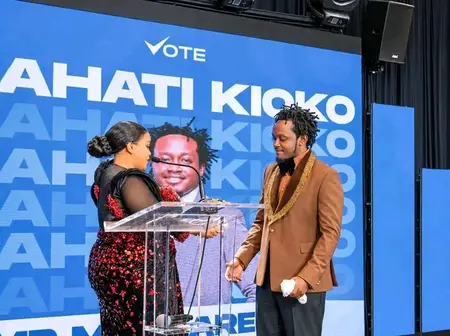
    The event in question was Bahati's so-called "Big Day" with wife Diana Marua, held on November 6. Promoted as a grand wedding celebration with entry pegged at KSh 1 million per invite, the evening took a sharp turn when Bahati used the platform to announce his 2027 bid for the Mathare parliamentary seat. He later admitted the wedding framing was a deliberate publicity strategy, which drew widespread criticism over the perceived deception.

    Did Bahati deny content creators food? In a video posted on Wednesday, November 11, Pamela did not hold back. She claimed that guests who had not paid the KSh 1 million entry fee were turned away from the food, something she said left her stunned. "I don't know how Bahati will take this, but we were denied food. I was surprised; if he can deny us food, will he win the Mathare seat?" she said. She noted that when she asked about the food situation, she was told it was reserved for paying guests.

    SOURCE:https://www.facebook.com/100067867727102/posts/1516452220627021/?app=fbl

  • EALA MP David Ole Sankok Defends Uhuru’s Right to Take Political Sides

    EALA MP David Ole Sankok Defends Uhuru’s Right to Take Political Sides

    East African Legislative Assembly MP David Ole Sankok has defended former President Uhuru Kenyatta’s continued engagement in national politics, arguing that retirement from the highest office does not require silence.

    Speaking on K24’s Politalks programme on 12 November 2026, Sankok said Uhuru remains a Kenyan citizen with full rights, including the freedom to choose and publicly support a political side. He pointed to former US President Barack Obama, who has continued to campaign and speak on public issues after leaving office, as a clear example.

    “Obama is a former Head of State, and you have also seen him campaigning. Being a former Head of State does not mean you should remain silent. Whatever is affecting the country will affect him too. So, I don’t see any problem with Uhuru picking a side,” Sankok stated.

    He added that national issues affect every citizen, including former leaders and their families and businesses, and that no one should be muted simply because they once occupied State House. Sankok also stressed that the sitting President is the exclusive symbol of national unity and must always uphold that role, even when others misbehave.

    The remarks come a day after Uhuru publicly urged opposition leaders—including Rigathi Gachagua, Kalonzo Musyoka and Eugene Wamalwa—to set aside personal ambitions and present a united front ahead of the 2027 general election. Speaking at the funeral of his cousin Beatrice Wambui Muturi in Nairobi on 11 November, Uhuru said Kenyans had already made up their minds and that the only remaining obstacle was opposition disunity.

    Sankok’s comments reinforce the view that retired presidents retain the right to participate in political discourse. They also highlight the growing intensity of the 2027 contest, in which Uhuru’s interventions are increasingly shaping opposition conversations while drawing responses from across the political divide.

    https://x.com/kenyans/status/2120769725424971827?s=46

  • ‘We Miss Raila’: UDA Spokesperson Criticises Opposition Over Lack of Clear Policies

    ‘We Miss Raila’: UDA Spokesperson Criticises Opposition Over Lack of Clear Policies

    Image result for ‘We Miss Raila’: UDA Spokesperson Criticises Opposition Over Lack of Clear Policies

    Mong’are argued that Kenya was witnessing a situation in which a quiet majority held different political views from a vocal minority that frequently dominates public discussions.

    Speaking about the political position of Generation Z, commonly known as Gen Z, the UDA official claimed that some young people had begun reconsidering their political choices after what he described as attempts by political actors and individuals seeking personal gain to influence their views.

    "We are facing a silent majority versus a loud minority, and many young people, the Gen Zs, who are misled by political saboteurs and extortionists, have opened their eyes," Mong’are said.

    His remarks come as political parties and leaders intensify efforts to attract young voters ahead of the 2027 General Election.

    The Gen Z generation has played an increasingly visible role in Kenya's political conversations, particularly following the nationwide demonstrations against the Finance Bill 2024. The protests brought issues such as taxation, corruption, accountability and unemployment into the national spotlight.

    Since then, political leaders across different parties have sought to engage young people, recognising their potential influence in the next general election.

    Mong’are also turned his attention to the opposition, particularly the Democracy for the Citizens Party (DCP), accusing its leadership of failing to develop a clear alternative policy agenda for the country.

    He argued that opposition parties should explain how they would address Kenya's economic and governance challenges rather than concentrating their efforts on criticising the current administration.

    "DCP Party has not sat down to come up with any concrete alternative. I really miss Raila Odinga because he used to come up with clear alternative policies, while we are putting forward an agenda of a first-world Kenya," Mong’are said.

    His reference to the late former Prime Minister Raila Odinga was significant, given Odinga's long history in opposition politics and his role in shaping national political debates through policy proposals and calls for government accountability.

    Mong’are suggested that the current opposition leadership should follow a similar approach by presenting clear proposals that voters can evaluate ahead of the next election.

    The remarks also reflect the growing competition between UDA and opposition parties as they seek to position themselves as the preferred political choices for Kenyans in 2027.

    However, opposition leaders have maintained that their criticism is part of their responsibility to question government decisions and offer an alternative direction for the country.

    The debate over Gen Z's political influence is also expected to remain important as young voters consider whether to support established political parties, independent candidates or emerging movements.

    Mong’are's comments underline the government's determination to challenge the opposition's political narrative and convince voters that President Ruto's development agenda offers a better path for the country.

    With the 2027 General Election approaching, both sides are likely to intensify their engagement with young people as they seek to turn political messages into electoral support.

  • “We Had Severe Depression Until Ruto Came,” Senator Moses Kajwang Breaks Silence

    “We Had Severe Depression Until Ruto Came,” Senator Moses Kajwang Breaks Silence

    Political discussion was ignited by Homa Bay Senator Moses Kajwang following his striking comments lauding President William Ruto’s achievements in development. He portrayed the Head of State as a figure who has assisted the residents of Homa Bay in surmounting prolonged periods of frustration and being overlooked.

    Kajwang noted that the people of Homa Bay have faced harsh conditions for years and are now longing for real progress, highlighting their ties with the present government.

    Drawing on a somewhat unusual comparison, the ODM legislator explained the impact of Ruto’s leadership on citizens, suggesting that the president has rejuvenated hope among individuals exhausted by years of disappointment.

    Kajwang stated that Ruto acts as their mental health counselor, noting that the deep despair experienced by residents of Homa Bay was so intense it required professional psychological help. After enduring hardship for an extended period, they now have a paved highway, a feat achieved under Ruto’s leadership despite the lack of such infrastructure since independence.

    He pointed out that he views the bond between the national government and people in Homa Bay as having shifted markedly, especially in the realms of development and infrastructure work.

    Kajwang’s remarks arrive as political alignments shift, with leaders maneuvering for position before the 2027 general election.

    Ruto has focused on broadening his backing in areas historically linked to opposition movements, especially Nyanza, where the ODM has held strong sway for many years.

    Interest in the President’s meetings with regional heads of state has grown, as development pledges and state initiatives have emerged as key topics in political debates.

    Thus, Kajwang’s commendation might be seen as yet another sign of shifting political discourse within the opposition’s base.

    Yet his comments are expected to spark discussion among locals and political rivals, who intend to evaluate the government's real progress on development compared to its pledges.

    As the 2027 presidential race nears, Ruto’s development plans and his expanding political activities in Nyanza may play a crucial role in shaping his backing in that area.

    For Kajwang, the takeaway was obvious: residents of Homa Bay care about progress and better ties with the central government.

    Link:

    https: //www. facebook. com/share/1LA2os8XNu/

  • Babu Owino Raises Concern Over Kenya’s Rising Debt, Warns of Malthusian Trap

    Babu Owino Raises Concern Over Kenya’s Rising Debt, Warns of Malthusian Trap

    Embakasi East Member of Parliament Babu Owino has raised concerns over Kenya's growing public debt, questioning why the country continues to borrow heavily without experiencing economic growth that matches the increasing financial burden.

    His statement has brought renewed attention to the country's borrowing habits, public spending and the government's responsibility to ensure that borrowed money delivers meaningful results.

    The Question of Rising Public Debt

    Public borrowing is not necessarily harmful to a country's economy. Governments often borrow to finance major infrastructure projects, improve public services, create employment opportunities and support economic development.

    However, the real concern arises when borrowing continues to increase without corresponding improvements in productivity, household incomes and living standards.

    For ordinary Kenyans, economic growth should be reflected in affordable living costs, better employment opportunities, improved healthcare, quality education and stronger businesses.

    When these improvements remain limited despite increased government borrowing, citizens naturally begin questioning how public resources are being utilised.

    Are Kenyans Getting Value for Borrowed Money?

    Babu's remarks also raise an important question about accountability. Kenyans need to understand whether borrowed funds are being directed towards productive investments or activities that offer limited long-term economic benefits.

    The government must demonstrate transparency in public expenditure and explain how major development projects contribute to economic growth.

    Equally important is ensuring that completed projects generate employment, improve productivity and create opportunities for businesses.

    Kenya's economic challenge goes beyond borrowing. The country must strengthen its revenue collection, support local industries, encourage investment and create an environment where young people can find meaningful employment.

    Ultimately, borrowing should be a tool for development rather than a permanent solution to financial challenges.

    Babu Owino's statement therefore invites an important national conversation about Kenya's economic direction and the future generations who will carry the responsibility of servicing public debt.

    Do you agree with Babu Owino that Kenya is borrowing too much without achieving proportional economic growth? Share your views in the comments.

    https://www.facebook.com/share/1JQ59QP3nH/