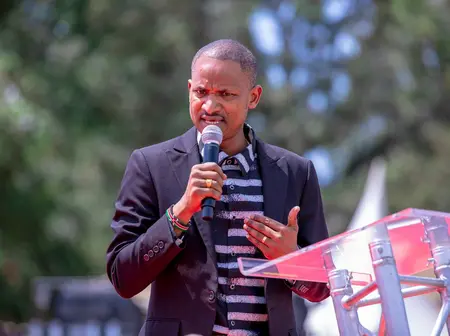
Embakasi East Member of Parliament Babu Owino has raised concerns over Kenya's growing public debt, questioning why the country continues to borrow heavily without experiencing economic growth that matches the increasing financial burden.
His statement has brought renewed attention to the country's borrowing habits, public spending and the government's responsibility to ensure that borrowed money delivers meaningful results.
The Question of Rising Public Debt
Public borrowing is not necessarily harmful to a country's economy. Governments often borrow to finance major infrastructure projects, improve public services, create employment opportunities and support economic development.
However, the real concern arises when borrowing continues to increase without corresponding improvements in productivity, household incomes and living standards.
For ordinary Kenyans, economic growth should be reflected in affordable living costs, better employment opportunities, improved healthcare, quality education and stronger businesses.
When these improvements remain limited despite increased government borrowing, citizens naturally begin questioning how public resources are being utilised.
Are Kenyans Getting Value for Borrowed Money?
Babu's remarks also raise an important question about accountability. Kenyans need to understand whether borrowed funds are being directed towards productive investments or activities that offer limited long-term economic benefits.
The government must demonstrate transparency in public expenditure and explain how major development projects contribute to economic growth.
Equally important is ensuring that completed projects generate employment, improve productivity and create opportunities for businesses.
Kenya's economic challenge goes beyond borrowing. The country must strengthen its revenue collection, support local industries, encourage investment and create an environment where young people can find meaningful employment.
Ultimately, borrowing should be a tool for development rather than a permanent solution to financial challenges.
Babu Owino's statement therefore invites an important national conversation about Kenya's economic direction and the future generations who will carry the responsibility of servicing public debt.
Do you agree with Babu Owino that Kenya is borrowing too much without achieving proportional economic growth? Share your views in the comments.
https://www.facebook.com/share/1JQ59QP3nH/
Leave a Reply